
Augustin Brunias Danse d'esclaves 02 — History & Facts
What first seizes the eye in Augustin Brunias Danse d'esclaves 02 is the sense of movement and music caught mid-breath: a dancer, arms akimbo and head cocked, seems to pulse with the rhythm of the drum at his feet, while a cluster of figures—musicians and onlookers—lean into the moment, their bodies echoing the beat. The artist draws us into the circle, using the sweep of bright skirts and the tilt of straw hats to guide our gaze from the foreground basket of fruit up to the poised, upright figure at the center. Light glances off white blouses and bare arms, setting them apart from the shadowed greenery behind, while the palette—earthy reds, ochres, and blues—grounds the scene in the warmth of the tropics.
Every gesture is deliberate: the musician’s hands on the drum, the dancer’s bent knee, the woman’s hand resting lightly on her hip, each detail a note in the larger composition. Painted in 1770, this work belongs to a world where European artists like Agostino Brunias turned their attention to the Caribbean, often at the behest of colonial patrons eager to document—or romanticize—the lives of enslaved and free people of color. Such paintings were both records and performances, shaped by the tastes and anxieties of their time. The Musée d'Aquitaine now holds this scene, a reminder of the era’s fascination with the spectacle of dance and music as both a social ritual and a symbol of endurance.
History has kept few traces of the individual lives behind these painted faces, but the energy of the gathering endures, inviting us to look closer and imagine the rhythms that once filled the air.
More Artworks by Agostino Brunias
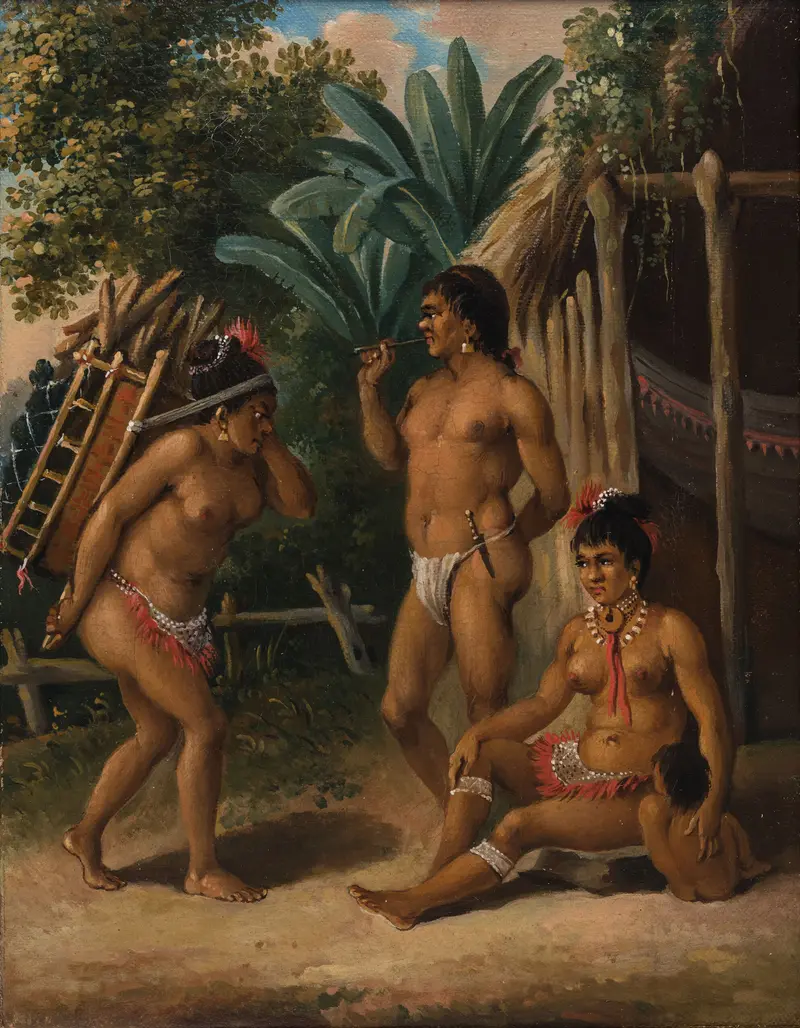
Indigenous Kalinago of St. Vincent [Aboriginal Caraibs of St. Vincents]
Agostino Brunias
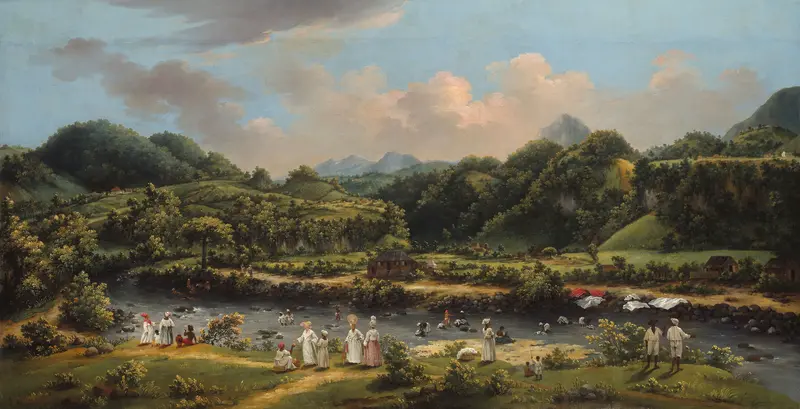
View on the River Roseau, Dominica
Agostino Brunias
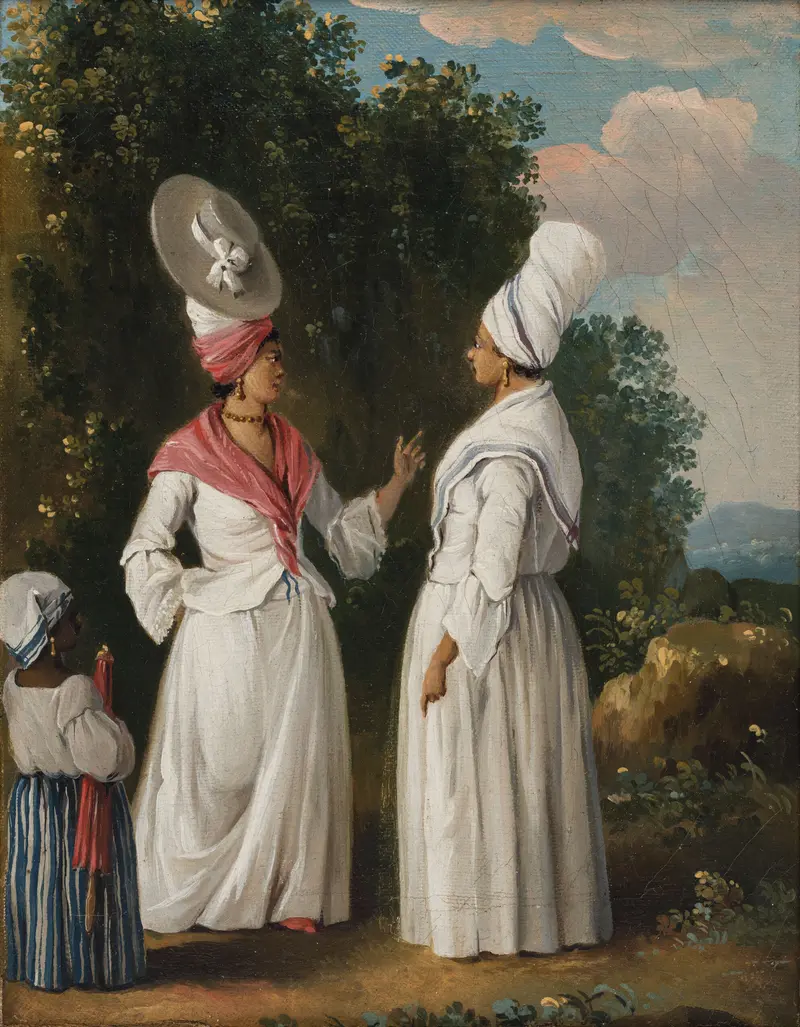
Francophone Women of Color and a Young Attendant, Dominica [French Mulatresses of Dominica in their Proper Dress]
Agostino Brunias
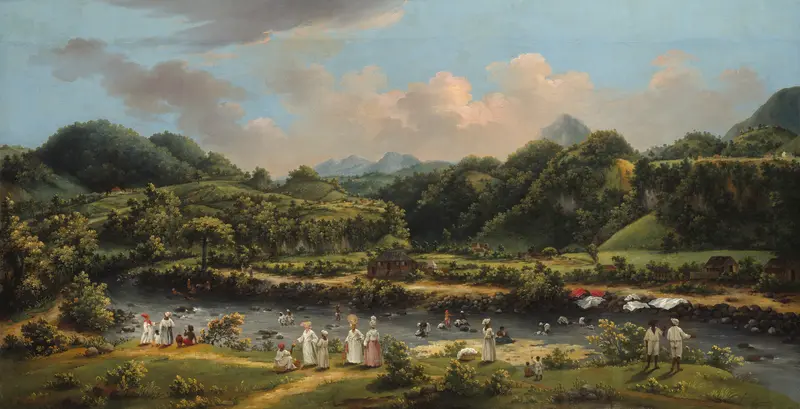
View on the River Roseau, Dominica
Agostino Brunias
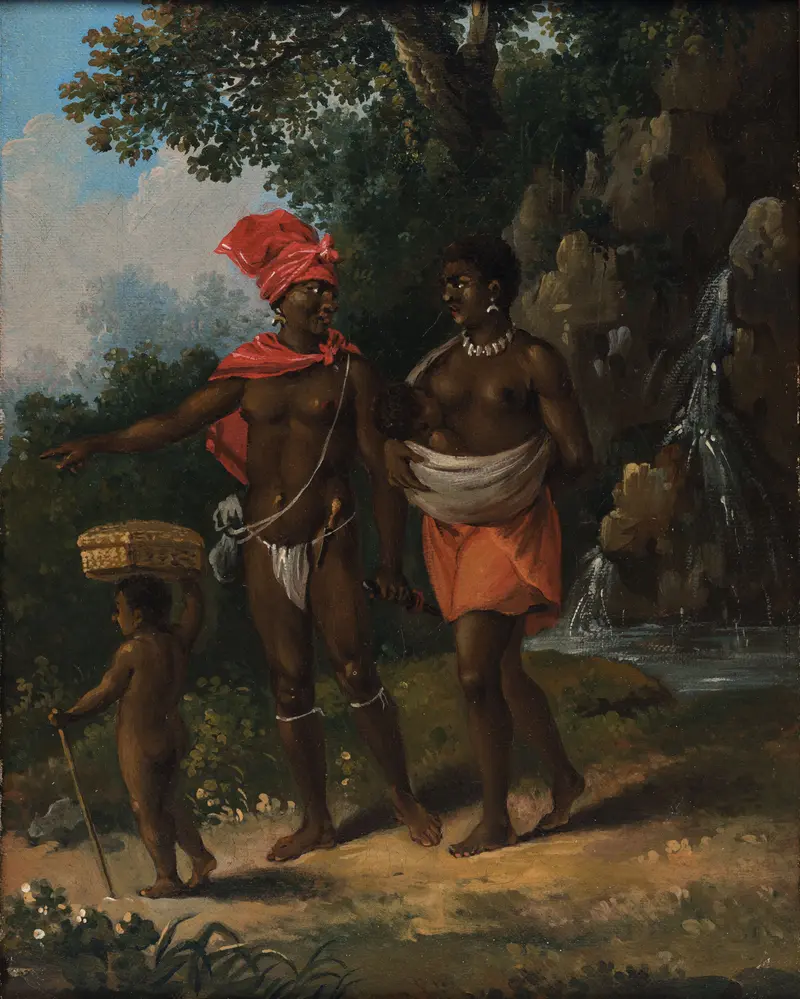
Garifuna Peoples of St. Vincent [Caraibs of St. Vincents]
Agostino Brunias
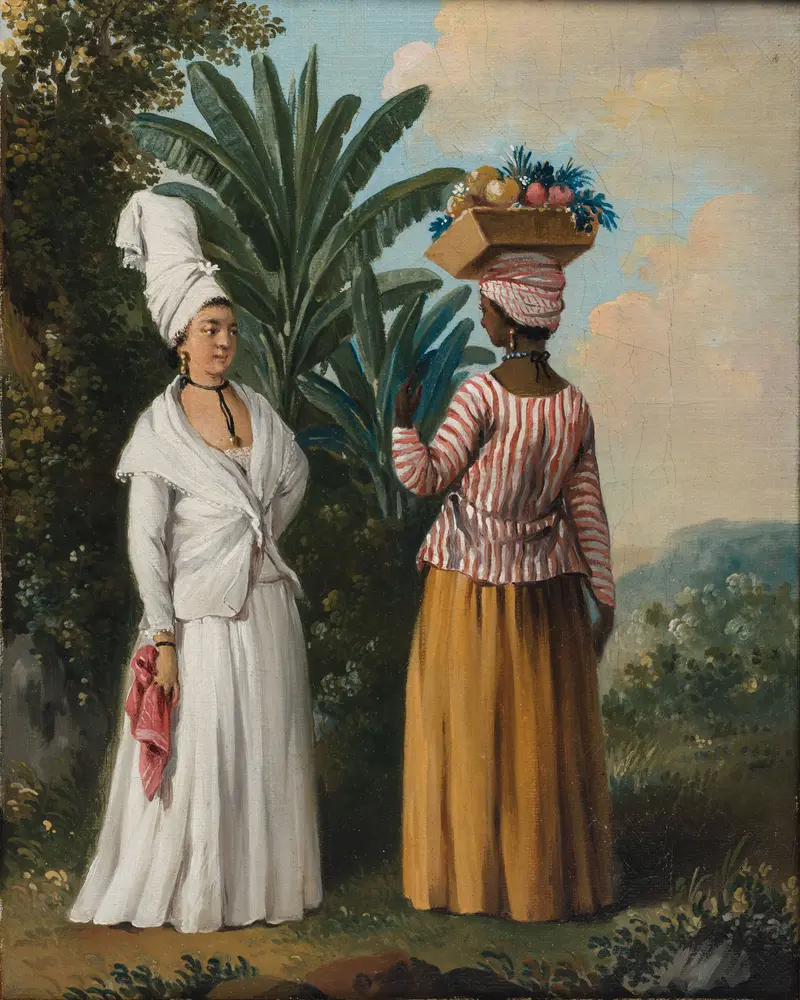
Two Women of Color, Dominica [French Mulatress of Dominica and a Negro Woman in their Proper Dress]
Agostino Brunias

Purchasing Fruit [A French Mulatress Purchasing Fruit from a Negro Wench]
Agostino Brunias

Women of Color Bathing and a Voyeur [Mulatresses and Negro Woman Bathing]
Agostino Brunias
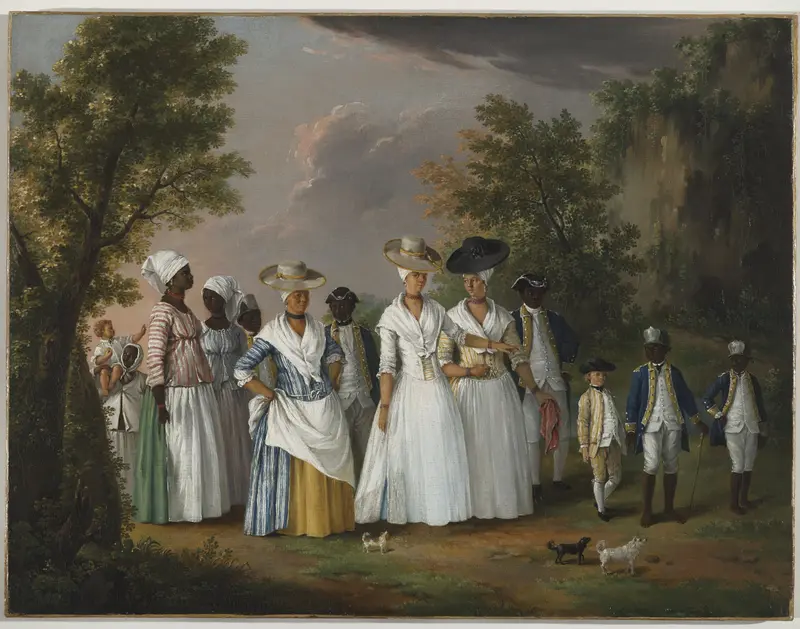
Free Women of Color with their Children and Servants in a Landscape
Agostino Brunias
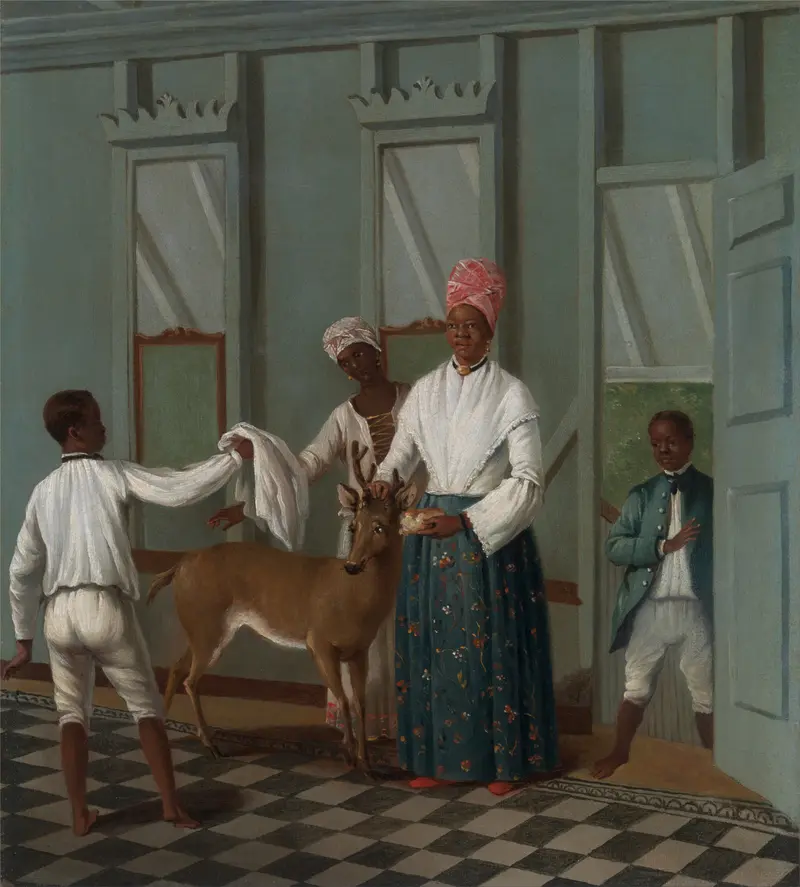
Servants Washing a Deer
Agostino Brunias
More Genre Scene Art

Banquet of the Officers of the St George Civic Guard
Frans Hals

Rembrandt and Saskia in the Scene of the Prodigal Son
Rembrandt van Rijn

Bal du moulin de la Galette
Pierre-Auguste Renoir

Quadrille at the Moulin Rouge
Henri de Toulouse-Lautrec

A Burial at Ornans
Gustave Courbet

When Will You Marry?
Paul Gauguin