
Ballet Theatre, Cremorne — History & Facts
In every stroke lies an obsession, a fervent desire to capture a moment that transcends time and space, inviting us into a world of movement and grace. Begin your journey by focusing on the figures in the foreground, where dancers stretch and leap, their bodies painted with a fluidity that breathes life into the canvas. Notice the range of colors: soft pastels blend with bold, contrasting hues, swirling together in a dance of their own. The composition draws your gaze upward, where the dimmed lights of the theatre create an ethereal glow, while shadows play along the edges, hinting at the secrets held within this space. As you delve deeper, consider the interplay between the energy of the dancers and the stillness of the audience, whose expressions are obscured yet palpable.
This tension reveals a duality — the pursuit of art and the quiet yearning of those who watch, perhaps reflecting their own unfulfilled dreams. The empty spaces between the figures speak volumes about the weight of anticipation and the obsession that drives both performers and admirers alike. William Henry Brooke painted this work in an era rich in artistic exploration, likely in the mid-to-late 19th century when the ballet was captivating audiences across Europe. Living in London, Brooke was part of a vibrant artistic community that sought to fuse realism with romanticism, reflecting the growing obsession with performance art.
It was a time when the boundaries of high culture and popular entertainment began to blur, mirroring the themes of aspiration and desire that permeate this piece.
More Artworks by William Henry Brooke
Browse all →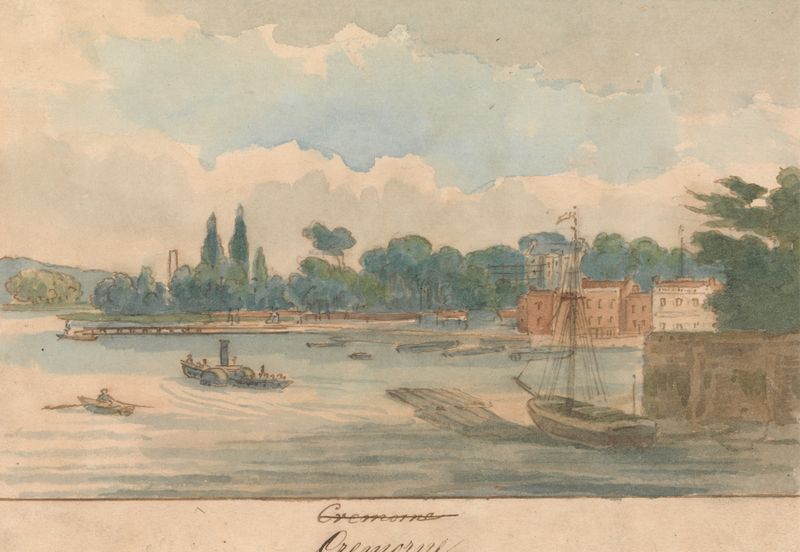
Cremorne
William Henry Brooke

Interior Marionette Theatre
William Henry Brooke

Fountain, Cremorne
William Henry Brooke
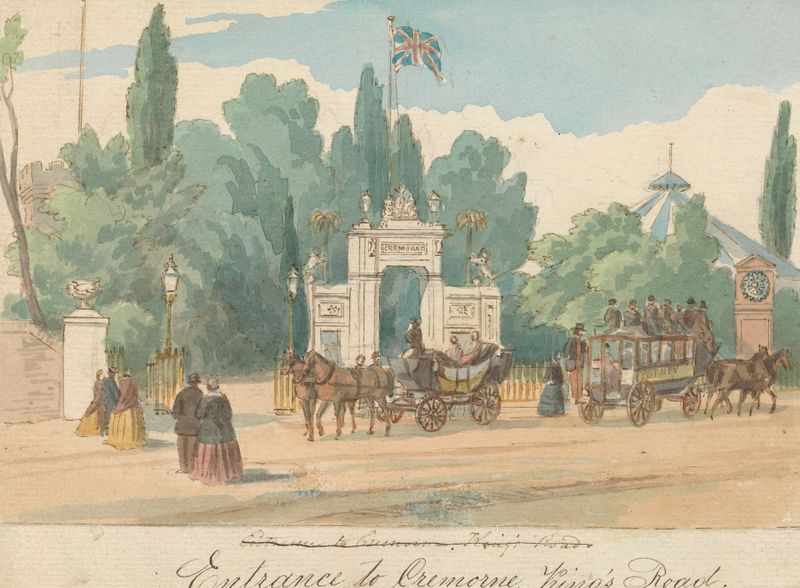
Entrance to Cremorne, King’s Road
William Henry Brooke
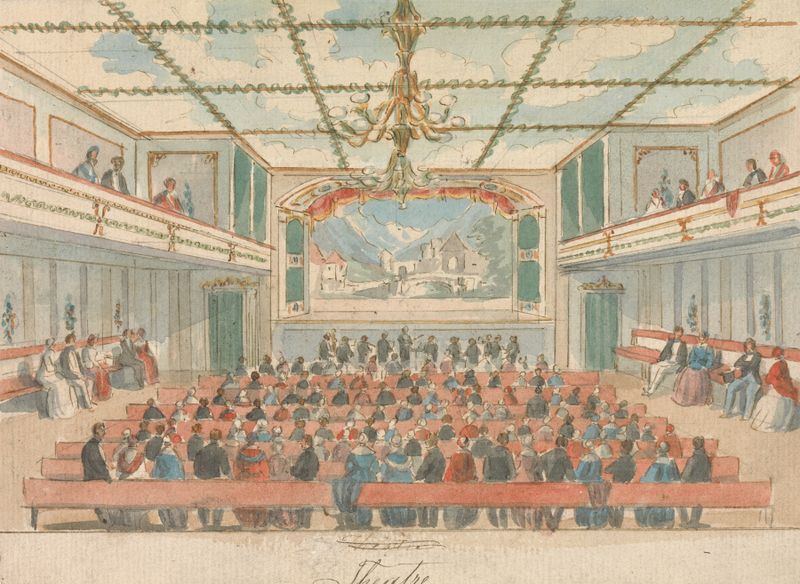
Theatre
William Henry Brooke

The Pavilion, Cremorne
William Henry Brooke

Fire Work Temple and American Building Saloon
William Henry Brooke





