Interior Marionette Theatre — History & Facts
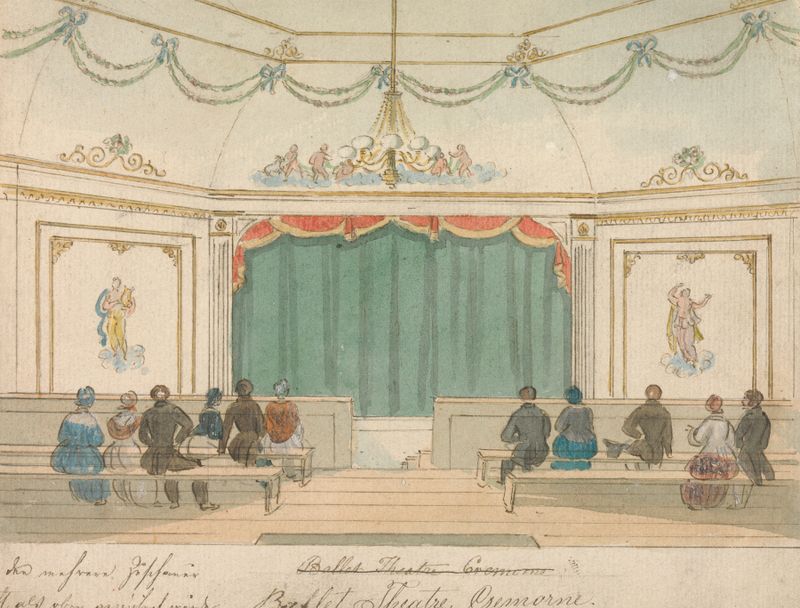
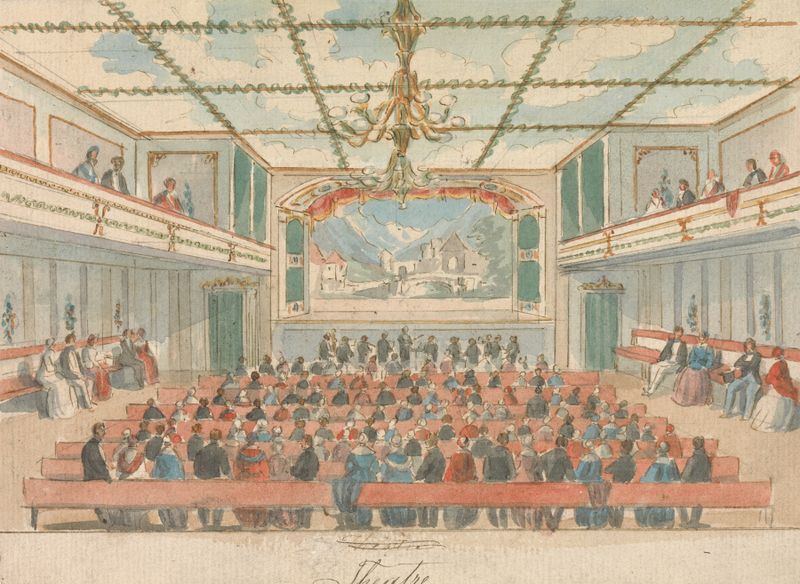
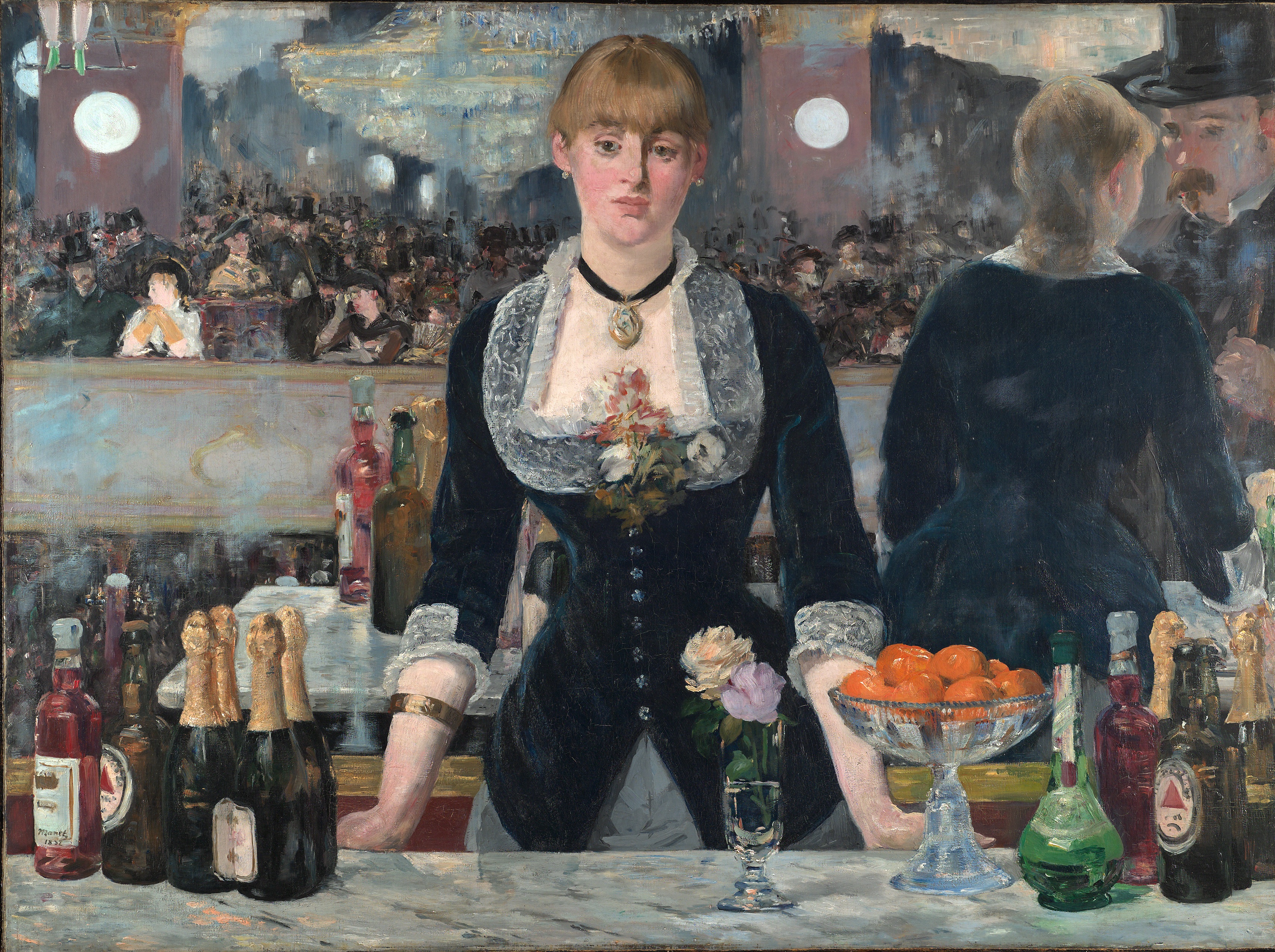
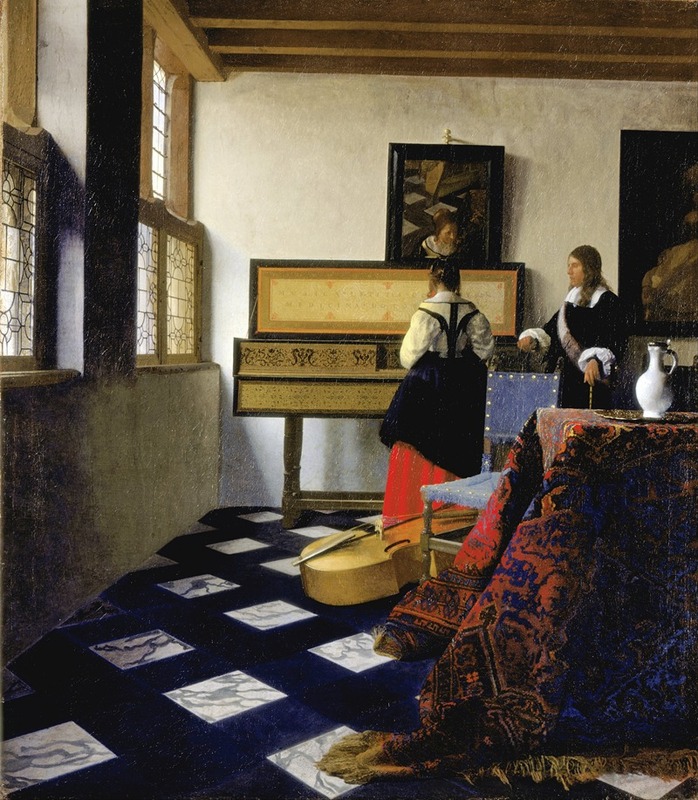
Can beauty exist without sorrow? The delicate world of puppetry embodies a profound legacy, where intricate movements reveal the bittersweet dance between joy and heartache. Look to the left at the wooden marionettes suspended in midair, their strings taut with potential. The warm, muted palette envelops the scene, casting a soft glow that invites you to explore the nuances of expression on each puppet's face. The artist’s meticulous attention to detail allows every stitch and paint stroke to resonate, creating an intimate atmosphere that draws the viewer in, as if they are part of this enchanting performance. Peering into the composition, a striking contrast emerges between the vibrant colors of the puppets and the shadowy backdrop, suggesting the duality of life — the vivacious spectacle of artistry set against the lurking solitude of existence.
The marionettes, with their joyful postures, seem to celebrate life, yet their strings hint at the invisible forces that govern their every move, echoing the human experience of choice and control. This tension invites contemplation about the legacies we create and the emotions entwined with our creations. William Henry Brooke painted this scene during a period characterized by a fascination with the theatrical arts, capturing a moment that reflects both the charm and melancholy of performance. Active in the mid-19th century, Brooke was immersed in an artistic environment that valued intricate detail and narrative, as he sought to explore the psychological dimensions of his subjects.
In the world of art at that time, the intersection of reality and illusion was increasingly celebrated, making this work a profound testament to the complexities of legacy.