Entrance to Cremorne, King’s Road — History & Facts
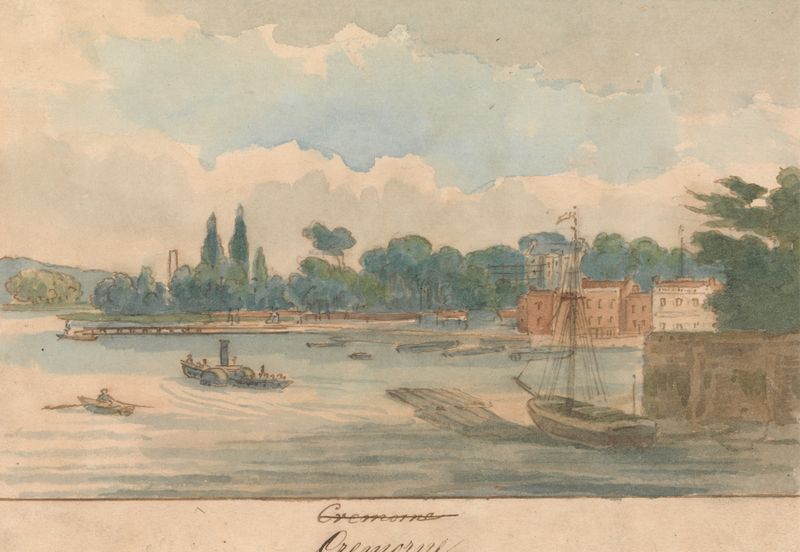
When did color learn to lie? This profound question echoes through the canvas, inviting introspection on the very nature of perception and reality. As you delve into the painting, direct your gaze to the lush green foliage framing the entrance. Notice how the dappled sunlight filters through the trees, casting intricate patterns that dance across the path. The vibrant hues are both welcoming and deceptive, a vivid invitation into a space that promises solace yet conceals mysteries beneath its beauty.
Observe the delicate brushwork that captures each leaf and blossom, revealing the artist's dedication to creating a scene that feels alive with movement and potential. Beneath the surface, the work reveals tensions between natural beauty and the allure of escapism. The entrance, both literal and metaphorical, hints at the allure of leisure and the fleeting nature of joy. The careful juxtaposition of shadows with bright light suggests the duality of experience — joy intertwined with the inevitability of passage through time.
In this landscape, the colors evoke a transient happiness that may mask deeper truths, raising questions about what lies beyond the archway and inviting viewers to ponder their own paths. Created during a period of vibrant artistic exploration, this piece reflects the shifts in Brooke's life as an artist in 19th-century England. At that time, he was entrenched in the burgeoning Romantic movement, which celebrated the beauty of nature while grappling with the encroachment of industrialization. These forces influenced his approach to color and composition, elevating the landscape beyond mere representation to a realm of emotional resonance and philosophical inquiry.