
Barques sur la Durance — History & Facts
What if beauty was never meant to be finished? In Barques sur la Durance, Paul-Camille Guigou captures an ephemeral moment, suspended between the tangible and the void, inviting us to ponder the fleeting nature of existence and artistry. Look to the left at the gentle curve of the river, where soft brushstrokes render the water's surface into a delicate dance of blues and greens. Notice how the light falls upon the two boats, their sturdy forms rendered in earthy tones, contrasting against the dreamy landscape that surrounds them. The composition is balanced, drawing your eye towards the horizon, where the sky becomes a palette of warm oranges and purples, hinting at the day's end.
This interplay of color and texture reflects Guigou’s impressionistic style, effortlessly guiding the viewer into a serene yet profound contemplation of nature. Delve deeper, and you’ll find hidden tensions within the tranquility. The stillness of the water contrasts sharply with the implication of movement from the boats, suggesting both journey and pause. The absence of figures creates a void that resonates with solitude, evoking a sense of longing or introspection.
The lush vegetation framing the scene is alive yet silent, amplifying this emotional dichotomy and reminding us of beauty's transient, often unsettling nature. Guigou painted Barques sur la Durance in 1870 while living in France, amidst a burgeoning art movement that sought to break away from traditional constraints. During this period, artists were increasingly drawn to the immediacy of the world around them, embracing new techniques and outdoor settings. As he captured this tranquil riverside scene, Guigou not only contributed to the Impressionist tradition but also asserted his unique voice within an evolving landscape of artistic exploration.
More Artworks by Paul-Camille Guigou
Browse all →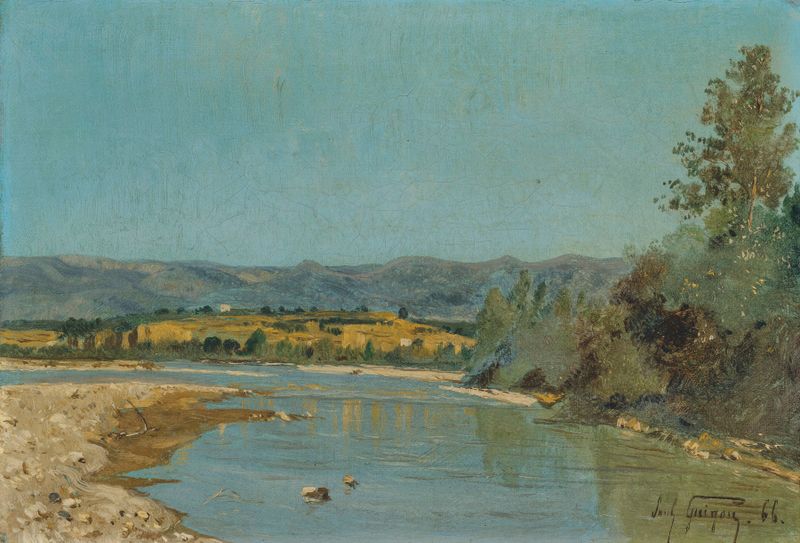
Les Bords de la Durance à Puyvert
Paul-Camille Guigou
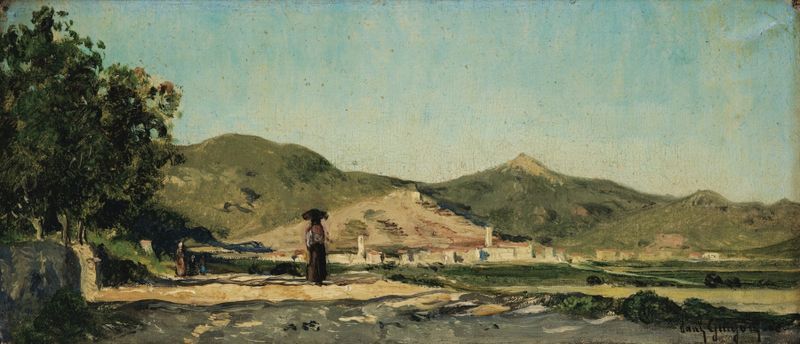
Paysanne sur un chemin en Provence
Paul-Camille Guigou
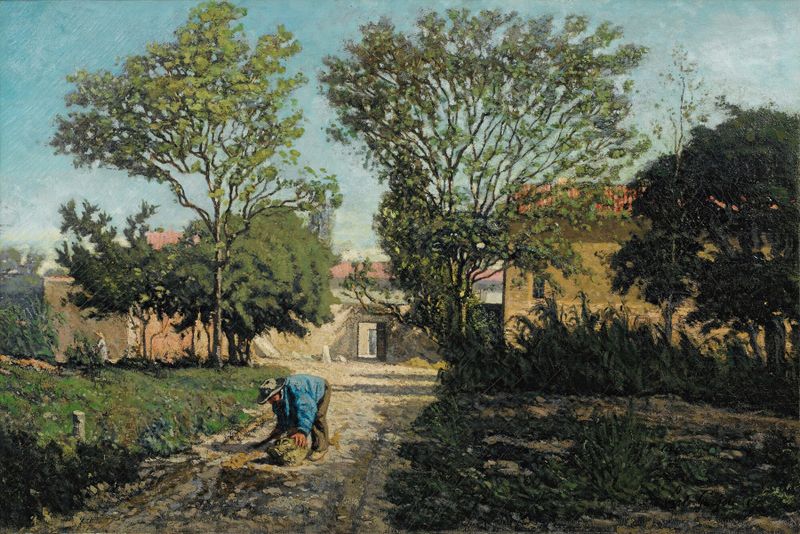
Ferme Aux Environs De Marseille
Paul-Camille Guigou

Hut by the sea shore (Cabane au bord de la mer)
Paul-Camille Guigou
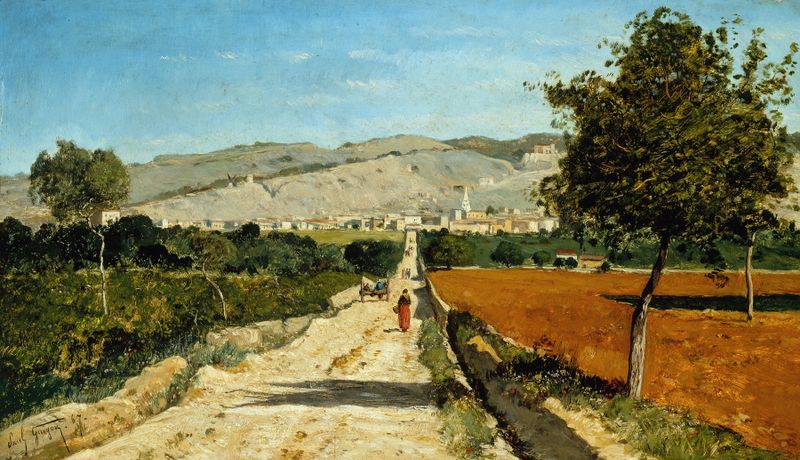
Paysage de Provence. Vue de Saint-Saturnin-les-Apt.
Paul-Camille Guigou
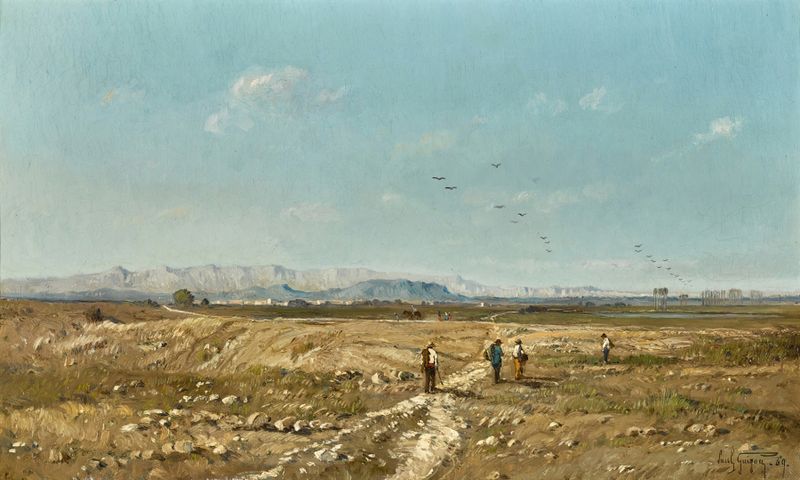
Souvenir de la Crau, Provence
Paul-Camille Guigou
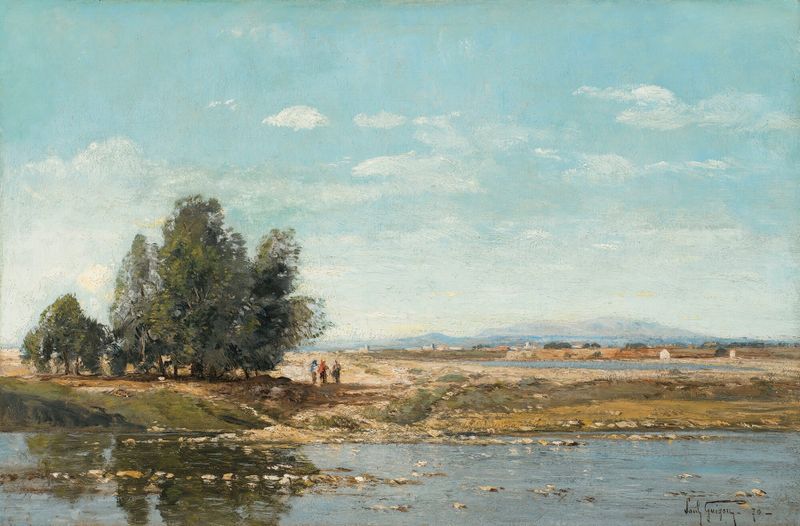
Bords De Durance
Paul-Camille Guigou

Am Ufer der Durance
Paul-Camille Guigou
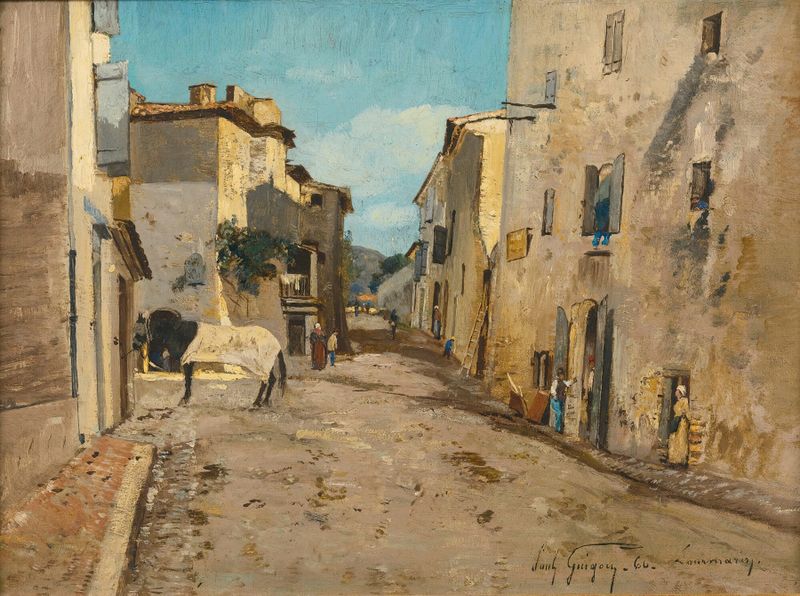
Rue À Lourmarin (Vaucluse)
Paul-Camille Guigou
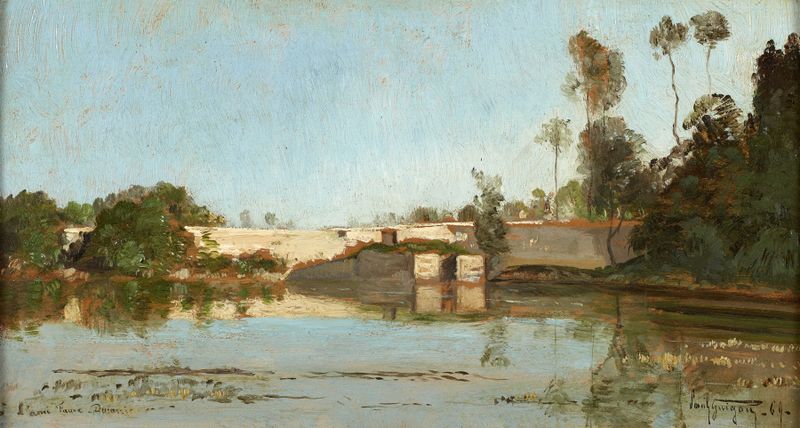
L’étang du Plessis-Picquet
Paul-Camille Guigou





