
Rue À Lourmarin (Vaucluse) — History & Facts
Could beauty survive in a century of chaos? In Rue À Lourmarin (Vaucluse), a serene French street beckons, bathed in the golden embrace of sunlight. The warm hues of ochre and soft greens pulse with life, inviting viewers to step into a moment seemingly untouched by time. Look closely at the left side of the canvas, where the sun-drenched cobblestones glisten under the light, leading your eye down the winding path. Notice how the buildings, with their charming façades, lean slightly inward, creating a sense of intimacy and welcoming.
The interplay of light and shadow illustrates a time of day that feels both peaceful and fleeting, a gentle reminder of the transience of beauty. As you explore the details, consider the diagonal shadows cast by the architectural elements, which evoke a sense of depth and movement, as if the scene might come alive with sound. The subtle contrast between the vibrant greenery and the warm tones of the buildings suggests a harmonious coexistence of nature and human creation. This balance reflects a deeper yearning for stability amidst the uncertainties of the era. In 1866, when this painting was created, Guigou was active in the burgeoning art scene of Provence, focusing on capturing the essence of rural life amidst industrial transformations sweeping through France.
This work exemplifies his dedication to landscape painting during a period marked by social and political upheaval, illustrating how he sought refuge in the beauty of his surroundings while the world outside shifted dramatically.
More Artworks by Paul-Camille Guigou
Browse all →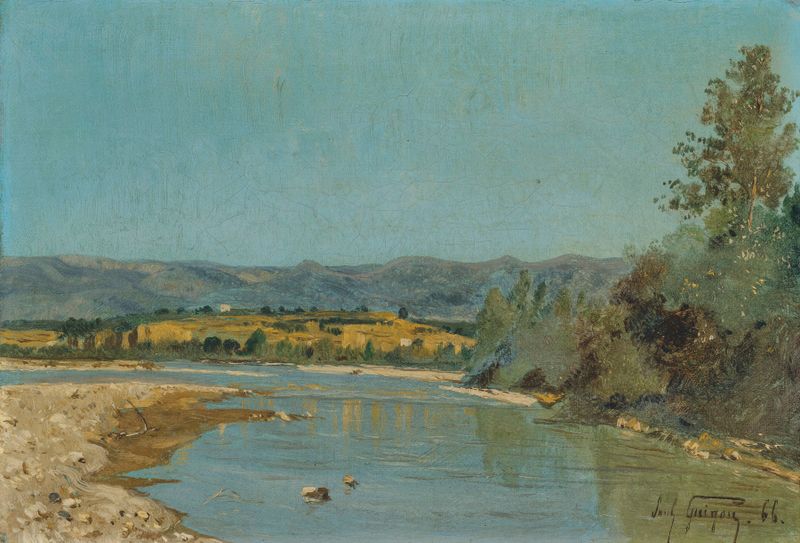
Les Bords de la Durance à Puyvert
Paul-Camille Guigou
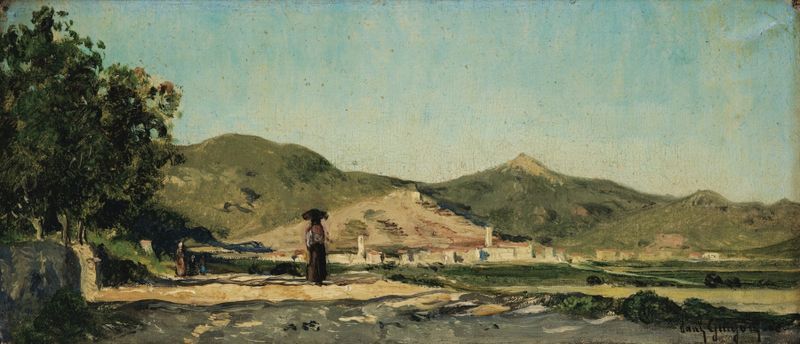
Paysanne sur un chemin en Provence
Paul-Camille Guigou
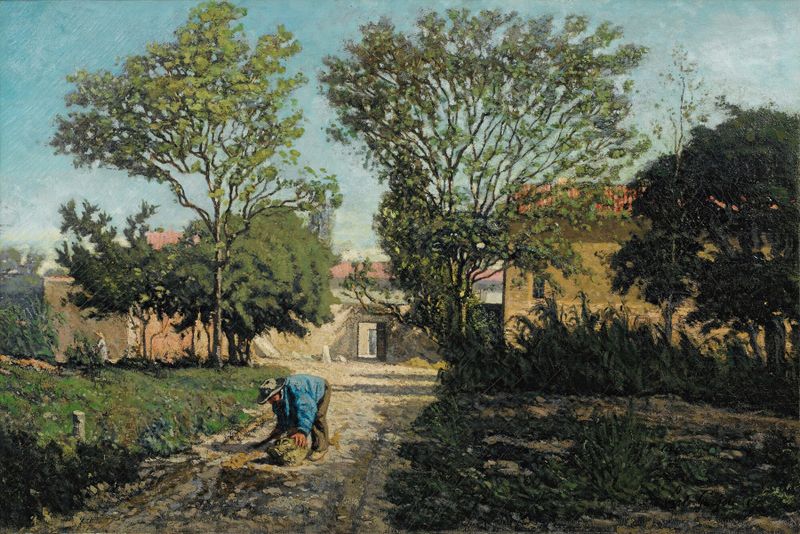
Ferme Aux Environs De Marseille
Paul-Camille Guigou

Hut by the sea shore (Cabane au bord de la mer)
Paul-Camille Guigou
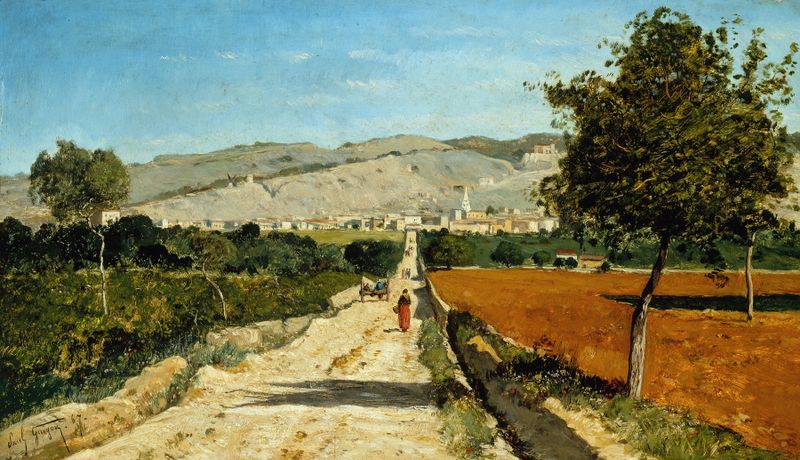
Paysage de Provence. Vue de Saint-Saturnin-les-Apt.
Paul-Camille Guigou

Barques sur la Durance
Paul-Camille Guigou
Souvenir de la Crau, Provence
Paul-Camille Guigou
Bords De Durance
Paul-Camille Guigou

Am Ufer der Durance
Paul-Camille Guigou
L’étang du Plessis-Picquet
Paul-Camille Guigou





