
Hut by the sea shore (Cabane au bord de la mer) — History & Facts
Could beauty survive in a century of chaos? In the tranquil solitude of Hut by the Sea Shore, a fragile harmony emerges against a backdrop of uncertainty, inviting contemplation of mortality and the fleeting nature of life. Look to the left at the modest hut, its weathered structure standing firm against the encroaching tide. Notice how the soft, muted colors of the sandy shore blend seamlessly with the vibrant blue of the sea, while the gentle strokes of the brush convey the caress of the breeze and the whisper of time. The subtle interplay of light and shadow casts a serene ambiance, enveloping the scene in a warm embrace, as if nature herself is cradling this humble dwelling. Yet, beneath the surface, contrasting elements reveal the poignant tension of existence.
The delicate balance of land and sea speaks to both stability and transience, while the solitary hut evokes feelings of isolation, suggesting the vulnerability of human endeavors in the face of nature's might. Together, these elements invite viewers to reflect on the resilience of beauty amidst the inevitability of decay and loss. In 1869, Paul-Camille Guigou painted this work during a period marked by rapid change in France, both socially and artistically. The rise of Impressionism was beginning to reshape the art world, encouraging artists to explore light and color in new ways.
Guigou, inspired by the coastal landscapes of Provence, sought to capture the delicate connection between humanity and nature, a theme that resonates deeply in this serene yet contemplative piece.
More Artworks by Paul-Camille Guigou
Browse all →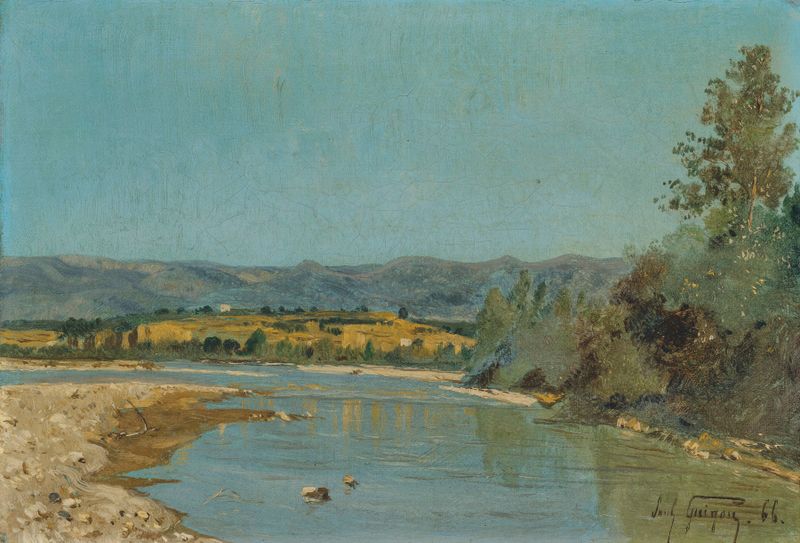
Les Bords de la Durance à Puyvert
Paul-Camille Guigou
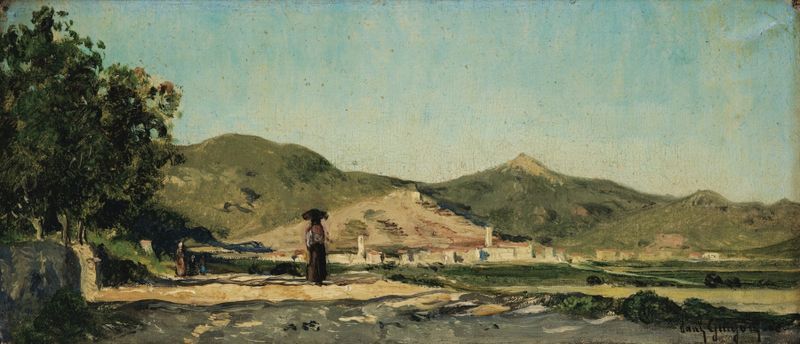
Paysanne sur un chemin en Provence
Paul-Camille Guigou
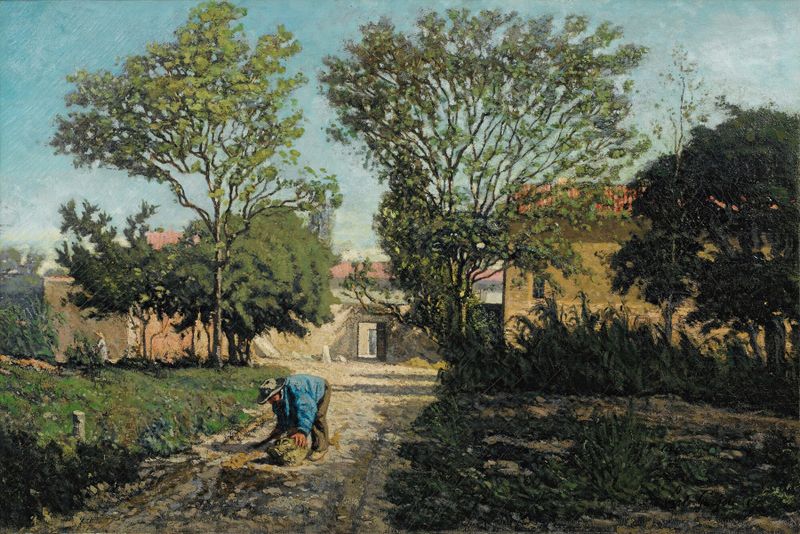
Ferme Aux Environs De Marseille
Paul-Camille Guigou
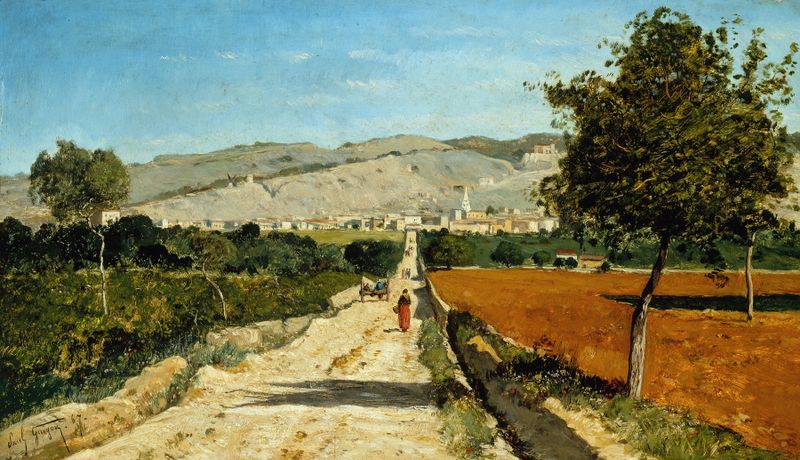
Paysage de Provence. Vue de Saint-Saturnin-les-Apt.
Paul-Camille Guigou

Barques sur la Durance
Paul-Camille Guigou
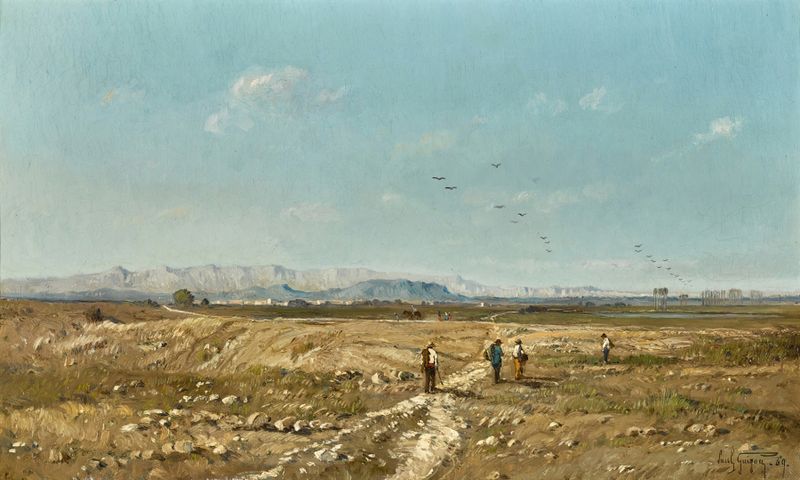
Souvenir de la Crau, Provence
Paul-Camille Guigou
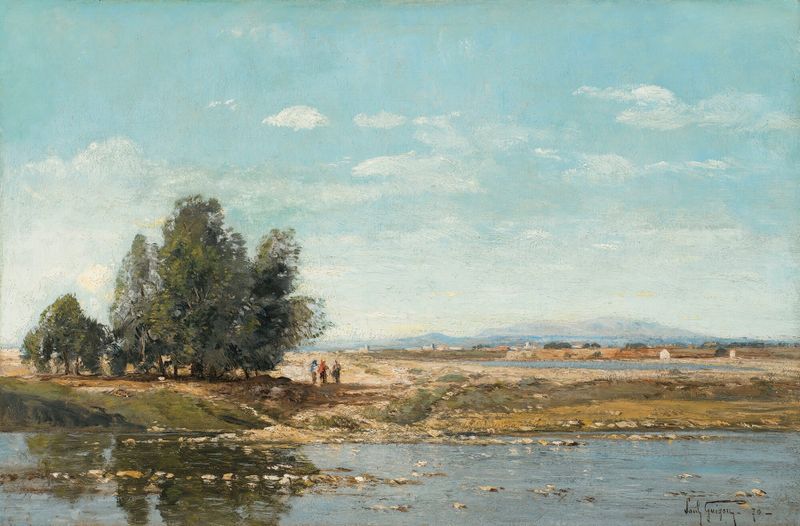
Bords De Durance
Paul-Camille Guigou

Am Ufer der Durance
Paul-Camille Guigou
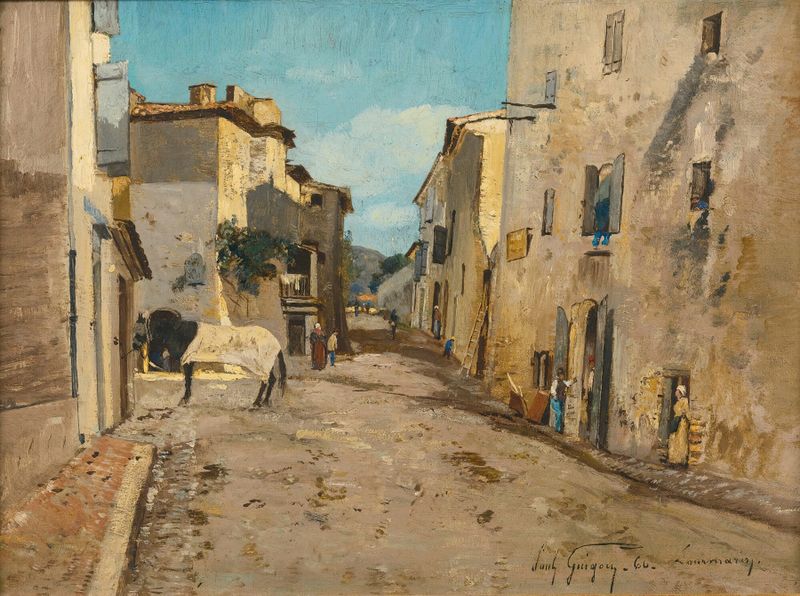
Rue À Lourmarin (Vaucluse)
Paul-Camille Guigou
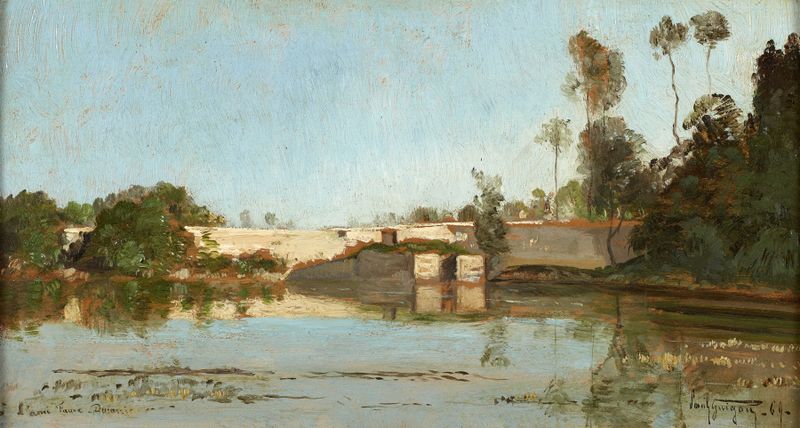
L’étang du Plessis-Picquet
Paul-Camille Guigou





