
Bassin de Marly — History & Facts
A single glance draws you into the gentle bustle at the edge of water, where dappled light flickers across the path and the trees catch the last warmth of the day. The brushwork is loose, almost hurried, yet every stroke seems to know its place: the sky is restless with cloud, the foliage alive with shifting greens and ochres. Two figures pause in conversation beneath the trees, their presence anchoring the scene and offering a moment of quiet humanity amid the sweep of landscape.
The low wall and the distant, sunlit buildings hint at a place shaped by both nature and careful design, while the water’s surface—just visible—reflects the fleeting brightness of the sky. Here, the light itself is the true subject, leading the eye from the figures to the far shore and back again, always in motion. Painted in 1875, Bassin de Marly belongs to the world of late nineteenth-century France, when artists like Alfred Sisley sought to capture the shifting moods of the countryside just beyond Paris. This was the era of Impressionism, when painters took their easels outdoors and let their eyes—and their brushes—chase the effects of weather, season, and time of day.
Works like this were rarely made for grand salons or royal patrons; instead, they were painted for a new, growing audience eager to see the world as it was changing around them. The painting’s presence in The Yorck Project’s vast digital collection reminds us how many such moments were recorded, even if history has kept few traces of their journeys. Look again at the patchwork of color and light: it is a record not just of a place, but of a way of seeing.
More Artworks by Alfred Sisley
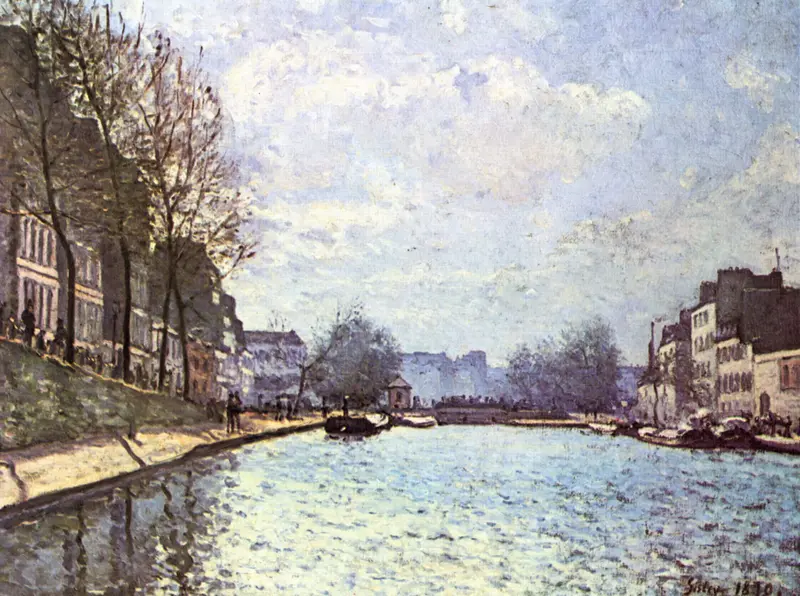
View of the Canal Saint-Martin
Alfred Sisley

Le Loing à Saint-Mammès
Alfred Sisley
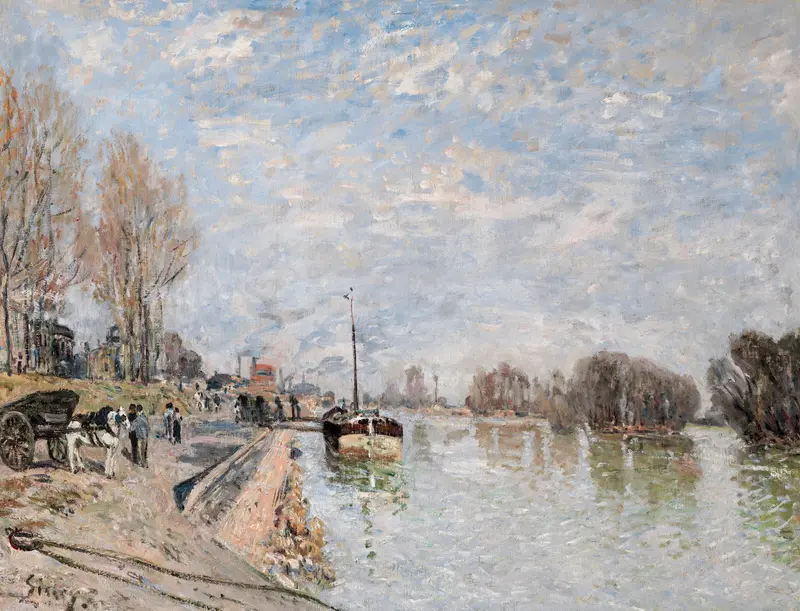
La Seine à Suresnes
Alfred Sisley
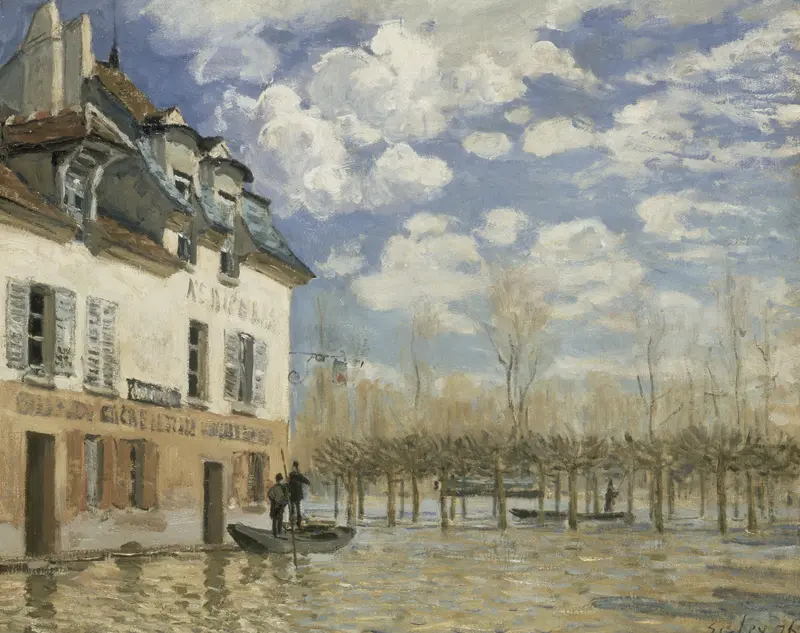
Boat in the Flood at Port Marly
Alfred Sisley
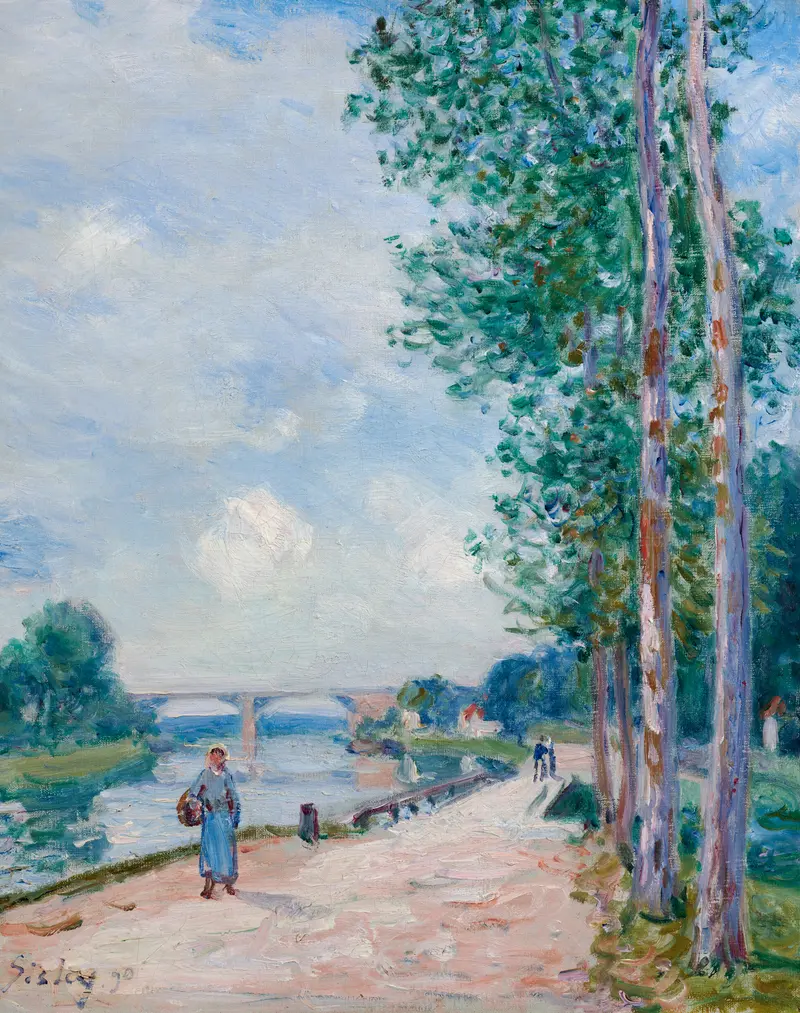
Les bords du Loing près de Moret
Alfred Sisley
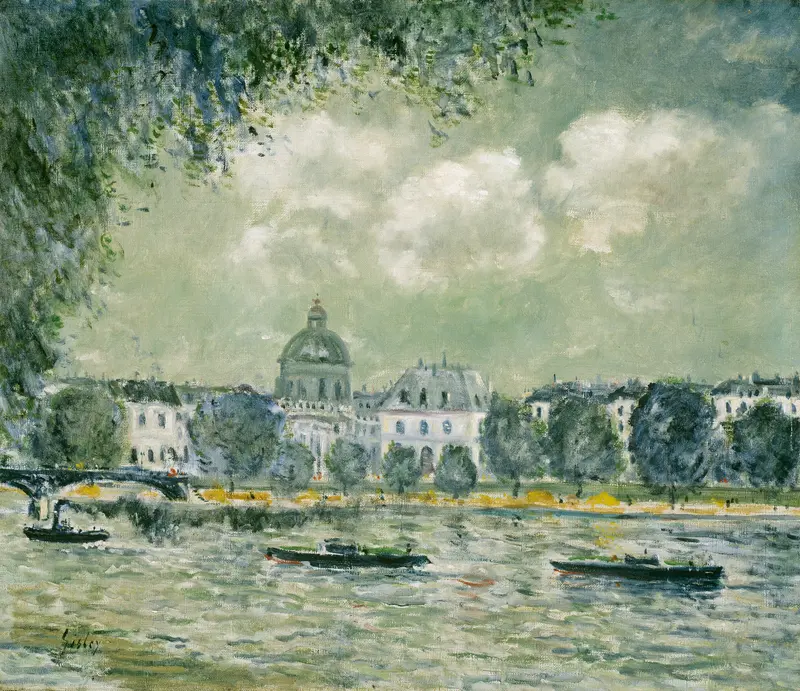
Landscape along the Seine with the Institut de France and the Pont des Arts
Alfred Sisley

Printemps au bord du Loing
Alfred Sisley
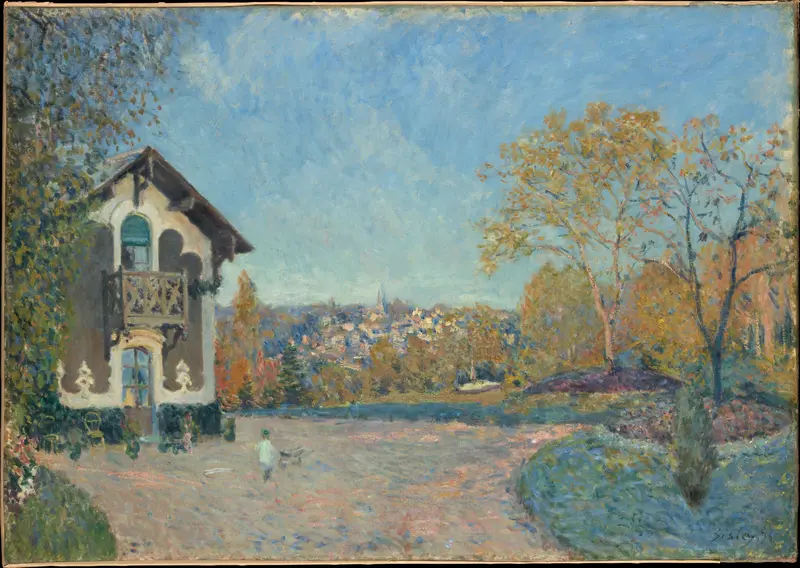
View of Marly-le-Roi from Coeur-Volant
Alfred Sisley
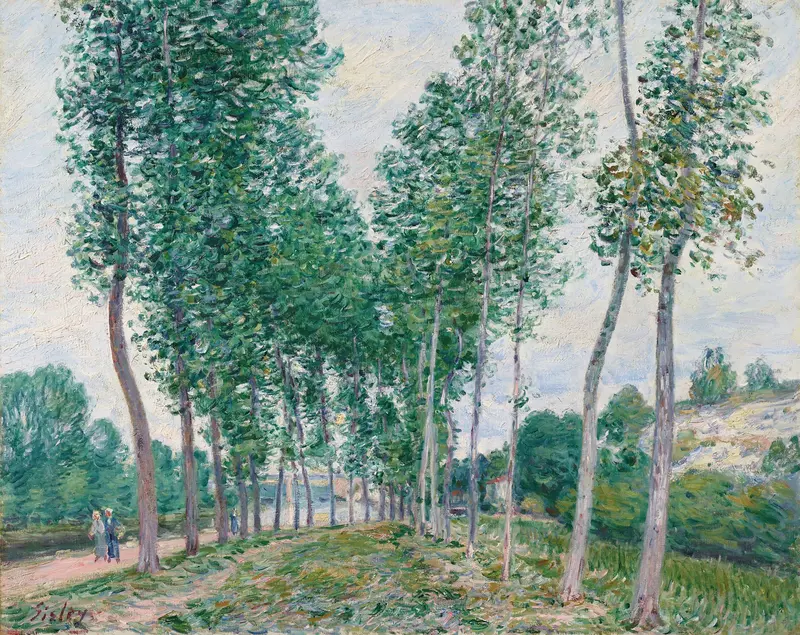
L’allée des peupliers au bord du Loing
Alfred Sisley
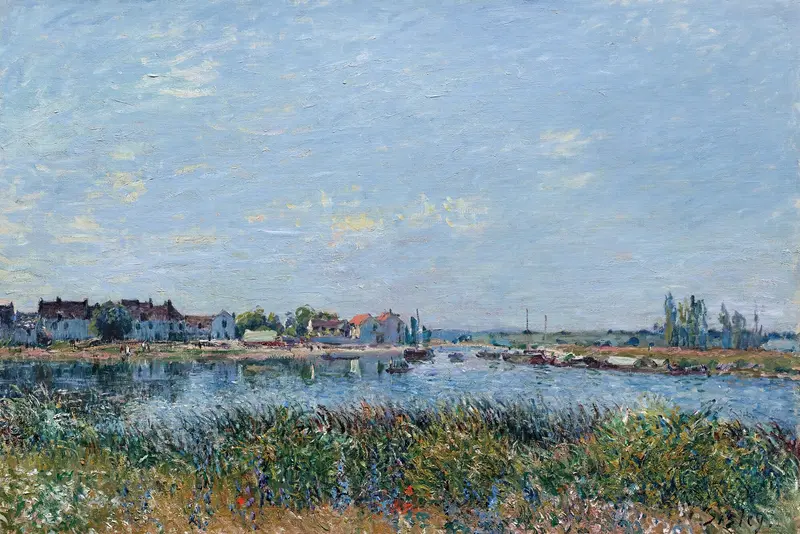
Saint-Mammès, Le Matin
Alfred Sisley
More Landscape Art

The Starry Night
Vincent van Gogh

View of Delft
Johannes Vermeer

Water Lilies
Claude Monet

The Grand Canal, Venice, looking north-west from the Ca' Corner to the Ca' Contarini degli Scrigni, with the campanile of Santa Maria della Carità
Canaletto

Windsor Castle
Canaletto

The Grand Canal looking North-East from the Palazzo Dolfin-Manin to the Rialto Bridge
Canaletto