
Bateaux à l'écluse de Bougival — History & Facts
The first thing that draws the eye in Bateaux à l'écluse de Bougival is the gentle conversation between water and sky, each reflecting the other’s shifting moods. The low horizon gives the sky a generous stage, its pale blues and soft grays echoing in the ripples below. Boats cluster quietly at the lock, their forms anchored by the yellow house and the dense, leafy trees, which stand as silent witnesses to the passing of time and traffic on the river.
The brushwork is brisk yet deliberate: you can almost feel the movement of the water and the softness of the humid air. The smoke rising from a boat’s chimney signals human presence, but the figures themselves are nearly lost in the landscape, as if absorbed into the rhythm of the place. Painted in 1873, this work belongs to a world on the cusp of modernity, when artists like Alfred Sisley turned their attention to the changing countryside around Paris. Locks and barges became new icons of progress, their utilitarian forms now worthy of a painter’s gaze.
The Impressionists, Sisley among them, sought to capture fleeting effects of light and atmosphere, often working outdoors to seize a particular hour’s character. While history has kept few traces of this specific painting beyond its inclusion in The Yorck Project’s collection, its subject and style speak to a moment when the landscape was both a retreat and a record of human industry. Look again at the water’s shifting surface, and you glimpse not just a scene, but a world in motion.
More Artworks by Alfred Sisley
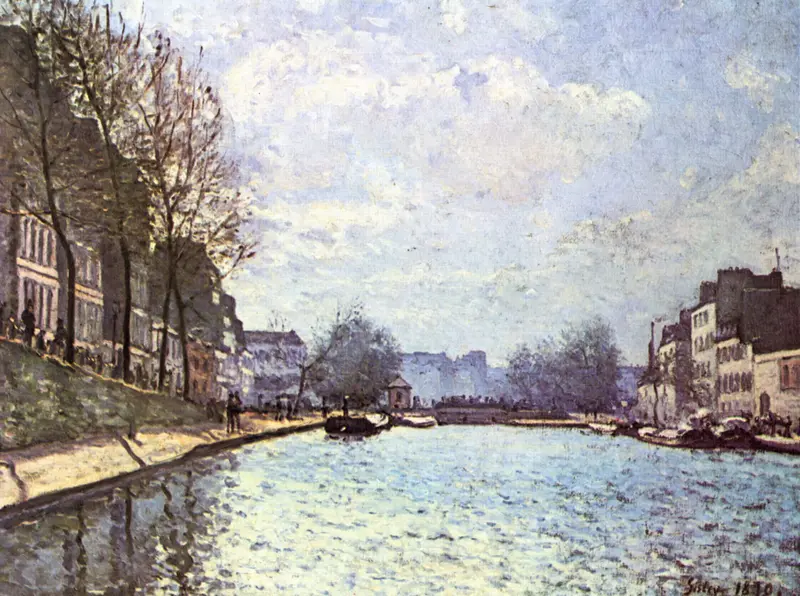
View of the Canal Saint-Martin
Alfred Sisley

Le Loing à Saint-Mammès
Alfred Sisley
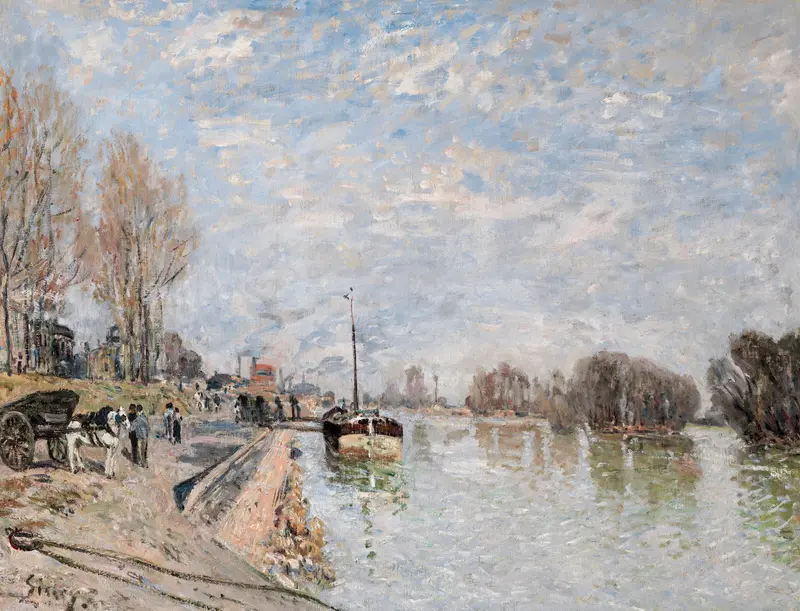
La Seine à Suresnes
Alfred Sisley
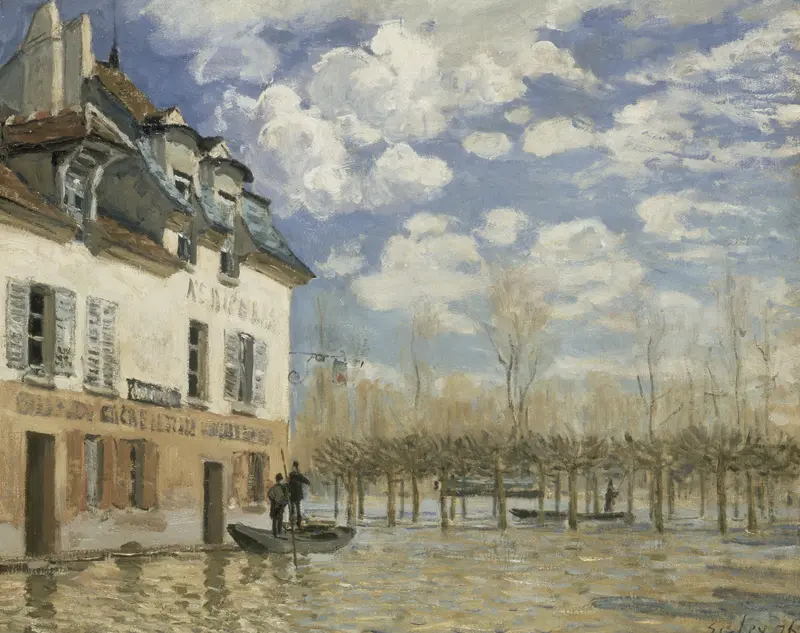
Boat in the Flood at Port Marly
Alfred Sisley
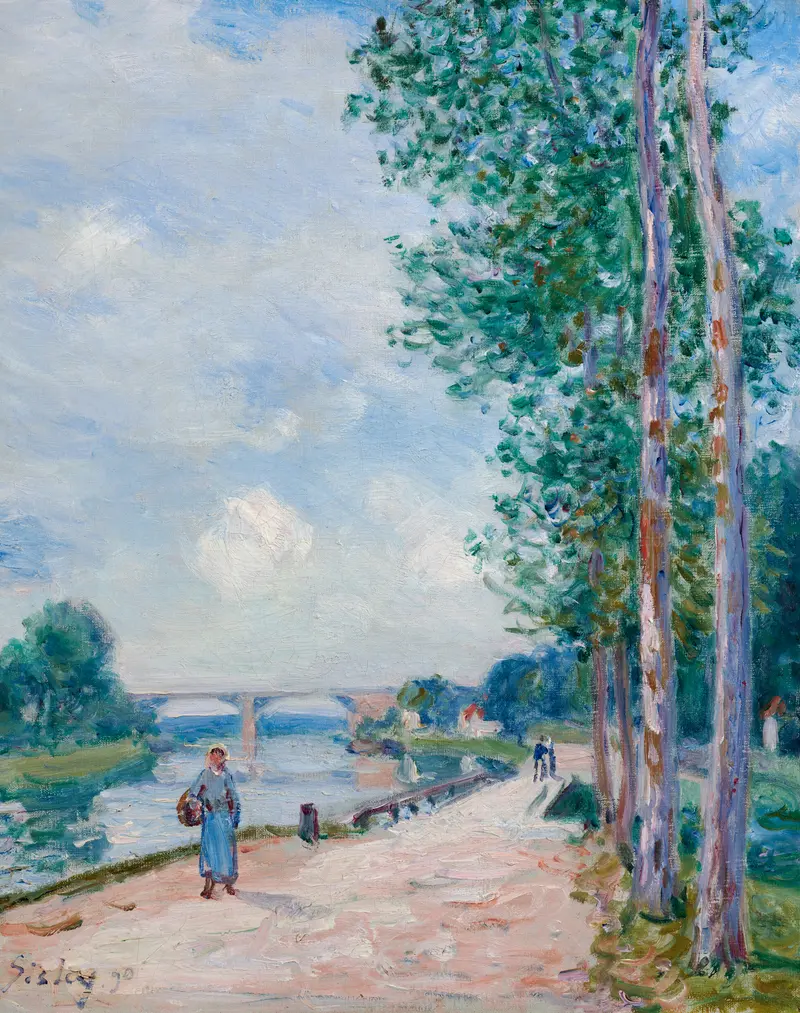
Les bords du Loing près de Moret
Alfred Sisley
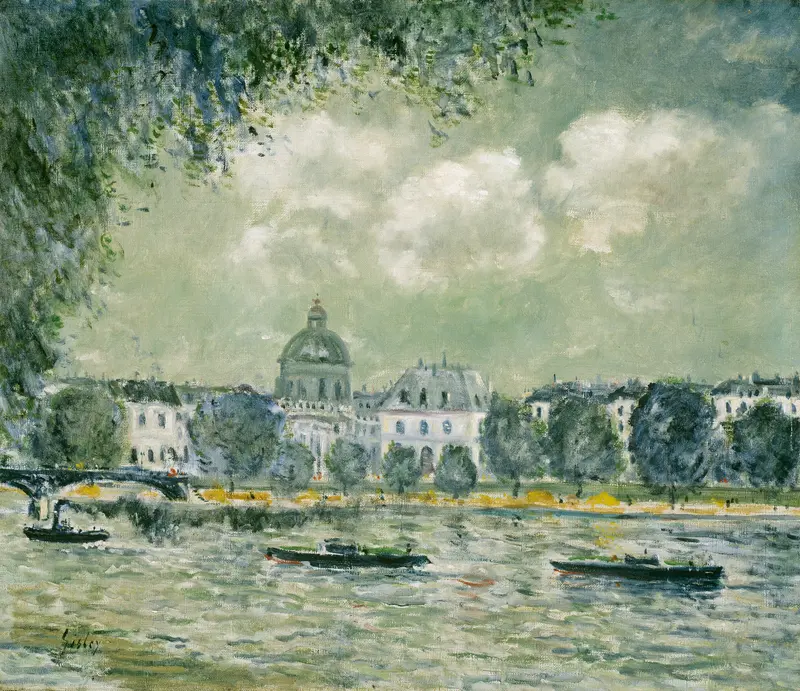
Landscape along the Seine with the Institut de France and the Pont des Arts
Alfred Sisley

Printemps au bord du Loing
Alfred Sisley
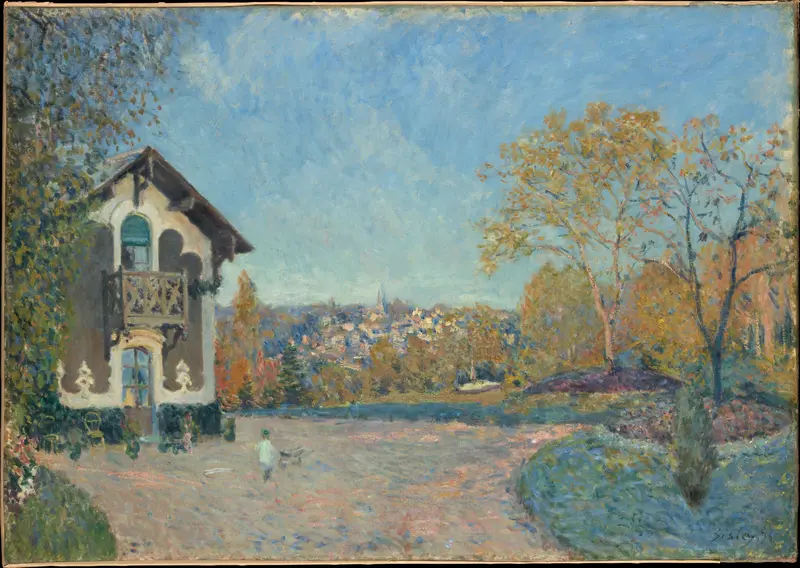
View of Marly-le-Roi from Coeur-Volant
Alfred Sisley
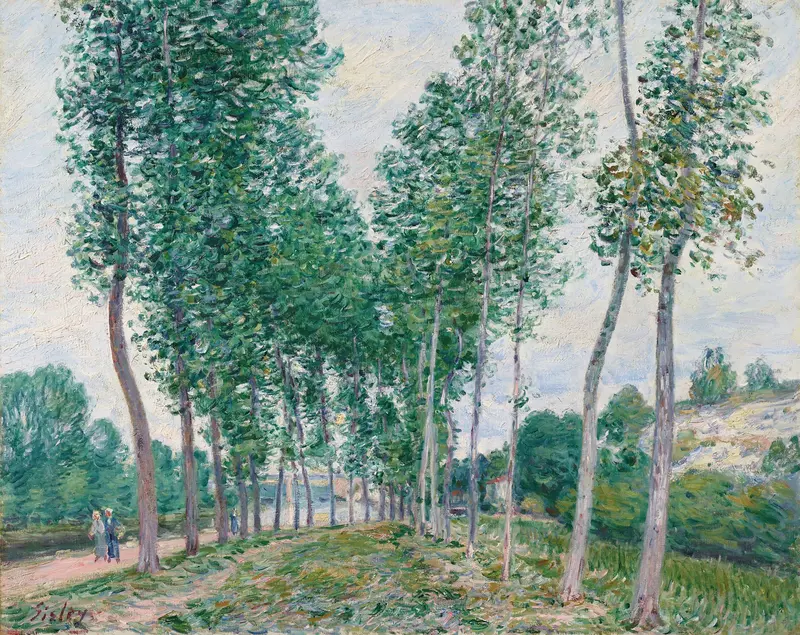
L’allée des peupliers au bord du Loing
Alfred Sisley
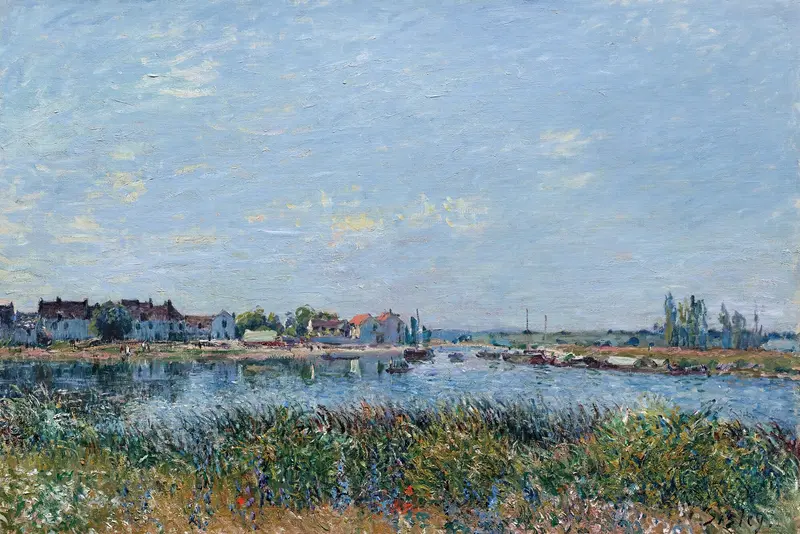
Saint-Mammès, Le Matin
Alfred Sisley
More Landscape Art

The Starry Night
Vincent van Gogh

View of Delft
Johannes Vermeer

Water Lilies
Claude Monet

The Grand Canal, Venice, looking north-west from the Ca' Corner to the Ca' Contarini degli Scrigni, with the campanile of Santa Maria della Carità
Canaletto

Windsor Castle
Canaletto

The Grand Canal looking North-East from the Palazzo Dolfin-Manin to the Rialto Bridge
Canaletto