
Bedouin Bride — History & Facts
What first catches the eye in Bedouin Bride by Theodoros Ralli is the quiet dignity of the sitter, her profile emerging from a field of warm ochres and soft shadows. The artist chooses a moment of stillness, capturing the young woman in left-facing profile, her gaze lowered, lips gently pressed together, as if holding back words or emotion. The linen headdress frames her face, its folds echoing the subtle undulations of the background, while a single gold earring and a heavy silver armband hint at both ceremony and status.
Light falls across her cheek and bare shoulder, drawing the viewer’s attention to the textures of skin and cloth, and to the interplay of strength and vulnerability in her bearing. The palette is restrained, almost monochrome, yet the richness of the surface invites a slow, attentive looking. Painted sometime between 1873 and 1909, this work belongs to the world of late nineteenth-century Orientalism, when European artists like Ralli traveled or imagined their way into the cultures of North Africa and the Middle East. Such portraits were often commissioned for Western collectors eager for images of distant lands, and they reflect both fascination and fantasy—yet here, the sitter’s individuality resists easy exoticism.
Little is recorded about this specific painting’s journey, but its survival in an online collection today is a reminder of the era’s hunger for stories and faces from beyond Europe’s borders. The painting asks us to linger, to wonder about the life behind the veil, and to consider what it means to be seen and remembered across time.
More Artworks by Theodoros Ralli

The Sleeping Concubine
Theodoros Ralli
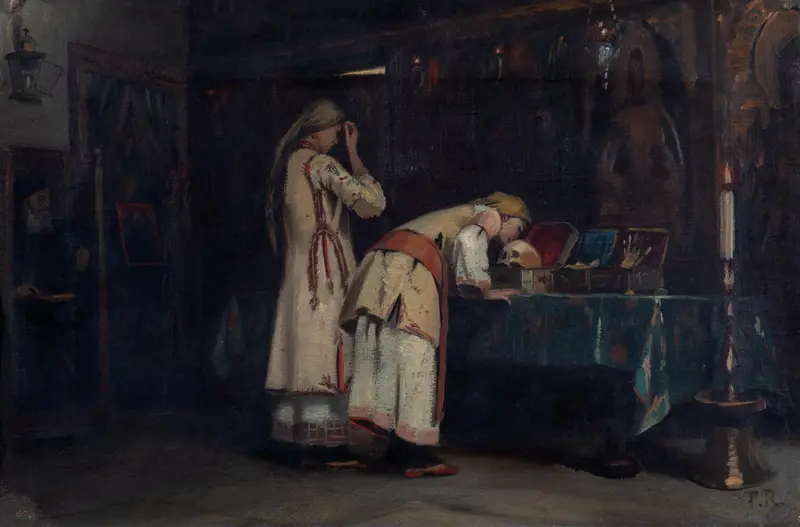
Holy Relics
Theodoros Ralli
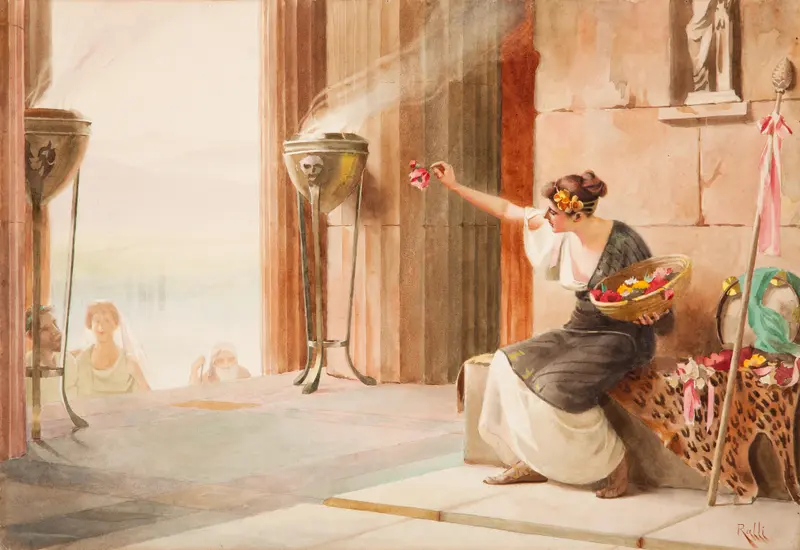
Flower Seller at the Parthenon
Theodoros Ralli
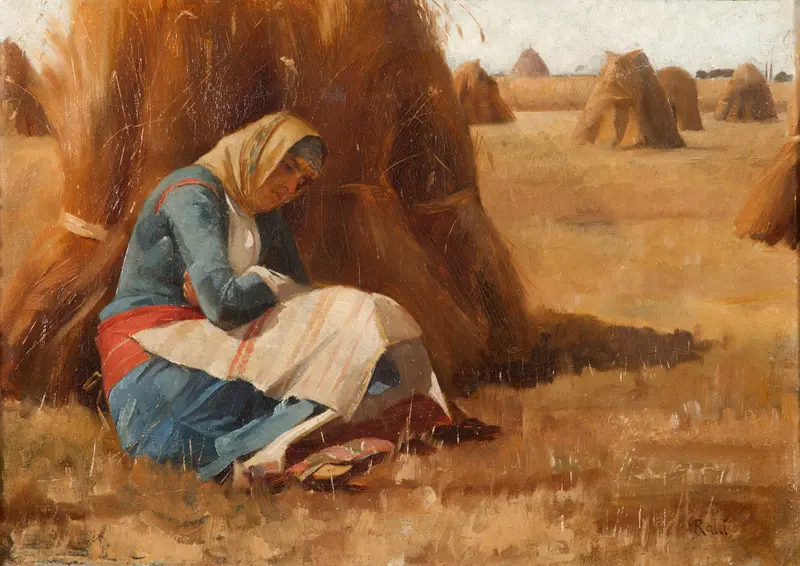
Resting by a Haystack
Theodoros Ralli
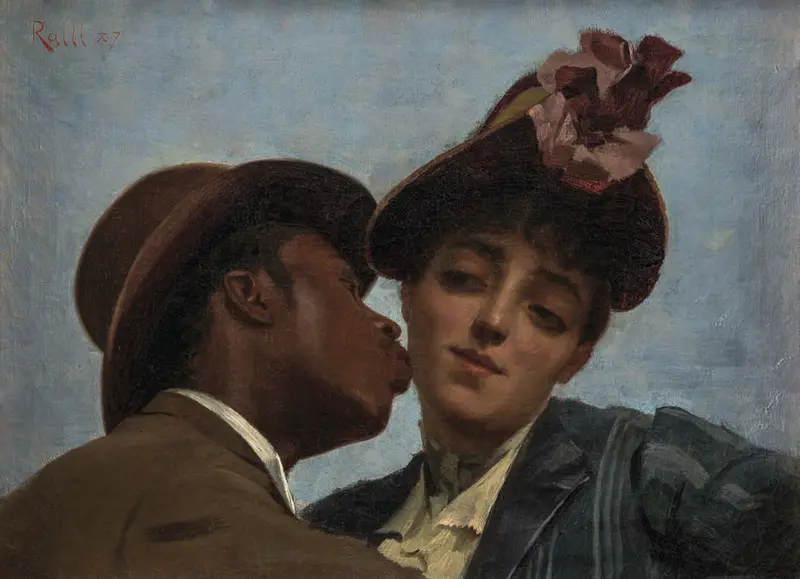
The Kiss (Ralli)
Theodoros Ralli
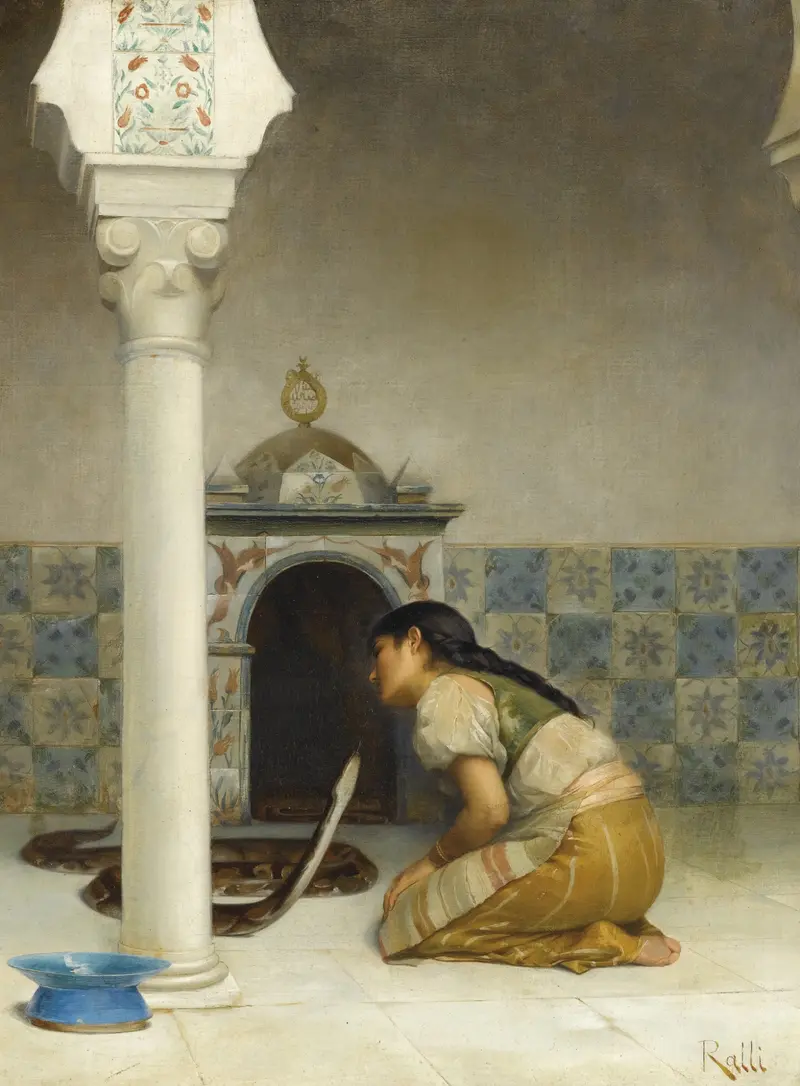
The Sacred Serpent
Theodoros Ralli
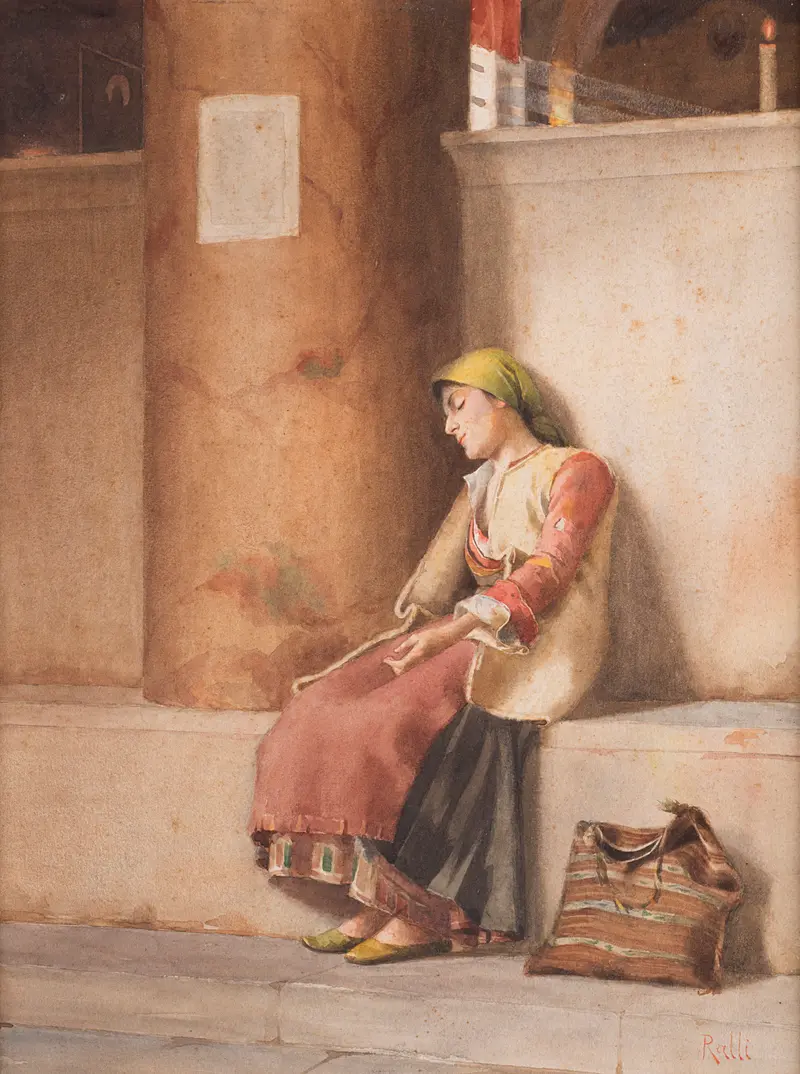
A Moment of Reflection
Theodoros Ralli
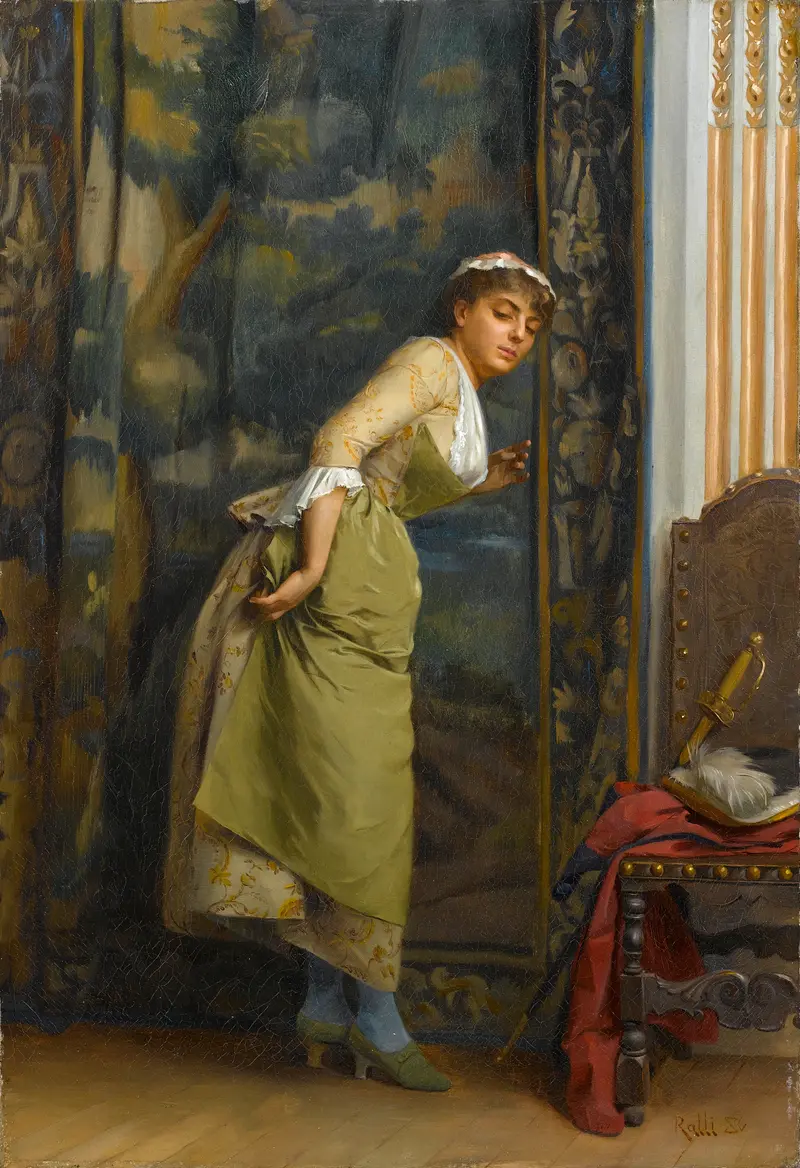
Eavesdropping (Ralli)
Theodoros Ralli
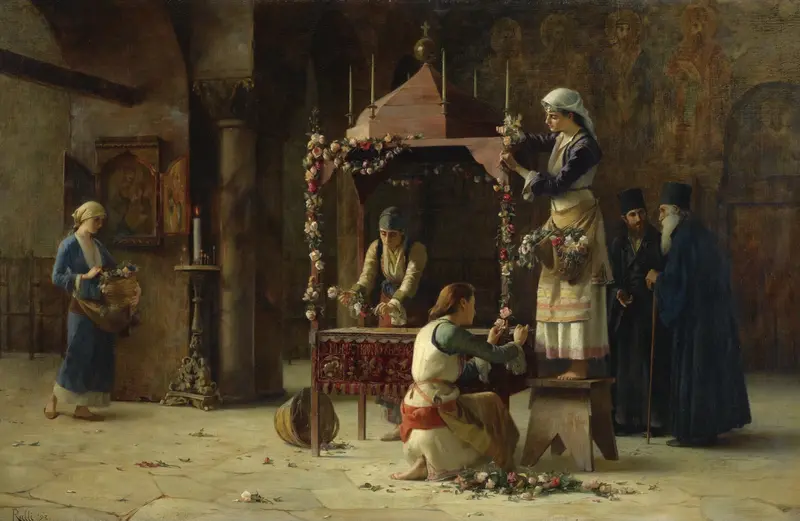
Holy Friday, Greece
Theodoros Ralli
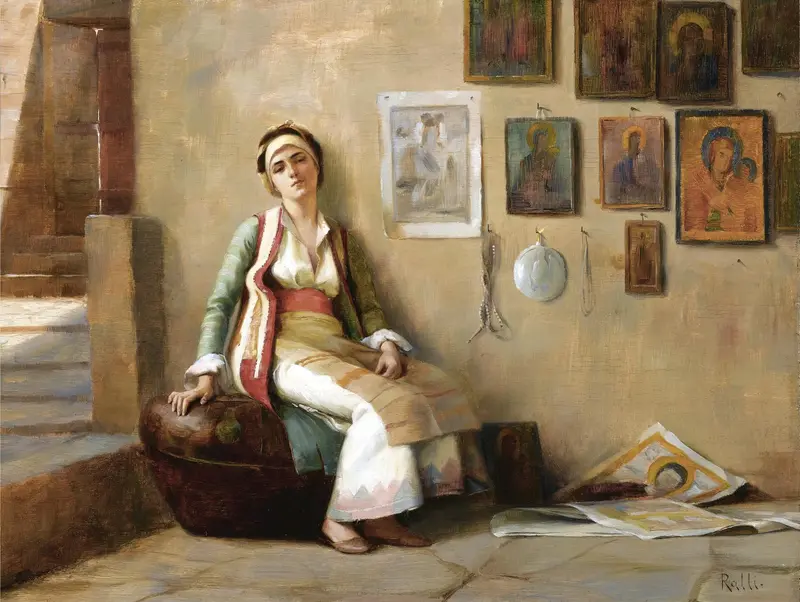
A Moment's Rest
Theodoros Ralli





