
Begegnung auf der Landstraße — History & Facts
What draws the eye first in Begegnung auf der Landstraße is the gentle choreography of hands: a man, travel-worn and broad-shouldered, raises his arm in a gesture that hovers between blessing and farewell, while a woman, seated on a donkey laden with vegetables, bows her head to touch his hand with her lips. The forest path behind them is dappled with light, but the real illumination falls on their faces and the space between them—a private moment, caught in the open air, where the world seems to pause. The artist sets the figures close, their bodies angled toward each other, so that the viewer feels almost intrusive, as if witnessing a ritual of parting or reunion.
The donkey, patient and unmoved, anchors the scene in the everyday, its baskets brimming with the fruits of labor. Painted by Adolf Humborg and dated by 1921, this work belongs to a tradition of genre painting that flourished in Central Europe in the late nineteenth and early twentieth centuries, when artists turned their attention to rural life and its quiet dramas. Such scenes were often commissioned or collected by urban patrons nostalgic for the rhythms of the countryside, or by those who saw in these encounters a mirror of social values—duty, respect, the ties of kin and community. The painting now resides in the Dorotheum collection, a reminder that history has kept few traces of the individual lives pictured here, but preserves the gestures and glances that once filled a country road with meaning.
Look again at the space between the figures, and consider how much of a life can be contained in a single, fleeting meeting.
More Artworks by Adolf Humborg
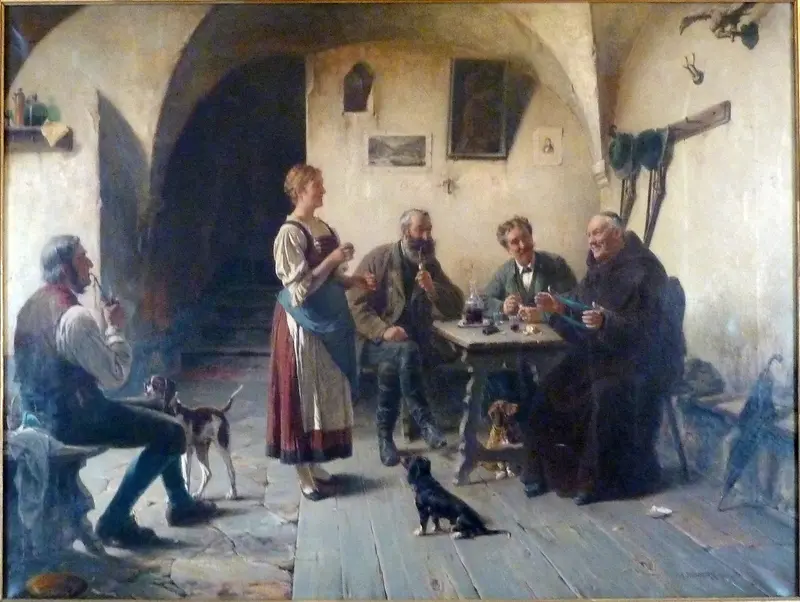
A. Humborg painting (title unknown)
Adolf Humborg
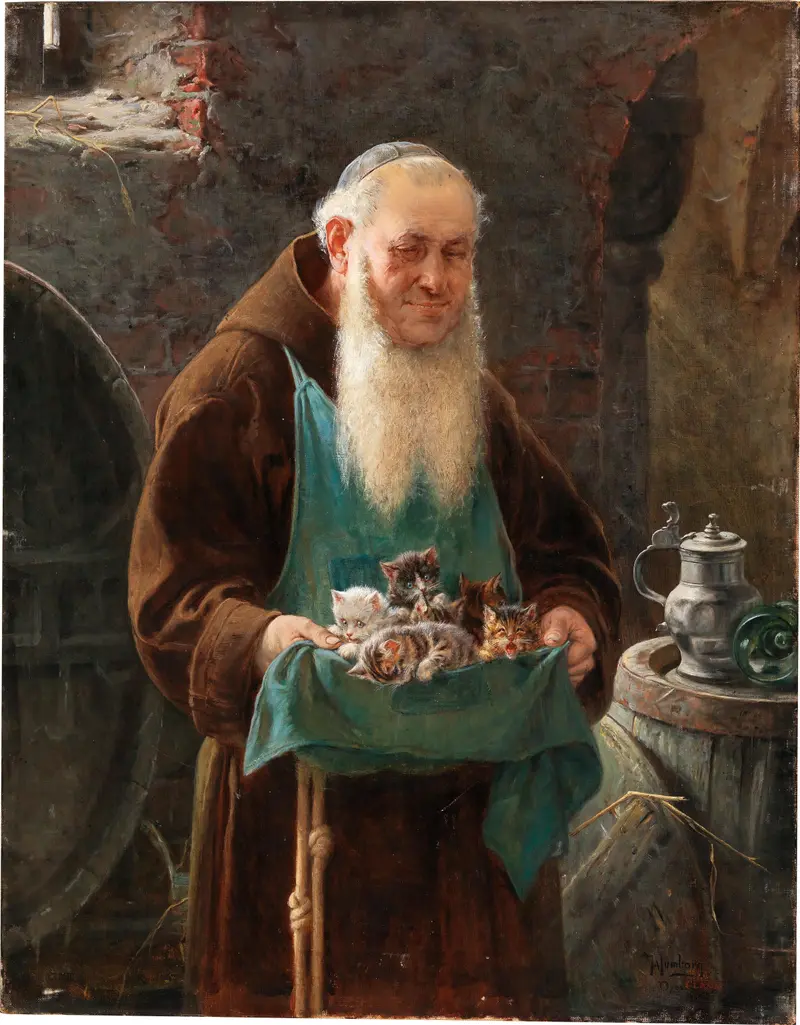
An Addition to the Monastery
Adolf Humborg
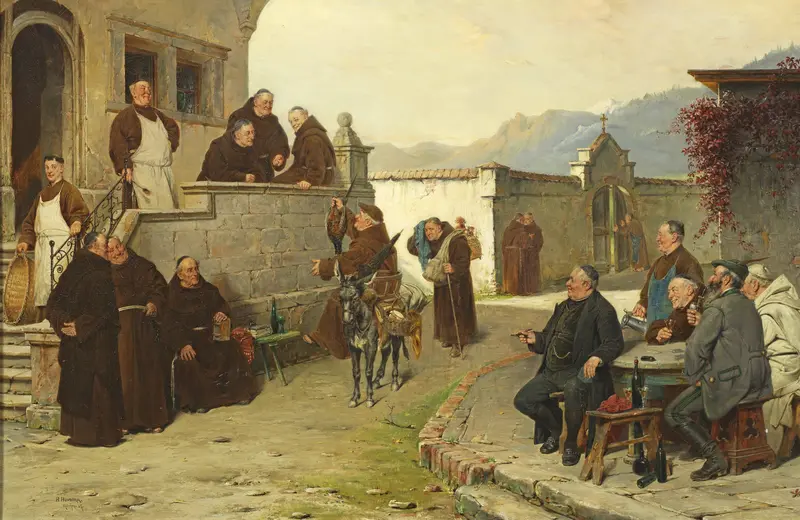
Ankunft der Bettelmönche im Kloster(hofe)
Adolf Humborg
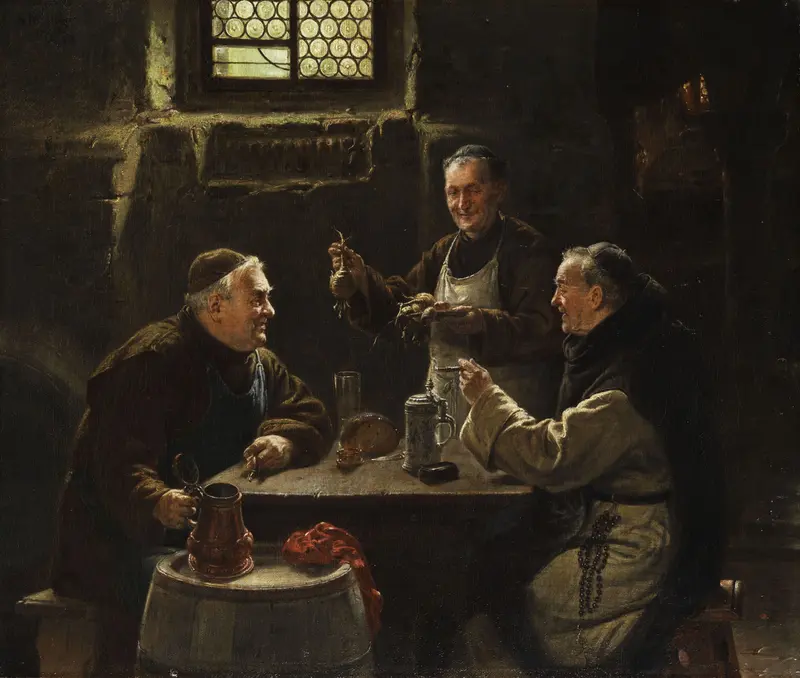
Drei Mönche bei der Vesper Mahlzeit
Adolf Humborg

Kirschen für die Kinder
Adolf Humborg
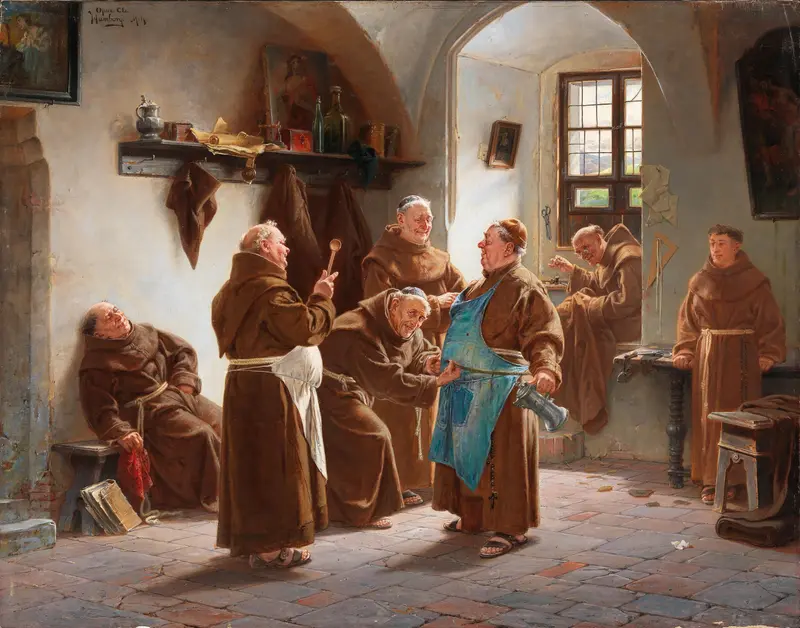
Who is Slimmer?
Adolf Humborg
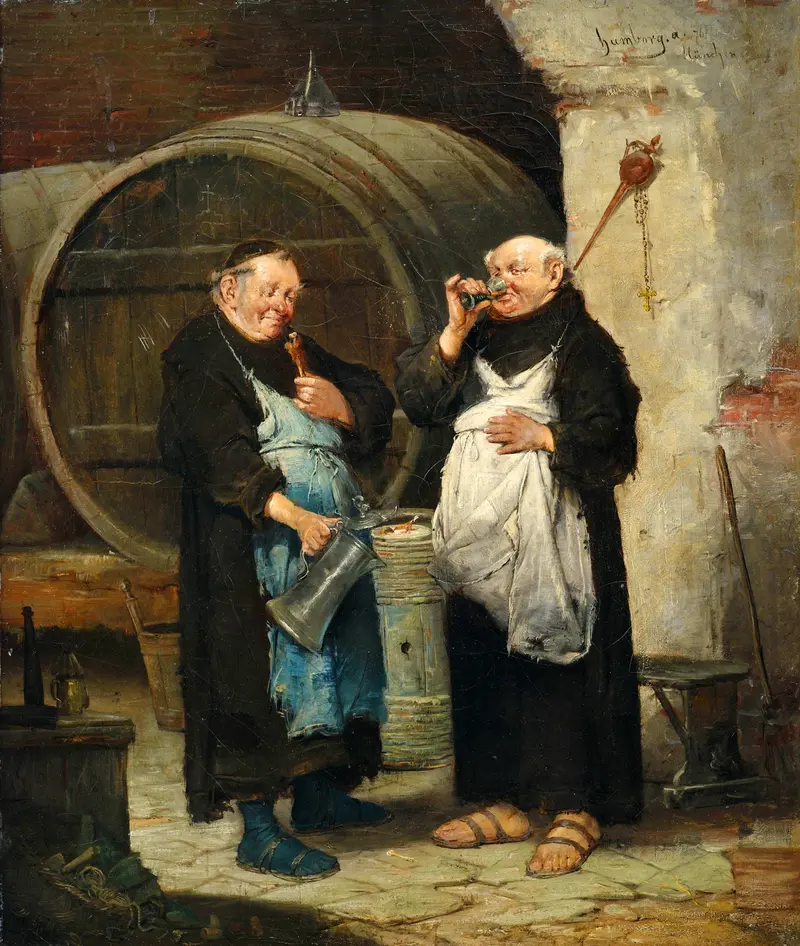
Zwei Mönche im Weinkeller
Adolf Humborg
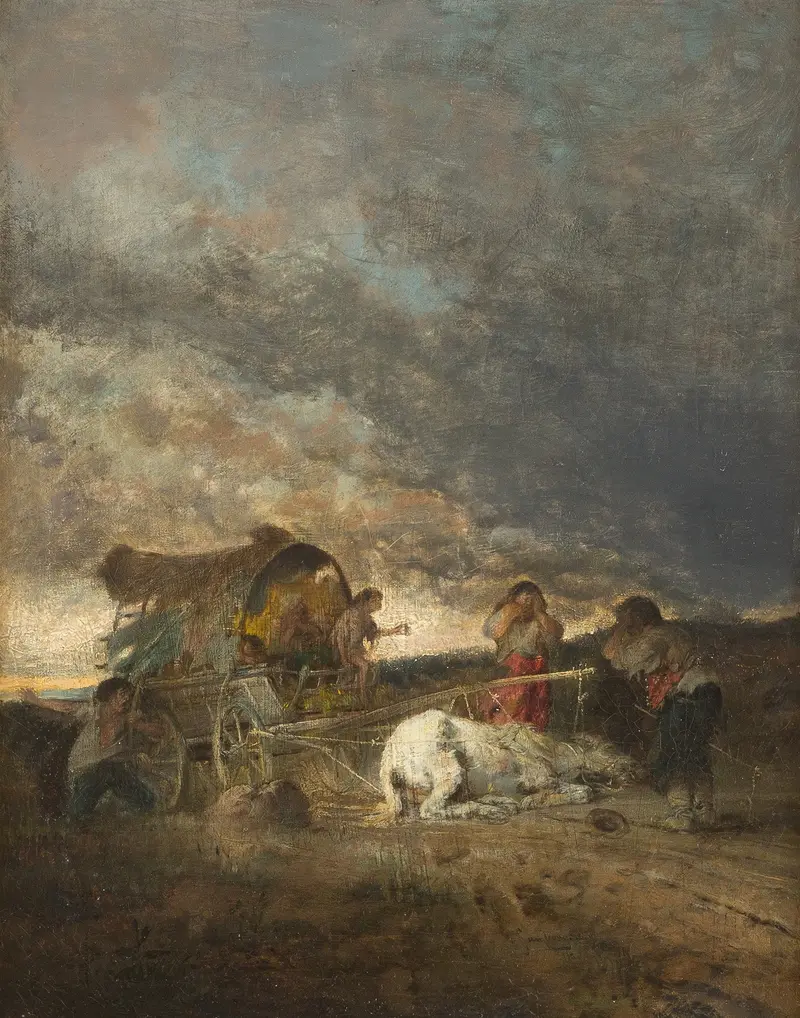
The accident
Adolf Humborg
More Genre Scene Art

Banquet of the Officers of the St George Civic Guard
Frans Hals

Rembrandt and Saskia in the Scene of the Prodigal Son
Rembrandt van Rijn

Bal du moulin de la Galette
Pierre-Auguste Renoir

Quadrille at the Moulin Rouge
Henri de Toulouse-Lautrec

A Burial at Ornans
Gustave Courbet

When Will You Marry?
Paul Gauguin