
Kirschen für die Kinder — History & Facts
What draws the eye first is not the cherries themselves, but the way the friar’s face creases in gentle amusement as he bends toward the children. His heavy robe and tonsure mark him as a man of the church, yet his hands are busy with the simplest of kindnesses: distributing fruit to a ragtag cluster of eager, barefoot youngsters. Each child’s posture tells its own story—one girl clutches her apron to receive her share, another sits contentedly at the friar’s feet, already lost in the pleasure of eating.
The light falls softly on their faces, picking out the bright red of the cherries and the warm tones of their worn clothing, while the crumbling stone and overgrown greenery behind them hint at a world that is both old and alive. This is a painting that invites you to linger, to notice the way generosity passes from hand to hand, and how delight can be found in the smallest of gifts. Painted by Adolf Humborg by 1921, this work belongs to a tradition of late nineteenth- and early twentieth-century genre painting that found its audience in the middle classes of Central Europe. Such scenes of everyday charity and rural innocence were cherished for their sentiment and their sense of stability in a rapidly changing world.
Humborg, known for his depictions of monastic life, often used the figure of the kindly friar to embody ideals of humility and goodwill. The painting’s presence today in the Dorotheum collection is a reminder of how these images once circulated in private homes and public spaces alike, shaping ideas of community and virtue. Look again at the children’s faces—each one a study in anticipation, mischief, or quiet satisfaction—and you glimpse the enduring appeal of these small, shared moments.
More Artworks by Adolf Humborg
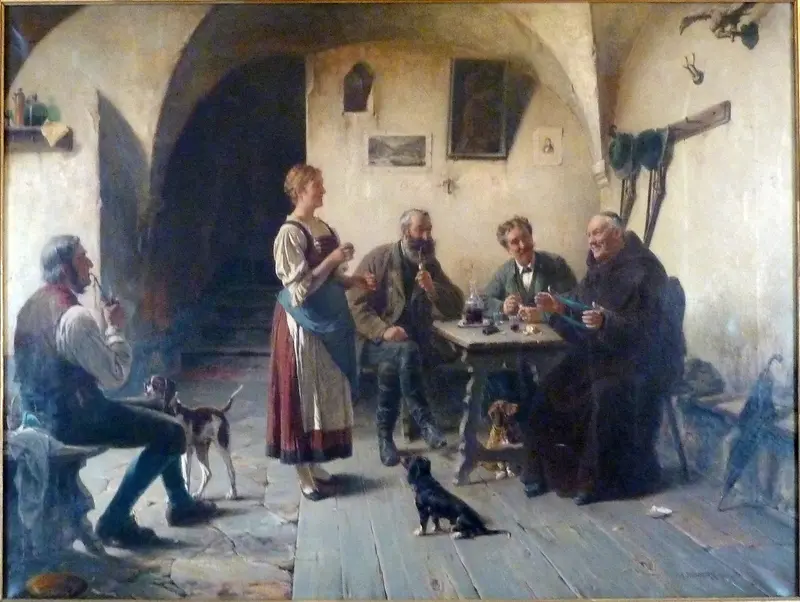
A. Humborg painting (title unknown)
Adolf Humborg
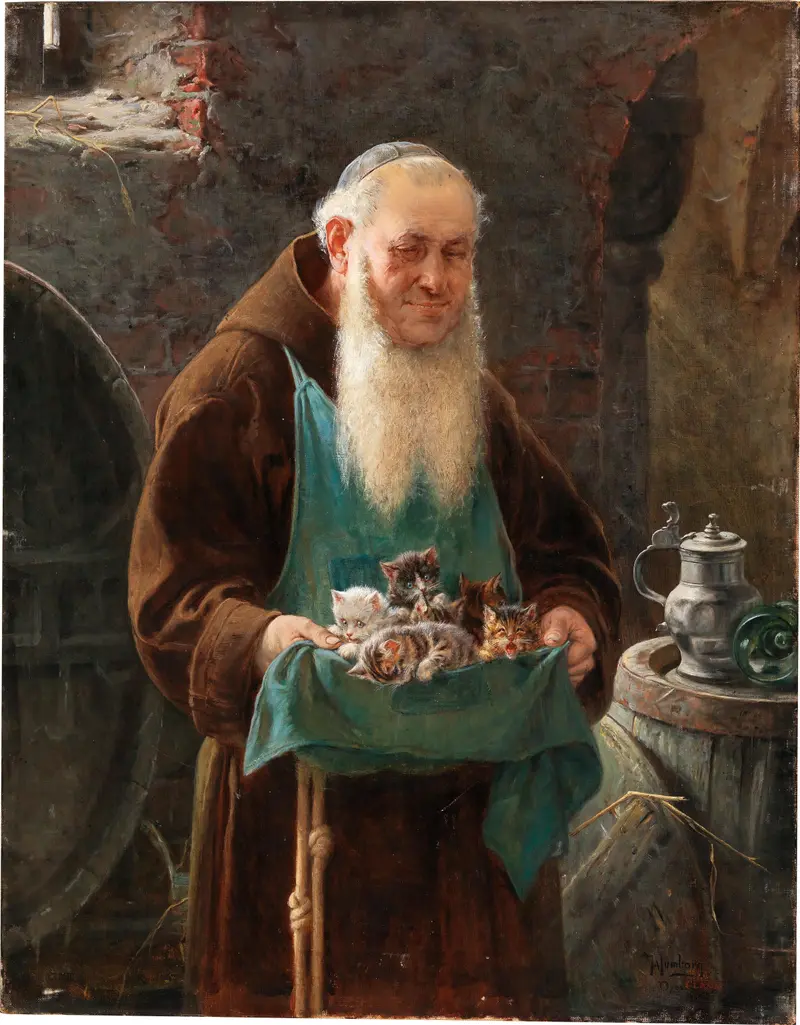
An Addition to the Monastery
Adolf Humborg
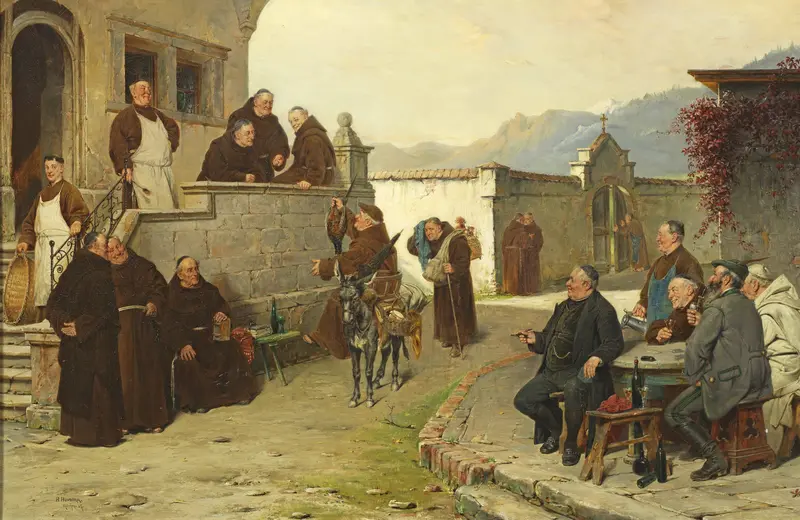
Ankunft der Bettelmönche im Kloster(hofe)
Adolf Humborg
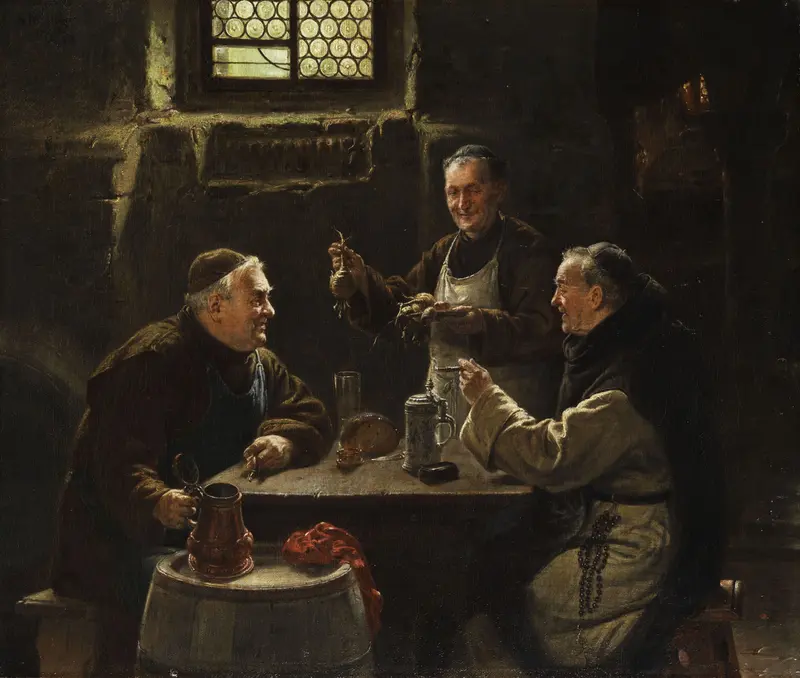
Drei Mönche bei der Vesper Mahlzeit
Adolf Humborg
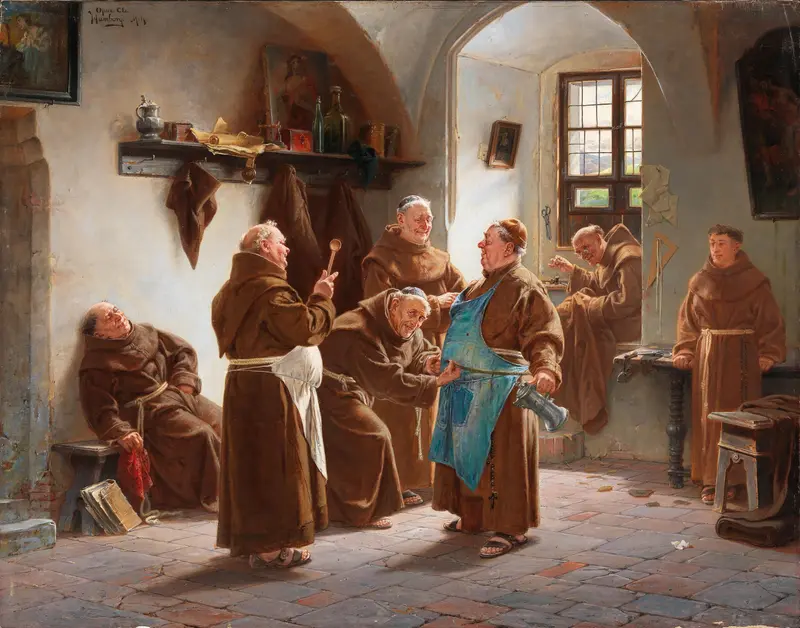
Who is Slimmer?
Adolf Humborg
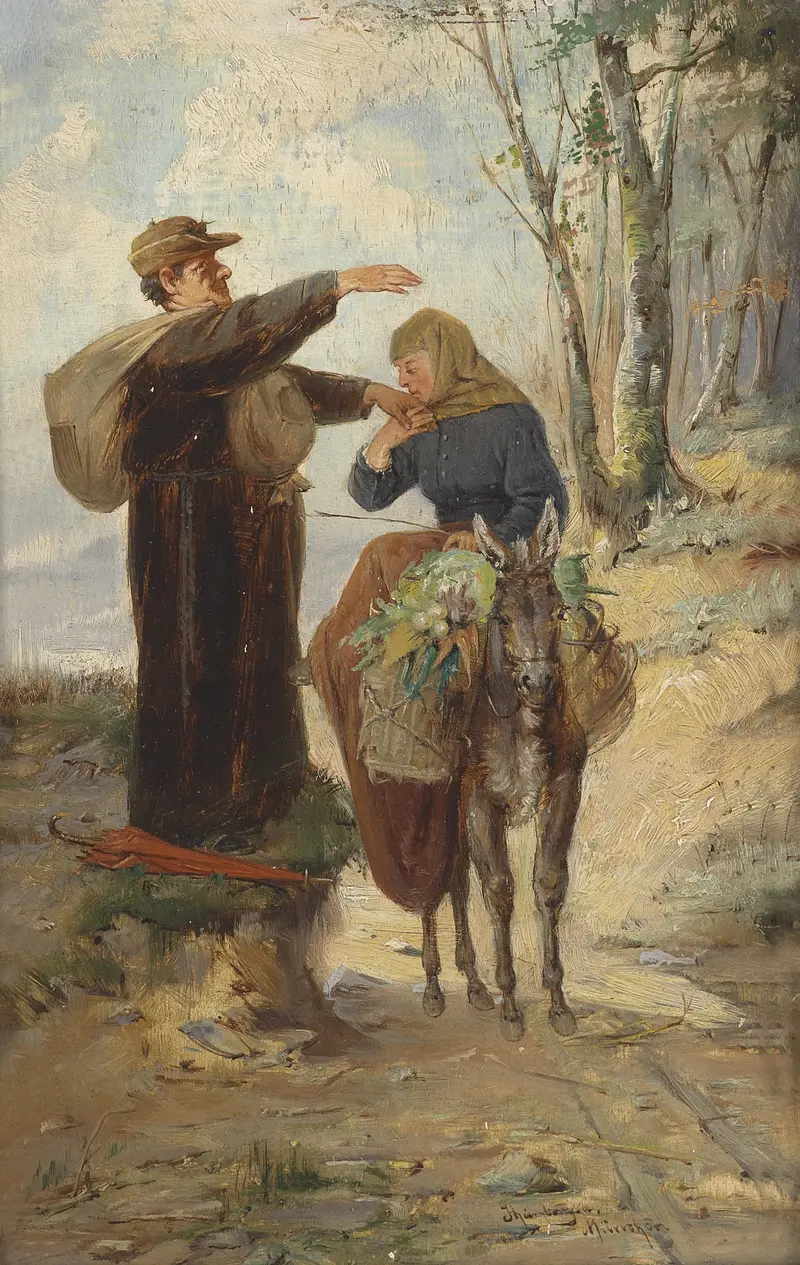
Begegnung auf der Landstraße
Adolf Humborg
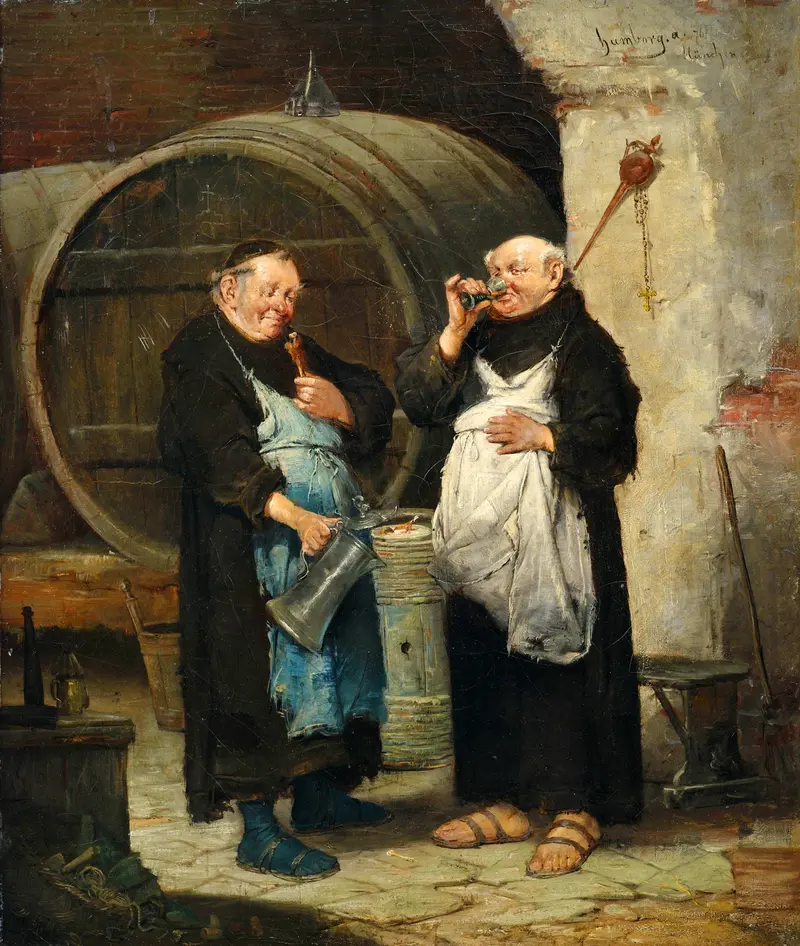
Zwei Mönche im Weinkeller
Adolf Humborg
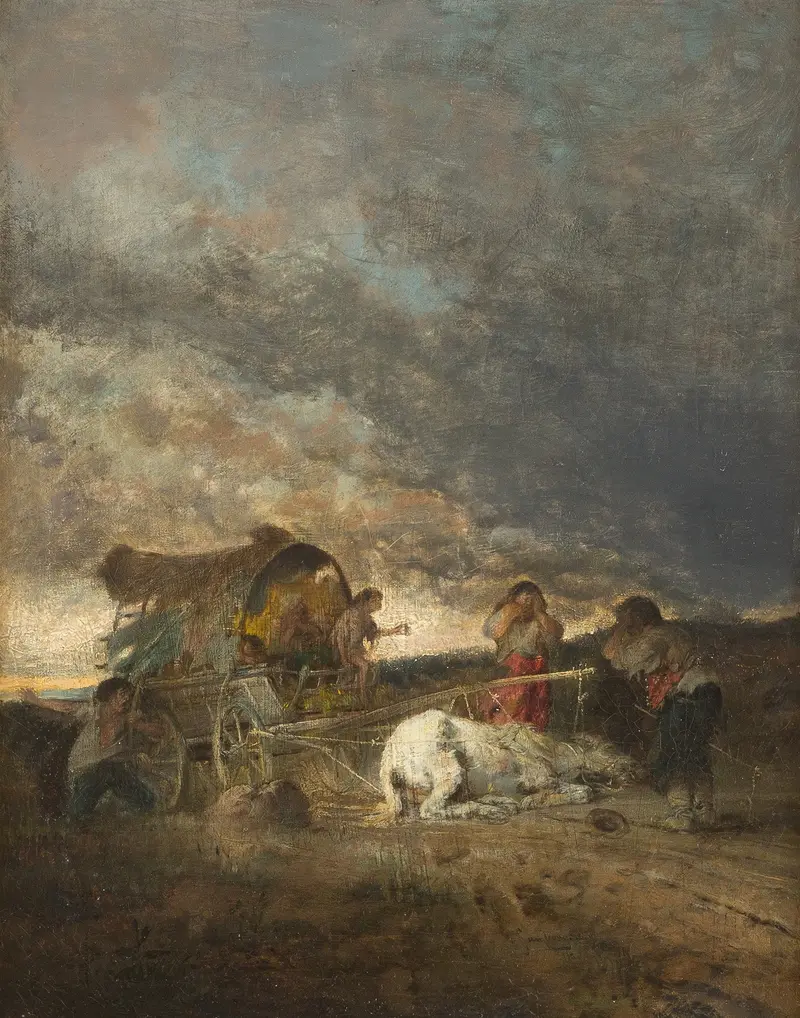
The accident
Adolf Humborg
More Genre Scene Art

Banquet of the Officers of the St George Civic Guard
Frans Hals

Rembrandt and Saskia in the Scene of the Prodigal Son
Rembrandt van Rijn

Bal du moulin de la Galette
Pierre-Auguste Renoir

Quadrille at the Moulin Rouge
Henri de Toulouse-Lautrec

A Burial at Ornans
Gustave Courbet

When Will You Marry?
Paul Gauguin