
Bergbauernhaus — History & Facts
Who listens when art speaks of silence? In Bergbauernhaus, Oskar Mulley captures a profound stillness that resonates with the weight of unspoken grief, inviting the viewer to contemplate the echoes of a life once lived. Look to the center of the canvas, where a solitary farmhouse emerges against a backdrop of rugged mountains. The muted palette, dominated by earthy browns and soft grays, conveys a somber mood that envelops the structure. Notice how the light delicately caresses the weathered façade, highlighting its age and solitude, while the dark clouds above loom like a heavy shroud, suggesting a storm both external and internal.
This juxtaposition of light and shadow draws our gaze, anchoring us in a moment that feels both intimate and expansive. Subtle details deepen the emotional landscape: the gnarled trees that frame the scene stand like sentinels, representing resilience in the face of loss, while the distant mountains evoke isolation, hinting at the longing for connection. Each brushstroke carries a sense of absence, prompting reflections on memory and the passage of time. The silence of the landscape resonates deeply, whispering tales of those who have inhabited this space, leaving behind only traces of their existence. In the early 1930s, Oskar Mulley worked amidst a tumultuous political climate in Europe, marked by economic instability and a rise in nationalist sentiments.
Painting Bergbauernhaus around 1934, he sought to express the complexities of rural life, often overshadowed by modernity’s encroachment. This work emerges from a period when many artists grappled with themes of nostalgia and loss, aiming to capture the soul of a vanishing world.
More Artworks by Oskar Mulley
Browse all →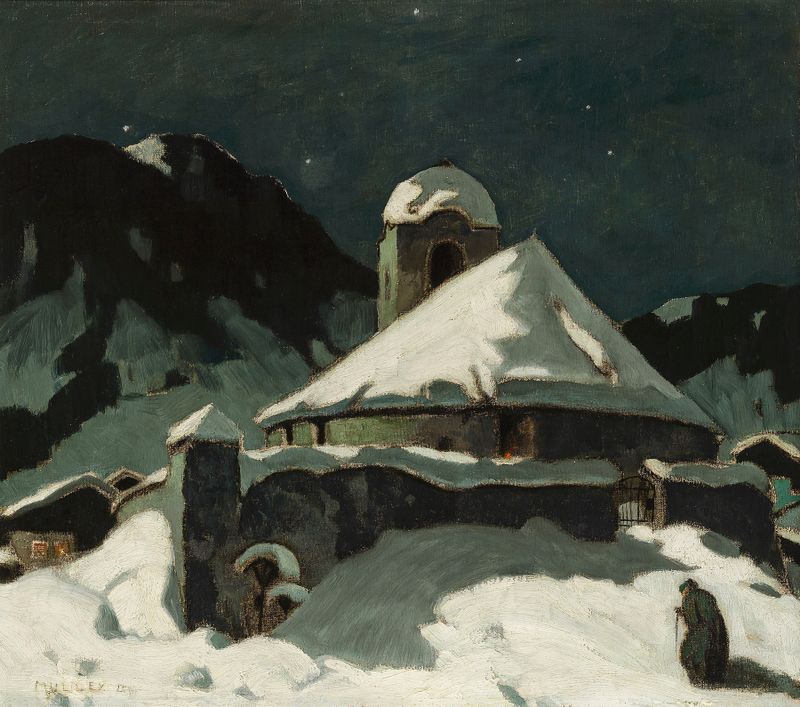
Winternacht im Bergdorf
Oskar Mulley
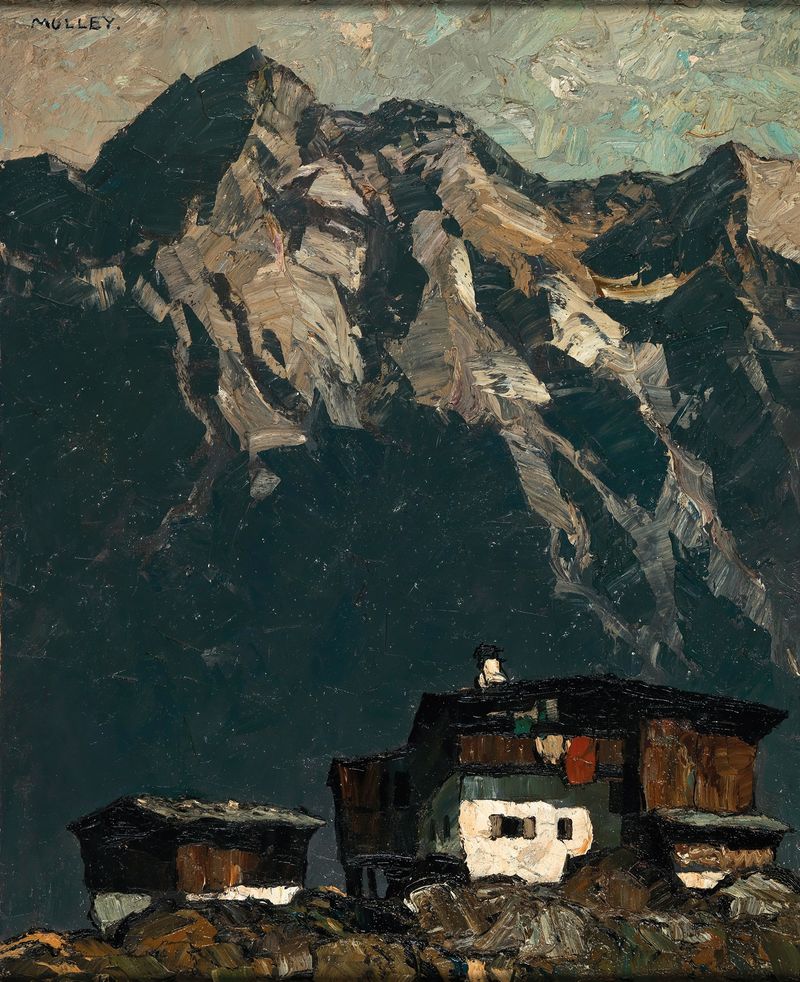
Bauernhof im Hochgebirge
Oskar Mulley
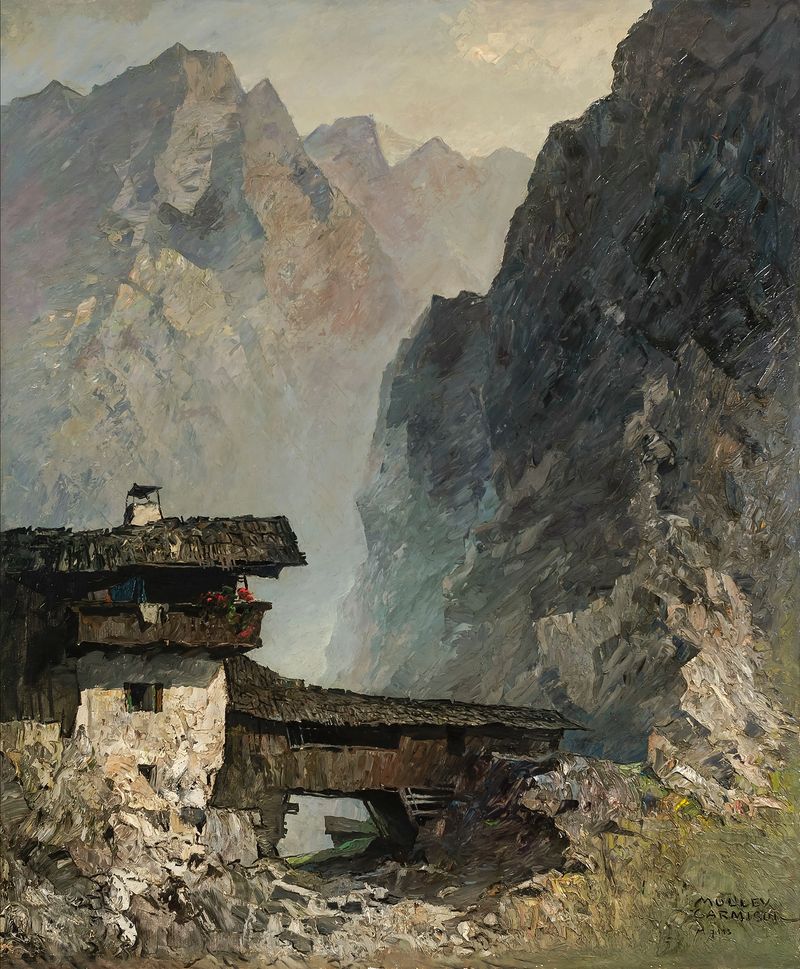
Im Hochtal
Oskar Mulley
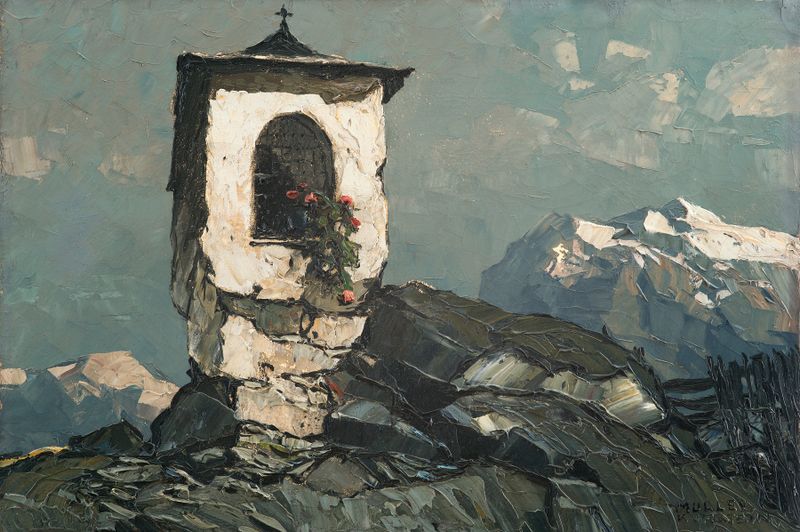
Materl im Hochgebirge
Oskar Mulley
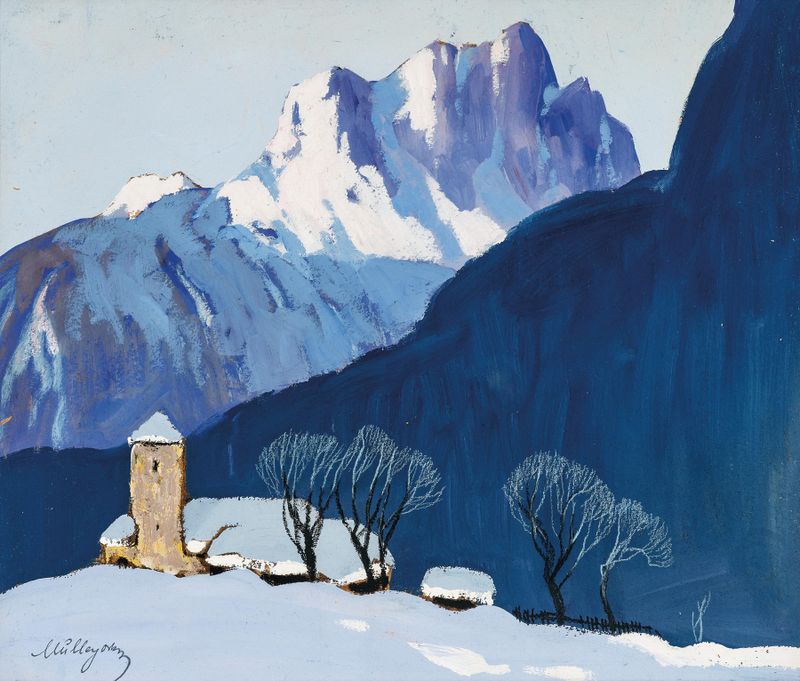
Winterlandschaft vor Bergkulisse
Oskar Mulley
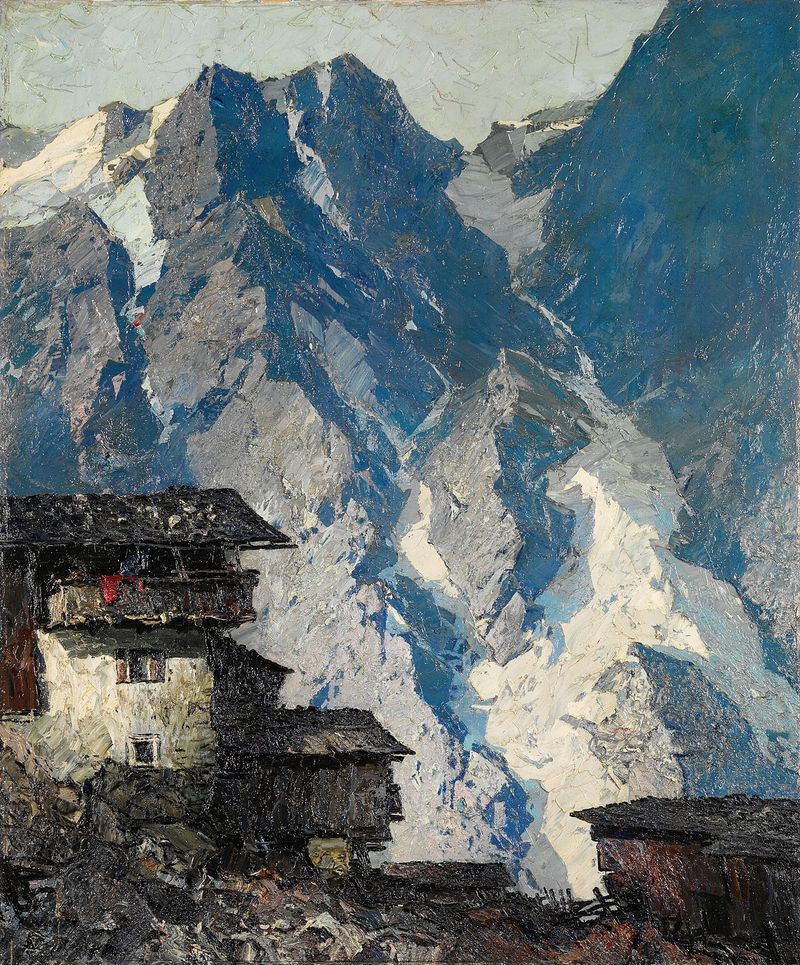
Berghof vor Gletscherlandschaft
Oskar Mulley
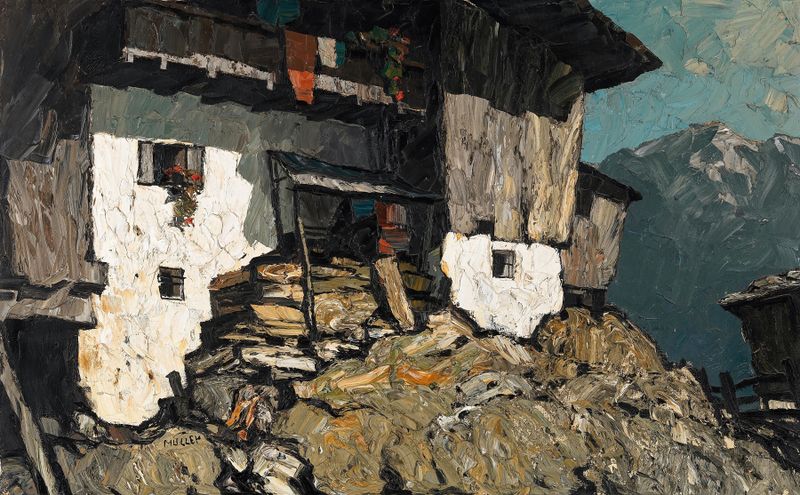
Bergbauernhof
Oskar Mulley
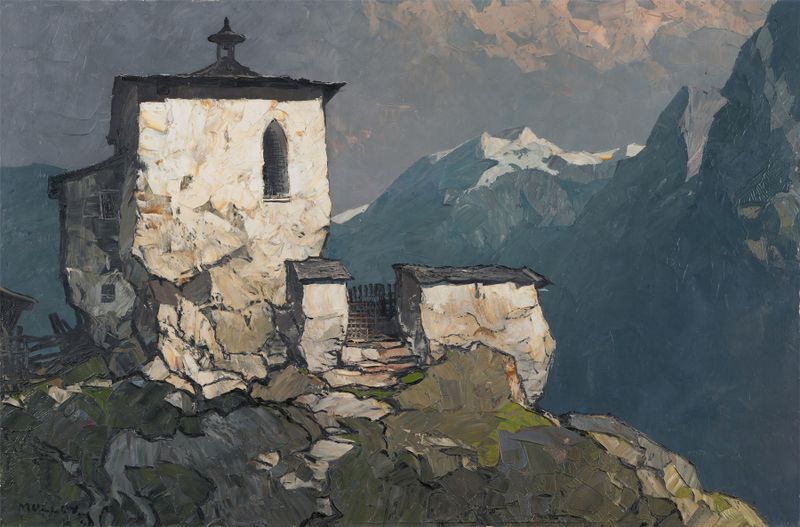
Bergkapelle
Oskar Mulley
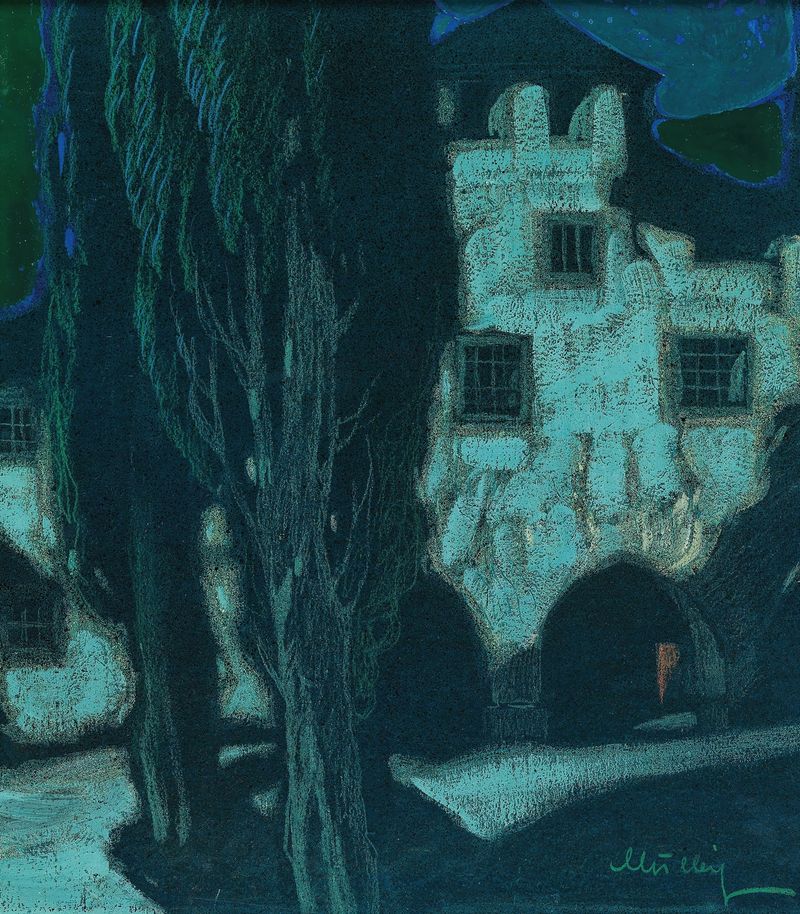
Mondnacht
Oskar Mulley
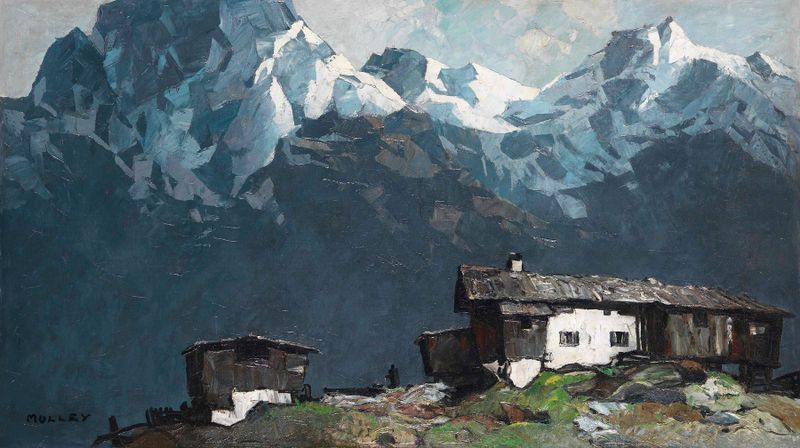
Bergbauernhof
Oskar Mulley





