
Bergers dans des ruines romaines — History & Facts
Who listens when art speaks of silence? In the stillness of Bergers dans des ruines romaines, tranquility envelops a pair of shepherds, their presence a gentle contrast to the grandeur of ancient ruins. Serenity permeates the scene, evoking a sense of timelessness amidst the remnants of civilization. Look to the left where the shepherds stand, framed by crumbling columns that rise like ghosts from the earth. The warm, golden light bathes the figures, casting elongated shadows that suggest both distance and intimacy.
Notice how the artist employs a soft color palette—earthy browns and muted greens—that harmonizes with the blue sky, creating a serene atmosphere. This interplay of light and shadow not only reveals the details of the shepherds’ attire but also enhances the sense of peace that permeates the landscape. Beneath the surface, there lies a contrast between the enduring ruins and the fleeting lives of the shepherds. The juxtaposition of human existence against monumental history invites contemplation on the passage of time and the cycles of life.
The figures represent harmony with nature, living simply while history stands still, a poignant reminder of what has been lost and what remains. The viewer is left to ponder the stories etched in the stones, as well as the quiet lives that continue to unfold in the shadows of the past. During the late 18th century, the artist created this piece against a backdrop of neoclassicism's rise and the Romantic movement's early stirrings. Living in Paris, Demachy was engaged with the changing art scene that emphasized both natural beauty and the sublime.
His work reflects a moment where the past and present converge, revealing the artist's deep appreciation for the serenity found in nature and history intertwined.
More Artworks by Pierre-Antoine Demachy
Browse all →
Démolition de la Bastille, le 17 juillet 1789
Pierre-Antoine Demachy
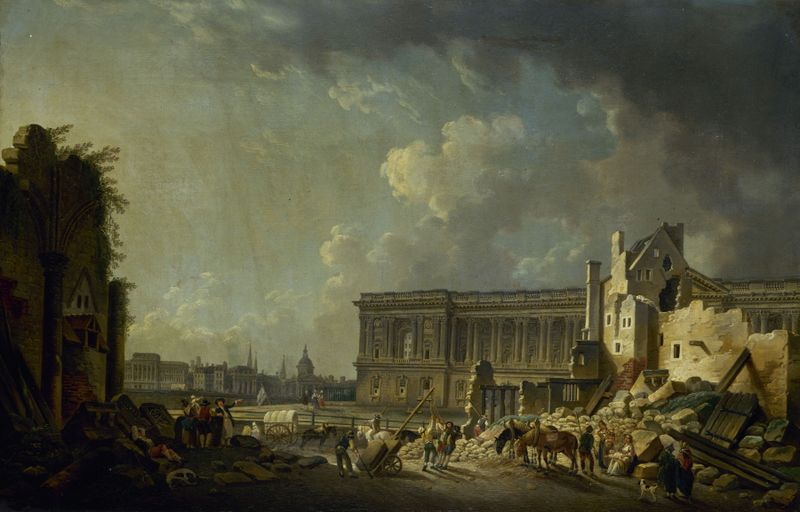
Dégagement de la colonnade du Louvre
Pierre-Antoine Demachy

La colonnade du Louvre, nouvellement dégagée
Pierre-Antoine Demachy
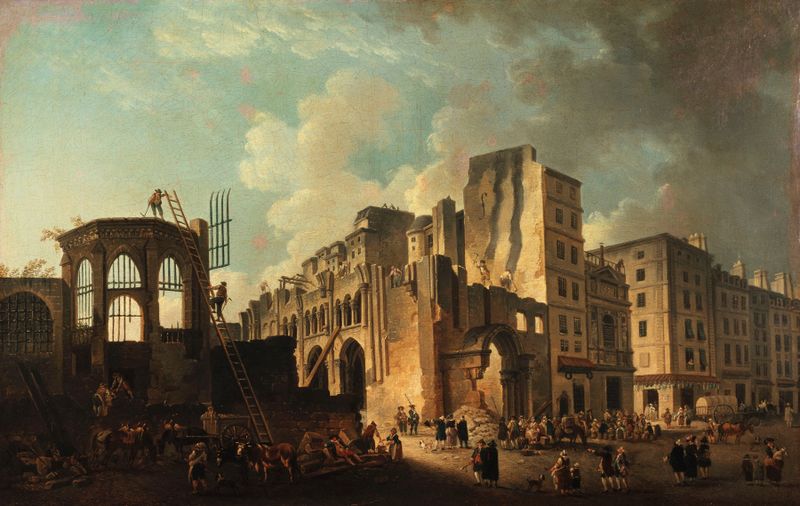
La démolition de l’église des Saints-Innocents, rue Saint-Denis
Pierre-Antoine Demachy
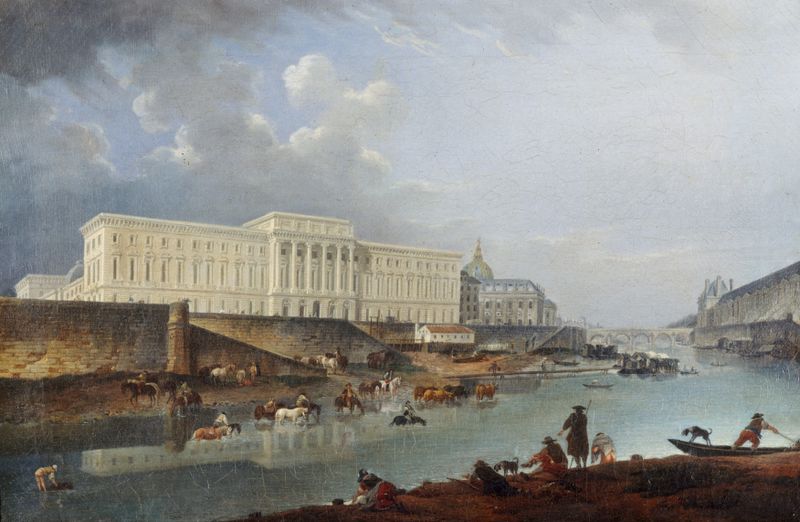
L’Hôtel de la Monnaie, le quai de Conti et la Seine, vus de la pointe de la Cité
Pierre-Antoine Demachy

Dégagement de la colonnade du Louvre
Pierre-Antoine Demachy

L’Hôtel de la Monnaie et le Louvre, vus du Pont-Neuf, vers 1800
Pierre-Antoine Demachy
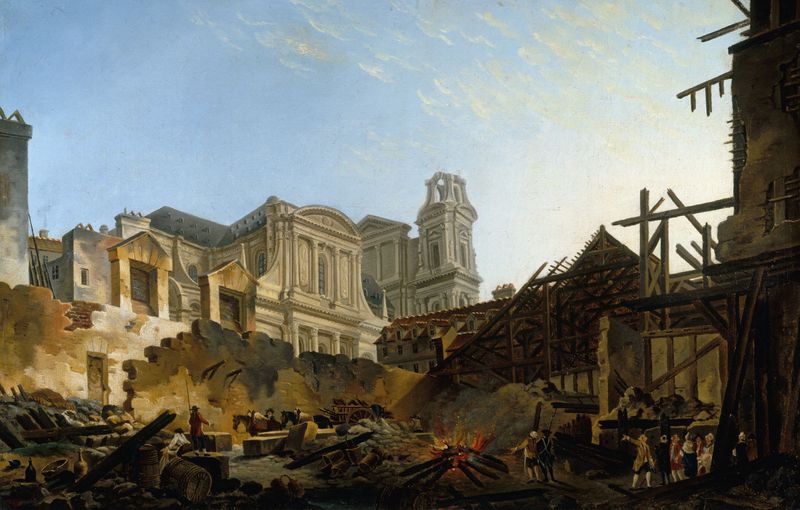
La foire Saint-Germain après l’incendie de la nuit du 16 au 17 mars 1762
Pierre-Antoine Demachy

La Foire Saint-Germain pendant l’incendie (nuit du 16 au 17 mars 1762)
Pierre-Antoine Demachy
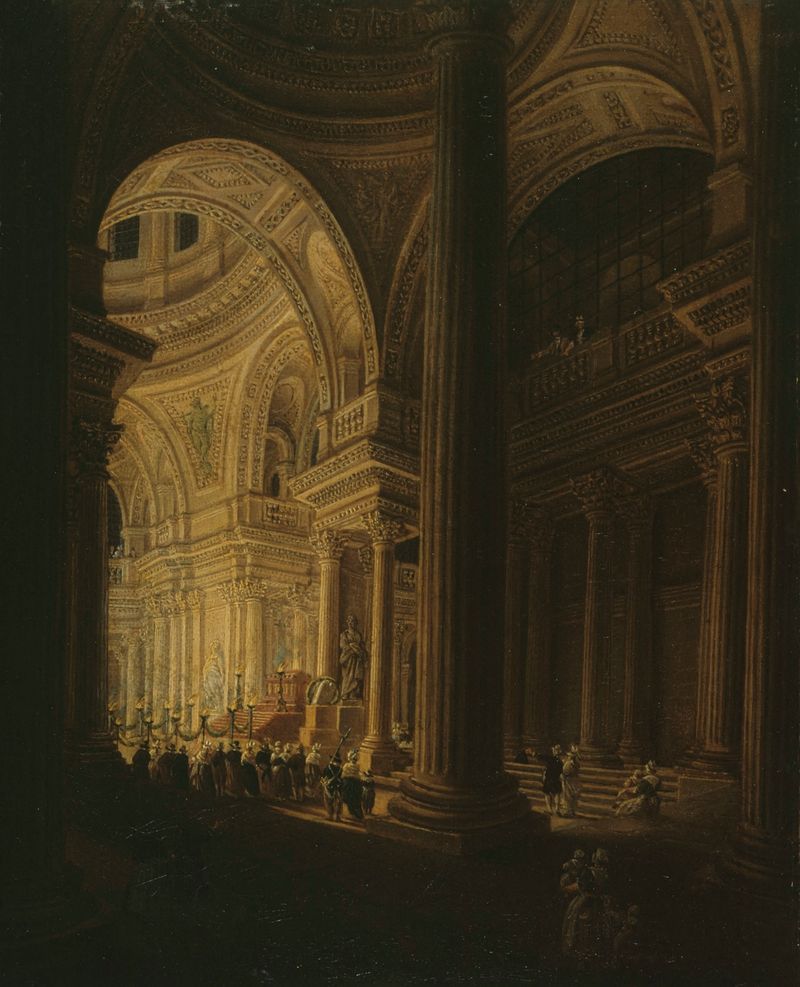
Le sarcophage de Jean-Jacques Rousseau, exposé au Panthéon (20 vendémiaire an III – 11 octobre 1794)
Pierre-Antoine Demachy





