Bergkuppe im Engadin — History & Facts
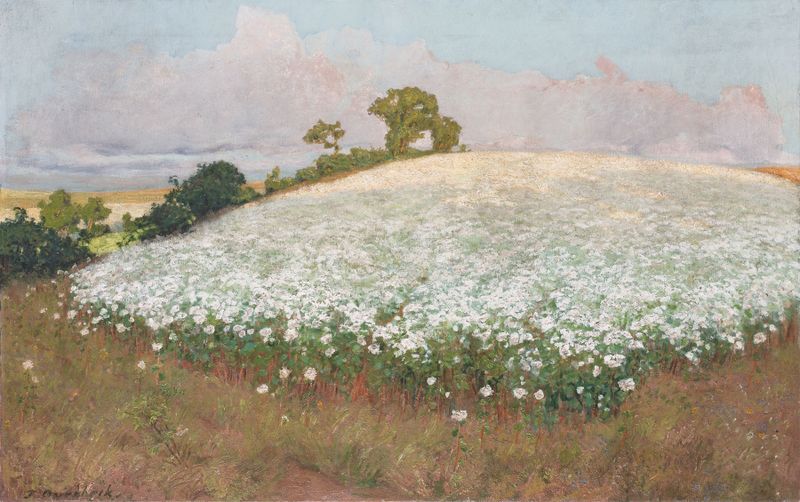
What if silence could speak through light? In the ethereal embrace of dawn, the mountains rise like ancient sentinels, their peaks bathed in a soft, golden glow that whispers serenity. Look to the left at the tranquil hues of the sky, blending seamlessly into the rugged silhouette of the mountain range. Notice how the artist employs delicate brushstrokes to create a textured surface, inviting the viewer to feel the cool stone beneath their fingertips. The subtle interplay of blues and warm earth tones evokes a sense of harmony, while the expansive canvas draws your gaze upward, emphasizing not just the grandeur of nature but also its quiet majesty. In this work, contrasts abound—the jagged, formidable mountains juxtaposed against the gentle caress of light.
This tension speaks to the fragility of existence within the vastness of nature. The small patches of greenery nestled in the valley hint at life, resilient yet dwarfed by the towering peaks; a reminder of both solitude and interconnectedness. It’s a meditation on the stillness found in nature, where every brushstroke conveys a meditative silence, allowing viewers to reflect on their own inner calm. Created in 1909, this piece emerged during a transformative period for the artist, who was deeply connected to the landscapes of the Engadin region in Switzerland.
At this time, Overbeck was focusing on capturing the sublime qualities of nature, exploring the emotional resonance of light and color. His work is often associated with the broader movement of German Impressionism, a response to the increasing industrialization of Europe, where artists sought refuge in the untouched beauty of the natural world.