Gehöft in Weyermoor — History & Facts
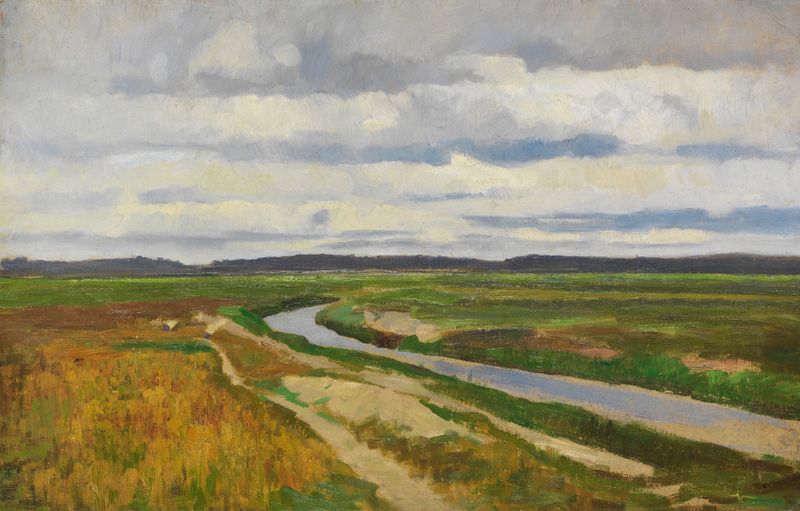
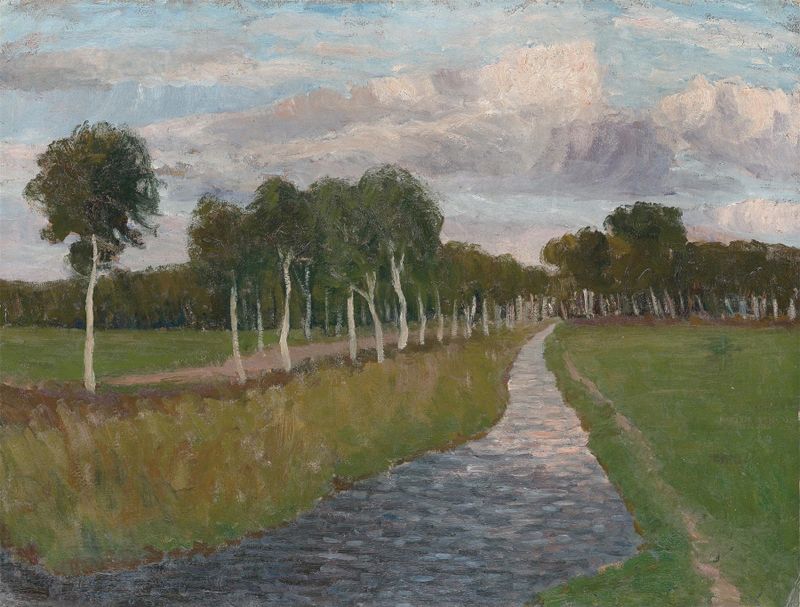
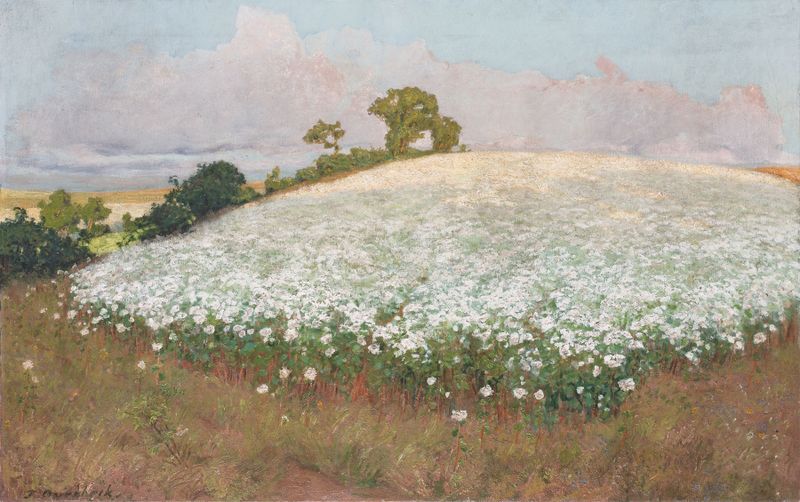
What if beauty was never meant to be finished? In Gehöft in Weyermoor, a sense of unresolved tension lingers, as if the quiet landscape holds its breath, teetering on the brink of a profound revelation. Look to the foreground where the delicate strokes of green grass lead your gaze toward the rustic farmhouse. Notice how the light bathes the building in a warm glow, illuminating its weathered facade and inviting you to delve deeper into the scene. The artist’s deft use of color creates a harmonious balance between the earthy tones of the land and the soft blues of the sky, evoking a serene yet unsettling mood, as if nature itself is alive with untold stories. Beneath the surface, this tranquil setting reveals a complex interplay of fear and beauty.
The gentle hills seem to cradle the farmhouse, yet their looming presence suggests both protection and a sense of isolation. Each brushstroke carries an emotional weight, hinting at the fleeting nature of peace and the ever-looming awe of what lies beyond the horizon. It captures the essence of human vulnerability against the vastness of the landscape, making the viewer reflect on their own place within it. In 1900, Fritz Overbeck painted this work during a time of significant personal and artistic exploration.
Living in northern Germany, he was drawn to the natural world, seeking inspiration from the rural landscapes around him. This period marked a shift in the art world, as artists began to embrace the beauty of everyday life, intertwining the simplicity of rural existence with deeper emotional truths.