Buchweizenfeld I — History & Facts
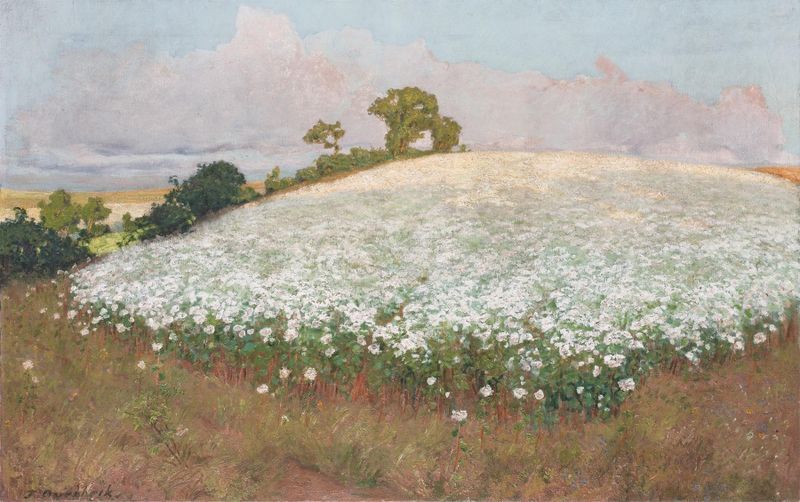
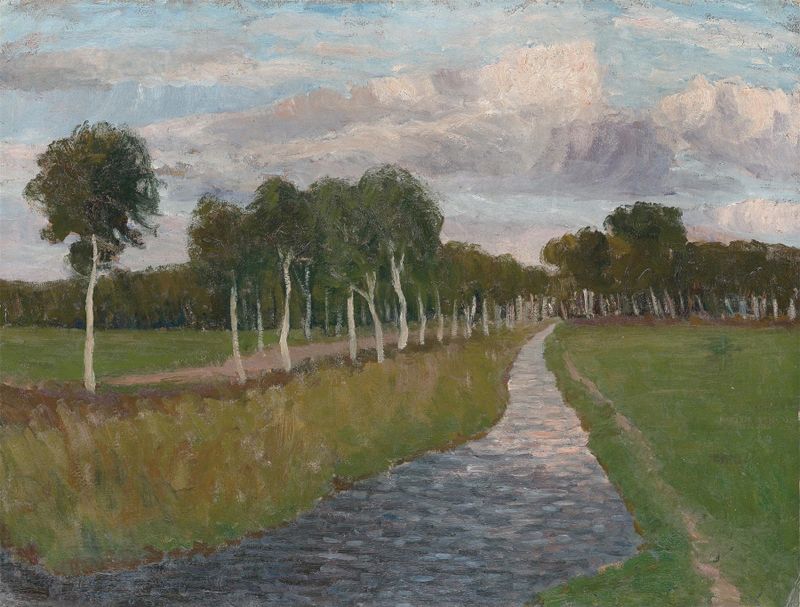
In a world ever-shifting, the canvas stands as a sanctuary of serenity, timeless and profound. Look to the center of the piece, where vibrant fields of buckwheat unfurl, their delicate blossoms capturing the light of a soft afternoon sun. The gentle brushstrokes create a tapestry of greens and whites, leading the eye into a harmonious rhythm that feels both alive and tranquil. Notice how the horizon melts into the sky, the pastel hues of dawn or dusk casting an ethereal glow, inviting a profound sense of peace and reflection. Beneath the surface lies a contrast between the natural beauty of the buckwheat fields and the looming presence of the distant mountains.
This juxtaposition speaks to the fleeting nature of tranquility amidst life’s inevitable challenges. The subtle interplay of light and shadow further emphasizes the delicate balance of serenity and unrest, hinting at the cyclical nature of growth and decay inherent in our existence. Each bloom is a reminder of moments that are both ephemeral and eternal. In 1897, Fritz Overbeck painted this work while living in the serene coastal town of Worpswede, Germany, a hub for artists seeking solace and inspiration.
It was a period marked by the rise of the Worpswede artists, who sought to capture the sublime beauty of rural landscapes, embracing the simplicity of nature as a counterbalance to the complexities of modern life. This piece reflects not only Overbeck’s personal quest for tranquility but also a collective yearning for connection with the land during a transformative era in art.