Evening at Moor channel II — History & Facts
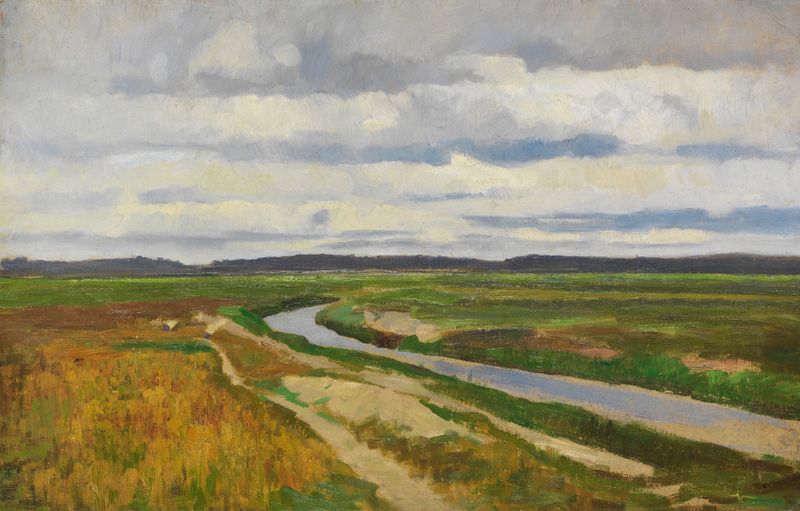
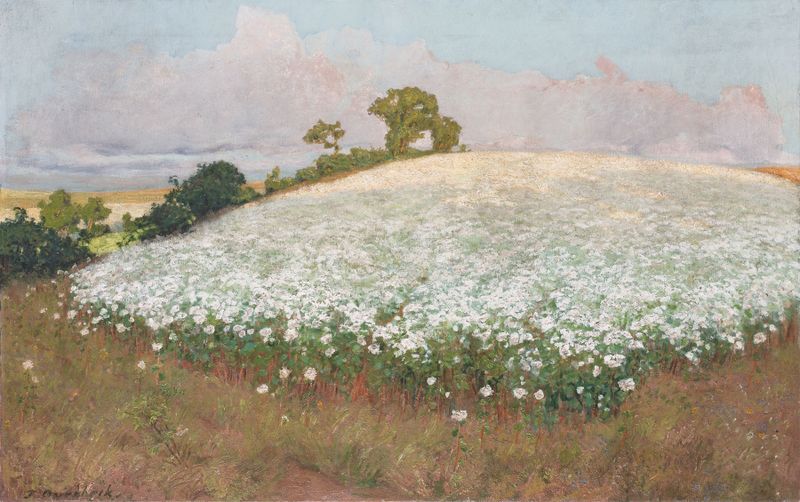
Could beauty survive in a century of chaos? This poignant question resonates through the tranquil landscape captured in Evening at Moor channel II. The artwork radiates a serene beauty that belies the tumultuous times surrounding its creation, inviting a contemplation of fragility in the face of encroaching darkness. Look to the left at the delicate strokes of gold and amber that dance across the sky, merging seamlessly into the deepening blue of twilight. The horizon line draws your eye toward the shimmering water, where subtle reflections ripple with an ethereal quality.
Notice how the gentle brushwork conveys the stillness of the moor, while the dark silhouettes of distant trees add depth and a hint of mystery, contrasting the warmth of the evening light with the coolness of the impending night. Beneath its picturesque surface, the painting reveals an emotional tension between solitude and serenity. The vastness of the moor evokes a sense of isolation, yet the vibrant colors suggest a fleeting moment of beauty that could vanish at any moment. This juxtaposition mirrors the artist’s inner turmoil, hinting at fears of the approaching upheaval and the loss of natural landscapes in the wake of industrialization. Painted in 1905 during a period of significant change in Europe, the artist found himself grappling with both personal and societal anxieties.
The early 20th century was marked by rapid industrialization and impending conflict, shaping the artistic movements of the time. Overbeck, residing in northern Germany, sought refuge in the beauty of nature, using his canvas as a means to express both his admiration for the landscape and his underlying dread of what was to come.