Hammehütte mit Torfkahn — History & Facts
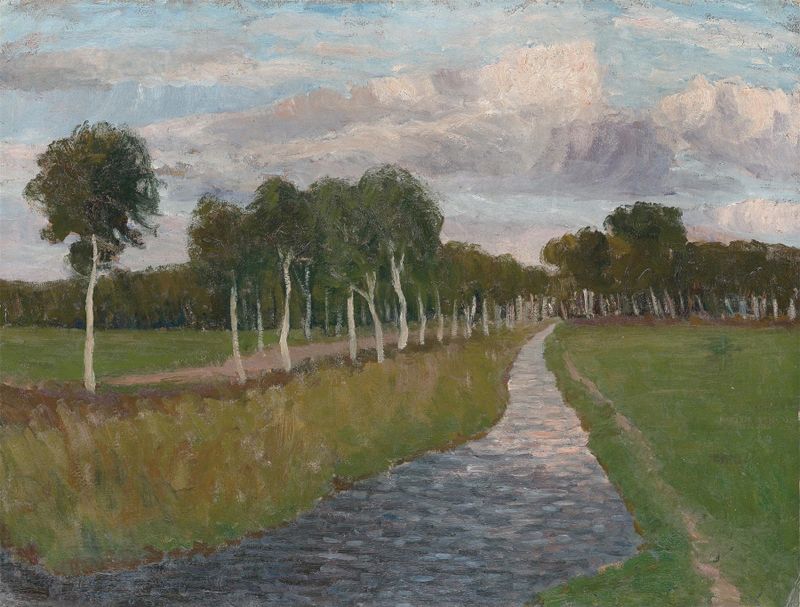
In the quiet solitude of nature, one can feel the weight of unspoken grief, resting like a heavy fog over the water's surface. The stillness envelops the viewer, inviting reflections that echo with the sorrow that often accompanies the passage of time. Look to the left at the humble hamlet nestled among the trees, its wooden structure kissed by soft, muted hues of ochre and green. The tranquil water mirrors the subdued palette, creating a harmonious blend that draws the eye across the canvas.
Notice how the light falls gently upon the torfkahn, the peat barge, its presence suggesting both a connection to the land and a sense of stillness that permeates the composition. Each brushstroke seems deliberate, capturing the essence of a moment held still against the relentless march of nature. Upon closer inspection, the juxtaposition of the warm earth tones against the cool, shadowy depths of the water speaks to an emotional tension. The stillness of the scene contrasts with the silent stories of those who have traversed these waters, hinting at the grief carried in their hearts.
The torfkahn, once a vessel of livelihood, now appears as a reminder of loss, its purpose intertwined with memories of those who have come and gone. In 1900, the artist found himself immersed in the tranquil landscapes of northern Germany, where he painted this work amid a shifting art world that grappled with the emerging modernity. Overbeck was deeply inspired by his surroundings and was known for his ability to convey emotion through nature. This piece reflects not only his personal experiences but also the broader societal changes of the time, where the vibrant life of rural communities began to fade into memory.