Moorkanal in der Hammeniederung — History & Facts
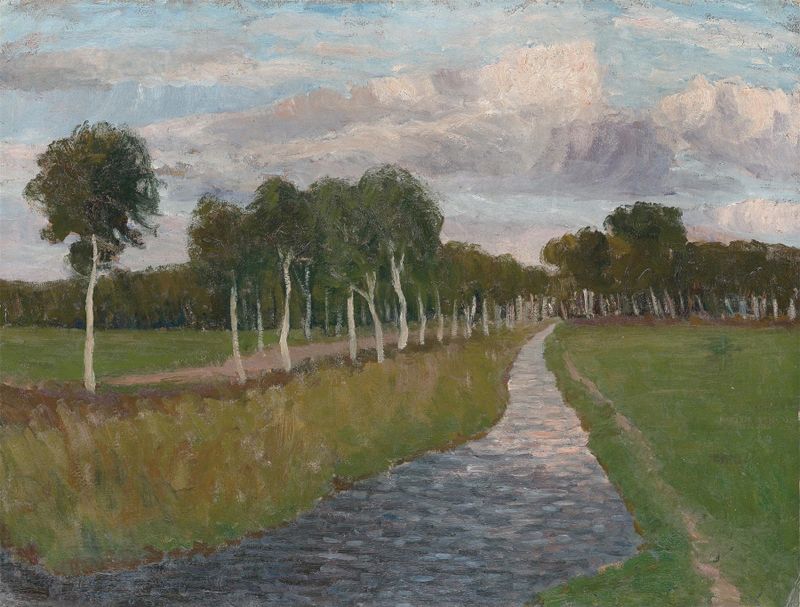
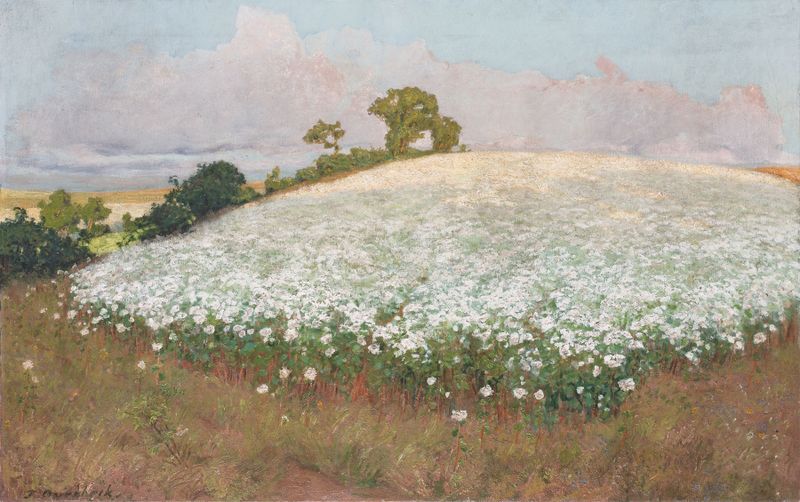
In the quiet sanctuary of nature, serenity unfolds, inviting reflection and repose. Look to the left at the gentle curve of the canal, its surface shimmering under the delicate touch of light. The interplay of greens and blues forms a harmonious palette, as trees bend gracefully towards the water, their reflections merging with the soft ripples. Notice how the artist’s brushstrokes evoke movement, creating a sense of calm yet vibrant energy that flows through the scene, leading the viewer’s gaze down the meandering path. Among the dappled shadows, hidden nuances arise.
The distant bank, cloaked in mist, suggests the passage of time, a reminder that tranquility exists beyond the immediate frame. The balance between light and shade speaks to the inherent duality of nature, where peace coexists with the unknown. Each element, from the quietly rustling leaves to the serene waterway, embodies a deeper connection to the landscape, urging us to pause and absorb the gentle rhythm of life. In 1894, the artist was residing in Germany, immersing himself in the lush landscapes surrounding him.
This period was marked by an exploration of impressionism, where he sought to capture nature’s essence with vivid colors and emotive brushwork. At this time, Overbeck was aligning his artistic vision with the broader movements of his contemporaries, yet his unique approach to depicting serenity in nature set him apart, reflecting both personal and universal themes of peace and introspection.