
Berne-Lötschberg-Simplon — History & Facts
A dizzying sense of altitude grips the viewer at once: the world drops away beneath the vantage point, as if one stands at the edge of a carriage window, the valley floor unfurling in geometric patterns far below. The artist, Emil Cardinaux, uses the sharp diagonal of the railway track and the bold vertical of a telegraph pole to slice the landscape, guiding the eye from the immediate foreground into the vast, sunlit sweep of the Swiss Alps. The palette is all ochres and rose, with snow-capped peaks glowing against a pale sky, while the valley is rendered in orderly patches, hinting at cultivation and human presence.
The electric wire strung overhead is not just a technical detail—it signals the modernity of the railway, a lifeline threading through the ancient mountains. Created in 1921, this work belongs to a world where posters were not merely advertisements but invitations to adventure, promising speed and spectacle to a new class of travelers. The Berne-Lötschberg-Simplon line, celebrated here, was a marvel of early twentieth-century engineering, opening the Alps to both tourism and commerce. Such posters, often commissioned by railway companies, shaped the image of Switzerland as a destination: clean, accessible, and thrillingly vertical.
Preserved today in the SBB Historic collection, this image is a window onto an era when the romance of rail travel was at its height—look again, and you may feel the rush of wind and possibility.
More Artworks by Emil Cardinaux
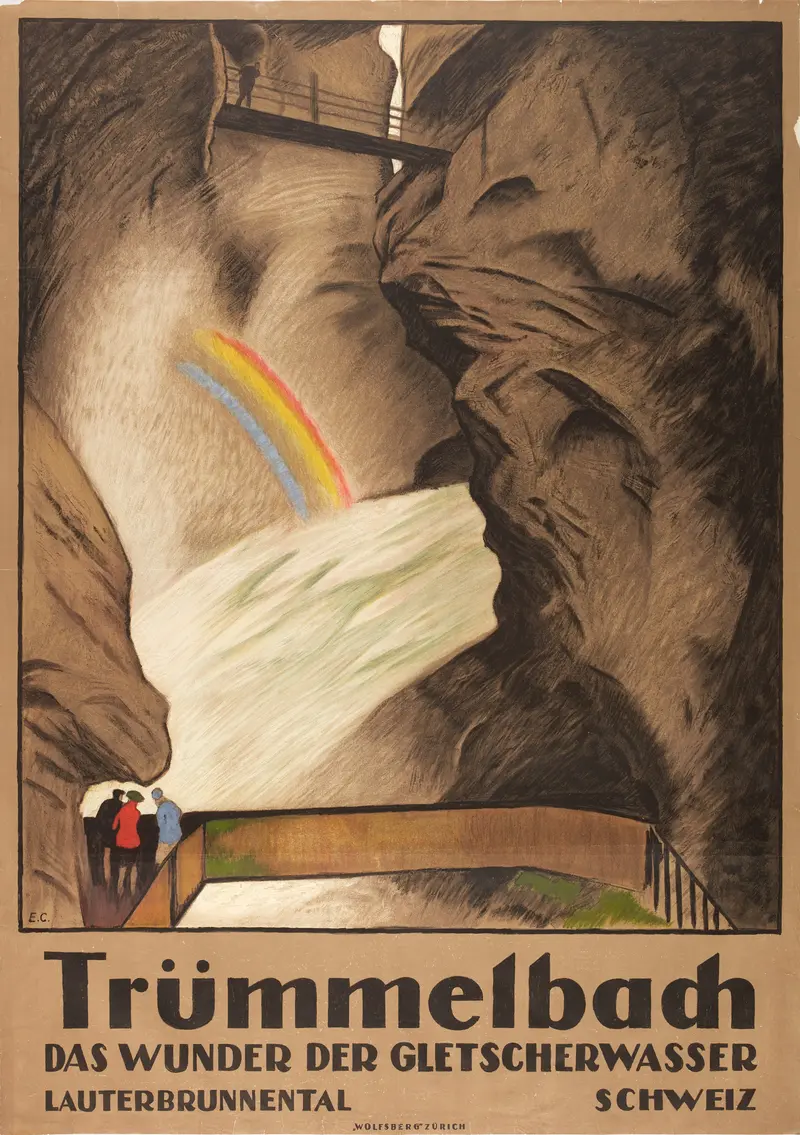
Trümmelbach
Emil Cardinaux
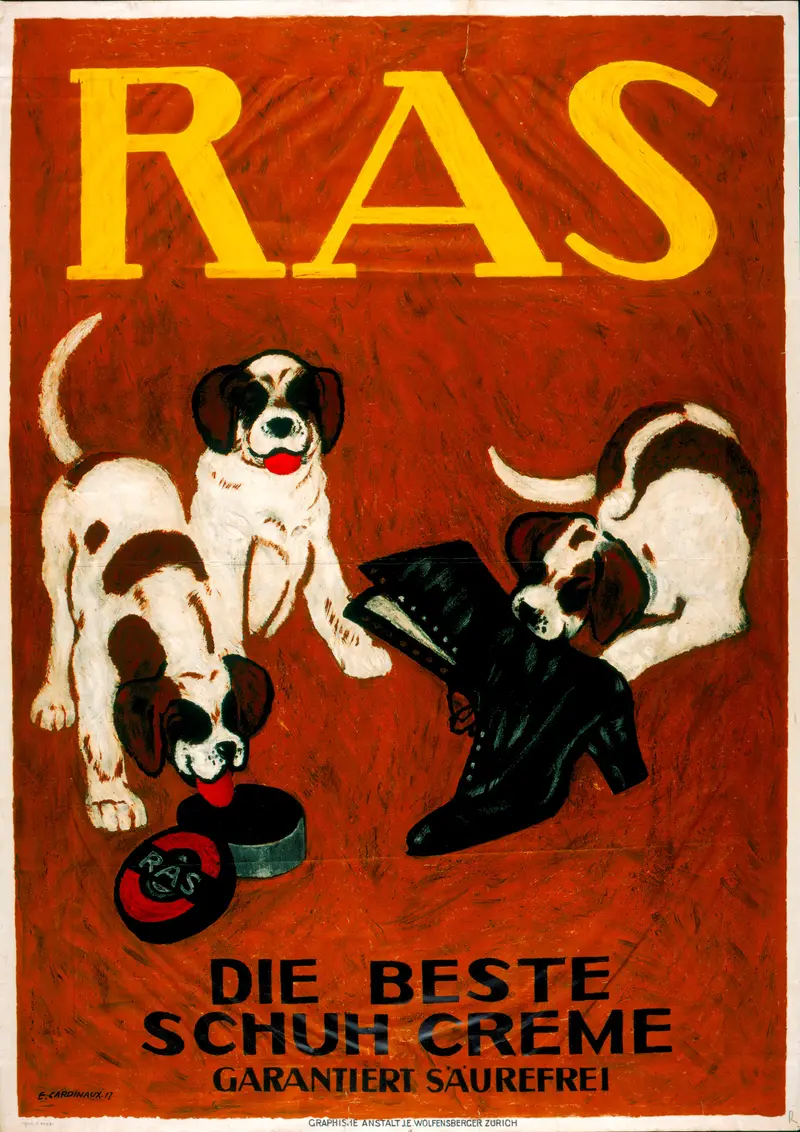
RAS, die beste Schuhcrème
Emil Cardinaux
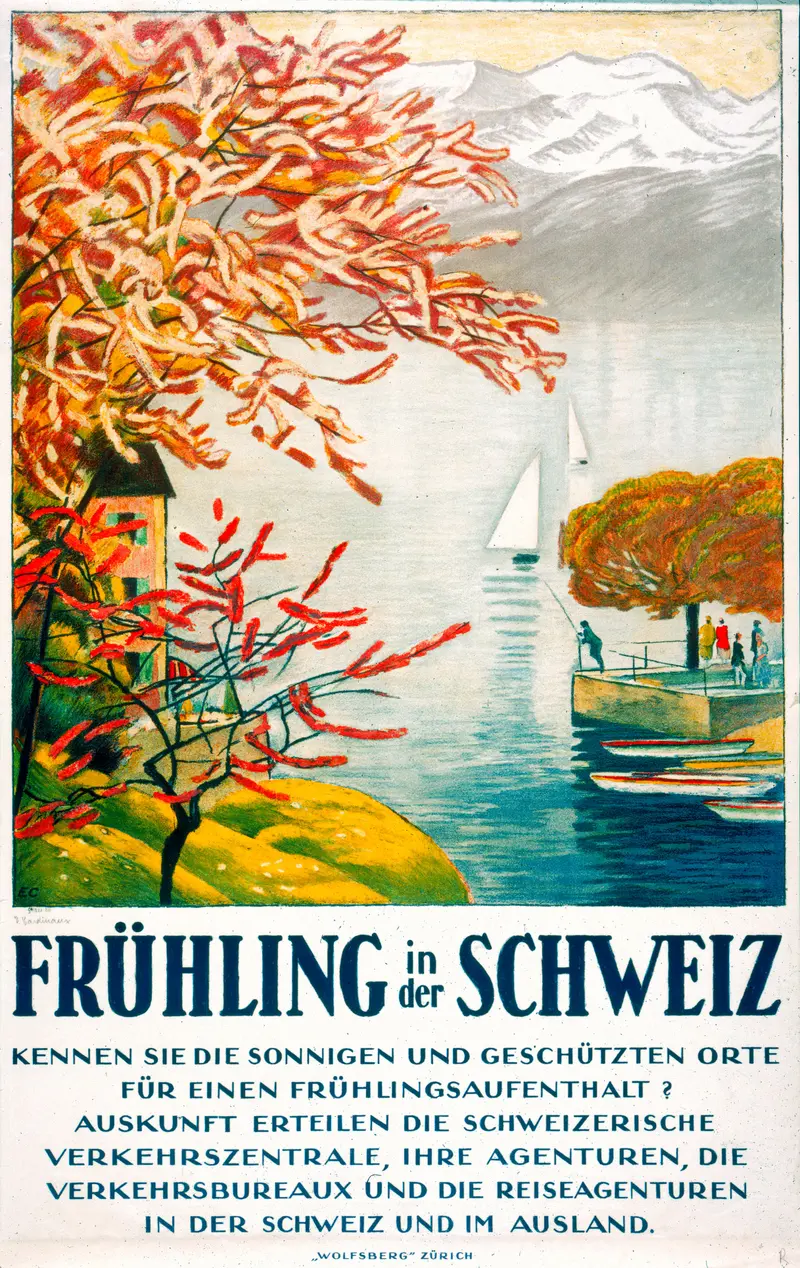
Frühling in der Schweiz
Emil Cardinaux
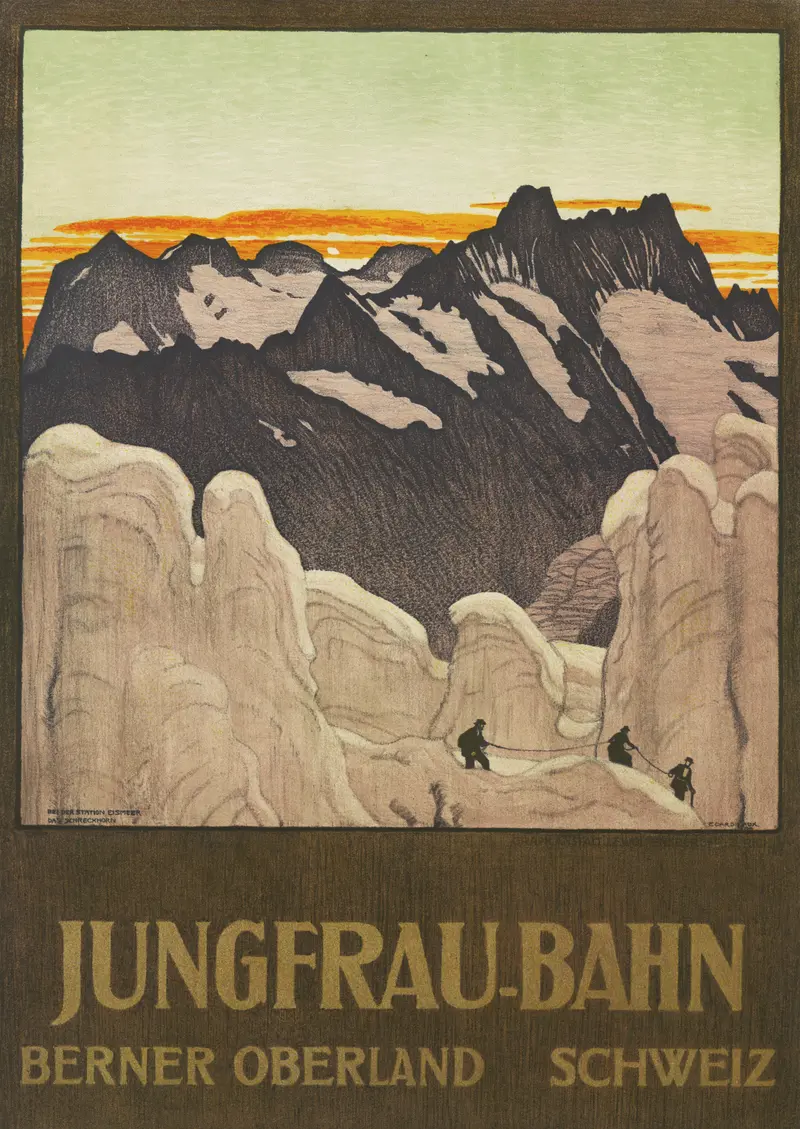
Jungfrau-Bahn, Berner Oberland
Emil Cardinaux

Bally – Schuhe für die Familie
Emil Cardinaux

Winter in Switzerland
Emil Cardinaux
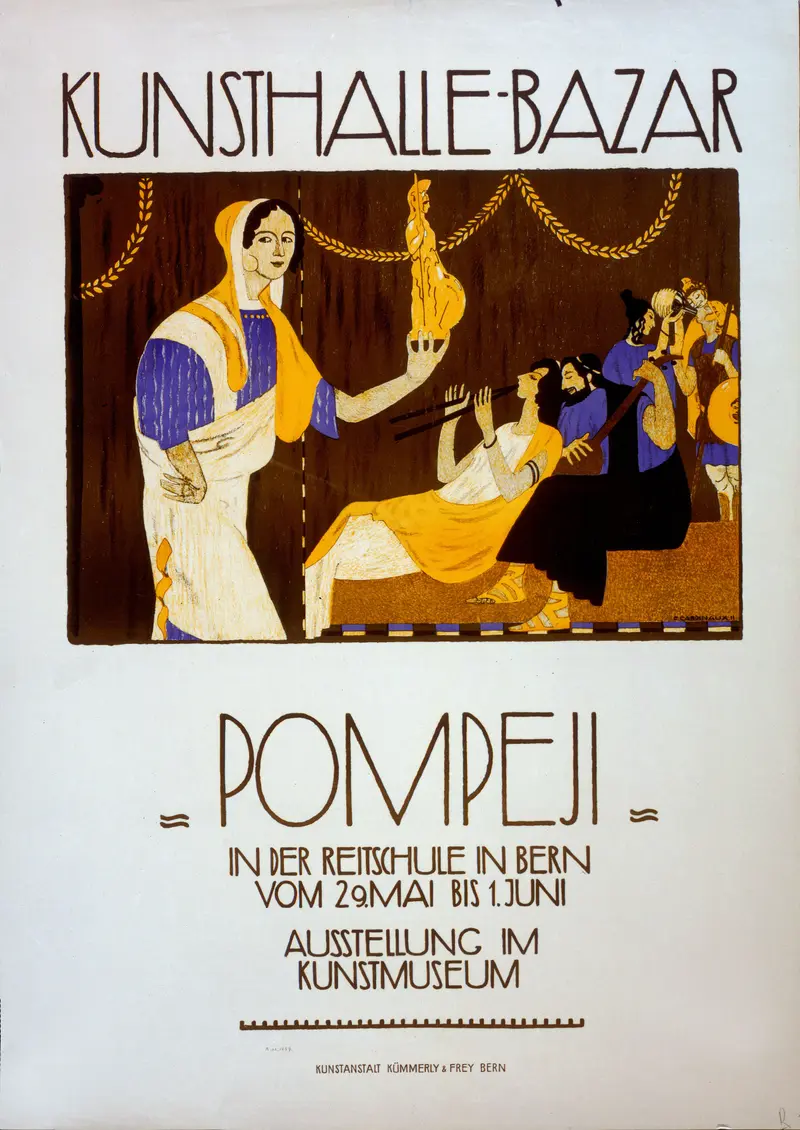
Kunsthalle-Bazar Pompeji, Bern 1911
Emil Cardinaux
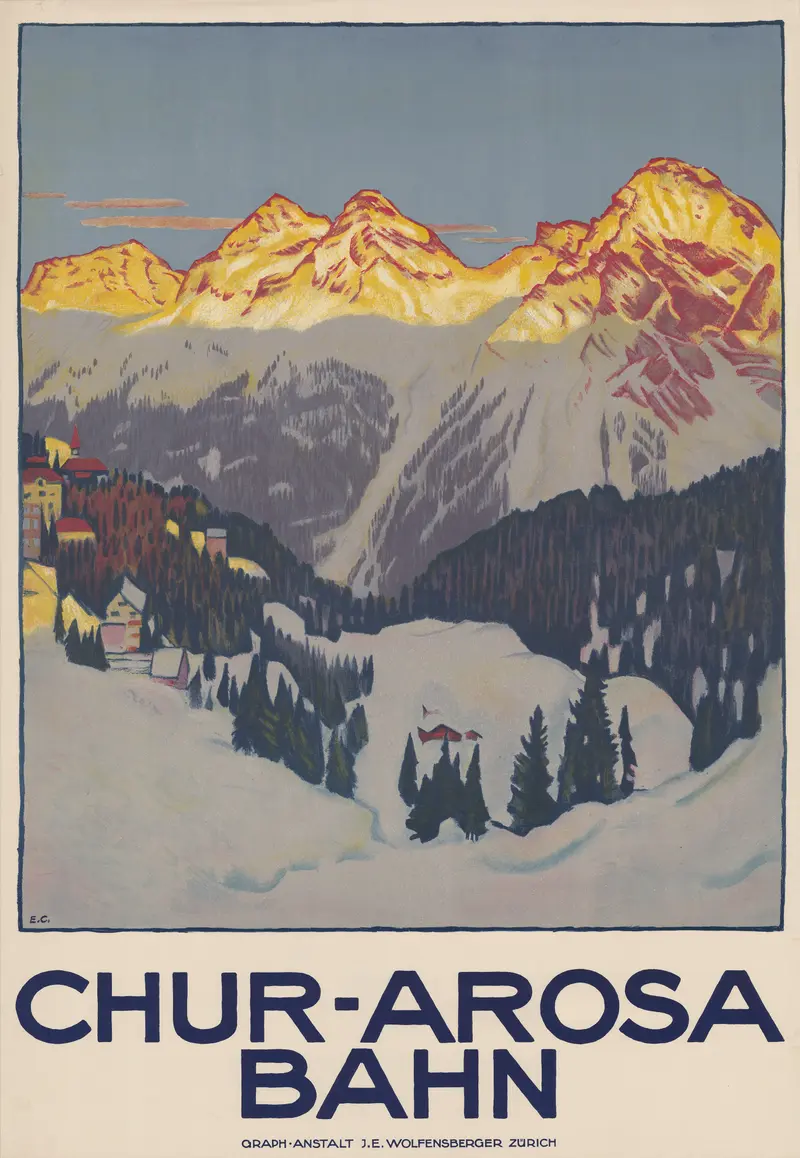
Chur-Arosa-Bahn
Emil Cardinaux
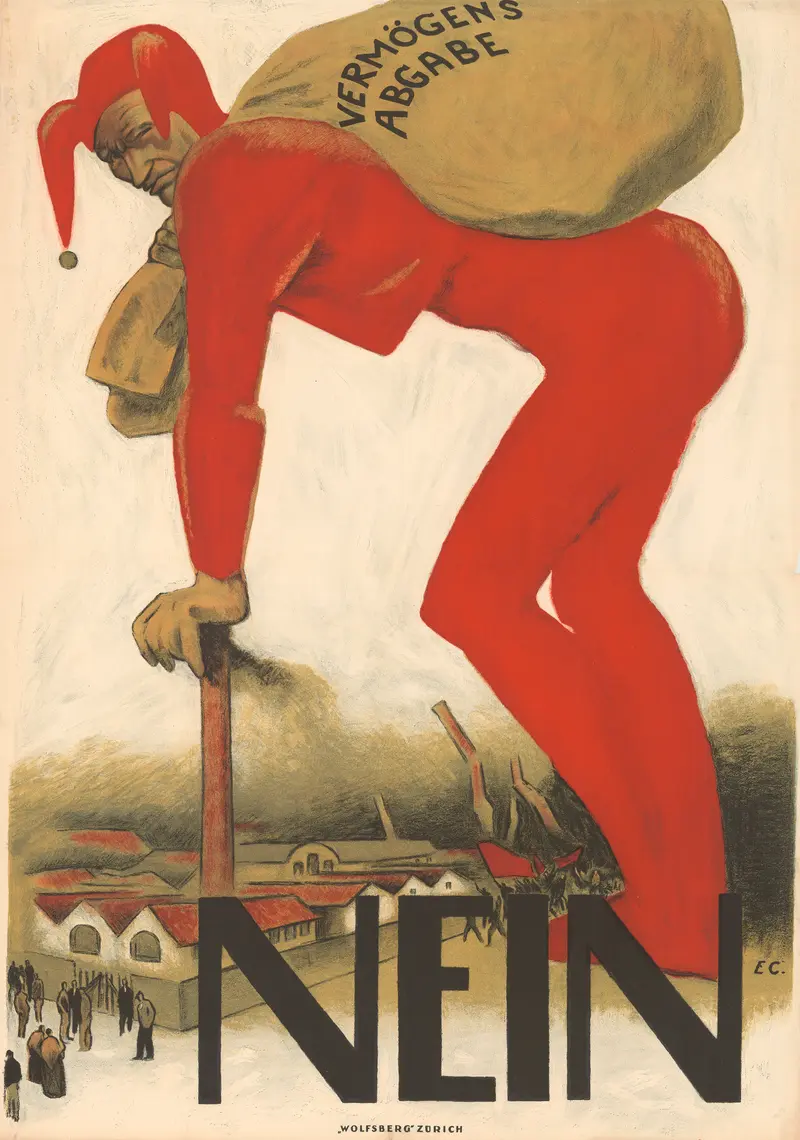
Vermögensabgabe – Nein
Emil Cardinaux
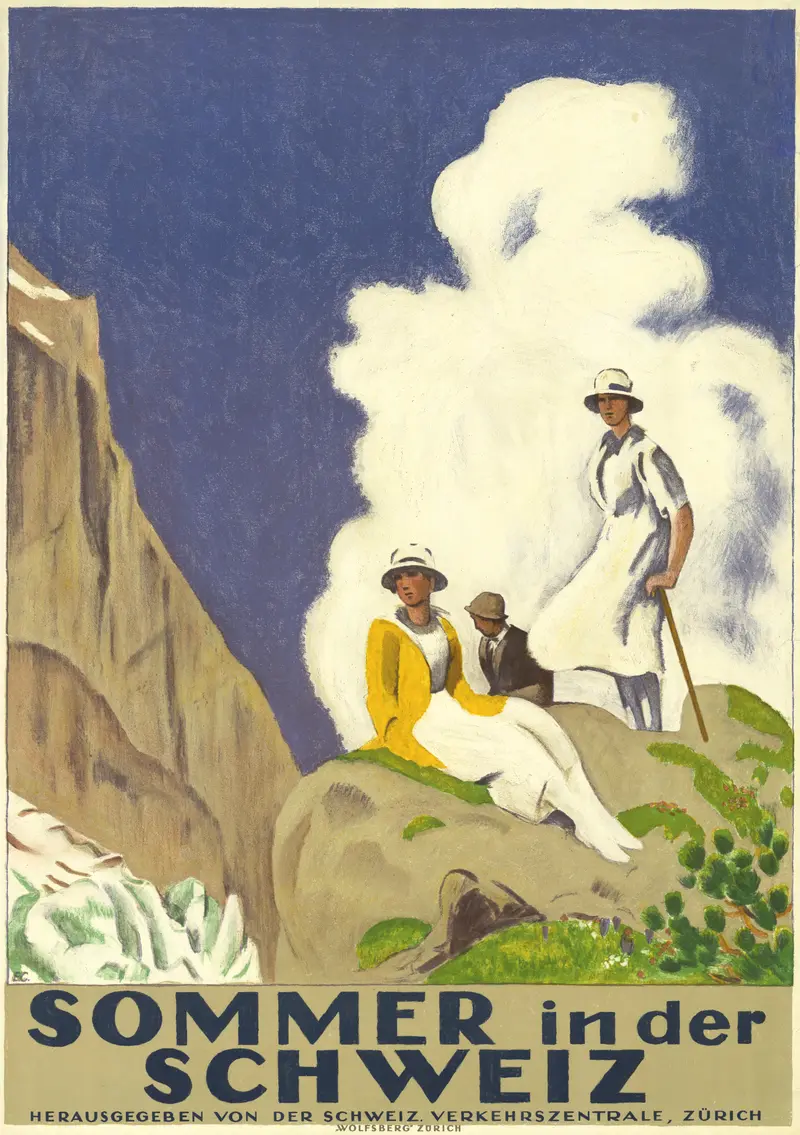
Sommer in der Schweiz
Emil Cardinaux
More Landscape Art

The Starry Night
Vincent van Gogh

View of Delft
Johannes Vermeer

Water Lilies
Claude Monet

The Grand Canal, Venice, looking north-west from the Ca' Corner to the Ca' Contarini degli Scrigni, with the campanile of Santa Maria della Carità
Canaletto

Windsor Castle
Canaletto

The Grand Canal looking North-East from the Palazzo Dolfin-Manin to the Rialto Bridge
Canaletto