
Böhmerwald — History & Facts
Did the painter know this moment would outlive them? In Böhmerwald, time is suspended in a whisper of color and form, a revelation captured forever on canvas. Look to the horizon where rolling hills, cloaked in shades of emerald and deep forest green, embrace a cerulean sky. Notice how the artist has meticulously woven light across the landscape, with golden rays filtering through the trees, illuminating patches of wildflowers at the foreground. The brushstrokes are both bold and tender, evoking the texture of the bark and the softness of the foliage, creating a sense of harmony in nature’s embrace. Beneath this serene visage lies a deeper contrast—the interplay between tranquility and hidden turmoil.
The lush greenery suggests life and abundance, yet there’s an underlying melancholy, a reminder of the encroaching shadows of an uncertain future. The delicate balance of natural beauty and the weight of existence invites viewers to reflect on their own moments of revelation amidst chaos and calm. In 1931, Anton Emanuel Peschka painted this work during a tumultuous period leading up to World War II. Living in Vienna at the time, he was surrounded by the vibrant art movements that sought to capture the essence of Eastern European landscapes.
The rise of modernism influenced his palette and technique, while the political landscape outside his studio hinted at the complexities of life that would soon unfold.
More Artworks by Anton Emanuel Peschka
Browse all →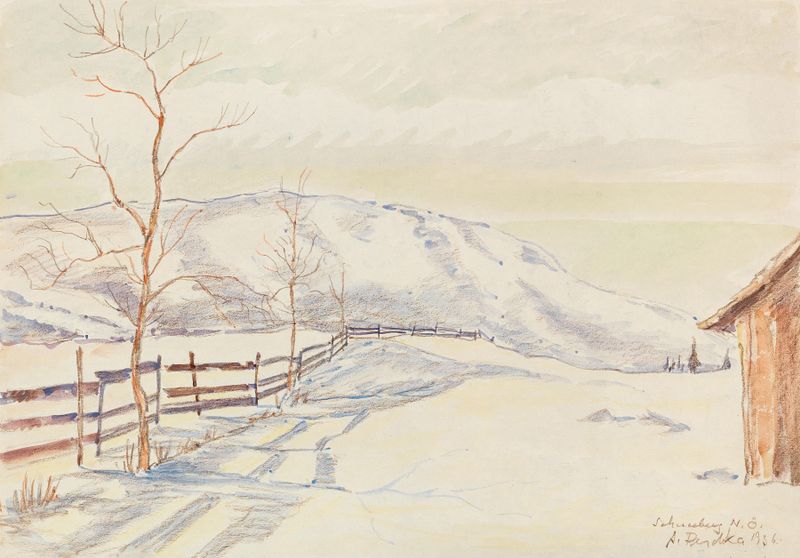
The Schneeberg Mountain in Lower Austria
Anton Emanuel Peschka
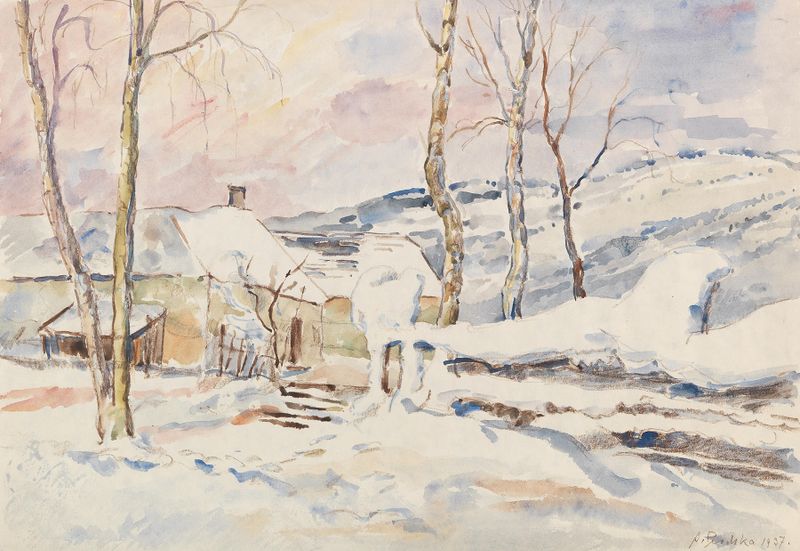
Winterplastiken am Weidezaun
Anton Emanuel Peschka
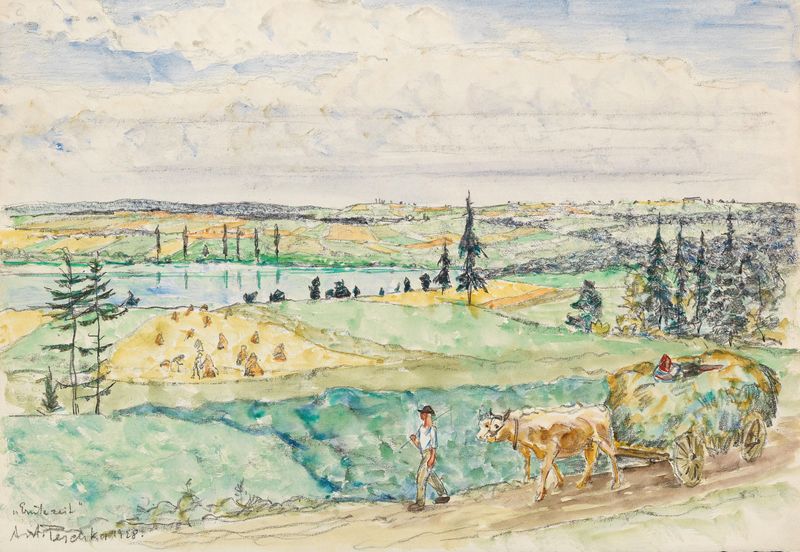
The Harvest
Anton Emanuel Peschka
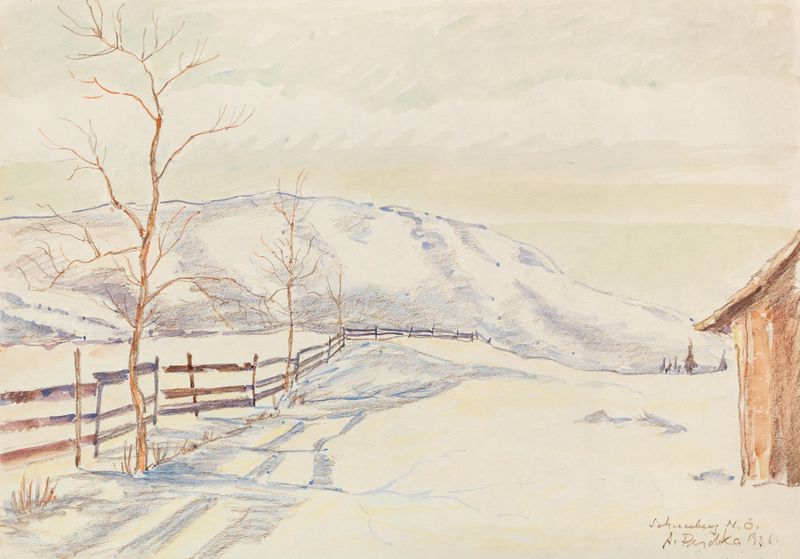
Schneeberg
Anton Emanuel Peschka
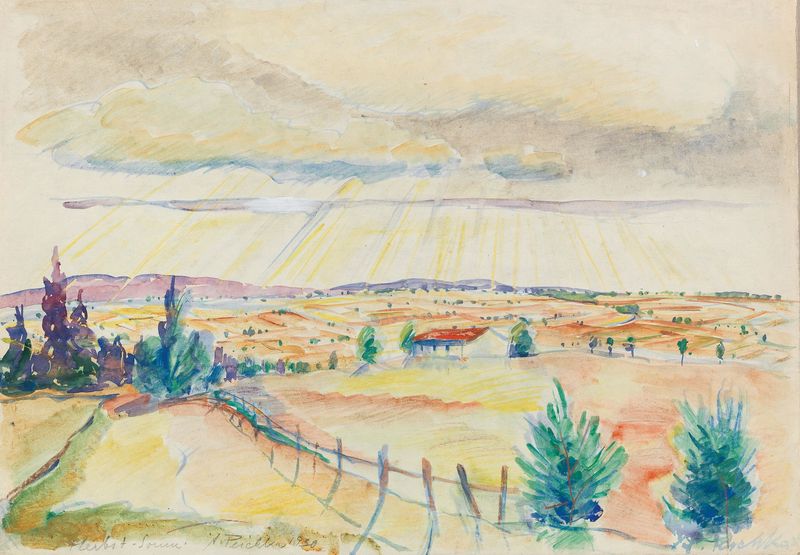
Herbstsonne
Anton Emanuel Peschka
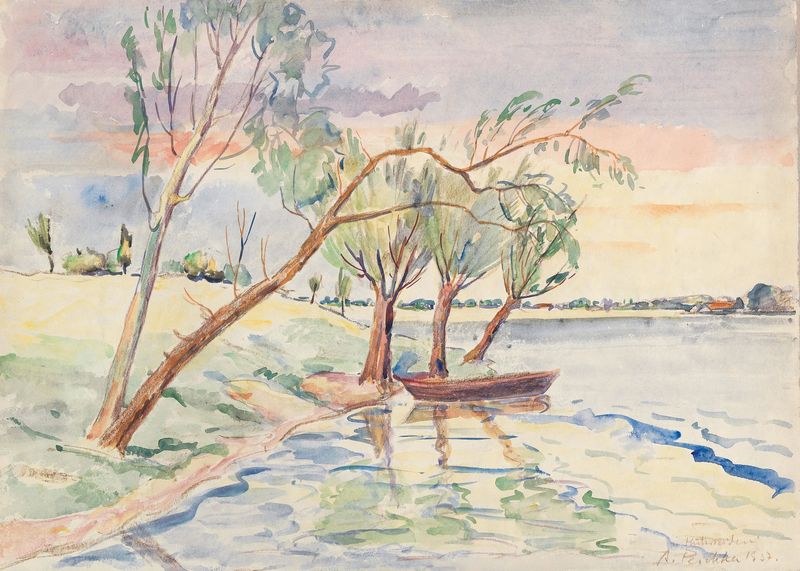
Hutweiden
Anton Emanuel Peschka
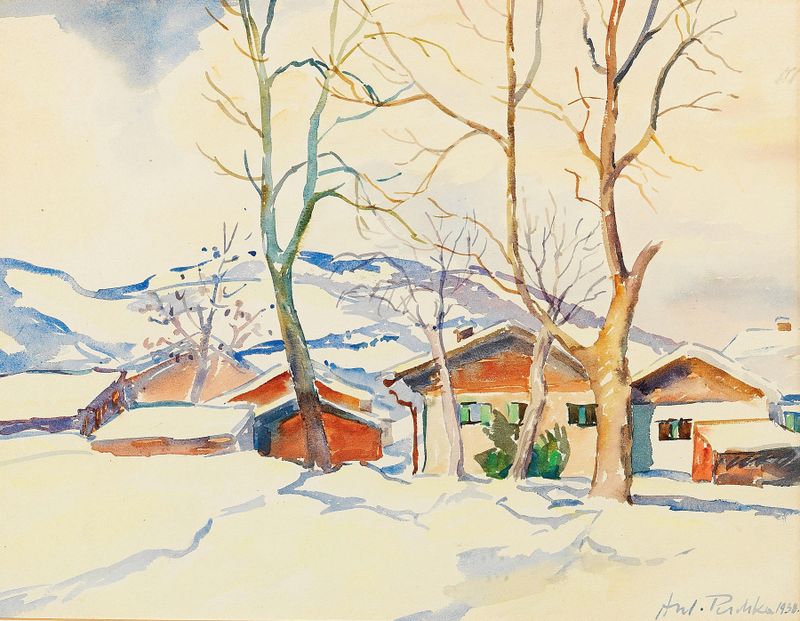
A Winter Landscape
Anton Emanuel Peschka
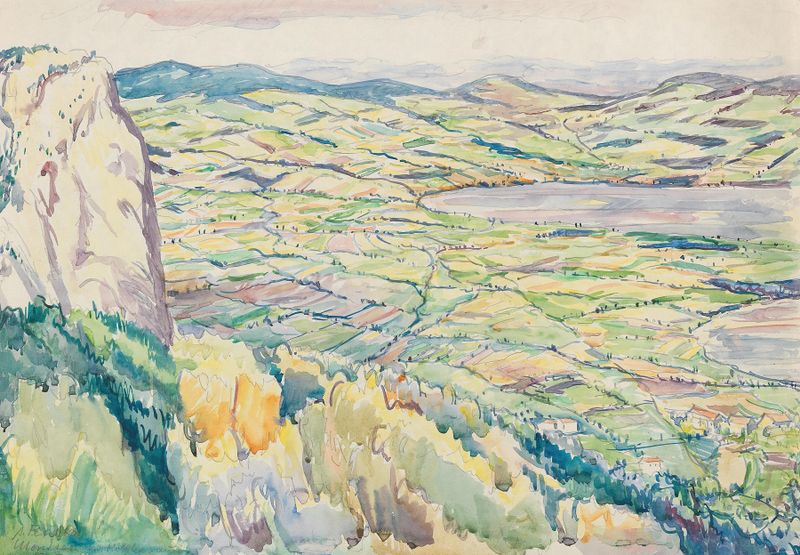
A view of Lake Mondsee from Höllkar
Anton Emanuel Peschka





