
Hutweiden — History & Facts
In the void of existence, a vibrant contrast awaits discovery, revealing layers beneath the surface of perception. Look to the center of the canvas, where the interplay of hues draws your eye. The warm ochres and deep greens create an inviting yet mysterious landscape, while delicate strokes suggest the rustle of grass beneath a gentle breeze. Notice how the light dances across the scene, illuminating the edges of the huts, casting elongated shadows that seem to whisper of stories untold.
The composition invites contemplation, each element positioned with intention to guide the viewer’s journey through an evocative, almost dreamlike space. Yet, within this serene portrayal lies an underlying tension. The void surrounding the huts speaks of absence, as if the inhabitants have momentarily stepped away, leaving their presence felt but unseen. The juxtaposition of vibrant color against the potential emptiness stirs a sense of longing.
One might ponder the lives lived within these walls, the laughter and sorrows that echo in silence, suggesting the poignant duality of human existence. During the time Hutweiden was painted, Peschka was immersed in the rich artistic environment of early 20th-century Europe, grappling with the emerging avant-garde movements. While his exact date of creation remains uncertain, it reflects a period of transition in his life, marked by exploration and a deep connection to the Austrian landscape. The world around him was evolving rapidly, yet his work remains a tranquil pause, inviting viewers to reflect on what exists beyond the visible.
More Artworks by Anton Emanuel Peschka
Browse all →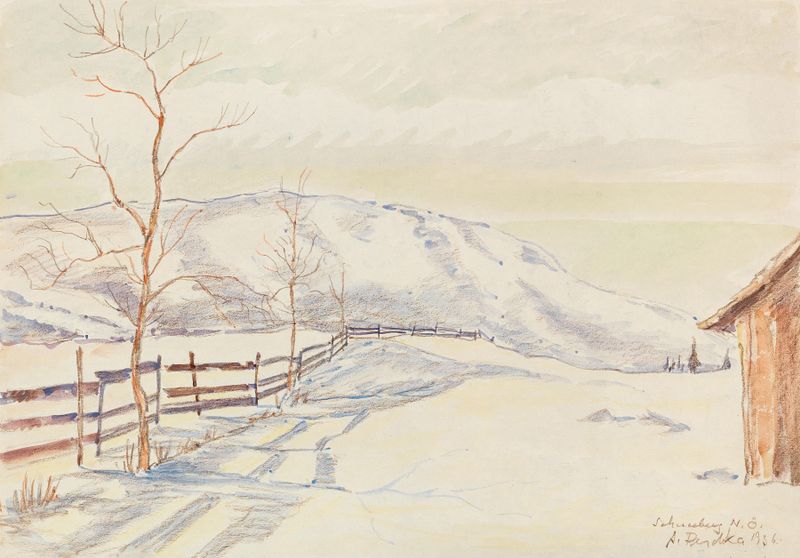
The Schneeberg Mountain in Lower Austria
Anton Emanuel Peschka
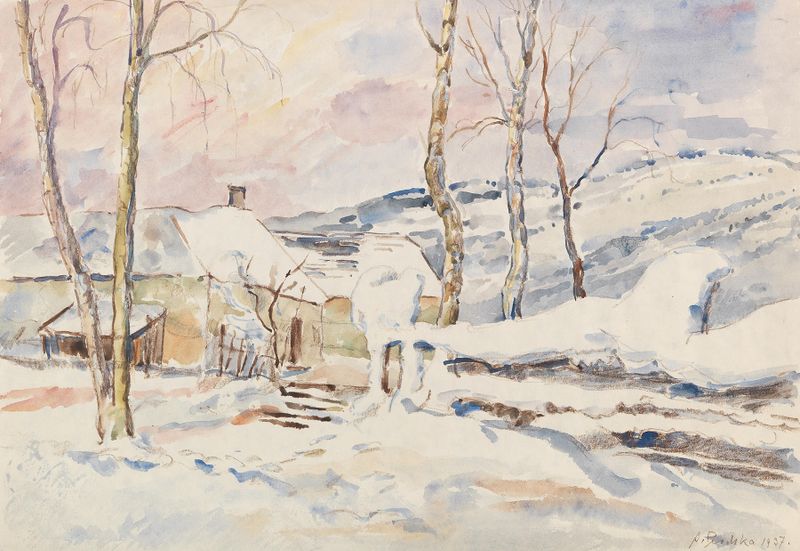
Winterplastiken am Weidezaun
Anton Emanuel Peschka
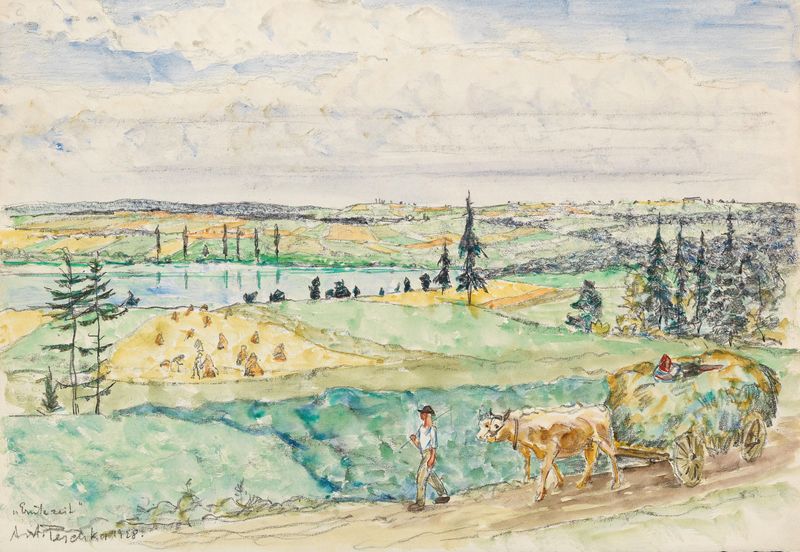
The Harvest
Anton Emanuel Peschka
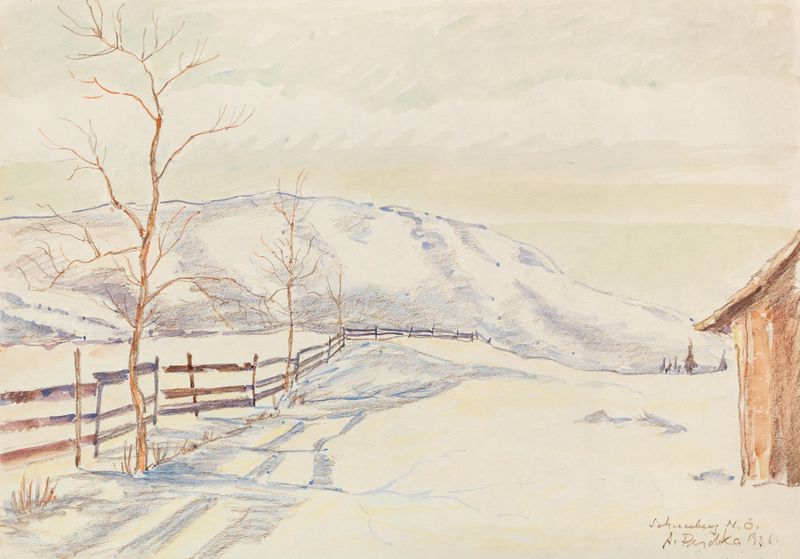
Schneeberg
Anton Emanuel Peschka
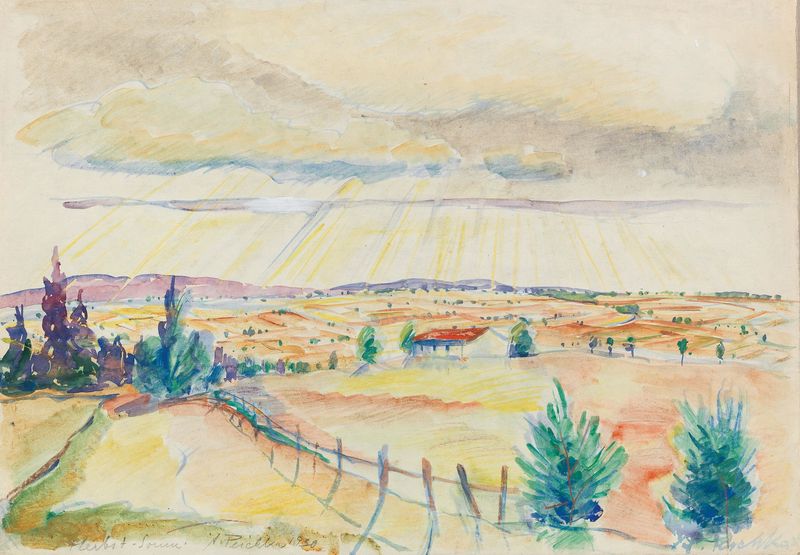
Herbstsonne
Anton Emanuel Peschka
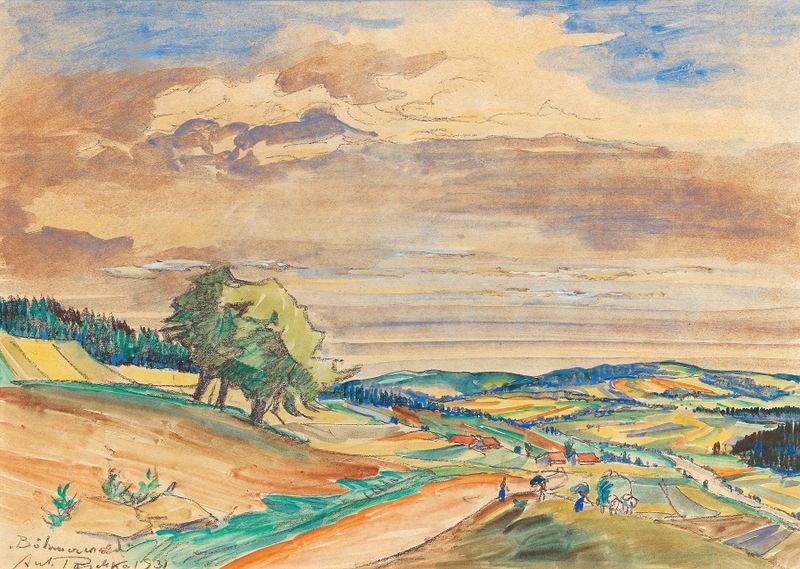
Böhmerwald
Anton Emanuel Peschka
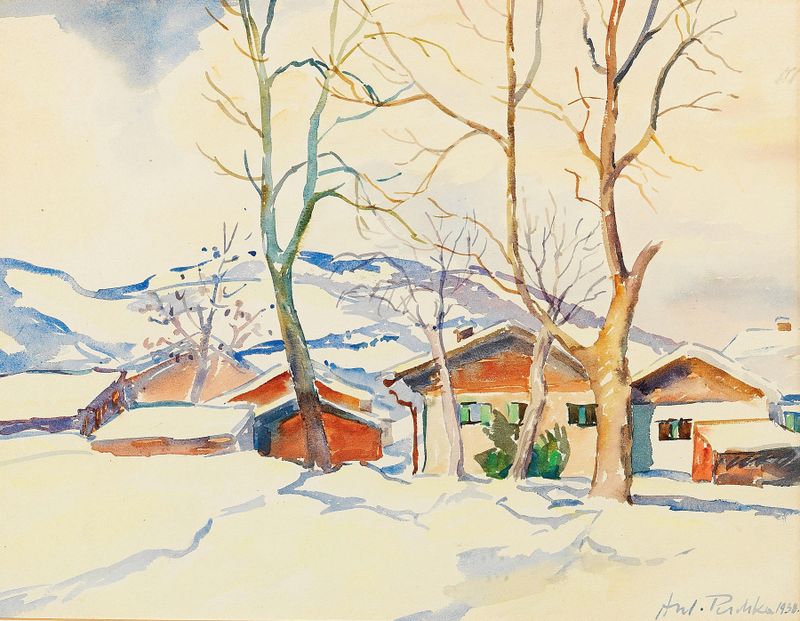
A Winter Landscape
Anton Emanuel Peschka
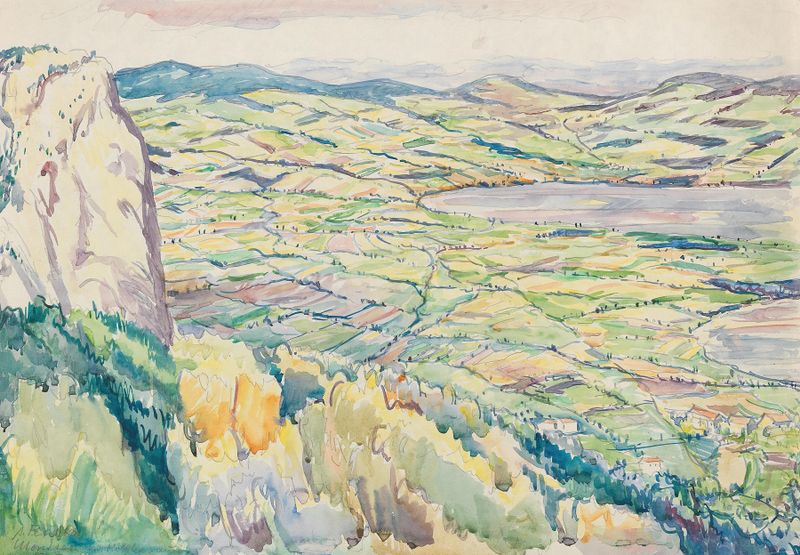
A view of Lake Mondsee from Höllkar
Anton Emanuel Peschka





