
Winterplastiken am Weidezaun — History & Facts
In the gentle embrace of nostalgia, a memory dances at the threshold of consciousness, inviting us to reflect on the layers of our past. Look to the center of the canvas, where a series of delicate winter sculptures emerge along a weathered fence. The soft whites and cool blues evoke a serene chill, while warm browns of the fence contrast, grounding the scene. Notice how the light delicately caresses the snow-laden forms, casting subtle shadows that seem to breathe life into this frozen moment.
Peschka’s brushwork reveals the texture of both ice and wood, harmonizing the quiet beauty of nature with human craftsmanship. At first glance, the piece captures winter’s stillness, yet it resonates with deeper emotions. The starkness of the sculptures against the rugged fence symbolizes the passage of time—elements of nature and human endeavor juxtaposed in a silent dialogue. The simplicity of the composition invites contemplation, urging viewers to consider their own memories entwined with the seasons and the transience of life itself.
Each sculptural form becomes a vessel for personal reflection, hinting at the fragility of our own histories. In 1937, Peschka painted this work in Austria, a time when he was increasingly interested in exploring themes of identity and memory in his art. The world was on the brink of upheaval, yet within this landscape, he found solace in the quietude of winter. This piece reflects his dedication to capturing the essence of moments that might otherwise fade, a poignant testament to both the era's introspection and the artist's vision.
More Artworks by Anton Emanuel Peschka
Browse all →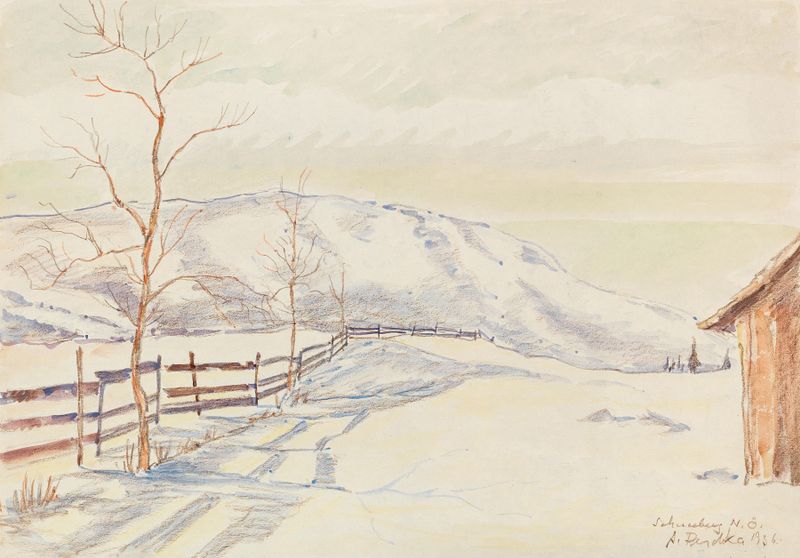
The Schneeberg Mountain in Lower Austria
Anton Emanuel Peschka
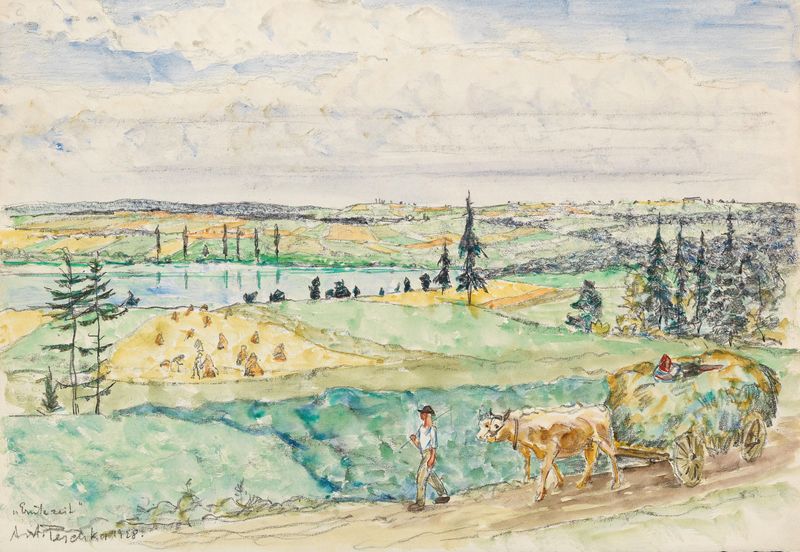
The Harvest
Anton Emanuel Peschka
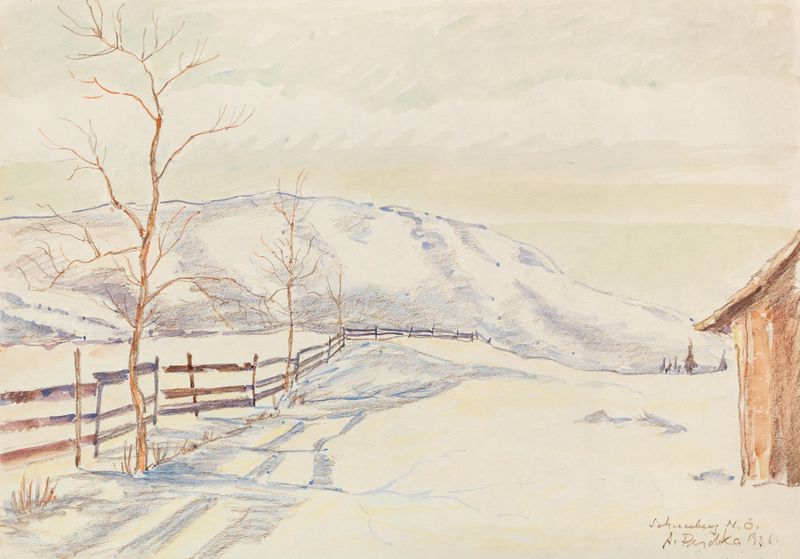
Schneeberg
Anton Emanuel Peschka
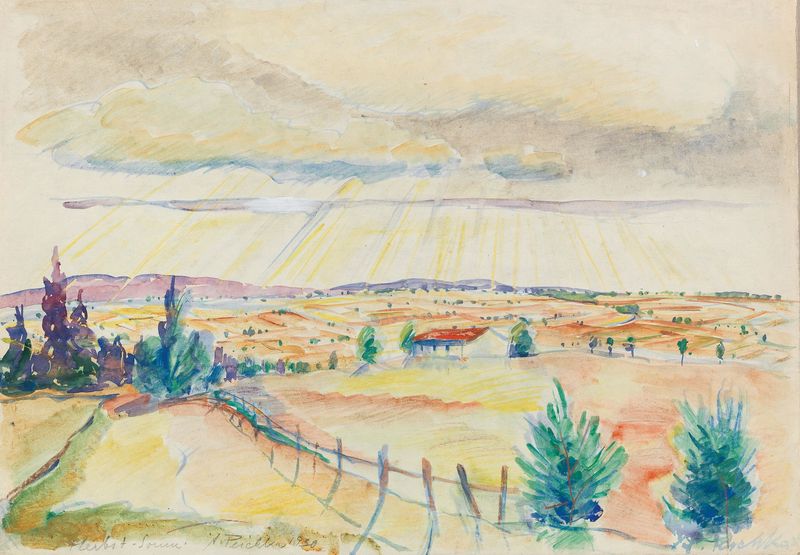
Herbstsonne
Anton Emanuel Peschka
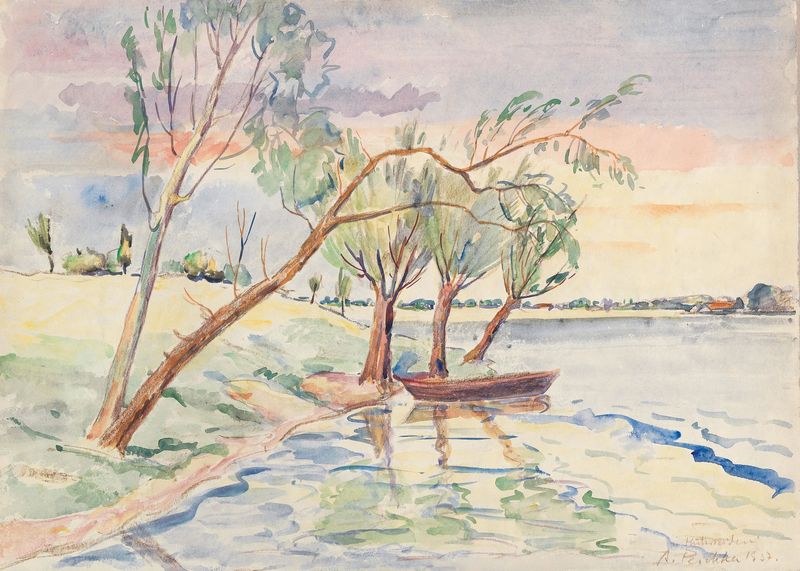
Hutweiden
Anton Emanuel Peschka
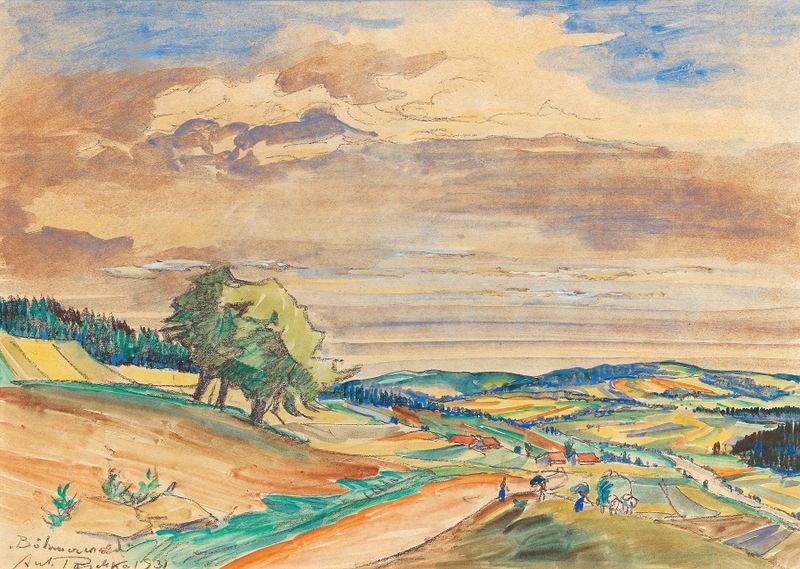
Böhmerwald
Anton Emanuel Peschka
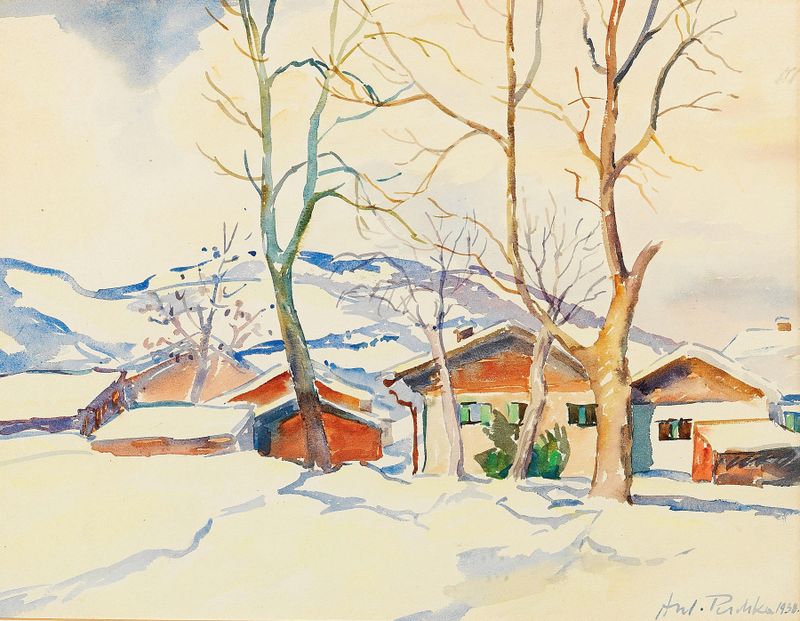
A Winter Landscape
Anton Emanuel Peschka
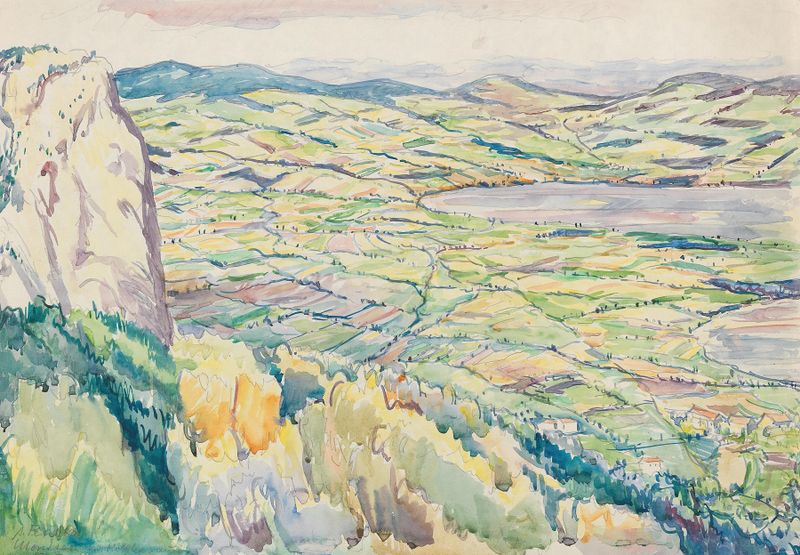
A view of Lake Mondsee from Höllkar
Anton Emanuel Peschka





