
Bildstock hinter der Karlskirche — History & Facts
Could beauty survive in a century of chaos? This question lingers in the hushed spaces between memories, where the past and present gently intertwine. Look to the center of the canvas, where a weathered shrine stands against a backdrop of towering architecture and vibrant foliage. The colors are a palette of earthy browns and lush greens, imbued with a soft, ethereal light that caresses the textures of the shrine's surface. Notice how Moser skillfully captures the play of dappled sunlight filtering through the trees, casting intricate shadows that breathe life into the scene.
The juxtaposition of the sturdy stone with the delicate play of nature evokes a sense of harmony, as if the shrine is a guardian of lost stories. Delve into the subtle emotional tones of the piece — the tension between permanence and transience. The shrine, a symbol of memory and reverence, stands resolute amid the ephemeral beauty surrounding it. The sweeping curves of the nearby trees contrast with the rigid lines of the shrine, creating an unspoken dialogue about the fragility of human constructs against the relentless march of time.
Each brushstroke feels like a whisper from the past, urging us to remember those who came before. In 1912, Richard Moser painted this work in Vienna, a city alive with artistic experimentation yet haunted by the shadows of impending conflict. At this time, the art world was shifting, embracing new movements while clinging to tradition. Moser's attention to detail and reflection on memory can be seen as a response to the turbulence of his era, capturing a moment of beauty amidst the uncertainty that lay ahead.
More Artworks by Richard Moser
Browse all →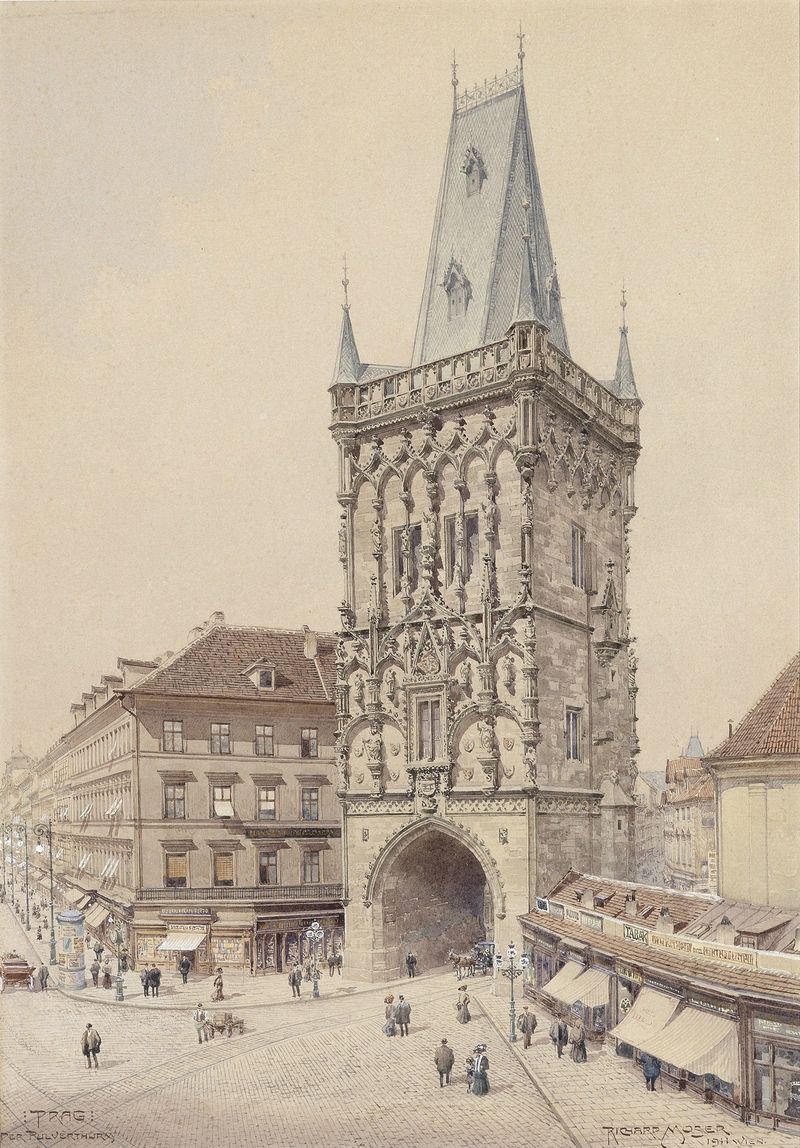
Prag Pulverturm
Richard Moser
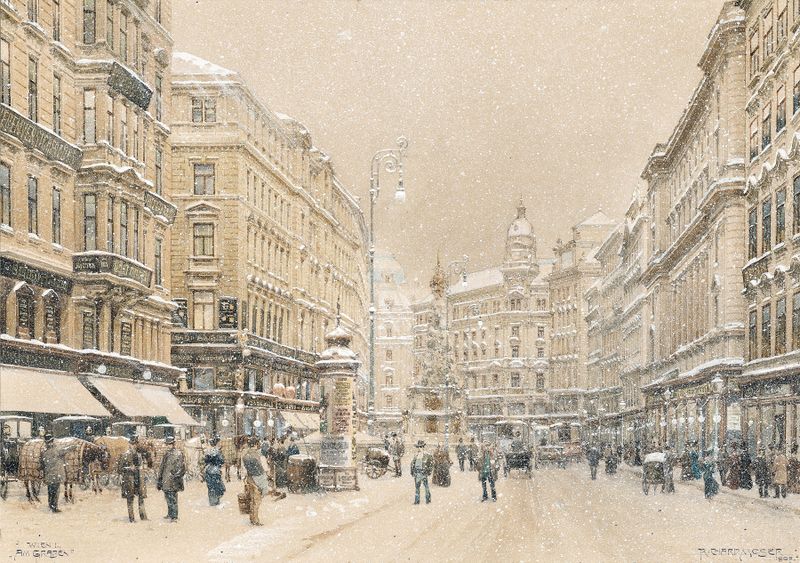
Graben in Vienna at snow flurry
Richard Moser

Wien Am Hof
Richard Moser

Stephansdom Pilgramkanzel
Richard Moser

A view of the church and monastery of the Visitation of the Virgin (church of the Salesian sisters) a gardener in the foreground
Richard Moser

Die Jubiläumsausstellung in Wien 1898; Pavillion der Stadt Wien
Richard Moser
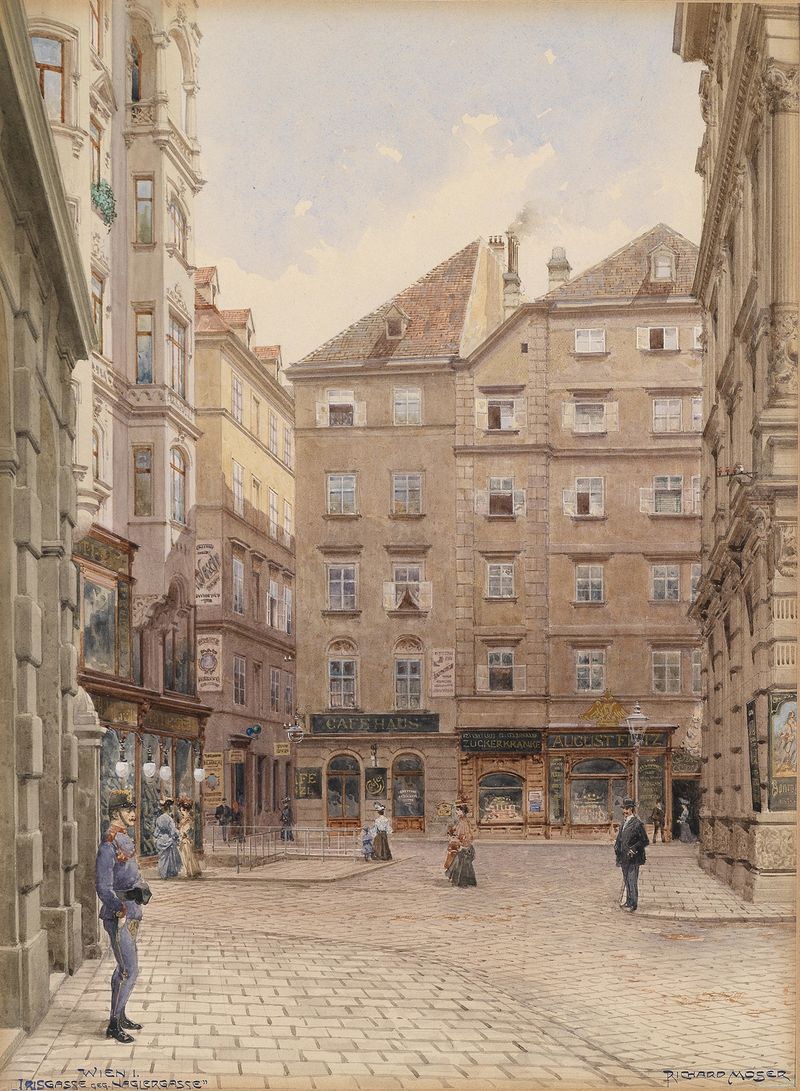
Wien Irisgasse gegen Naglergasse
Richard Moser
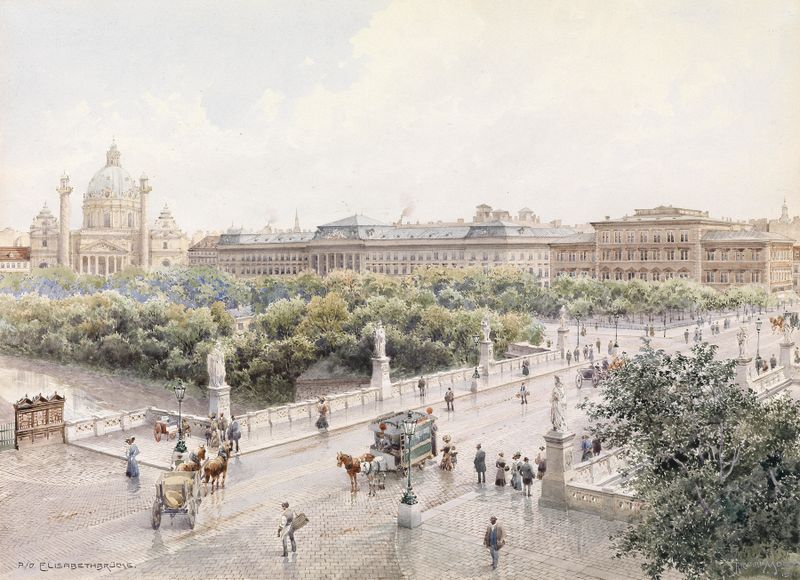
Wien Elisabethbrücke
Richard Moser
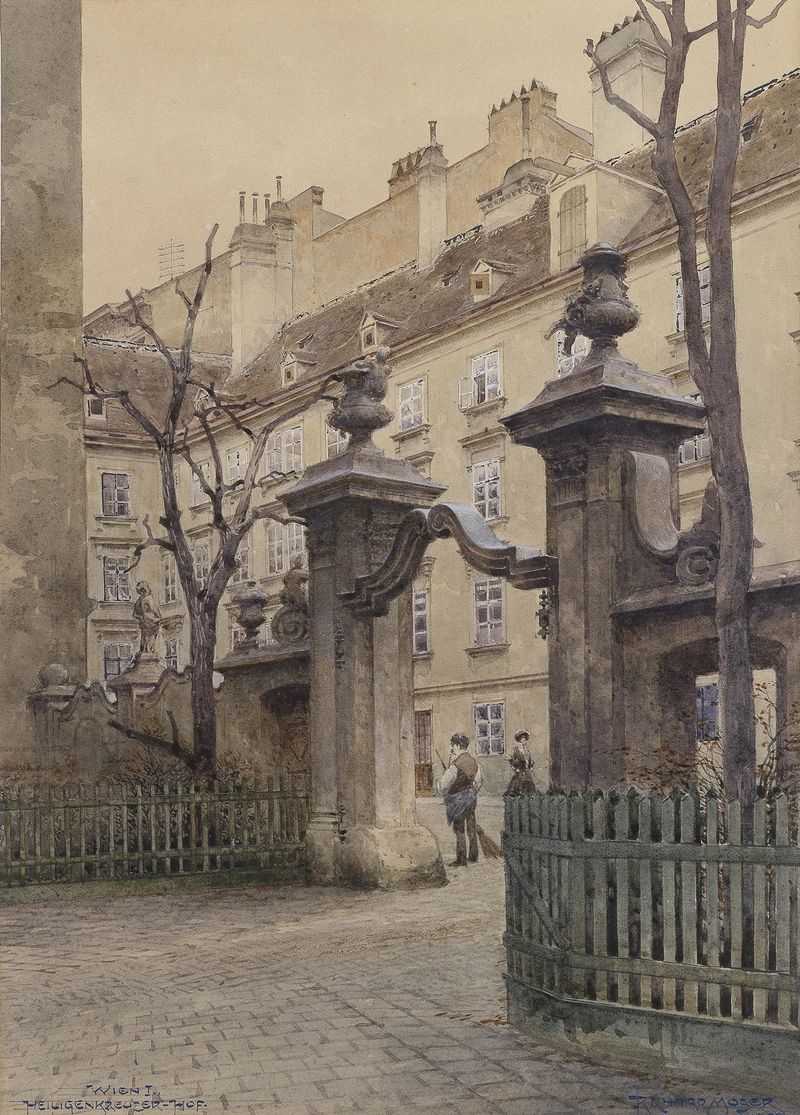
Heiligenkreuzerhof in Wien
Richard Moser
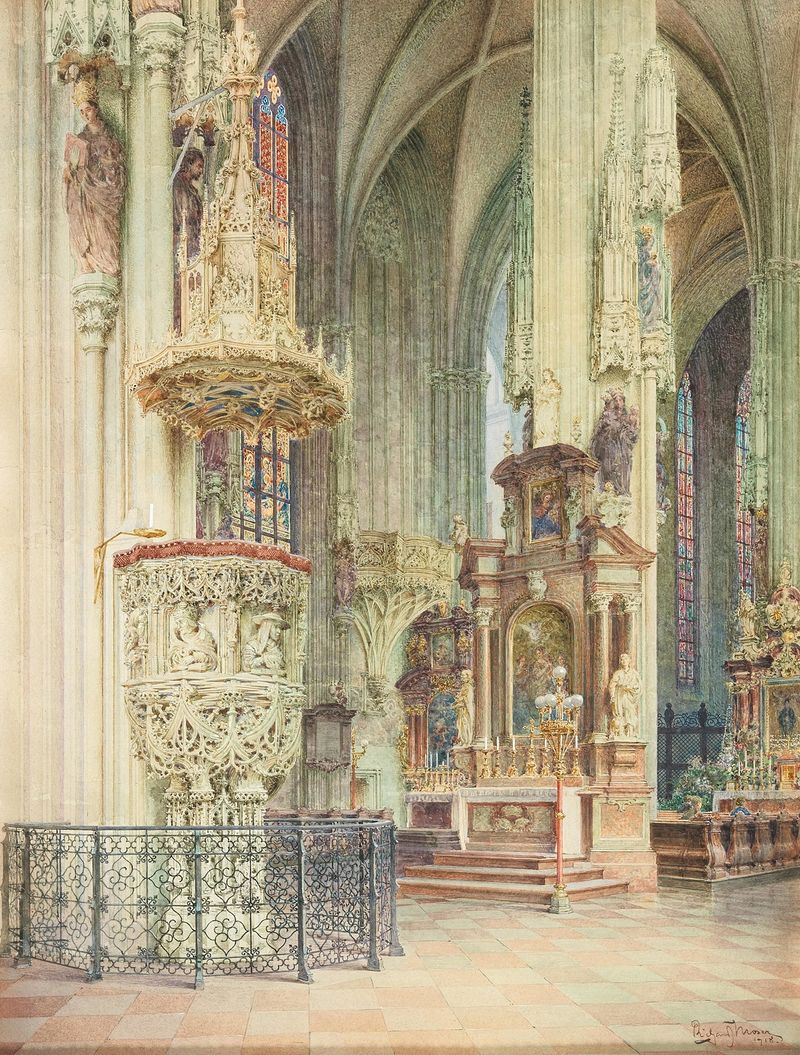
Inneres des Stephansdoms mit Pilgramkanzel
Richard Moser
More Architecture Art
Browse all →
The statue of Liberty
Frédéric Auguste Bartholdi

View of Houses in Delft, Known as ‘The Little Street’
Johannes Vermeer

View of Houses in Delft, Known as ‘The Little Street’
Johannes Vermeer

The Cathedral in Rouen. The portal, Grey Weather
Claude Monet

The yellow house
Vincent van Gogh

The Church in Auvers-sur-Oise, View from the Chevet
Vincent van Gogh