
Prag Pulverturm — History & Facts
In a world teetering on the brink of revolution, the act of creation becomes an act of defiance. How do we capture the remnants of our past when the future seems poised to erase them? Look to the foreground, where a solitary tower stands against a tumultuous sky. The structure, a bold geometric form, emerges from a rich tapestry of dark hues, evoking both the solidity of historical memory and the fragility of current existence.
Notice how the light dances upon the surface, playing with shadow and illuminating details that might otherwise be lost. The brushwork is both vigorous and deliberate, as if the artist is wrestling with the very essence of time itself. Within the rugged lines of the tower lies a tension between permanence and the societal upheaval that looms. The stark contrasts of light and dark suggest an impending breakthrough, a violent shift that could either obliterate or liberate.
Each stroke embodies the artist's anticipation and anxiety, hinting at the broader struggles of identity and history that shape our personal and collective narratives. The tower represents more than a mere structure; it stands as a testament to resilience amid chaos. Richard Moser painted Prag Pulverturm in 1911 while living in the heart of Europe, a continent steeped in the prelude to the First World War. At this moment, the art world grappled with modernity, and traditional forms were challenged by emerging styles.
Moser's work reflects his awareness of the dynamics of change, both in society and in his artistic practice, as he sought to capture the essence of a rapidly evolving world.
More Artworks by Richard Moser
Browse all →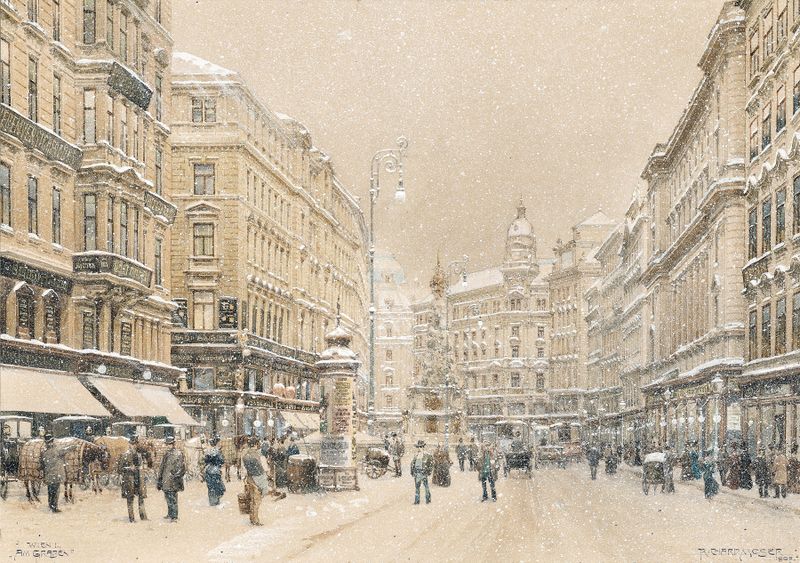
Graben in Vienna at snow flurry
Richard Moser

Wien Am Hof
Richard Moser

Stephansdom Pilgramkanzel
Richard Moser

A view of the church and monastery of the Visitation of the Virgin (church of the Salesian sisters) a gardener in the foreground
Richard Moser

Die Jubiläumsausstellung in Wien 1898; Pavillion der Stadt Wien
Richard Moser
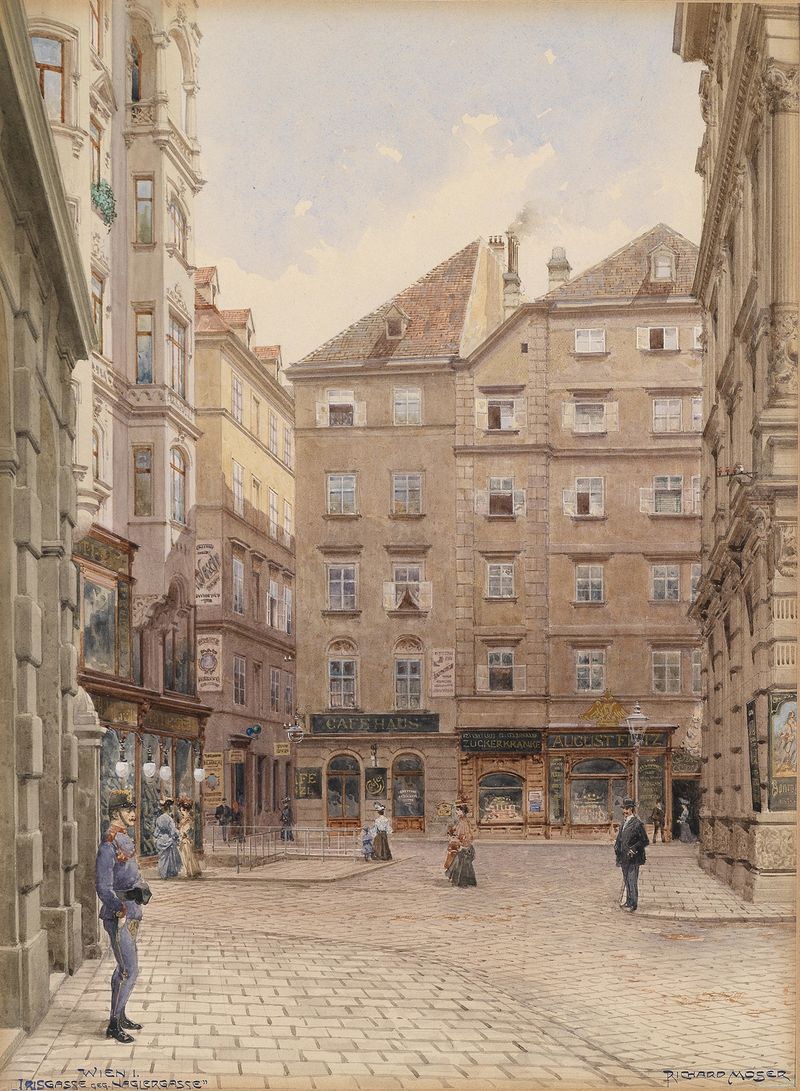
Wien Irisgasse gegen Naglergasse
Richard Moser
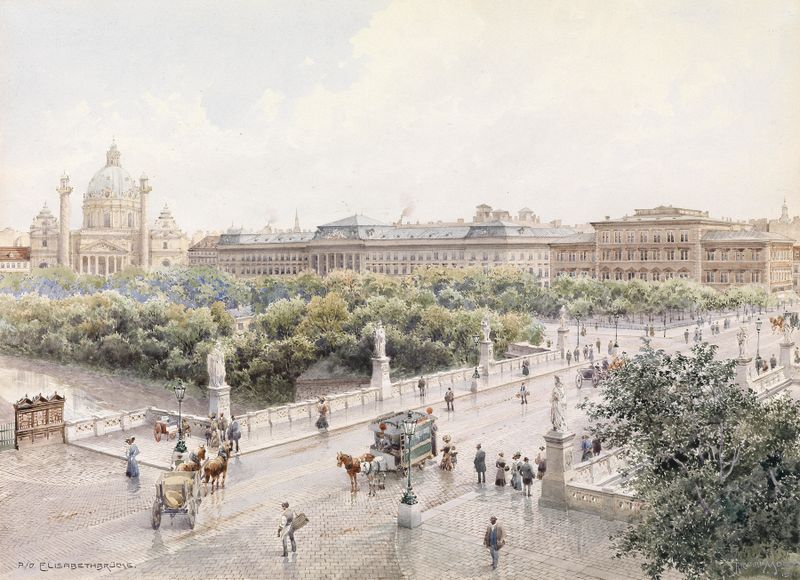
Wien Elisabethbrücke
Richard Moser
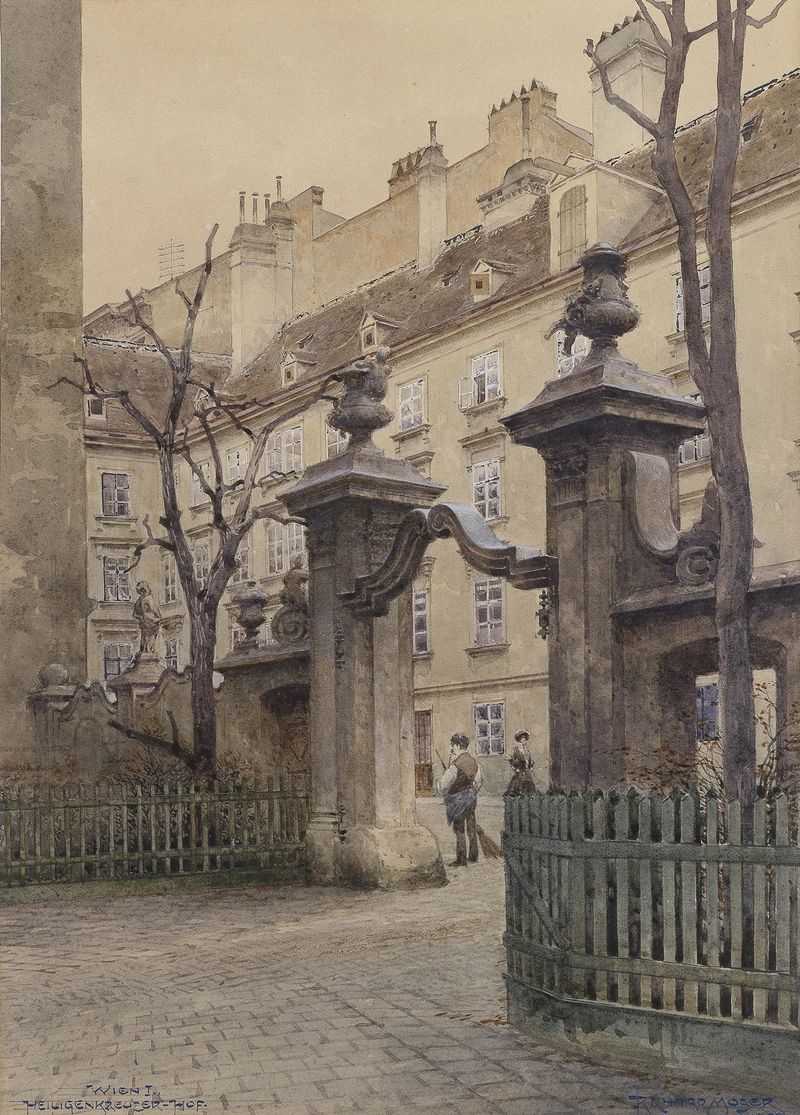
Heiligenkreuzerhof in Wien
Richard Moser
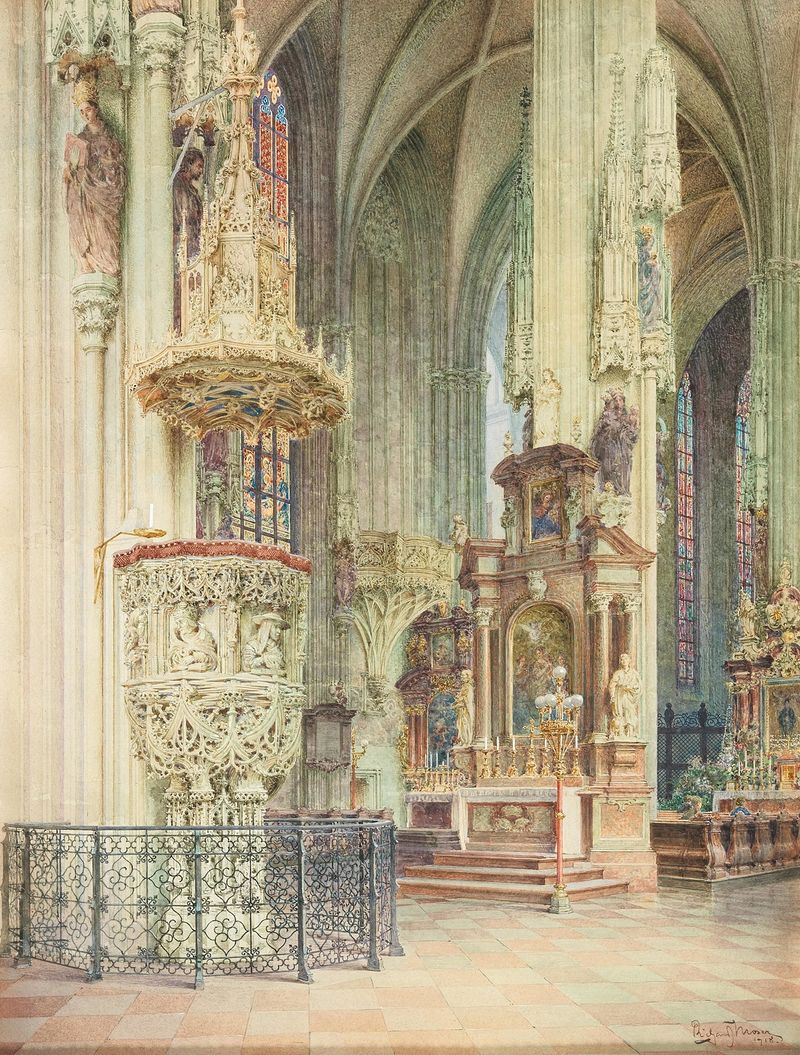
Inneres des Stephansdoms mit Pilgramkanzel
Richard Moser
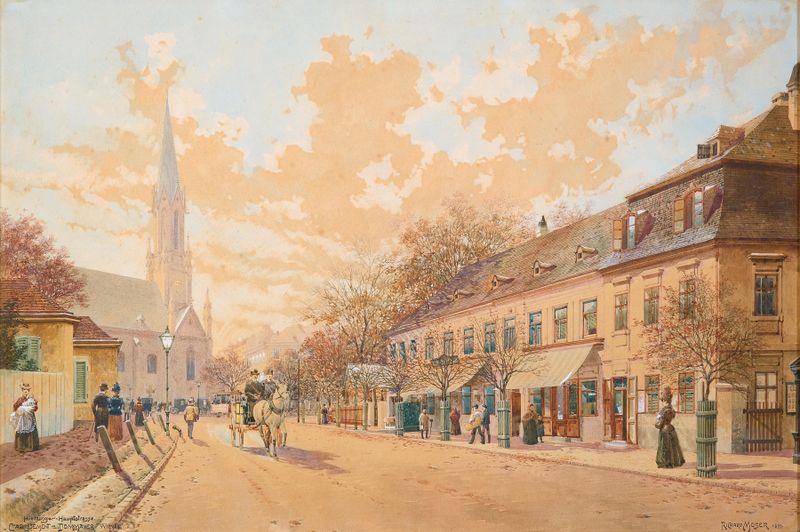
Hietzinger Hauptstrasse
Richard Moser





