
Stephansdom Pilgramkanzel — History & Facts
This profound observation encapsulates the tension that vibrates through art, where emotions linger between the strokes of the brush. Fear, often lurking in the shadows of our consciousness, finds expression in unexpected forms and colors. Look to the left at the intricate details of the pulpit structure, masterfully rendered to evoke both reverence and foreboding. The deep, rich hues of the wood juxtaposed with the starkness of the surrounding space create a palpable tension, pulling the viewer into a moment suspended in time.
Notice how the light dances across the carvings, casting shadows that seem to whisper secrets of the past, while the angle of the viewer's perspective invites contemplation, almost a challenge to engage with what lies beneath the surface. Within this composition, Moser weaves layers of meaning — the pulpit, a place for preaching hope, stands counter to the atmosphere of unease that permeates the scene. The austere lines of the architecture suggest confinement, reflecting the societal fears of 1916, a year marked by the chaos of World War I. The delicate balance between the sacred and the secular hints at the uncertainty of faith in a fractured world, urging the viewer to confront their own apprehensions. In 1916, Moser was in Vienna, deeply influenced by the shifting tides of art and politics.
As Europe grappled with the horrors of war, artists began to explore themes of existential dread and societal fragmentation. This period saw a burgeoning of modernist expression, and Moser's work reflects not only his personal struggle but also the collective anxiety of an era seeking beauty amid turmoil.
More Artworks by Richard Moser
Browse all →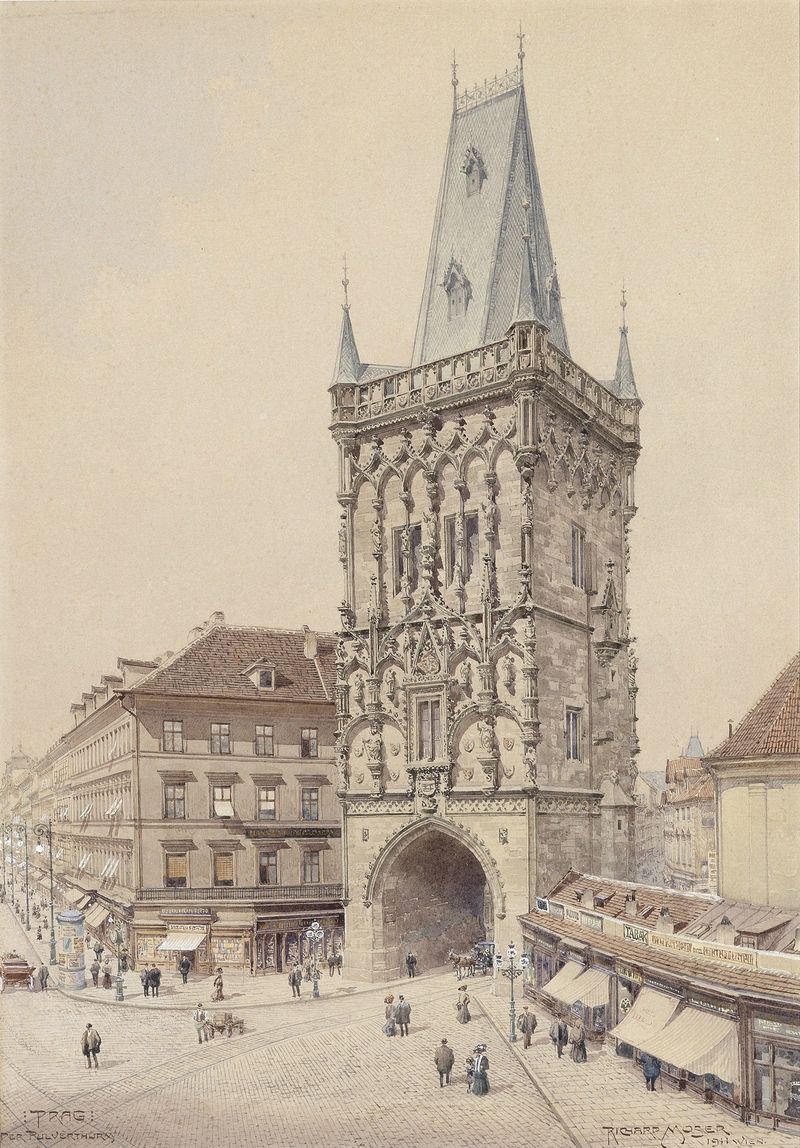
Prag Pulverturm
Richard Moser
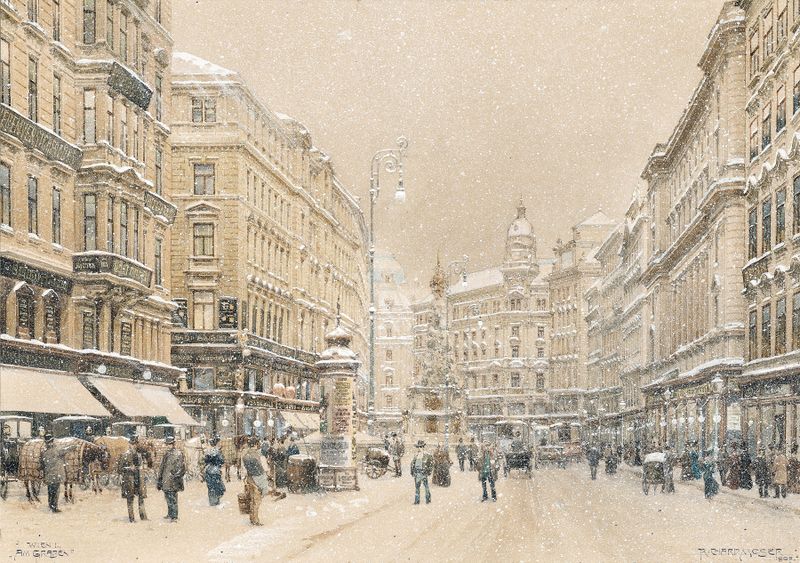
Graben in Vienna at snow flurry
Richard Moser

Wien Am Hof
Richard Moser

A view of the church and monastery of the Visitation of the Virgin (church of the Salesian sisters) a gardener in the foreground
Richard Moser

Die Jubiläumsausstellung in Wien 1898; Pavillion der Stadt Wien
Richard Moser
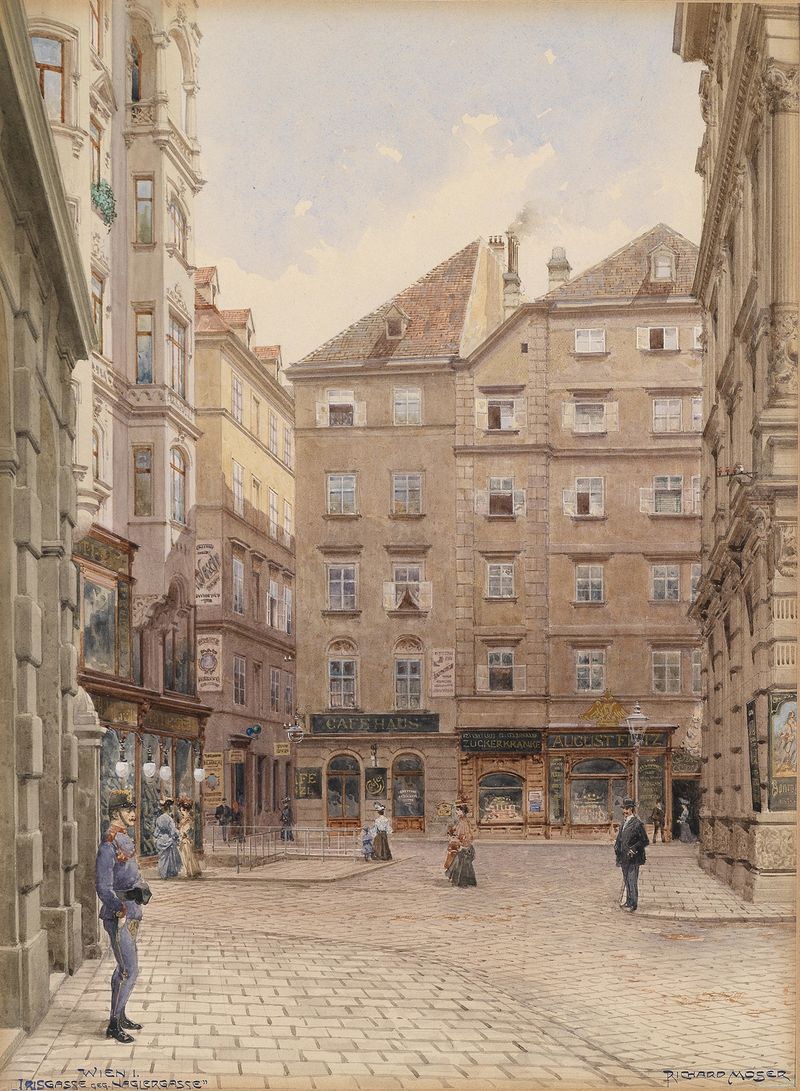
Wien Irisgasse gegen Naglergasse
Richard Moser
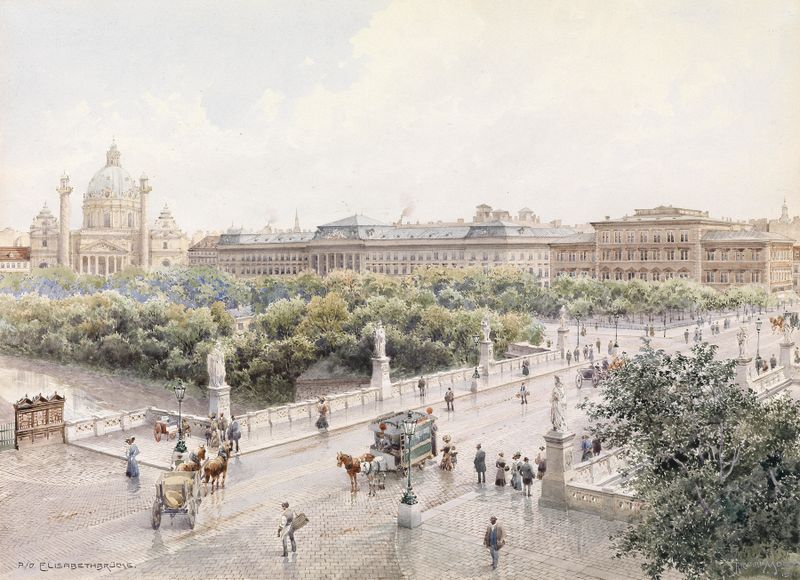
Wien Elisabethbrücke
Richard Moser
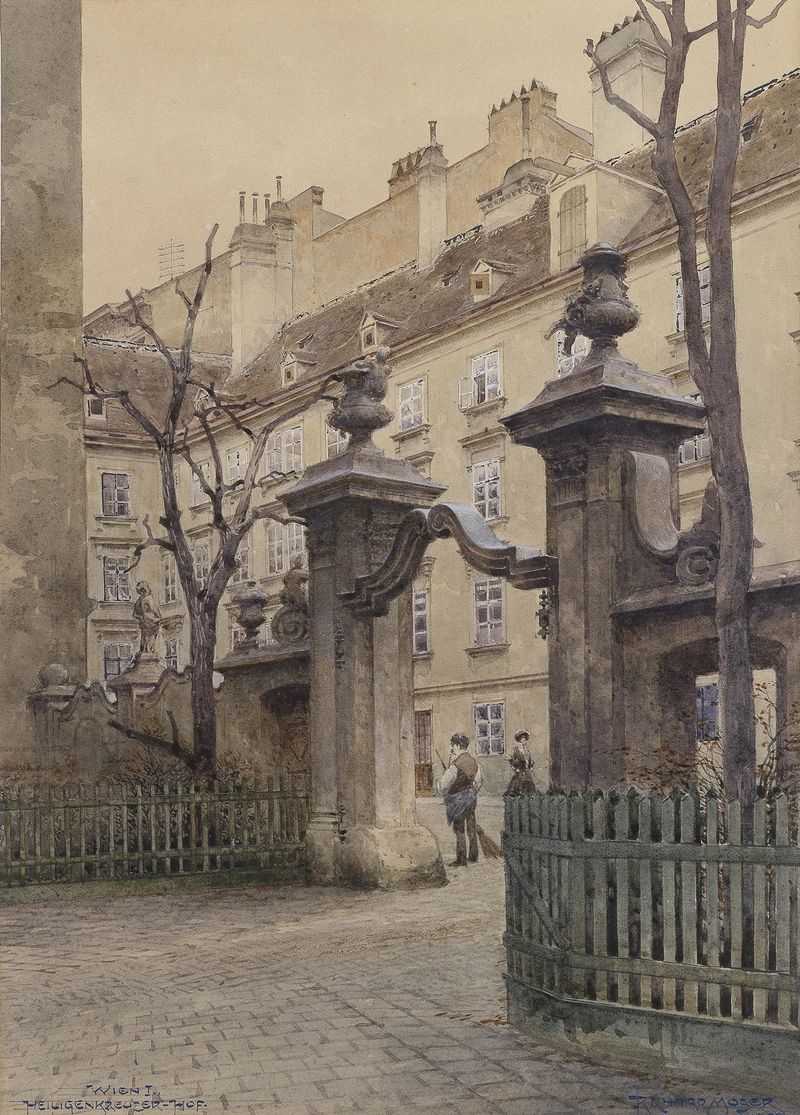
Heiligenkreuzerhof in Wien
Richard Moser
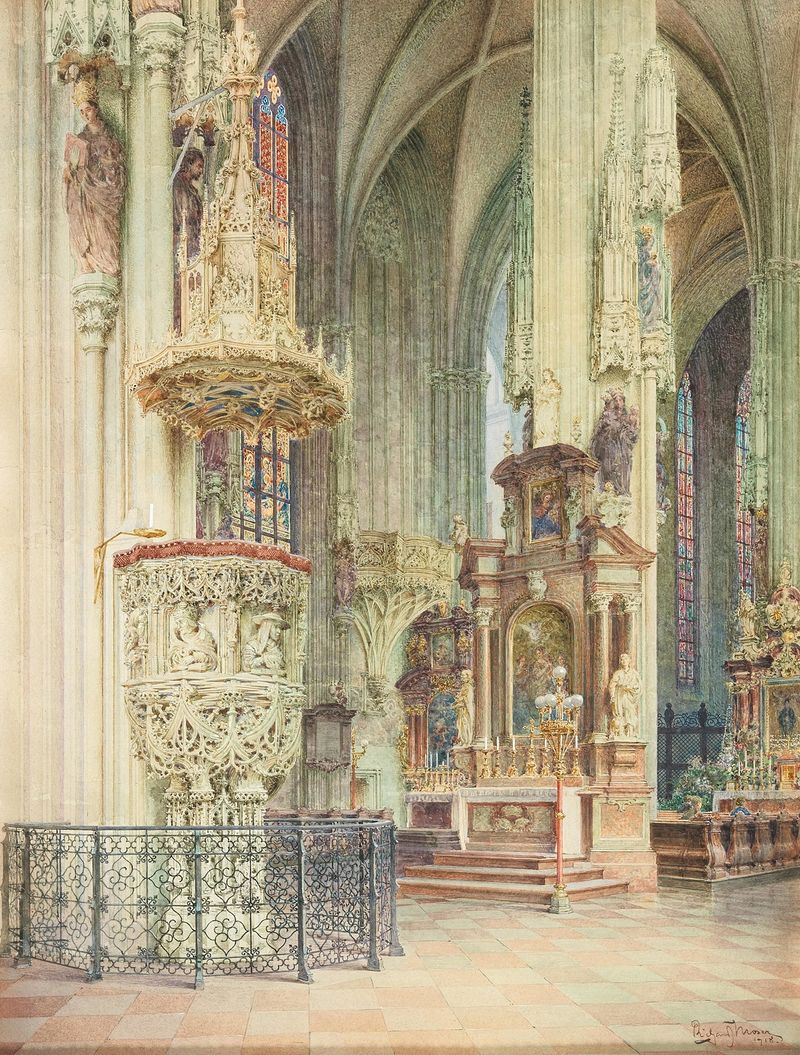
Inneres des Stephansdoms mit Pilgramkanzel
Richard Moser
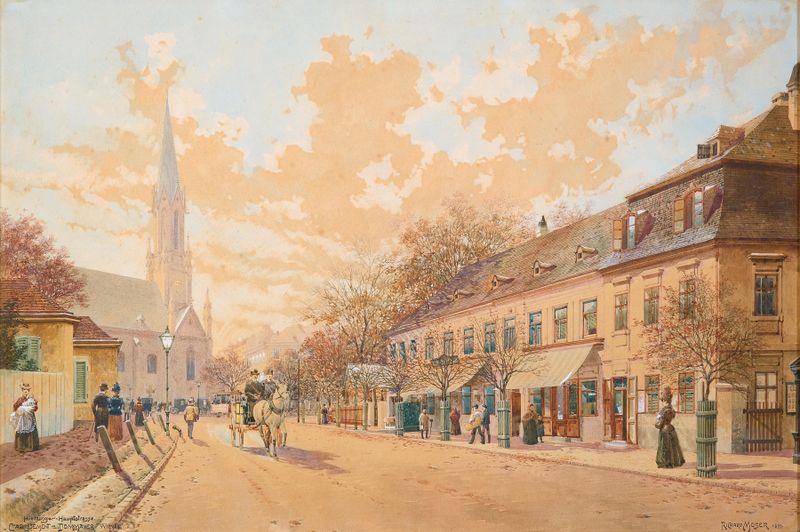
Hietzinger Hauptstrasse
Richard Moser
More Architecture Art
Browse all →
The statue of Liberty
Frédéric Auguste Bartholdi

View of Houses in Delft, Known as ‘The Little Street’
Johannes Vermeer

View of Houses in Delft, Known as ‘The Little Street’
Johannes Vermeer

The Cathedral in Rouen. The portal, Grey Weather
Claude Monet

The yellow house
Vincent van Gogh

The Church in Auvers-sur-Oise, View from the Chevet
Vincent van Gogh