
Wien Elisabethbrücke — History & Facts
In the quiet spaces between colors, we find faith—not just in artistry, but in the ephemeral moments of life. Here, the brushstrokes weave a narrative that transcends time, inviting the viewer into a realm of contemplation. Look to the center, where the shimmering surface of the water reflects the delicate architecture of the Elisabethbrücke. Notice how the interplay of blues and greens captures the essence of a serene morning, each stroke revealing not just the bridge itself but the breath of life that surrounds it.
The atmospheric light dances across the canvas, creating a mesmerizing depth that pulls the eye along the waterway, inviting exploration. Delve deeper, and you will encounter the contrast between the solid structure of the bridge and the fluidity of the river. This juxtaposition speaks to the balance of stability and transience, evoking a sense of faith in the enduring amidst the fleeting. The soft outlines of the trees and the distant cityscape whisper of a world beyond, suggesting a longing for connection that remains unfulfilled, yet hopeful—a reminder of life's persistent tug towards harmony. In 1911, Richard Moser captured Wien Elisabethbrücke amidst a burgeoning modernist movement in art and architecture.
Living in Vienna, he was influenced by the city's blend of historic elegance and contemporary innovation, a reflection of his personal journey as an artist grappling with change. This period marked a time of emotional and artistic exploration, where Moser sought to encapsulate the very essence of his surroundings through the lens of faith and nostalgia.
More Artworks by Richard Moser
Browse all →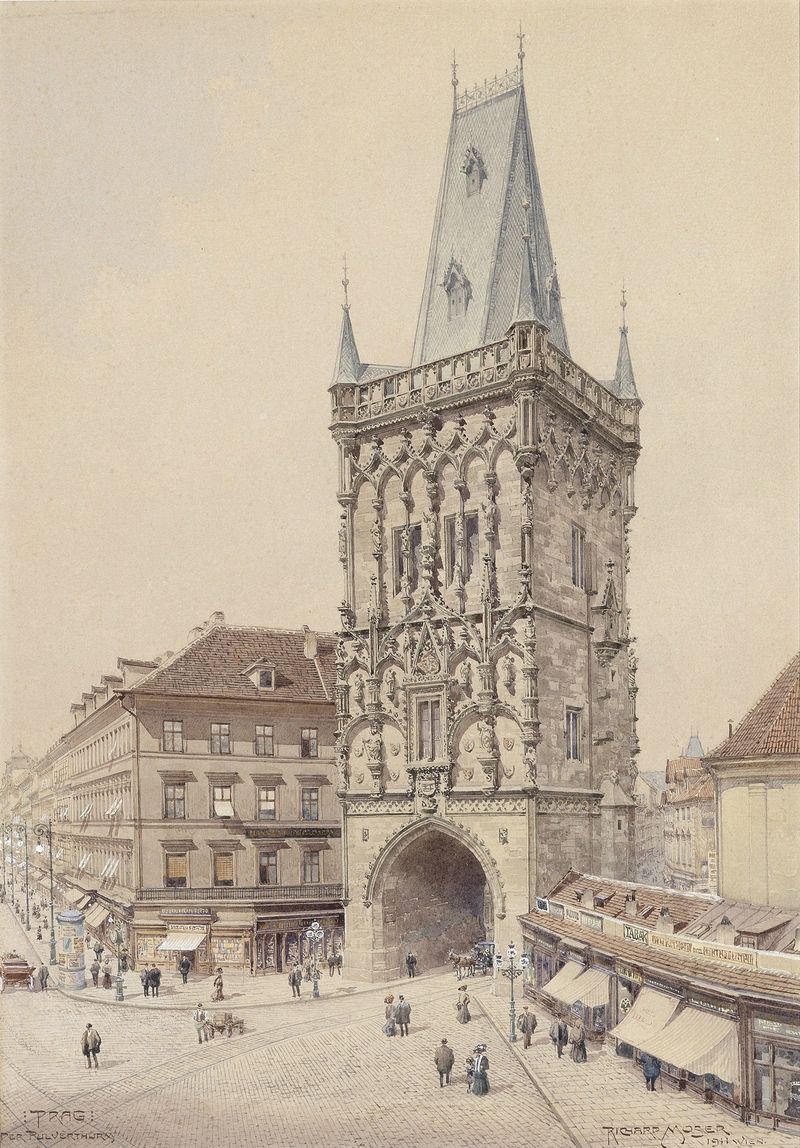
Prag Pulverturm
Richard Moser
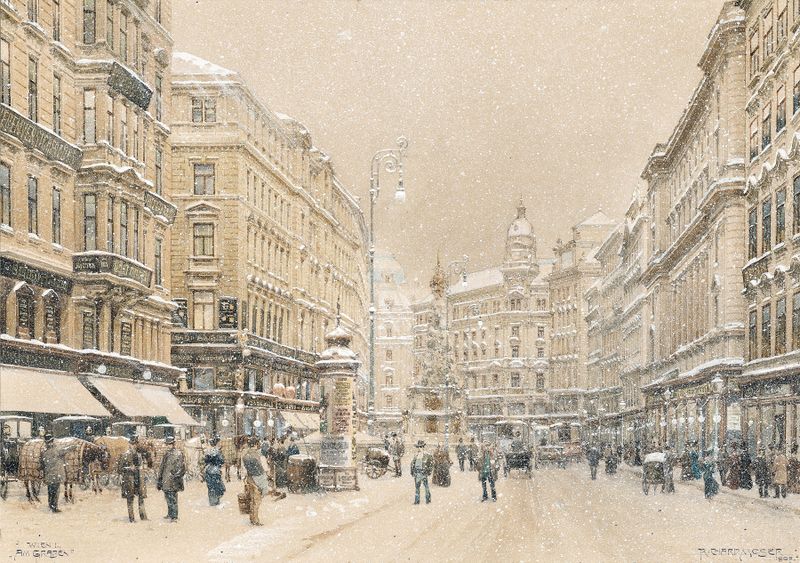
Graben in Vienna at snow flurry
Richard Moser

Wien Am Hof
Richard Moser

Stephansdom Pilgramkanzel
Richard Moser

A view of the church and monastery of the Visitation of the Virgin (church of the Salesian sisters) a gardener in the foreground
Richard Moser

Die Jubiläumsausstellung in Wien 1898; Pavillion der Stadt Wien
Richard Moser
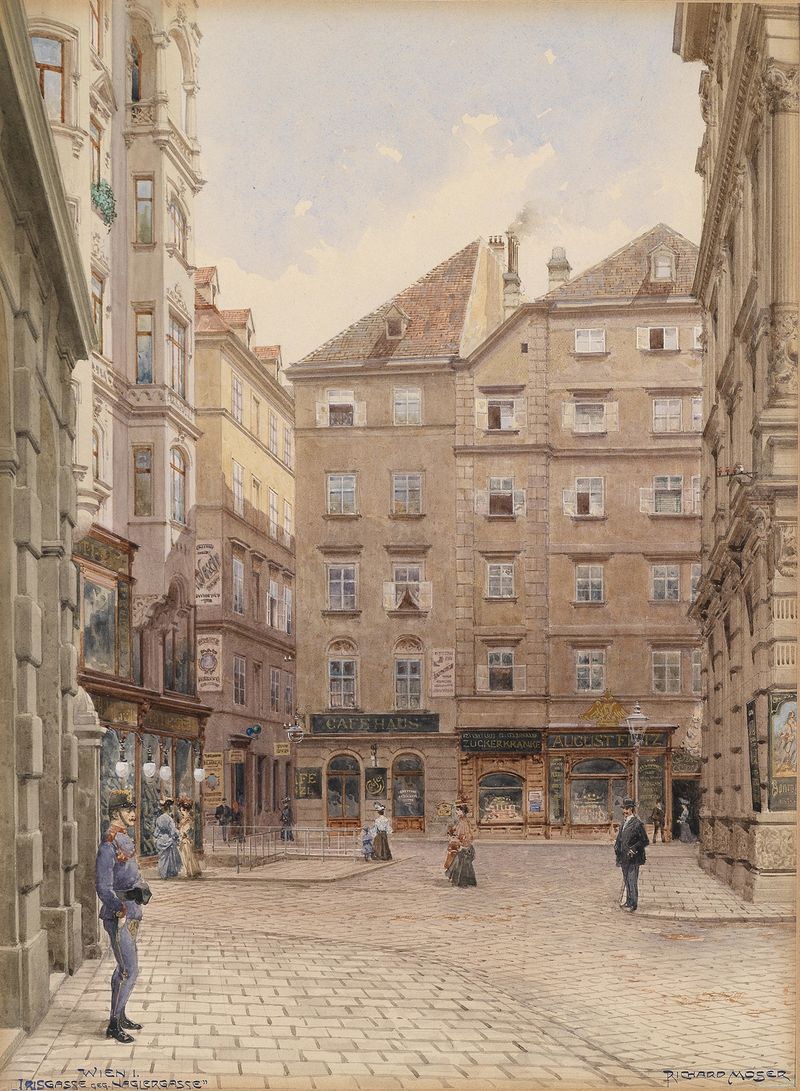
Wien Irisgasse gegen Naglergasse
Richard Moser
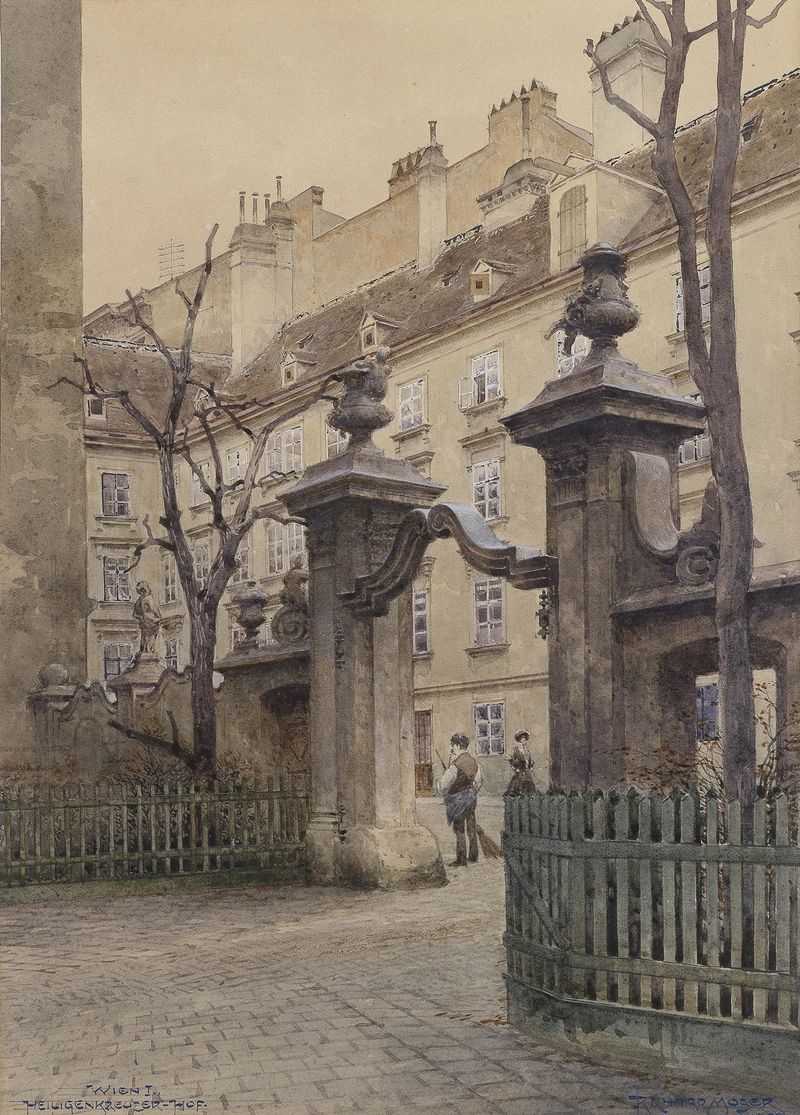
Heiligenkreuzerhof in Wien
Richard Moser
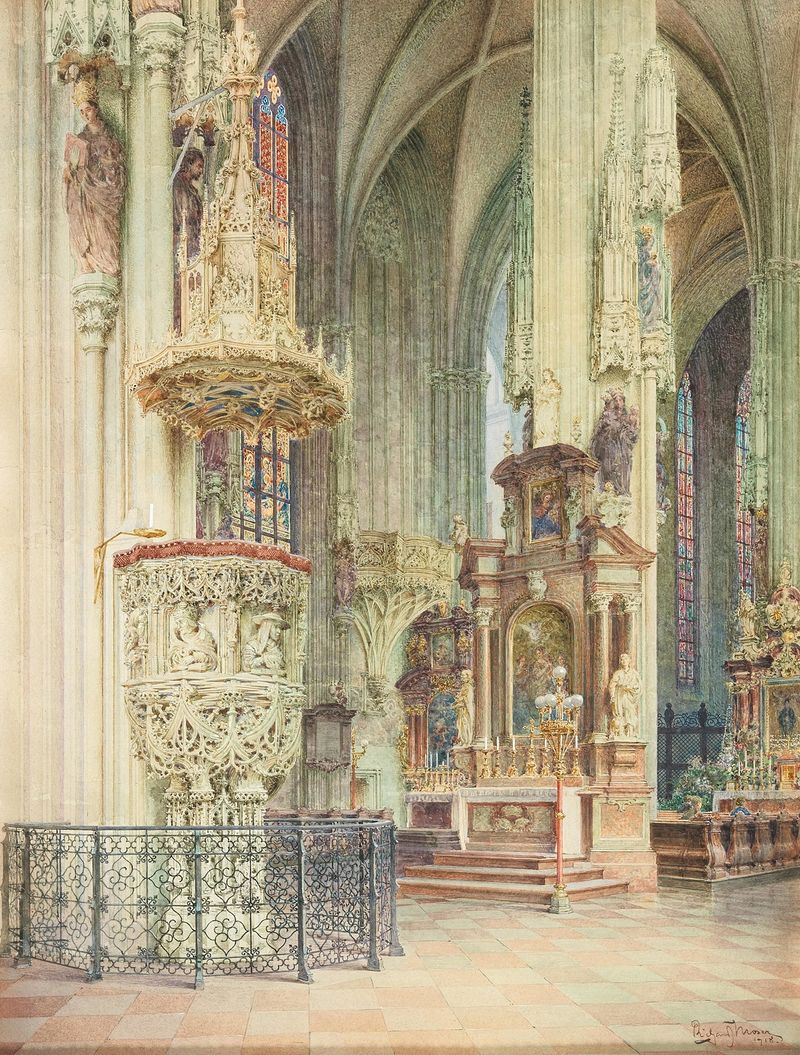
Inneres des Stephansdoms mit Pilgramkanzel
Richard Moser
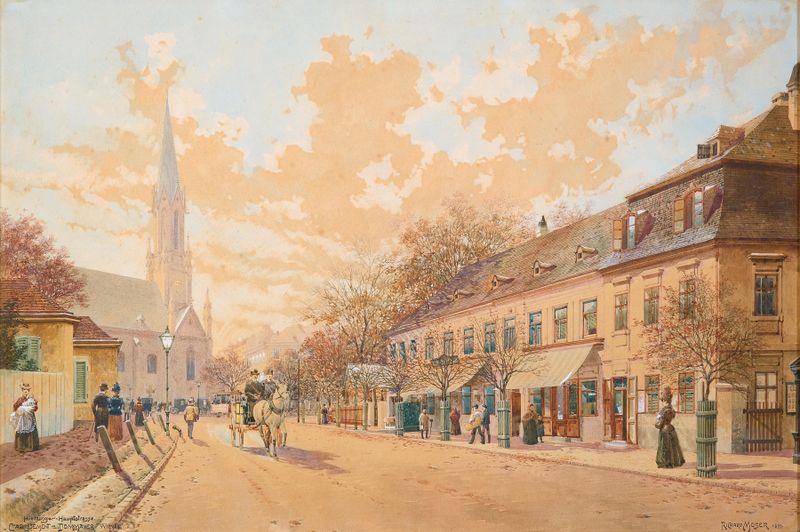
Hietzinger Hauptstrasse
Richard Moser





