
Heiligenkreuzerhof in Wien — History & Facts
Where does light end, and longing begin? Richard Moser's Heiligenkreuzerhof in Wien invites us to ponder this question as it captures a serene moment steeped in the soft embrace of dawn. Look to the center of the canvas, where the warm golden hues of early morning light filter through the archways, casting gentle shadows that dance along the cobblestones. The architectural details are meticulously rendered, showcasing Moser's skill in blending realism with an almost dreamlike quality. Notice how the muted palette speaks of tranquility and nostalgia, while the interplay of light and shadow creates a rhythmic dialogue across the surfaces of stone and brick. The painting evokes a sense of awakening, not just of the day but of the spirit, as the viewer is drawn into the stillness of the courtyard.
The quiet solitude echoes a deeper longing for connection and belonging, while the distant figures, mere silhouettes, suggest the presence of life just beyond the edges of perception. This tension between isolation and community resonates, inviting contemplation on the transient nature of moments captured in time. Moser created Heiligenkreuzerhof in Wien in 1909 while living in Vienna, a city pulsating with artistic innovation and cultural shifts. At this time, he was exploring the impressionist techniques that would shape his work, focusing on capturing the essence of everyday life.
The backdrop of Vienna, with its rich history and vibrant atmosphere, profoundly influenced his perspectives, establishing a connection between the artist and the city he so lovingly depicted.
More Artworks by Richard Moser
Browse all →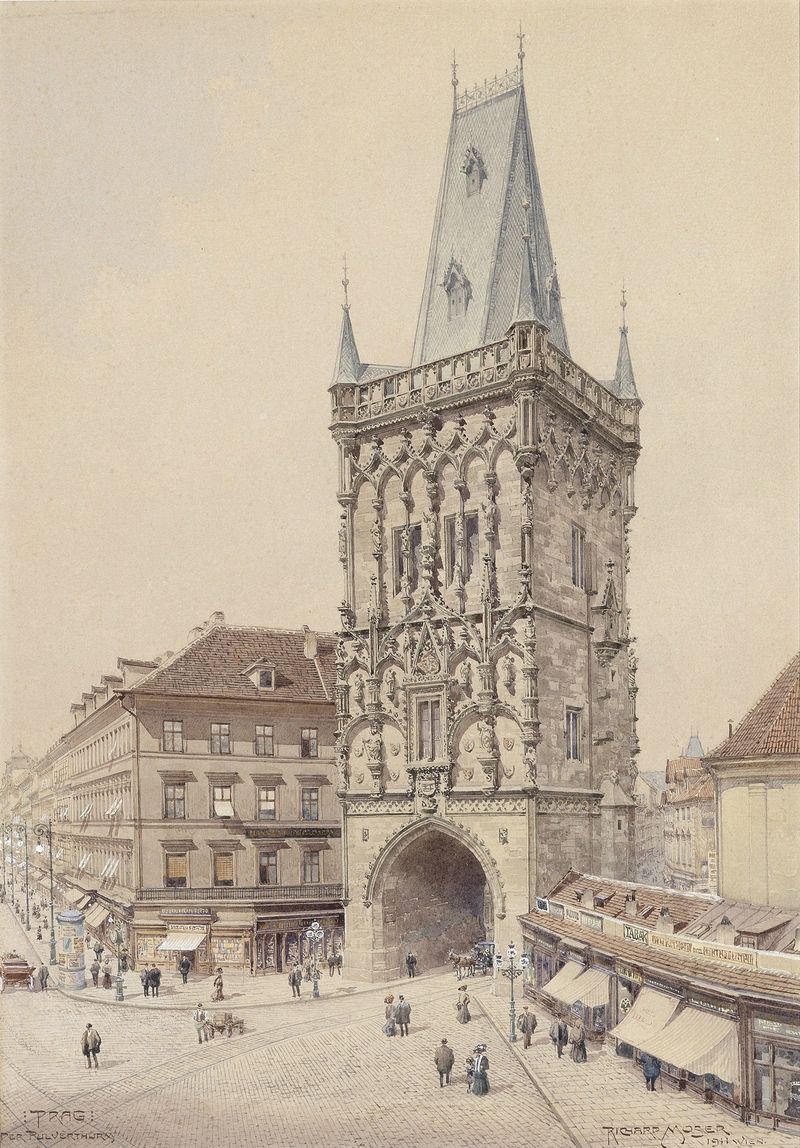
Prag Pulverturm
Richard Moser
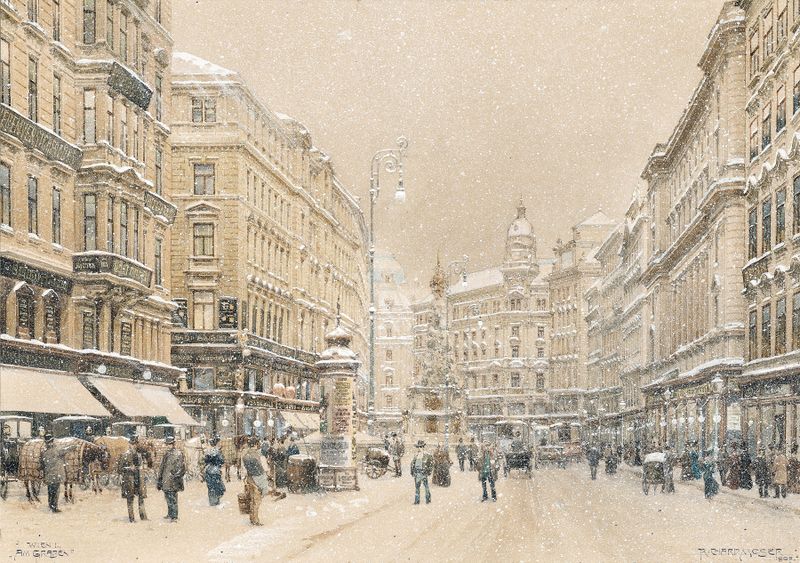
Graben in Vienna at snow flurry
Richard Moser

Wien Am Hof
Richard Moser

Stephansdom Pilgramkanzel
Richard Moser

A view of the church and monastery of the Visitation of the Virgin (church of the Salesian sisters) a gardener in the foreground
Richard Moser

Die Jubiläumsausstellung in Wien 1898; Pavillion der Stadt Wien
Richard Moser
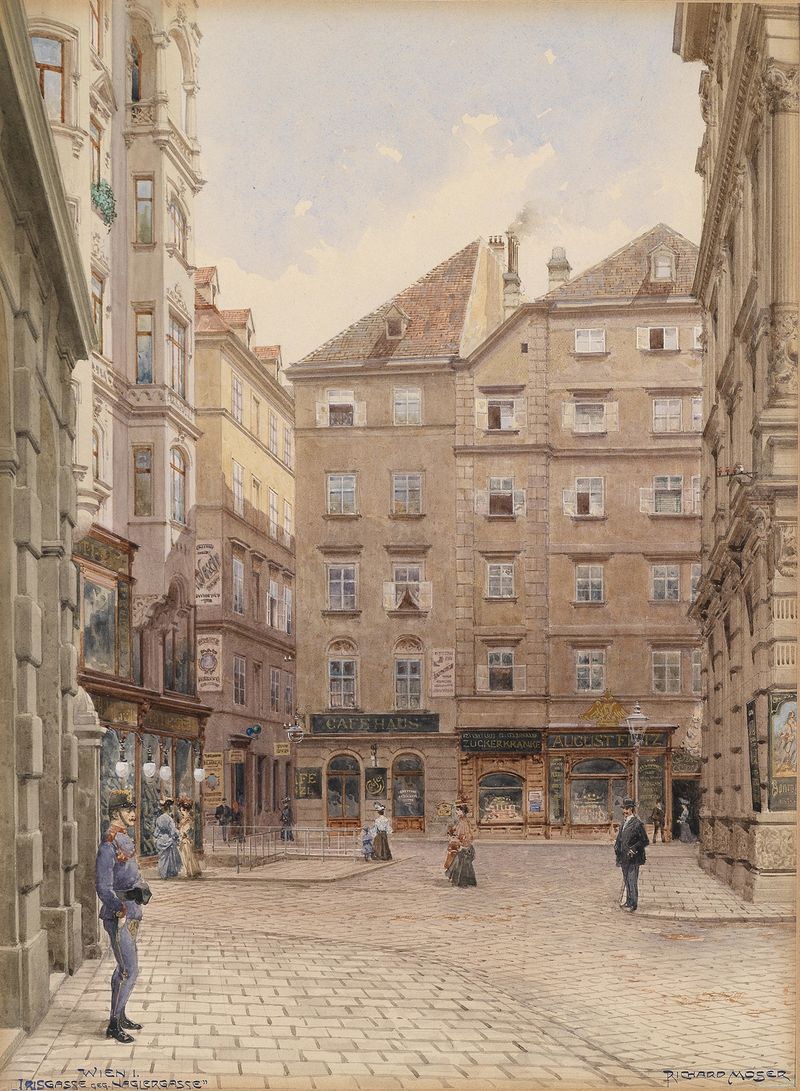
Wien Irisgasse gegen Naglergasse
Richard Moser
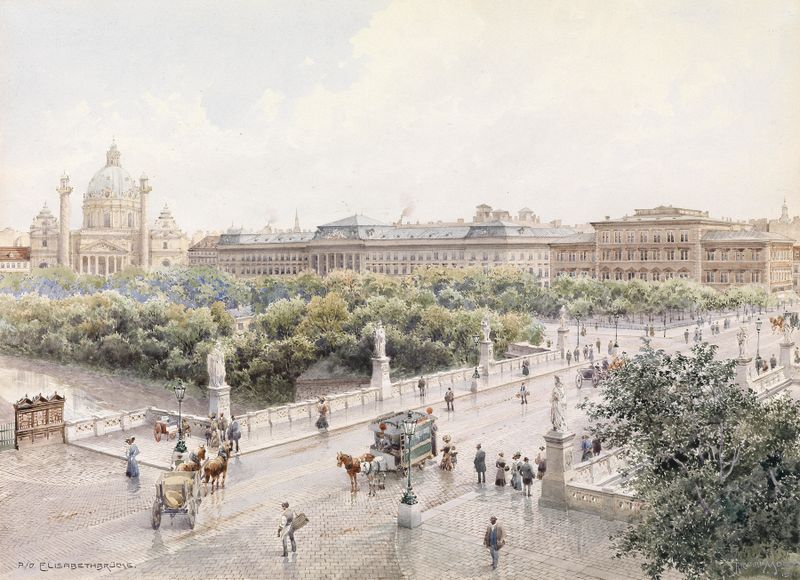
Wien Elisabethbrücke
Richard Moser
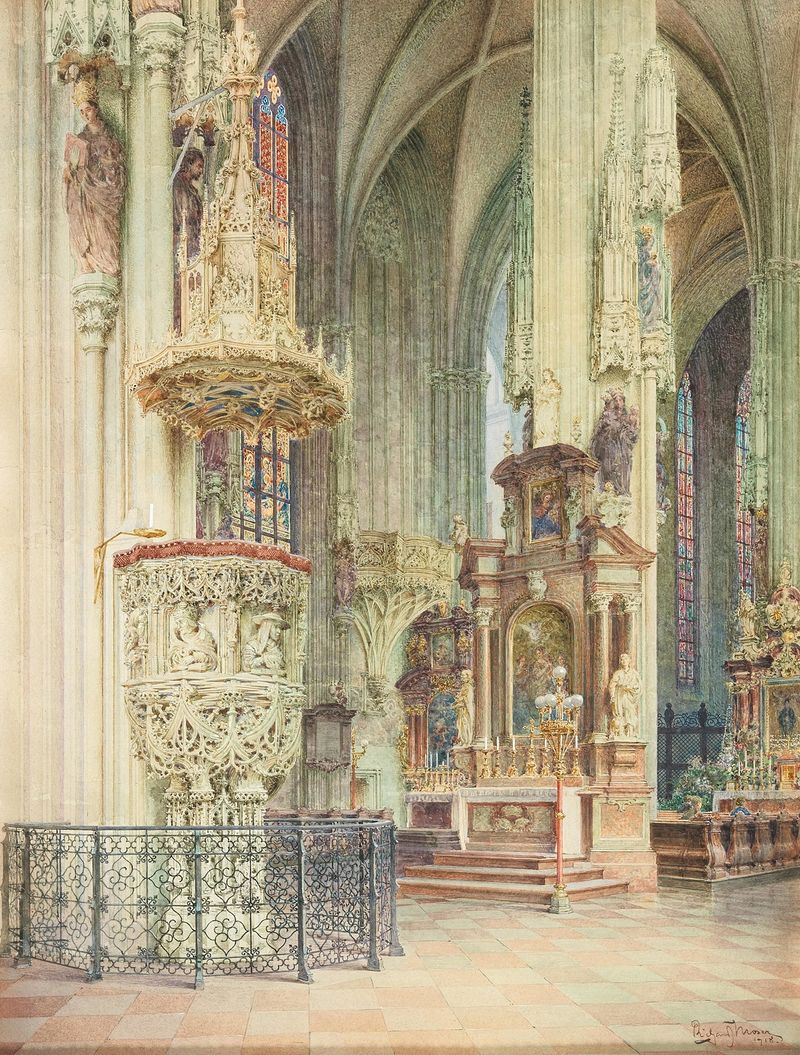
Inneres des Stephansdoms mit Pilgramkanzel
Richard Moser
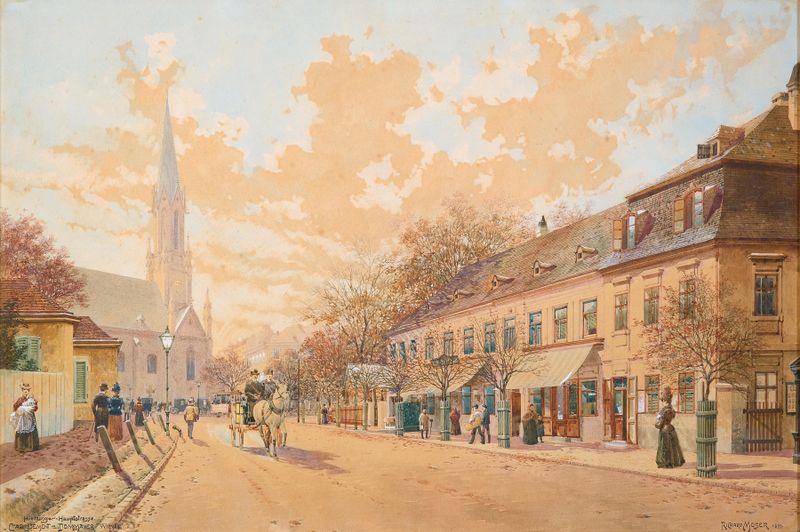
Hietzinger Hauptstrasse
Richard Moser
More Architecture Art
Browse all →
The statue of Liberty
Frédéric Auguste Bartholdi

View of Houses in Delft, Known as ‘The Little Street’
Johannes Vermeer

View of Houses in Delft, Known as ‘The Little Street’
Johannes Vermeer

The Cathedral in Rouen. The portal, Grey Weather
Claude Monet

The yellow house
Vincent van Gogh

The Church in Auvers-sur-Oise, View from the Chevet
Vincent van Gogh