
Graben in Vienna at snow flurry — History & Facts
Is this a mirror — or a memory? A fragile moment captured, where the ephemeral dance of falling snowflakes intersects with the solidity of the urban landscape, prompting reflections on the nature of existence and the passage of time. Look to the center where the bustling Graben, lined with intricate architecture, converges into a vortex of activity. A soft light, diffused by the snow, bathes the scene in a silvery hue, urging your gaze to glide across the figures lost in their own worlds. Notice how the snowflakes etch delicate patterns upon the cobblestone streets, each flake a whisper of transience, while the muted colors evoke a sense of nostalgia and longing, grounding the viewer in the moment. As you delve deeper, consider the juxtaposition of life and stillness.
The passersby, with their hurried gestures, seem oblivious to the winter’s gentle embrace, embodying the tension between urgency and contemplation. Look closely at the outlines of the buildings, their stoic presence standing against the ephemeral snow; they symbolize the enduring nature of memory amidst the inevitable passage of time. The scene speaks of mortality, a fleeting encounter with beauty as delicate as the snow itself. In the winter of 1907, while living in Vienna, Richard Moser painted this work amidst a burgeoning art scene grappling with modernity.
The city buzzed with cultural transformation, reflecting both the vibrancy of life and the shadows of existence as artists sought new forms of expression. Moser, influenced by the changing tides of his environment, captured this moment, resonating with the uncertainties of an era on the brink of upheaval.
More Artworks by Richard Moser
Browse all →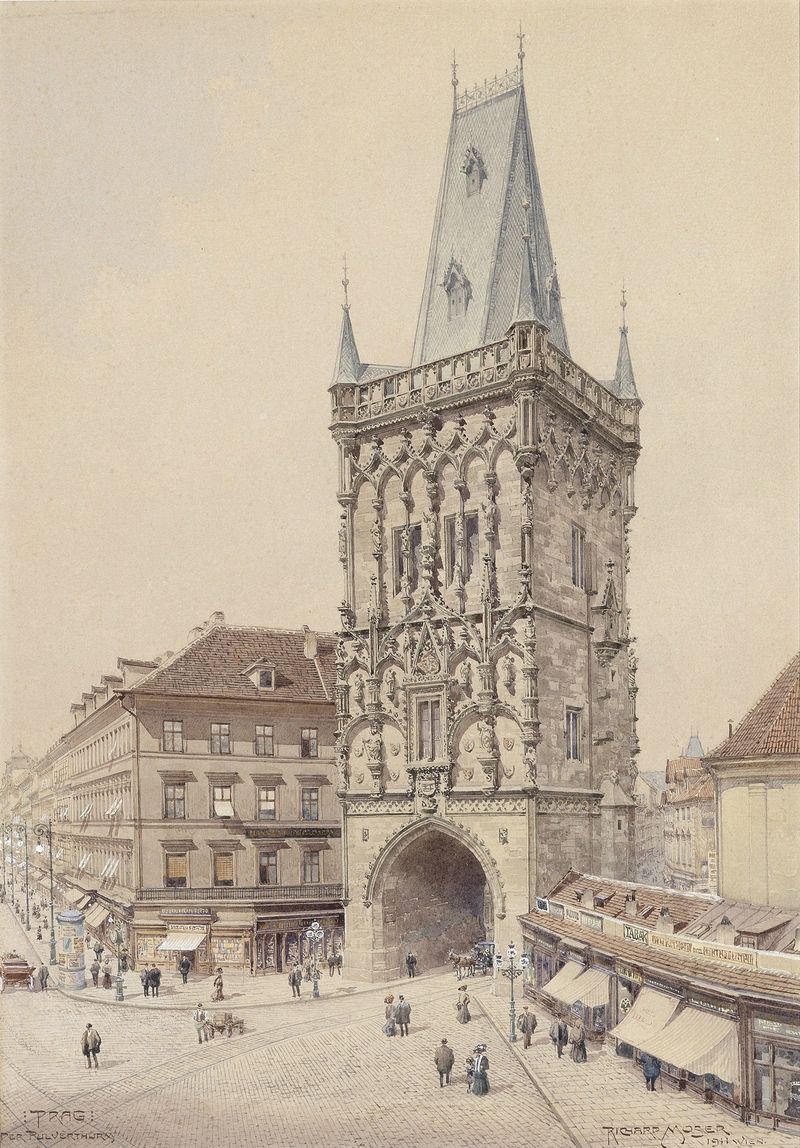
Prag Pulverturm
Richard Moser

Wien Am Hof
Richard Moser

Stephansdom Pilgramkanzel
Richard Moser

A view of the church and monastery of the Visitation of the Virgin (church of the Salesian sisters) a gardener in the foreground
Richard Moser

Die Jubiläumsausstellung in Wien 1898; Pavillion der Stadt Wien
Richard Moser
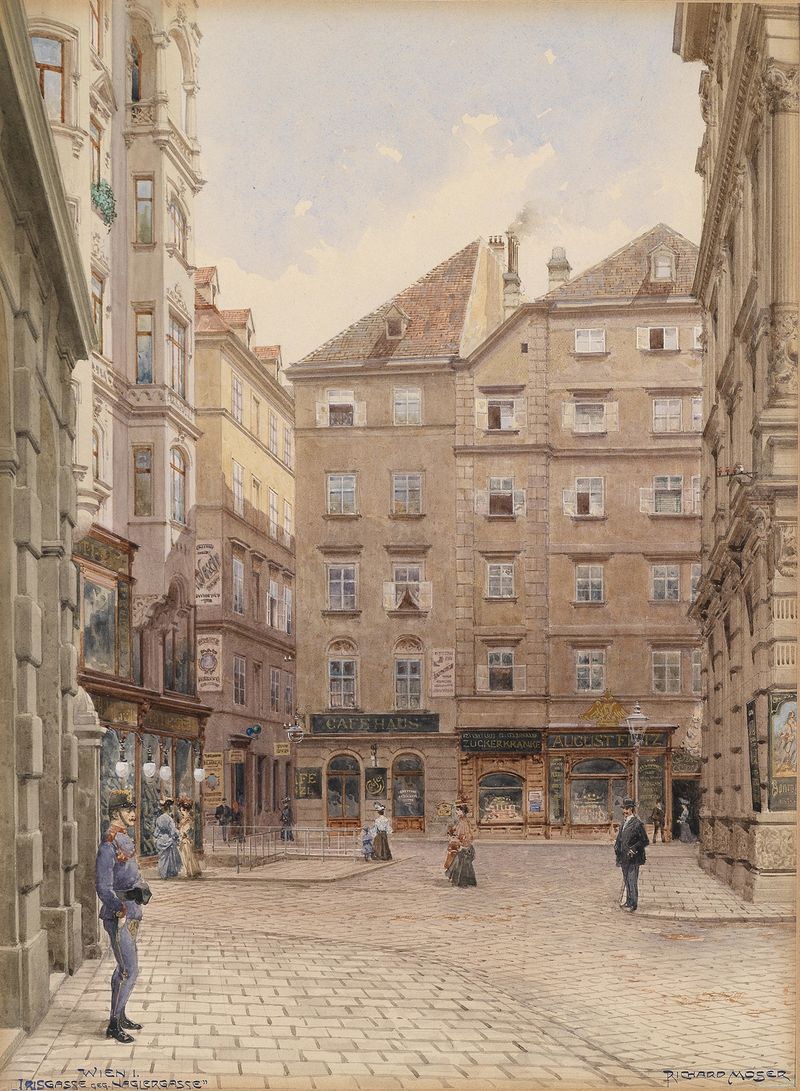
Wien Irisgasse gegen Naglergasse
Richard Moser
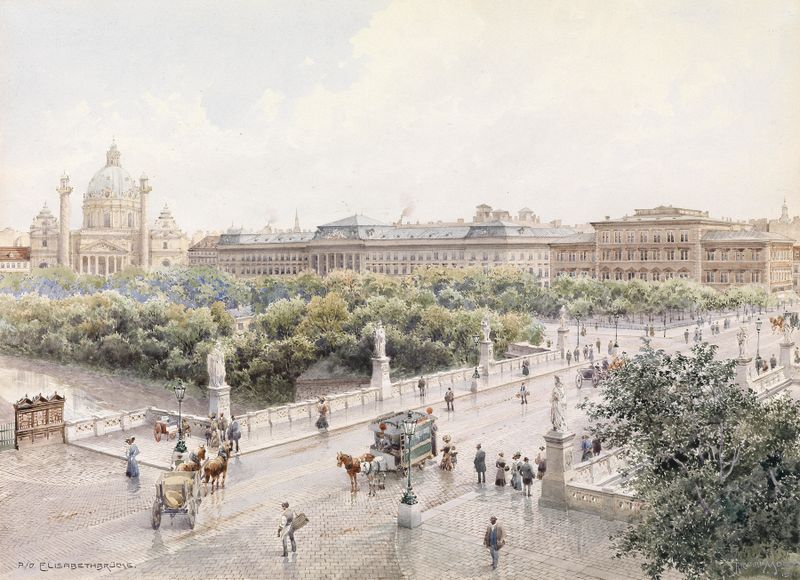
Wien Elisabethbrücke
Richard Moser
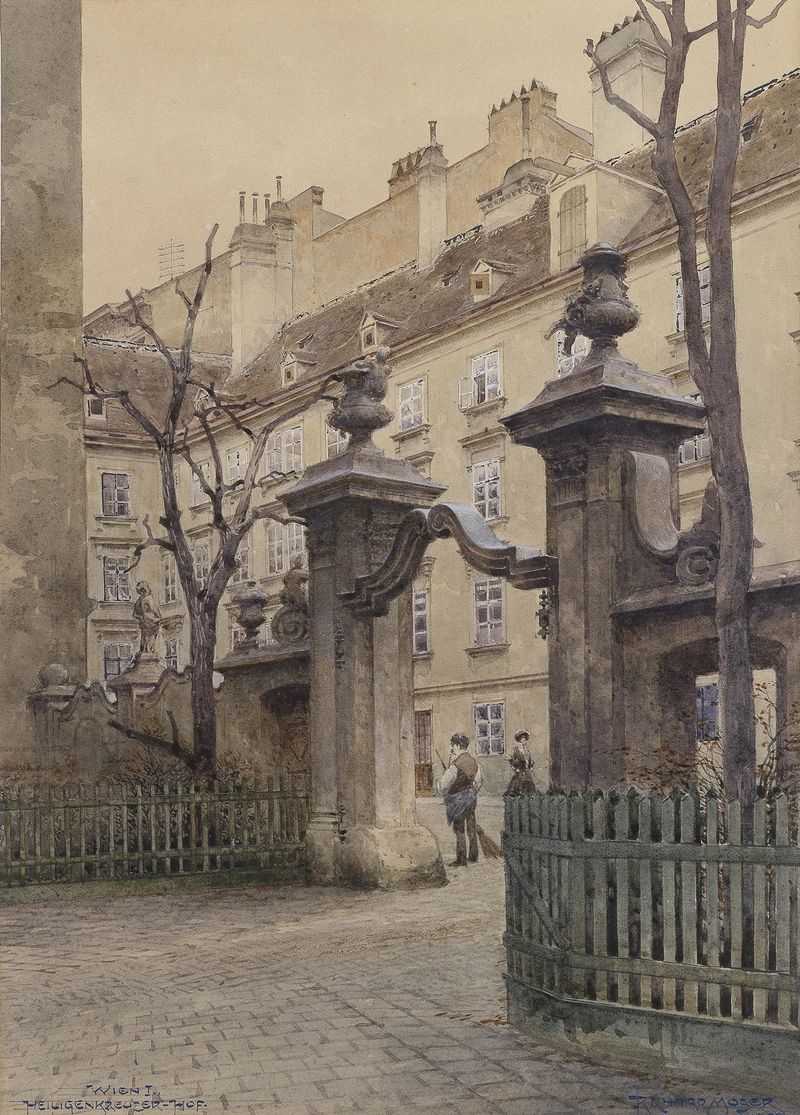
Heiligenkreuzerhof in Wien
Richard Moser
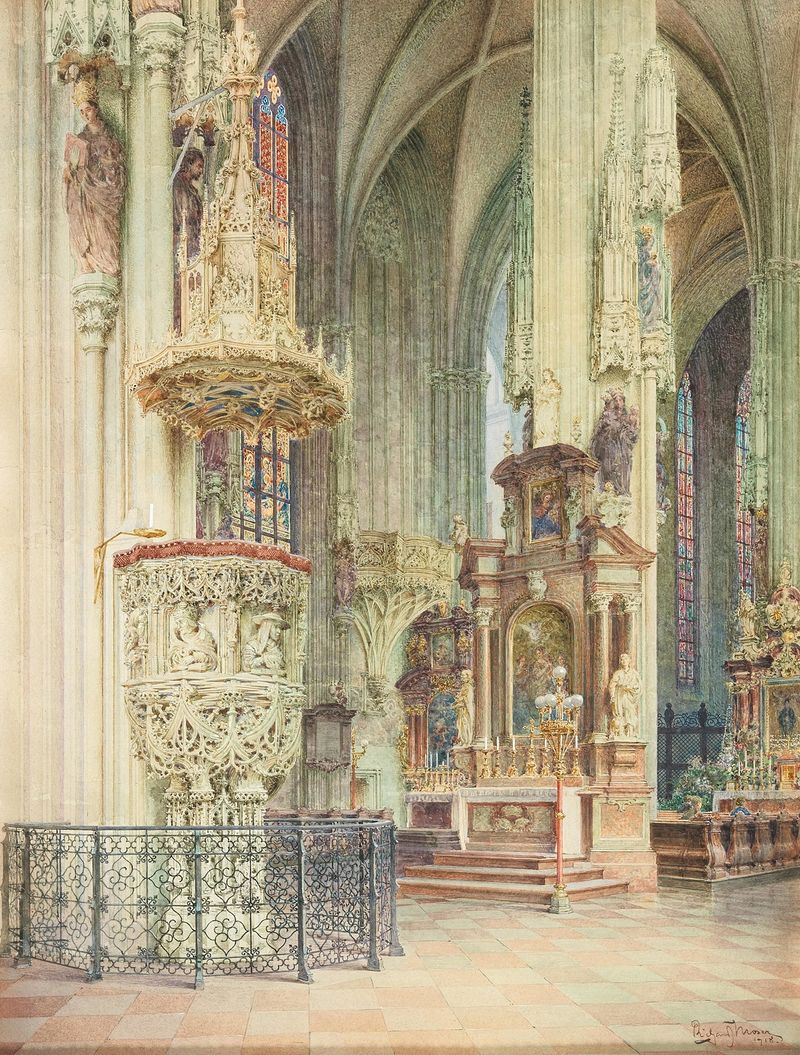
Inneres des Stephansdoms mit Pilgramkanzel
Richard Moser
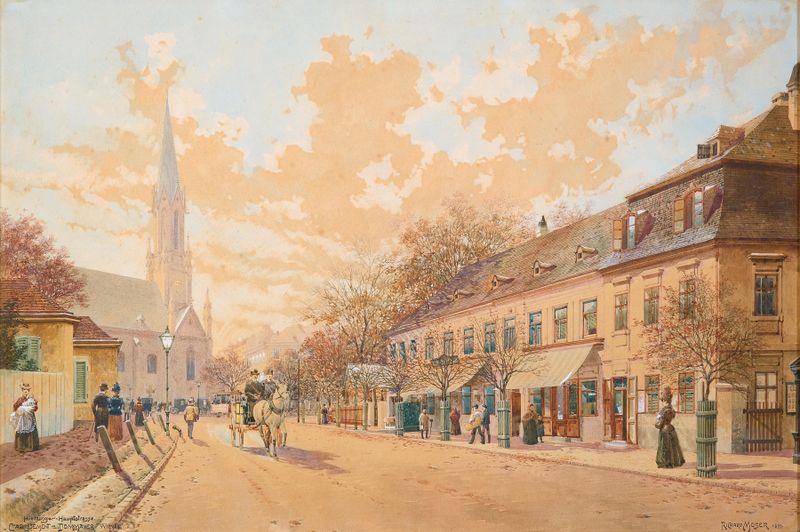
Hietzinger Hauptstrasse
Richard Moser
More Architecture Art
Browse all →
The statue of Liberty
Frédéric Auguste Bartholdi

View of Houses in Delft, Known as ‘The Little Street’
Johannes Vermeer

View of Houses in Delft, Known as ‘The Little Street’
Johannes Vermeer

The Cathedral in Rouen. The portal, Grey Weather
Claude Monet

The yellow house
Vincent van Gogh

The Church in Auvers-sur-Oise, View from the Chevet
Vincent van Gogh