
Billy Bounce-book-pg 090f full — History & Facts
What first catches the eye here is the wild, delighted menace of the black cat, its tail split into nine bristling plumes, each one radiating outward like the spokes of a wheel. The cat’s grin is as wide as its tail is improbable, and the gleam in its eyes suggests it is more than a mere household pet. Facing the cat, a stout boy with a round face stands hat in hand, caught between curiosity and caution, while the old woman—her pointed hat and broom unmistakable—addresses him with a sly satisfaction.
The room is simply drawn, its pale blue walls and white mantelpiece framing the trio, yet every detail, from the red jug to the framed picture, is chosen for clarity and wit. The palette is bright and direct, setting a mood of mischief rather than menace, and the scene brims with the playful literalism of early twentieth-century American comic art. This illustration comes from the world of Billy Bounce, first published in 1906, when comic strips and children’s books were discovering the power of color printing and the visual joke. William Wallace Denslow, known for his work on The Wonderful Wizard of Oz, brought a bold, poster-like clarity to his drawings, delighting young readers with visual puns and fantastical characters.
The phrase “cat-o-nine tails” becomes, in Denslow’s hands, a literal cat with nine tails—an image that captures the era’s love of wordplay and the absurd. Though history has kept few traces of this particular edition, preserved in a personal collection and bearing a mid-century signature, its humor and invention are very much of its time. The longer you look, the more the cat’s impossible anatomy seems not just a joke, but an invitation to imagine what else might be hiding in plain sight.
More Artworks by William Wallace Denslow
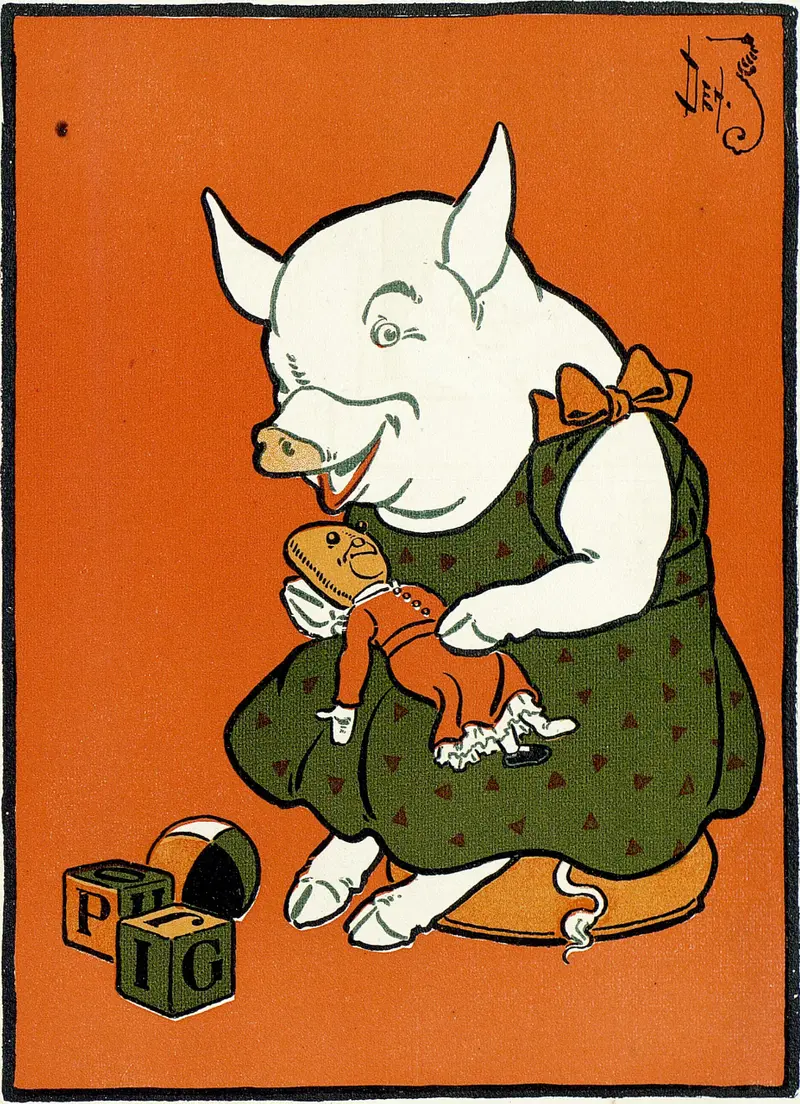
Denslow's 5 Little Pigs (page 7 crop)
William Wallace Denslow

Denslow's 5 Little Pigs
William Wallace Denslow
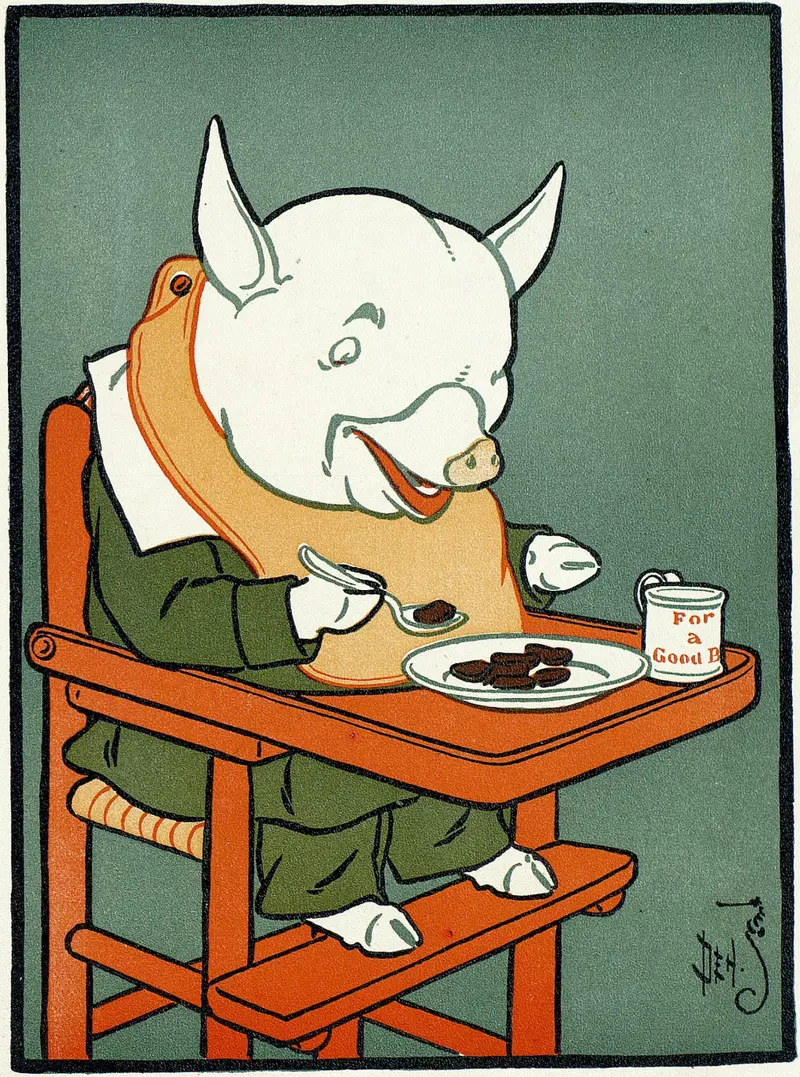
Denslow's 5 Little Pigs (page 9 crop)
William Wallace Denslow
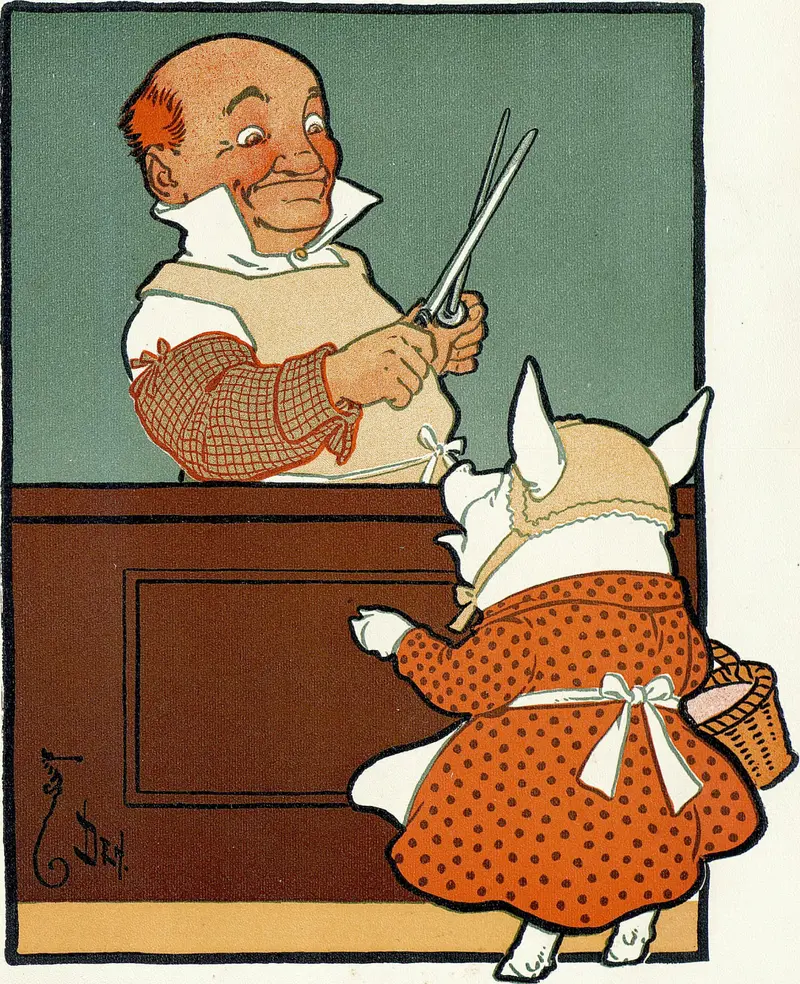
Denslow's 5 Little Pigs (page 5 crop)
William Wallace Denslow

Denslow's 5 Little Pigs (page 11 crop)
William Wallace Denslow

Denslow's 5 Little Pigs (page 15 crop)
William Wallace Denslow

Denslow's 5 Little Pigs (page 13 crop)
William Wallace Denslow

Pearl and Pumpkin-book pg-000 cover
William Wallace Denslow
Denslow's 5 Little Pigs page p4b
William Wallace Denslow
Denslow's 5 Little Pigs page 3
William Wallace Denslow





