
Black Pond — History & Facts
In Black Pond, the depths of sorrow are palpable, inviting reflection in a world that often overlooks emotional landscapes. Look to the center, where the inky waters of the pond draw you in, dark and still, reflecting the brooding sky above. Notice the interplay of muted blues and greens, subtly blending into shadows that hint at depth and mystery. The delicate brushwork reveals a serene yet unsettling surface, suggesting that beneath the tranquility lies a tumult of emotions waiting to surface. Hidden within the composition are contrasts that evoke the weight of grief.
The stillness of the pond juxtaposes the dynamic forms of the trees that encircle it, their gnarled branches reaching out as if in silent mourning. Each droplet of paint carries the weight of memory, whispering of loss and longing, while the faint light filtering through the clouds suggests a glimmer of hope, a fragile acknowledgment of life's cycles. In 1909, at the time Black Pond was created, Władysław Ślewiński was immersed in the artistic currents of Poland, grappling with personal and collective grief following political upheaval. This period marked his exploration of emotional depth through landscape, reflecting a broader movement in art that sought to express the inner turmoil of the human experience.
More Artworks by Władysław Ślewiński
Browse all →
Rough sea
Władysław Ślewiński
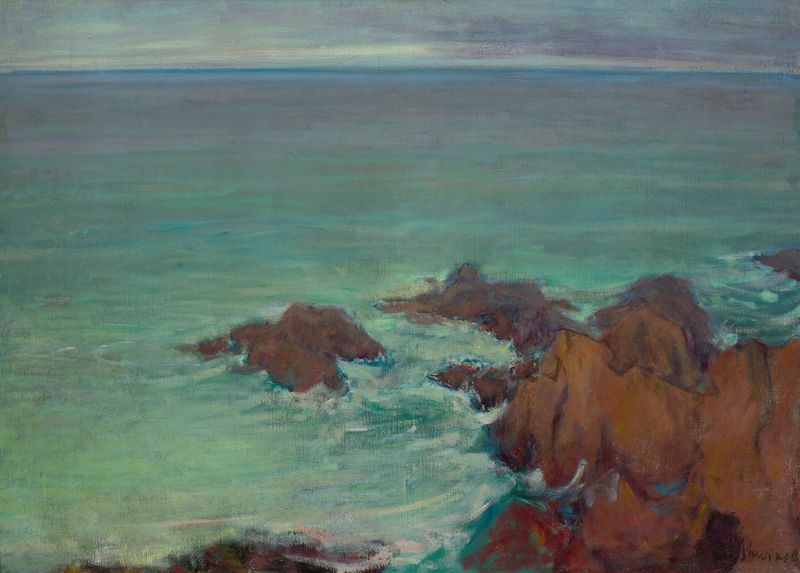
Sea in Brittany
Władysław Ślewiński
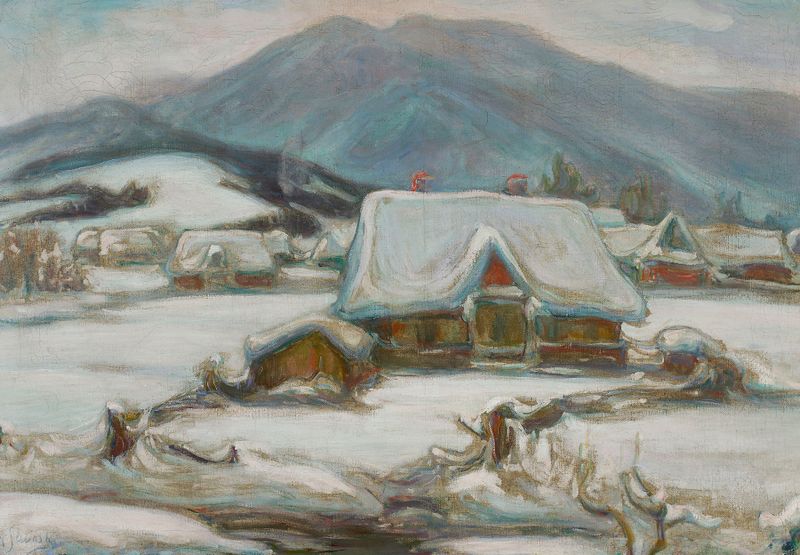
Cottages in the snow
Władysław Ślewiński

Sea
Władysław Ślewiński

Waves in a rocky bay
Władysław Ślewiński

Sea with white waves
Władysław Ślewiński
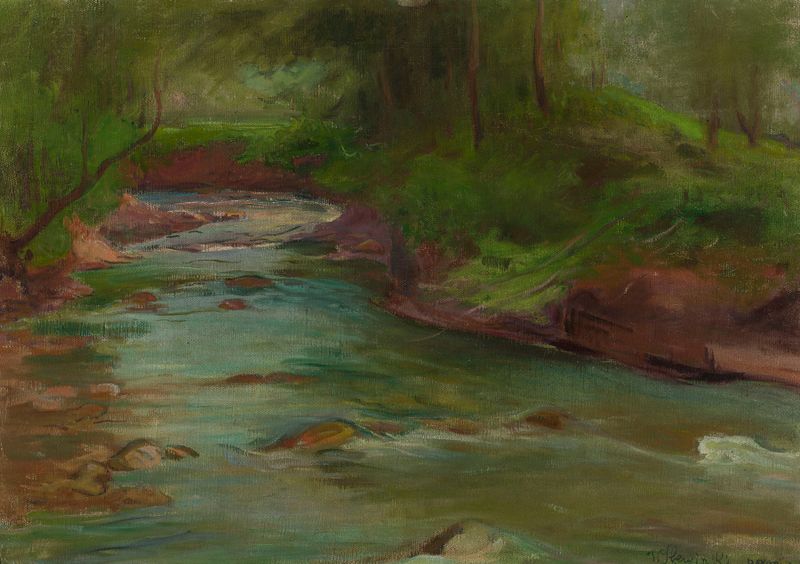
Mountain stream – in the Tatra Mountains below Mt Nosal
Władysław Ślewiński
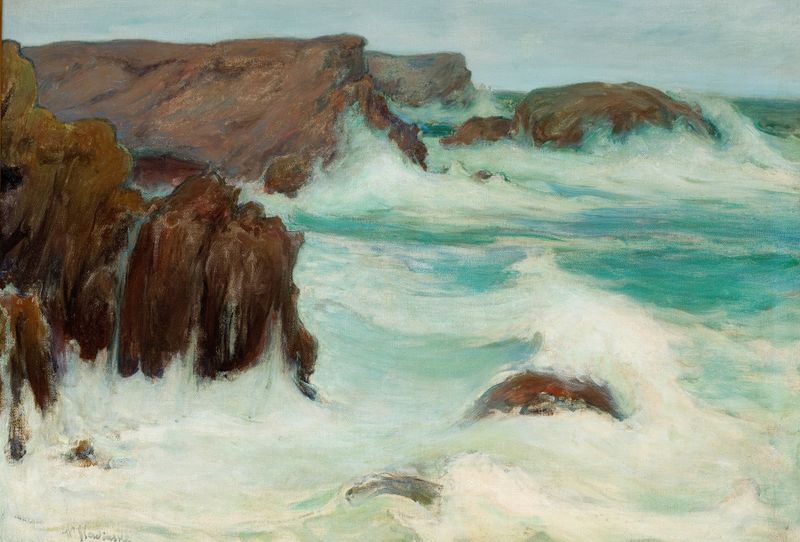
The Sea in Brittany
Władysław Ślewiński

A Coastal Landscape
Władysław Ślewiński

Sea at night
Władysław Ślewiński





