
Sea in Brittany — History & Facts
In the stillness of the moment, one can almost feel the whisper of the sea breeze mingling with the salty air. Shadows stretch across the landscape, weaving stories only the waves can tell. It’s a serene encounter with nature where silence speaks as loudly as the crashing waves. Look to the left where the bold blues and greens swirl together, creating a turbulent sea that mirrors the emotional depth of the artist’s vision.
Notice how the sunlight dances upon the water’s surface, illuminating the edges and revealing the tumultuous undercurrents below. The brushstrokes are deliberate yet fluid, conveying a dynamic interplay between calm and chaos, while the horizon line draws the eye toward an infinite expanse. Beneath the surface, contrasts emerge. The fierce, undulating waves are juxtaposed with the tranquil shoreline, suggesting a tension between tumultuous emotion and serene contemplation.
Each brushstroke holds significance, from the shadows that cradle the waves to the highlights that breathe life into the scene, inviting viewers to explore their own reflections on nature and existence. In 1905, Ślewiński captured Sea in Brittany during a transformative period in his artistic journey. Living in France, he was influenced by the developments of Modernism while remaining connected to his Polish roots. At a time when artists were pushing boundaries and exploring new techniques, he sought a deep understanding of nature, evident in his contemplative approach to this coastal scene.
More Artworks by Władysław Ślewiński
Browse all →
Rough sea
Władysław Ślewiński
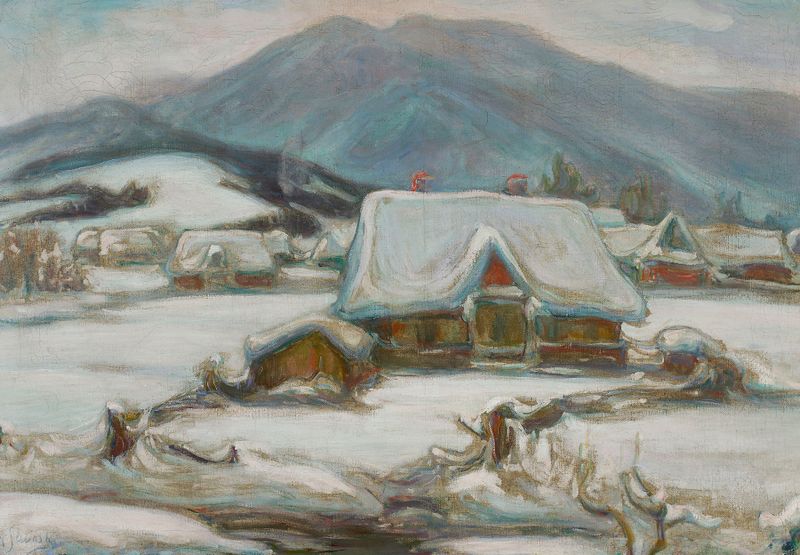
Cottages in the snow
Władysław Ślewiński

Sea
Władysław Ślewiński

Waves in a rocky bay
Władysław Ślewiński

Sea with white waves
Władysław Ślewiński
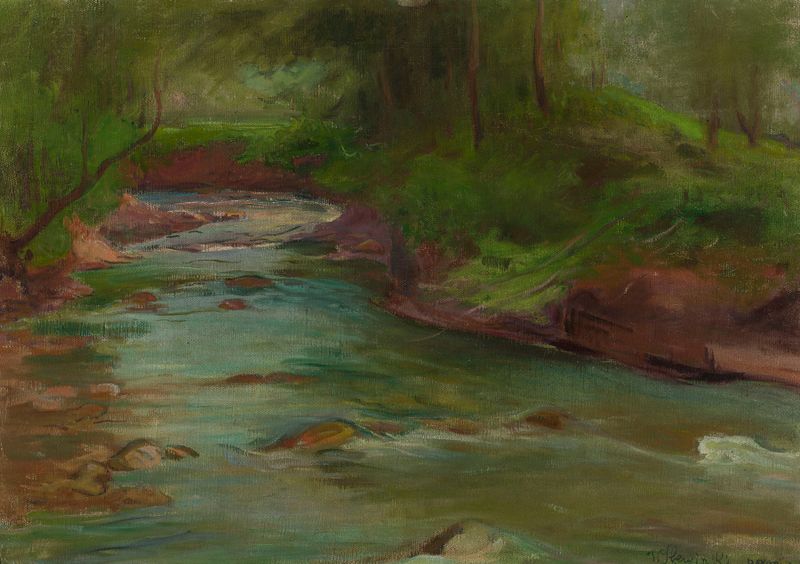
Mountain stream – in the Tatra Mountains below Mt Nosal
Władysław Ślewiński
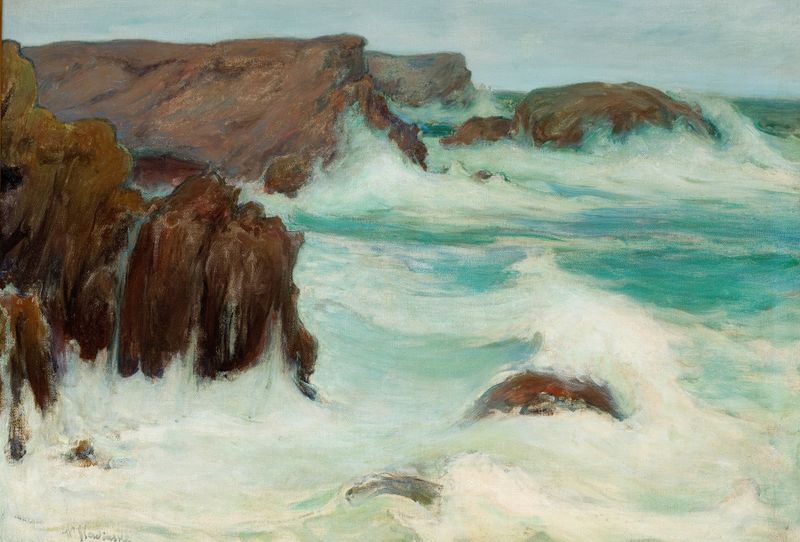
The Sea in Brittany
Władysław Ślewiński

A Coastal Landscape
Władysław Ślewiński

Sea at night
Władysław Ślewiński
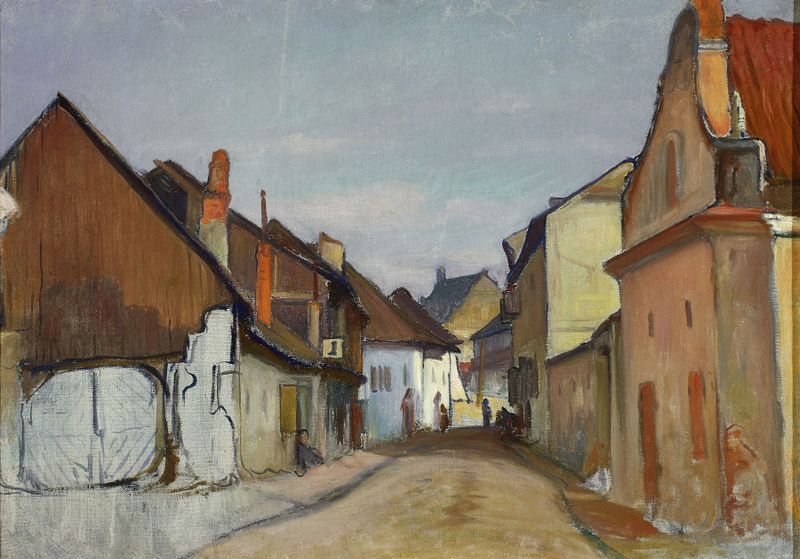
Lubelska Street in Kazimierz Dolny
Władysław Ślewiński





