
Blick in einer holländische Vorstadtstraße — History & Facts
What first draws the eye in Blick in einer holländische Vorstadtstraße is the play of sunlight across the battered façades and the way the windmill’s sails rise above the rooftops, staking a quiet claim on the skyline. The street, paved and gently curving, is animated by small figures going about their daily business—women with baskets, a man shouldering a bundle, children in the shadows. The composition leads the viewer from the deep shade of the trees on the left, across the sunlit wall pocked with age, and finally up to the windmill, which stands as both a landmark and a reminder of the town’s rural industry.
The palette is warm and earthy, with ochres and browns offset by the cool blue of the sky, creating a mood that is both intimate and expansive. Every detail, from the birds circling overhead to the uneven stones of the street, invites the viewer to linger and imagine the rhythms of life in this quiet Dutch suburb. Painted by Adrianus Eversen by 1897, this work belongs to a long tradition of Dutch townscapes that flourished in the nineteenth century, when artists and collectors alike sought scenes of everyday life rendered with affectionate precision. Such paintings were often commissioned or purchased by the rising middle class, eager to celebrate the familiar streets and local landmarks of their own communities.
Eversen was known for his ability to capture the character of Dutch urban life, blending architectural accuracy with a sense of lived experience. While the specific history of this painting is little recorded, its presence in the Hampel Kunstauktionen collection today is a testament to the enduring appeal of these glimpses into the quieter corners of history. The viewer is left with the sense that, just beyond the edge of the frame, the life of the town continues.
More Artworks by Adrianus Eversen

View of a sunlit Dutch street scene
Adrianus Eversen
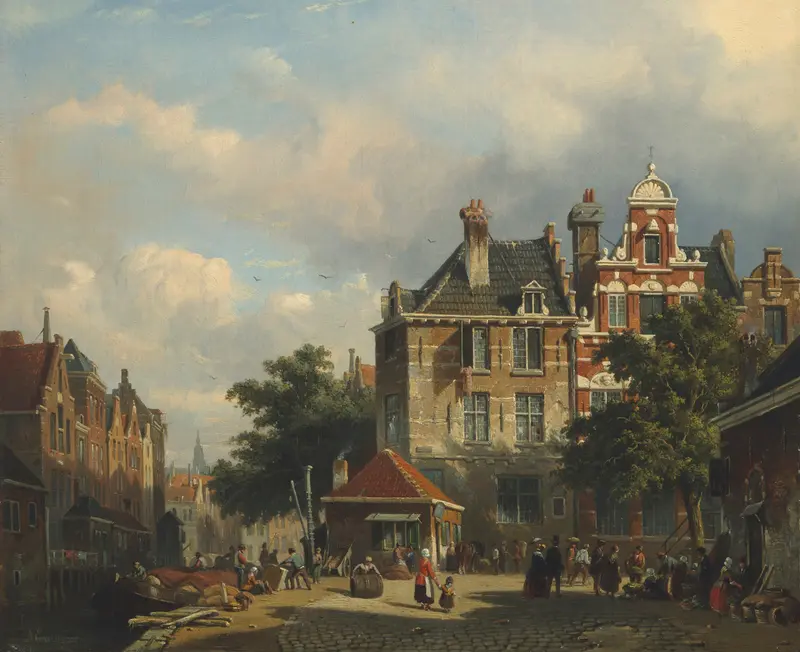
A Dutch street scene
Adrianus Eversen
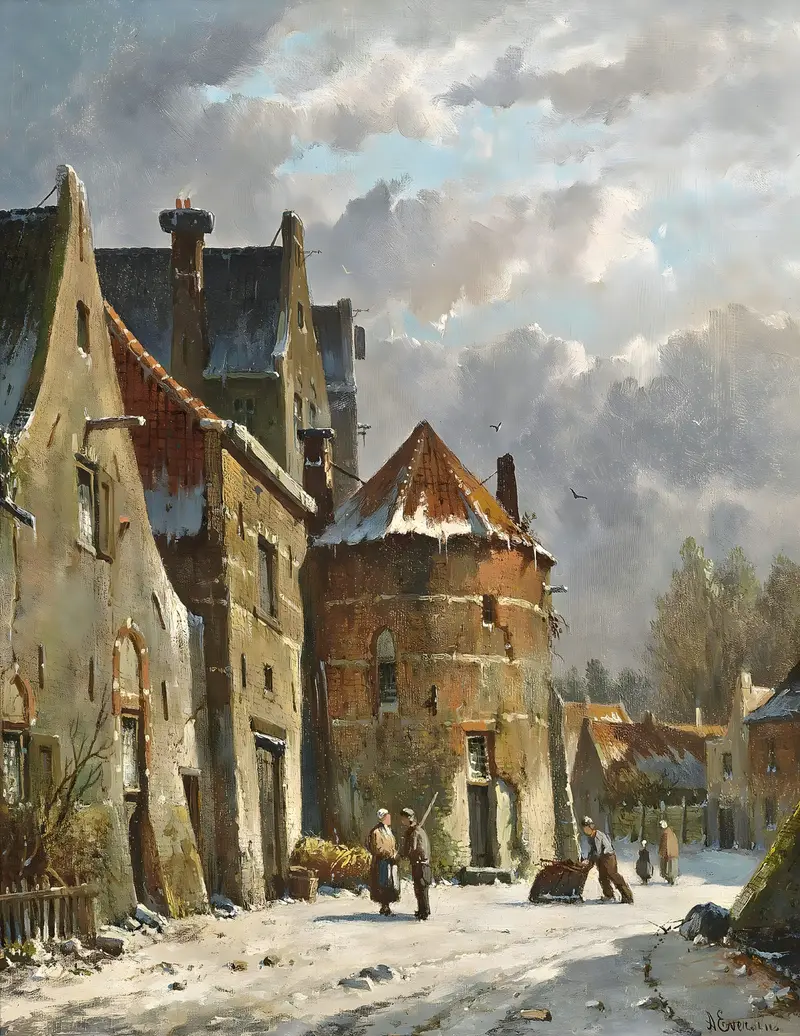
Figures On A Dutch Street, Winter
Adrianus Eversen
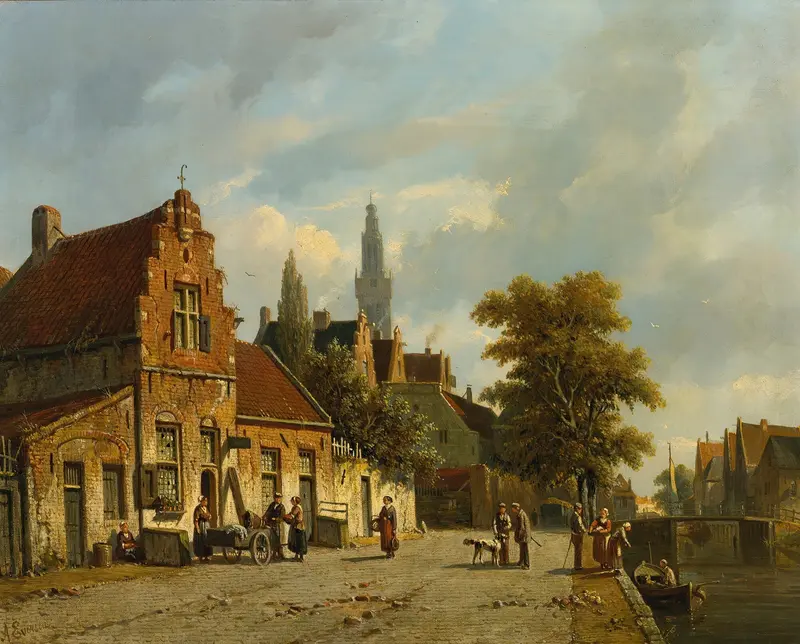
A Town In Holland
Adrianus Eversen
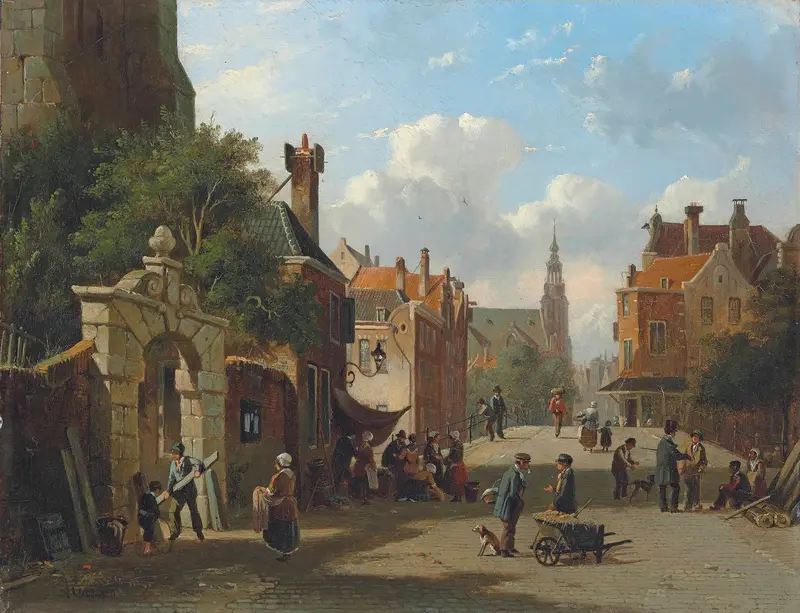
A busy street in Holland
Adrianus Eversen
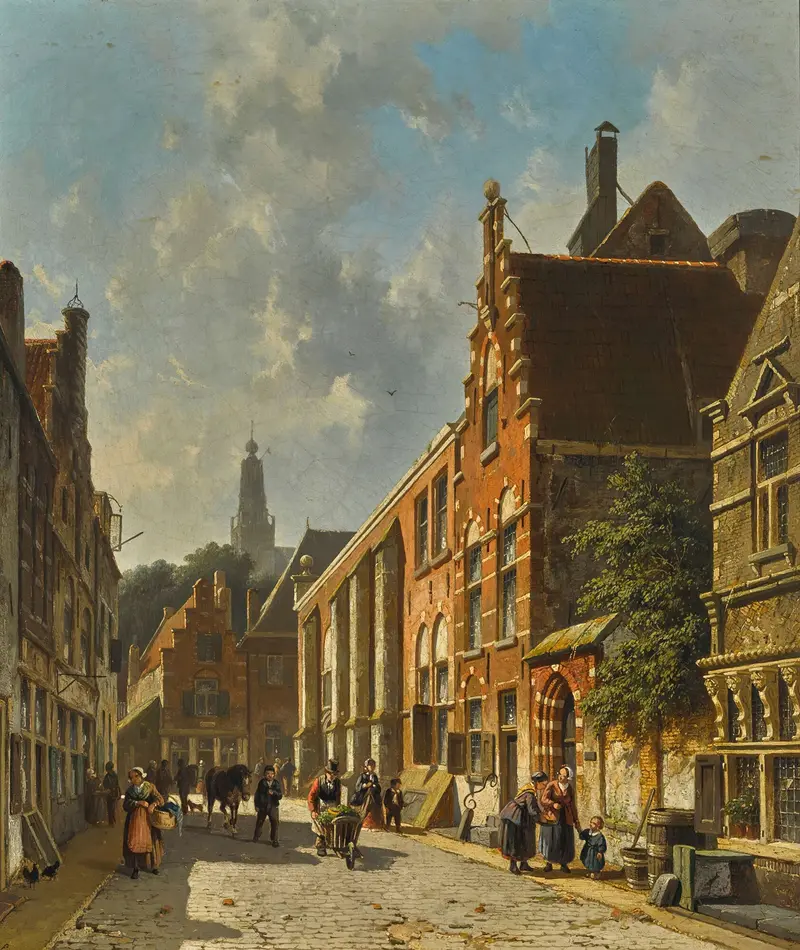
A busy street in summer
Adrianus Eversen

Figures on a Sunlit Street
Adrianus Eversen
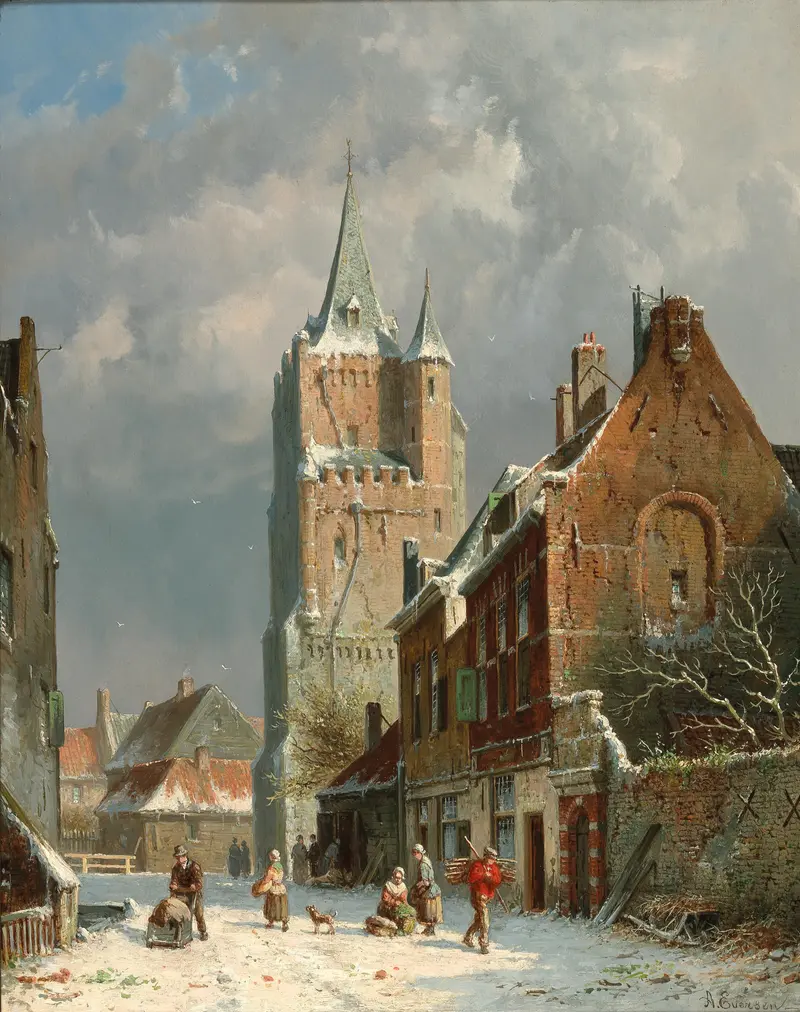
In the Voldersgracht in Delft
Adrianus Eversen
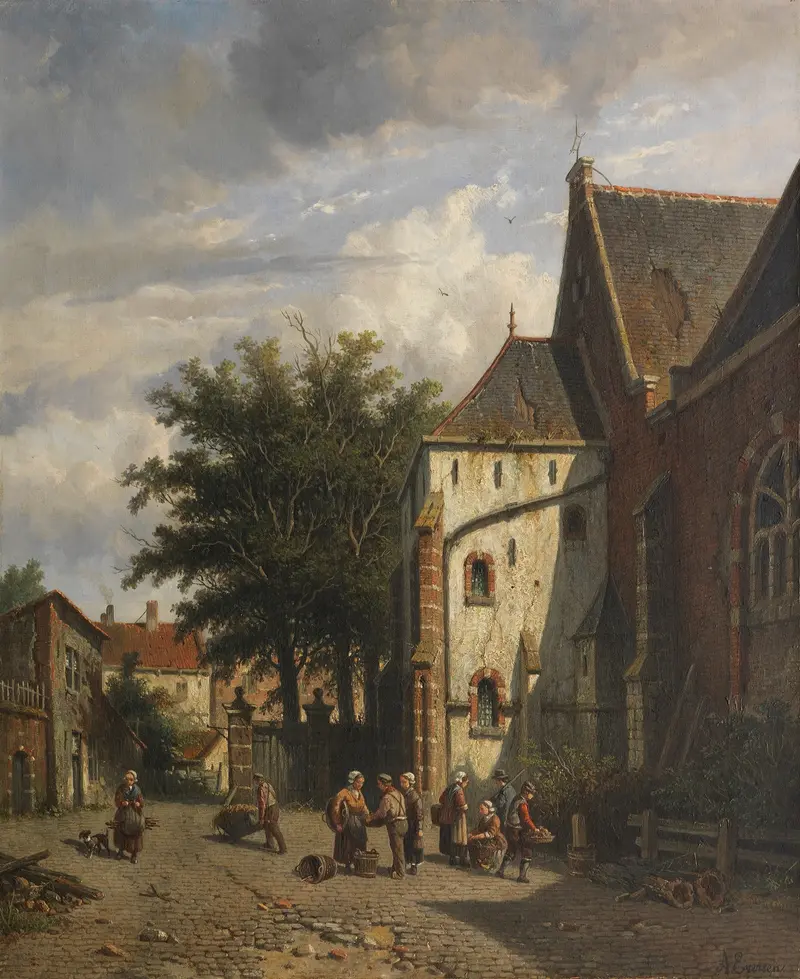
Achter de Westerkerk in Enkhuizen
Adrianus Eversen
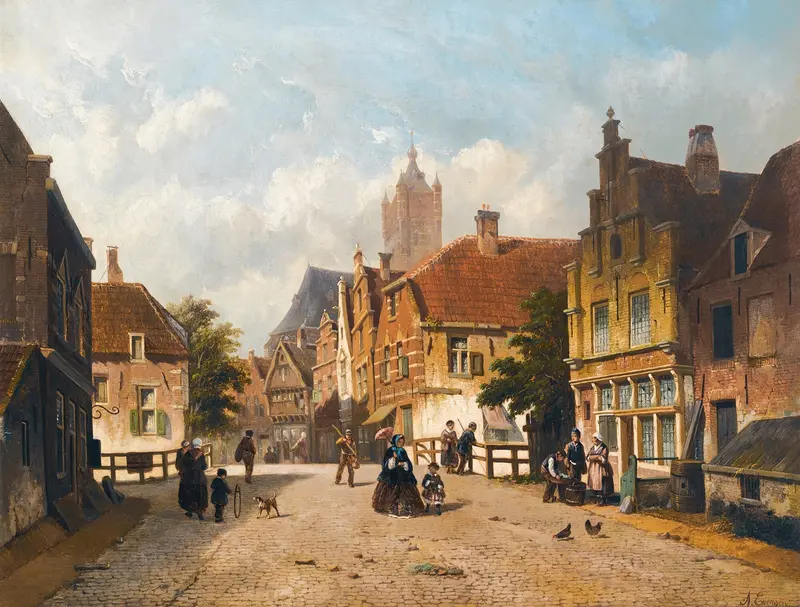
A dutch street
Adrianus Eversen
More Genre Scene Art

Banquet of the Officers of the St George Civic Guard
Frans Hals

Rembrandt and Saskia in the Scene of the Prodigal Son
Rembrandt van Rijn

Bal du moulin de la Galette
Pierre-Auguste Renoir

Quadrille at the Moulin Rouge
Henri de Toulouse-Lautrec

A Burial at Ornans
Gustave Courbet

When Will You Marry?
Paul Gauguin