
Blue Courtyard. Arenys de Munt — History & Facts
Where does light end, and longing begin? In the quiet embrace of Blue Courtyard, a delicate dance of color invites us to explore the spaces between solitude and memory. Look to the left at the cobalt walls, their cool hue contrasting harmoniously with the warm terracotta tiles beneath. Notice how the sunlight filters through the open space, casting soft shadows that breathe life into this tranquil scene. The composition draws the eye inward, creating a sense of intimacy, as if we are peering into a cherished moment frozen in time.
Each brushstroke evokes the essence of a sun-soaked Mediterranean day, where every corner holds the promise of stories long forgotten. Hidden within the vibrant blues is an emotional tension—a poignant reminder of what once was. The interplay of light and shadow acts as a narrative device, suggesting both presence and absence, nostalgia weaving its way through the courtyard. The open doorway hints at possibilities beyond, yet it is the stillness that lingers, evoking the bittersweet essence of memories that shape our legacies.
The vibrant colors simultaneously celebrate life and reflect the sorrow of time’s passage. Santiago Rusiñol painted this work during a period of profound personal exploration and artistic liberation, likely while residing in the charming village of Arenys de Munt in the early 20th century. At this time, he was deeply engaged in the Catalan modernisme movement, which sought to elevate Catalan identity through art. This piece resonates with the era’s emphasis on emotional expression and the beauty of everyday life, capturing a legacy that continues to inspire today.
More Artworks by Santiago Rusiñol
Browse all →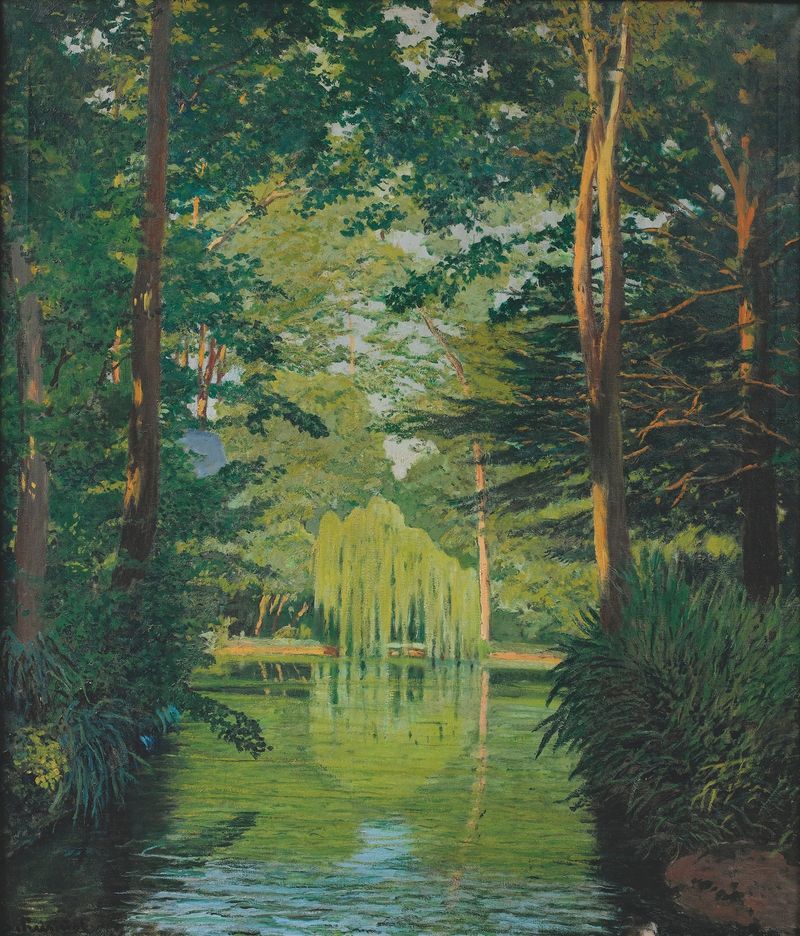
Parc Badés, Arbúcies
Santiago Rusiñol
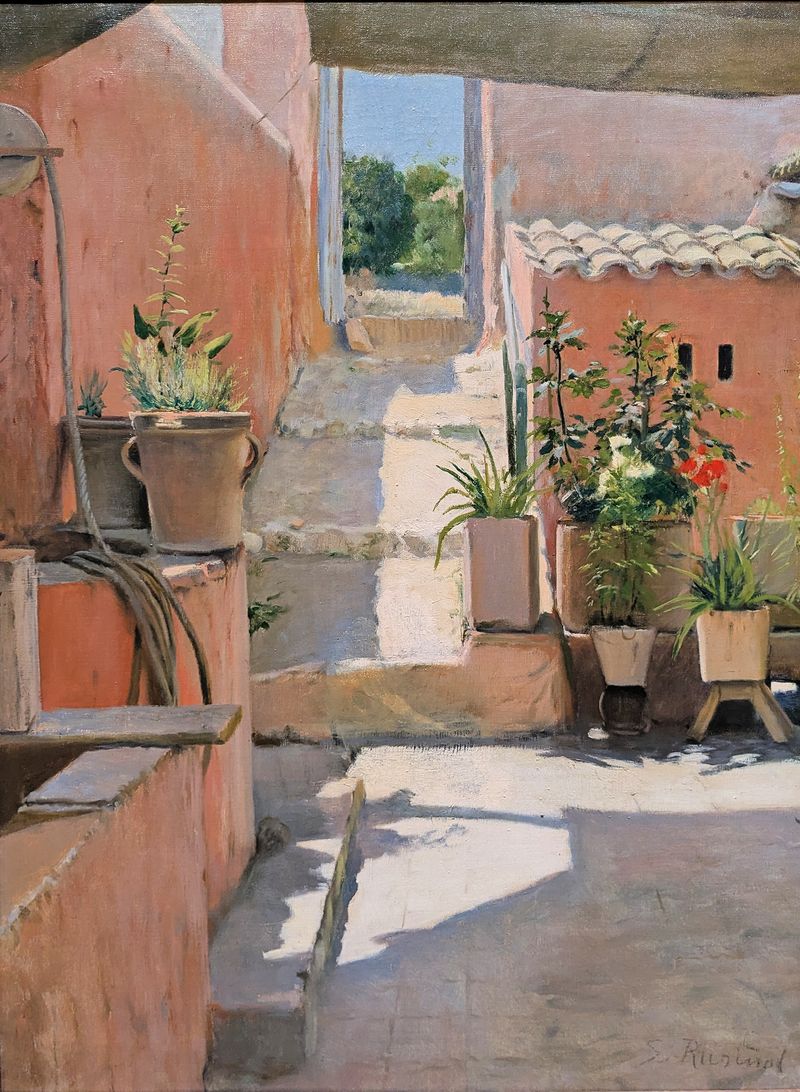
Patio in Sitges
Santiago Rusiñol
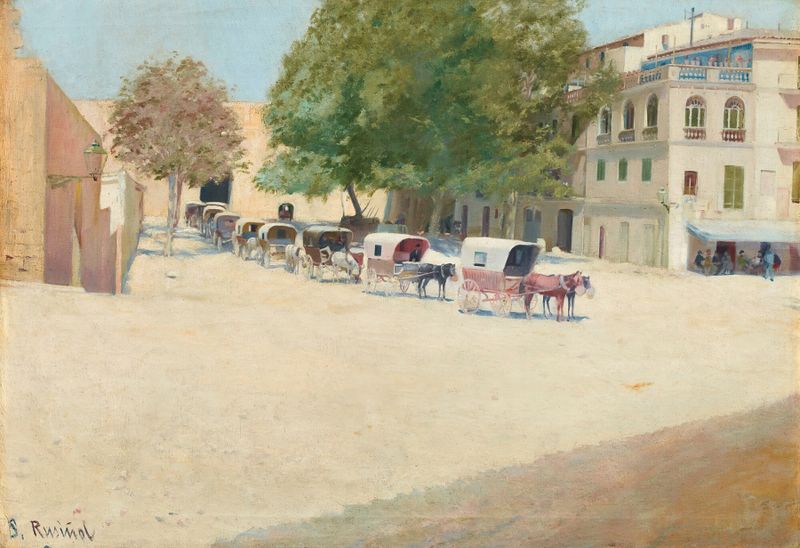
Paseo De Mallorca
Santiago Rusiñol
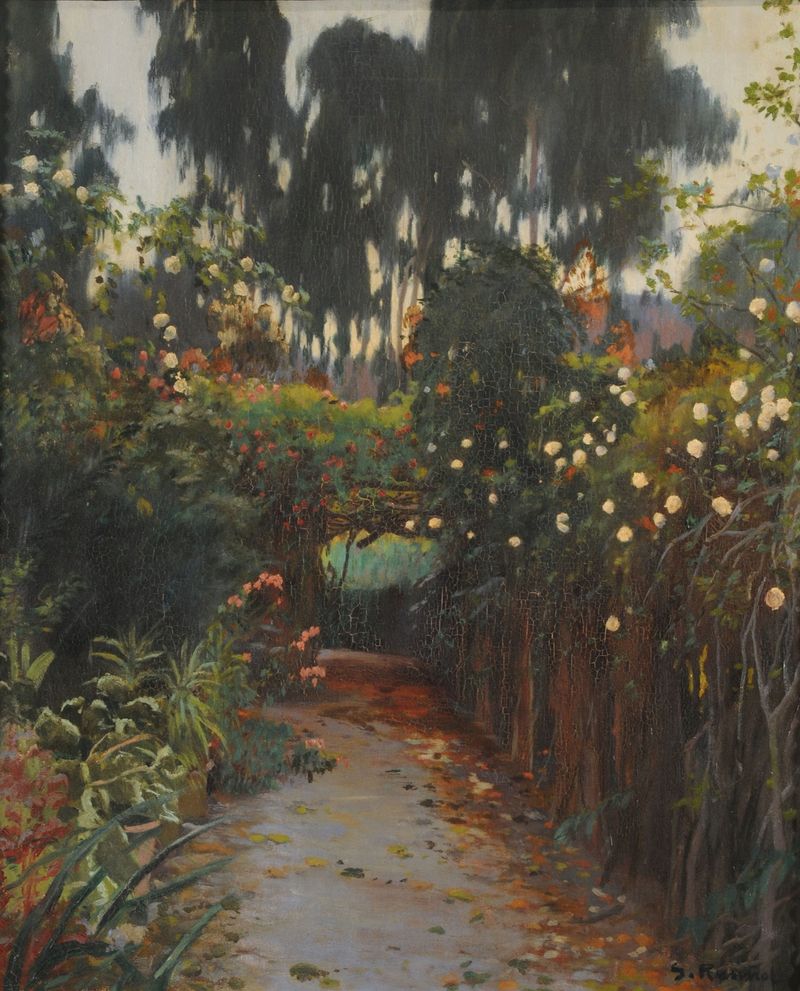
Camino de rosas
Santiago Rusiñol

Lavaderos De La Barceloneta
Santiago Rusiñol
Otoñal
Santiago Rusiñol

Cala Grisa
Santiago Rusiñol

Gardens of the Generalife
Santiago Rusiñol

Jardín De Sa Coma. Valdemosa
Santiago Rusiñol

La Fuente De Los Cipreses
Santiago Rusiñol





