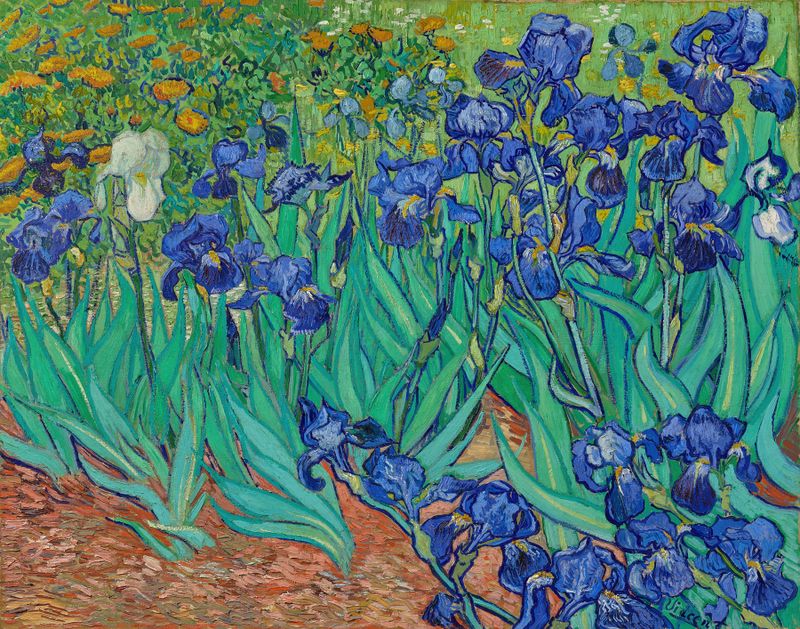
Blumengarten — History & Facts
In the intricate brushstrokes of Blumengarten, a lush oasis of color emerges, inviting viewers to pause and reflect on the fleeting nature of beauty. Here, a garden blooms, but it is not merely the flora that captivates; it is the revelation that art serves as a conduit of memory, an anchor amidst the passage of time. Look closely at the delicate petals in the foreground; each hue dances with life, the interplay of light and shadow breathing vibrancy into their forms. Notice the gentle gradients of greens and yellows, where the sun filters through the foliage, casting a warm glow on the scene.
The composition is expertly balanced, drawing your eye along winding paths that meander through the garden, suggesting an invitation to wander deeper into its serene depths. Yet beneath this tranquil surface lies a tension between transience and permanence. The flowers, bursting with life, evoke both joy and melancholy, reminding us that beauty is ephemeral. The subtle fading of colors at the edges hints at the inevitable decay that time brings, while the meticulous detail captures the essence of each bloom, a quiet protest against oblivion.
Mühlig’s choice of vibrant palette contrasts with soft shadows, embodying the simultaneous existence of joy and sorrow in the natural world. Created in 1895, Mühlig painted Blumengarten during a period of artistic exploration and transition in Germany. The late 19th century was marked by a growing interest in Impressionism, and Mühlig was influenced by this movement as he sought to capture the fleeting moments of nature. At this time, the artist was refining his techniques, focusing on color and light to convey emotion, while the world around him was slowly modernizing, altering perceptions of beauty and art.
More Artworks by Hugo Mühlig
Browse all →
Sommerliche Heuernte
Hugo Mühlig

Holzfäller am Feuer
Hugo Mühlig

Horse cart on a hill
Hugo Mühlig
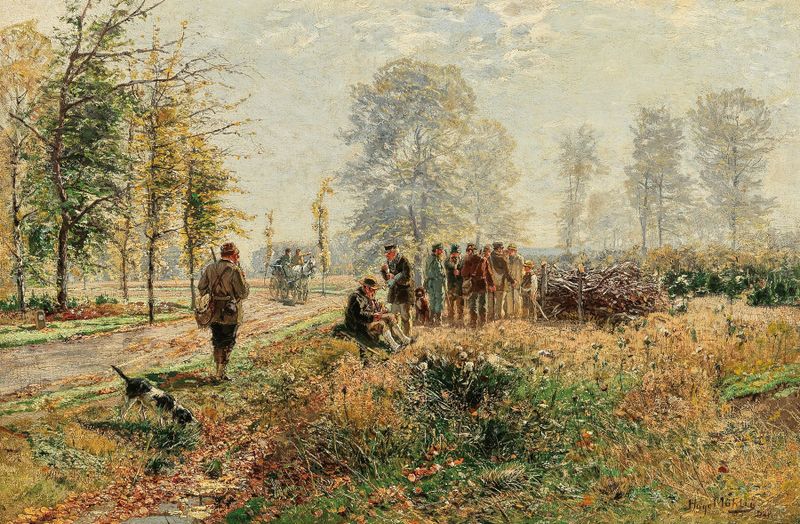
Aufbruch zur Jagd
Hugo Mühlig

Schäfer auf dem Heimweg
Hugo Mühlig
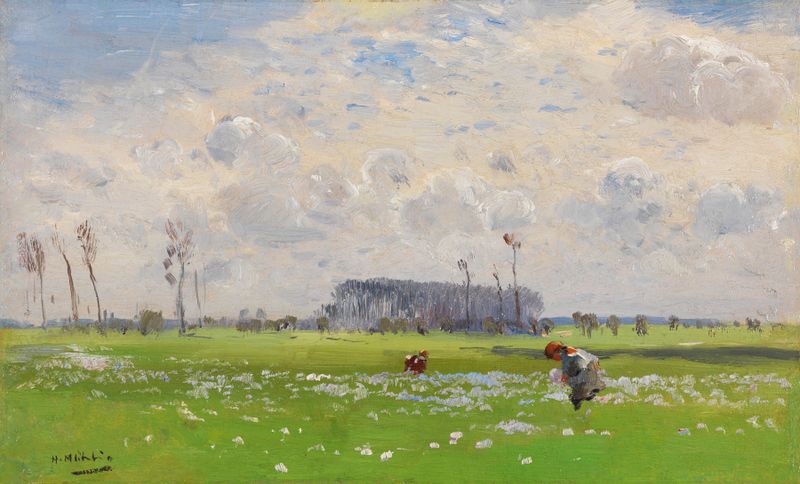
Sommerwiese mit blumenpflückenden Mädchen
Hugo Mühlig
Off to the Hunt
Hugo Mühlig

Bei der Ernte (Niederrhein)
Hugo Mühlig
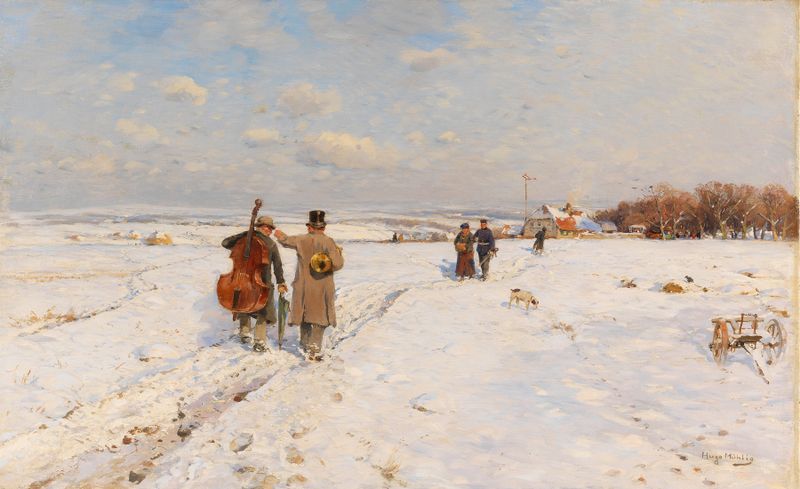
Heimkehrende Musikanten im Schnee
Hugo Mühlig
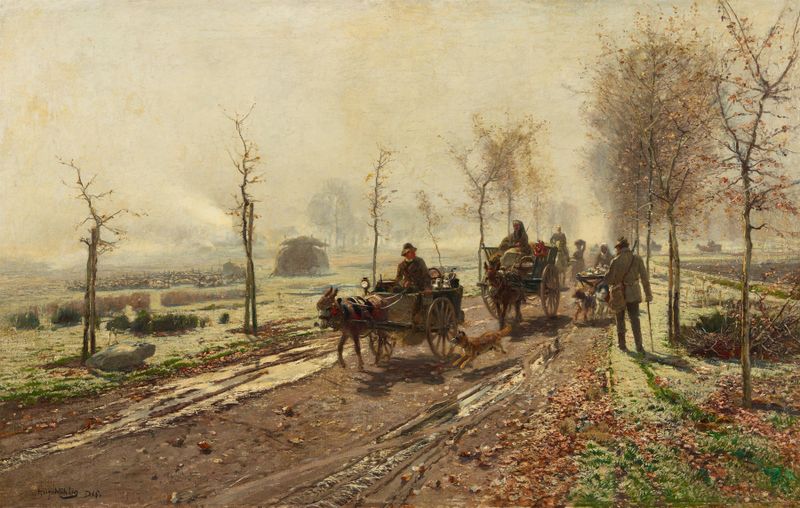
Herbstmorgen am Niederrhein
Hugo Mühlig