
Boats — History & Facts
In the delicate interplay of light and water, George Morland's Boats captures the fragility of existence as it drifts just out of reach. Look to the foreground, where two boats rest languidly on the shimmering surface, their reflections dancing with the undulating waves. The muted greens and blues evoke a serene atmosphere while hints of warm ochre suggest the fleeting touch of sunlight, illuminating the contours of the vessels. The subtle brushwork creates a tactile sensation, inviting the viewer to feel the gentle lapping of the water against the hulls, while the composition draws your eye toward the horizon, hinting at journeys both taken and abandoned. Yet, there lies a deeper tension within this tranquil scene.
The boats, though seemingly at peace, evoke a sense of vulnerability, floating precariously in a boundless sea. The juxtaposition of their sturdy constructions against the potentially tempestuous waters underlines the theme of fragility, reflecting the uncertainty of life itself. Each element, from the soft ripples to the distant shore, speaks to the transient nature of human endeavor and the ever-present possibility of change. In 1794, Morland painted during a time of political and social upheaval in Europe, marked by the aftermath of the American Revolution and the brewing tensions in France.
Working in London, he was immersed in an artistic community that valued both realism and idyllic landscapes. His choice of subject in Boats not only illustrates his technical prowess but also serves as a poignant reminder of the delicate balance between stability and chaos in both art and life.
More Artworks by George Morland
Browse all →
The Bell Inn
George Morland
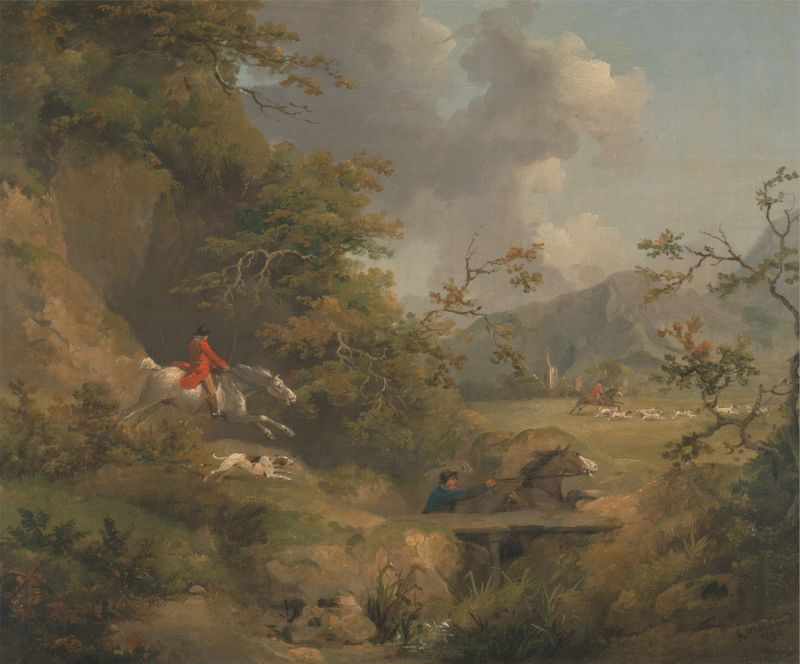
Foxhunting in Hilly Country
George Morland

View at Enderby, Leicestershire
George Morland

Pheasant Shooting
George Morland

The Mail Coach
George Morland

Rocky Landscape with Two Men on a Horse
George Morland
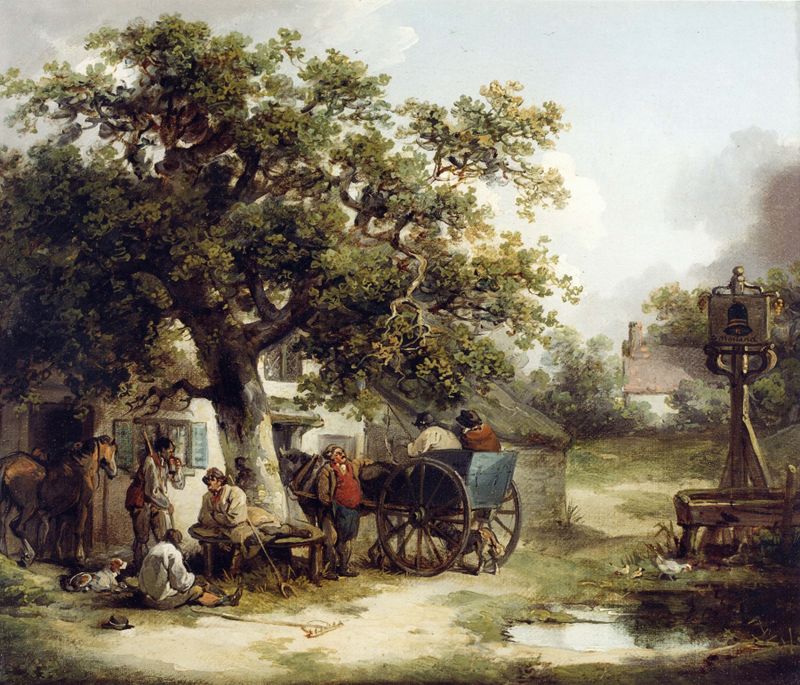
The Bell Inn, Kilburn
George Morland

Landscape
George Morland

Trepanning a Recruit
George Morland

A Country Inn
George Morland





