
Boatyard at Saint-Mammès — History & Facts
What first catches the eye in Boatyard at Saint-Mammès is the sheer expanse of sky, a dome of shifting clouds that dwarfs the human industry below. The painter, Alfred Sisley, draws us into a world where the business of boatbuilding is both humble and heroic, each plank and shed rendered with quick, searching strokes. The unfinished hull to the right stands like a monument in progress, its ribs exposed, surrounded by scattered timber and barrels that hint at recent labor.
Light pours across the scene from the left, warming the ochres and russets of the earth and wood, while the river beyond glimmers in cool blue, separating the work of man from the lush, untamed banks opposite. The composition leads the viewer’s gaze from the grounded boats to the horizon, then up into the restless sky, inviting a moment of quiet reflection amid the traces of toil. Painted in 1885, this work belongs to the late flowering of Impressionism, when artists like Sisley sought to capture the changing face of rural France as industry edged into the landscape. Scenes like this were rarely grand commissions; rather, they were painted for a growing middle class eager to see their world reflected with immediacy and light.
The riverside at Saint-Mammès, a favorite haunt of the Impressionists, offered a stage where tradition—boatbuilding, riverside labor—met the fleeting moods of weather and season. History has kept few traces of this particular boatyard or its workers, but Sisley’s painting, now preserved in digital form, lets us linger in their world, where the ordinary is made luminous by the artist’s eye.
More Artworks by Alfred Sisley
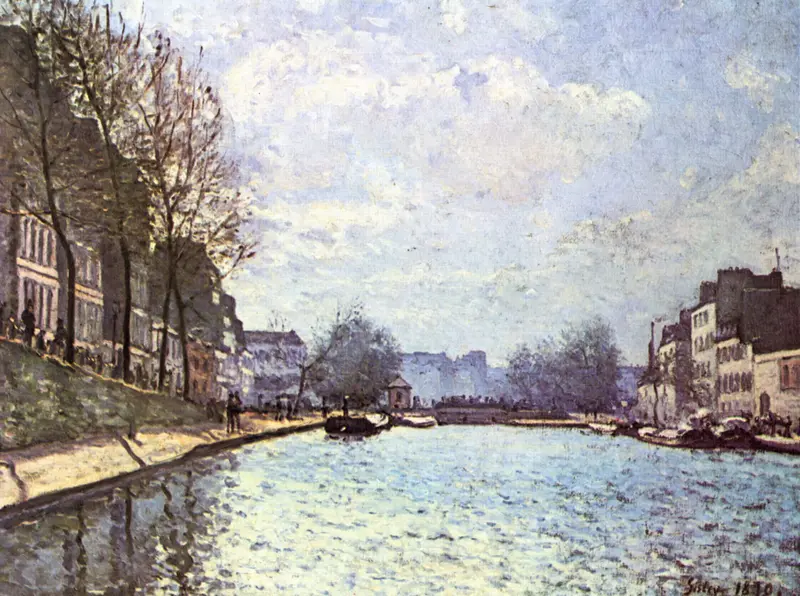
View of the Canal Saint-Martin
Alfred Sisley

Le Loing à Saint-Mammès
Alfred Sisley
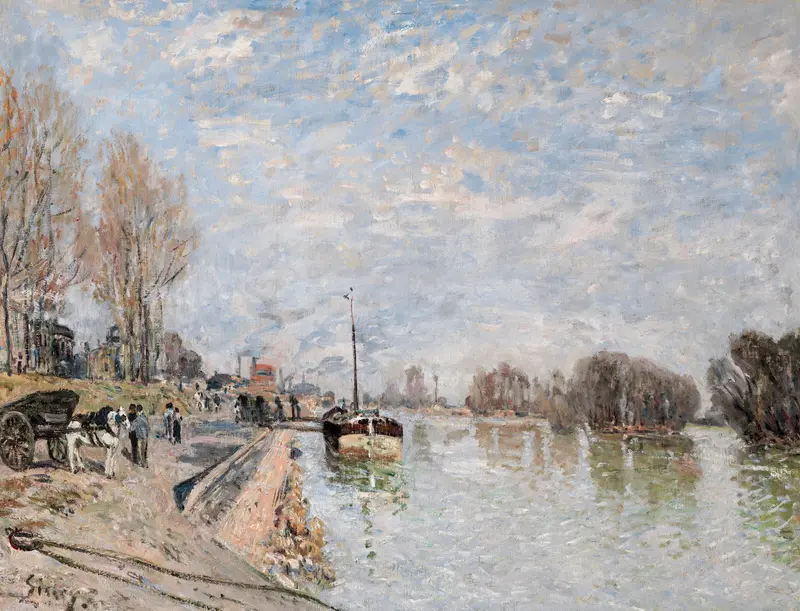
La Seine à Suresnes
Alfred Sisley
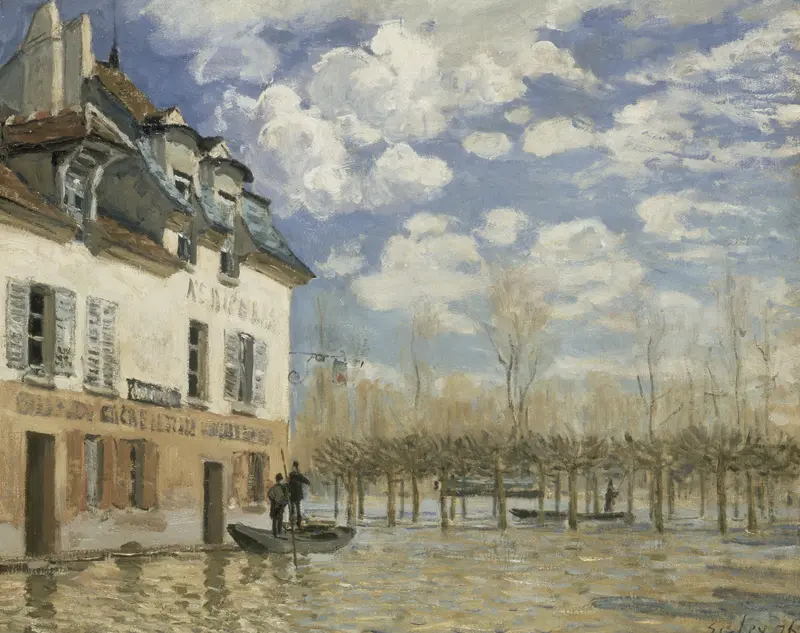
Boat in the Flood at Port Marly
Alfred Sisley
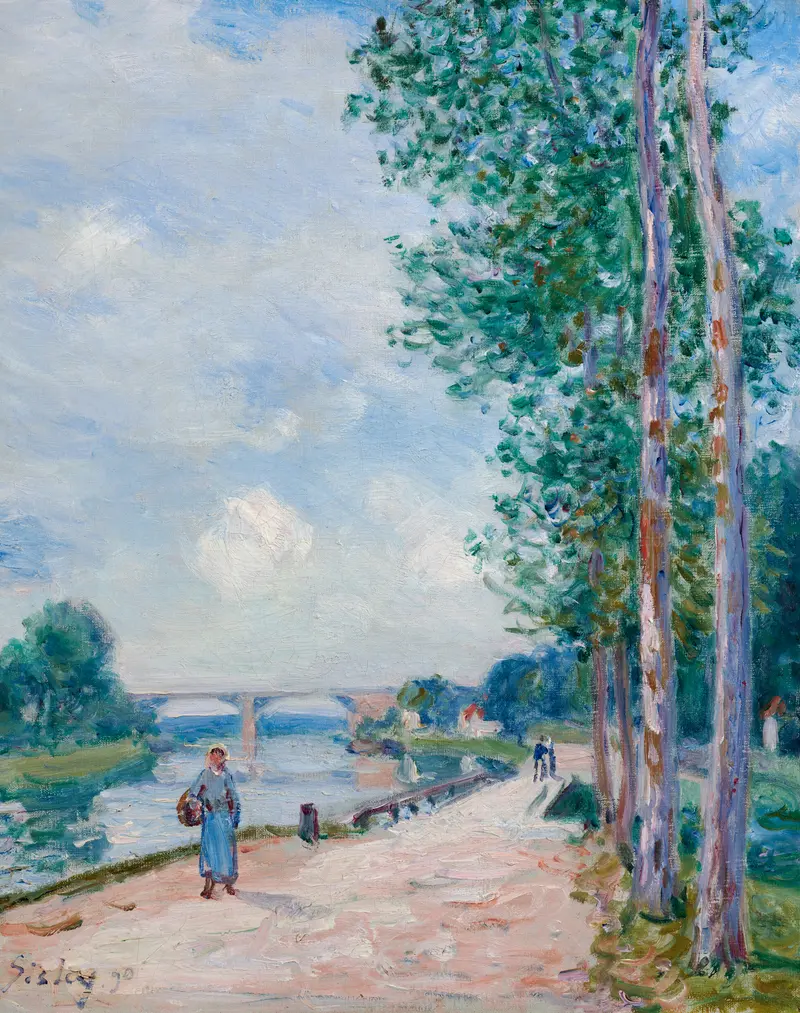
Les bords du Loing près de Moret
Alfred Sisley
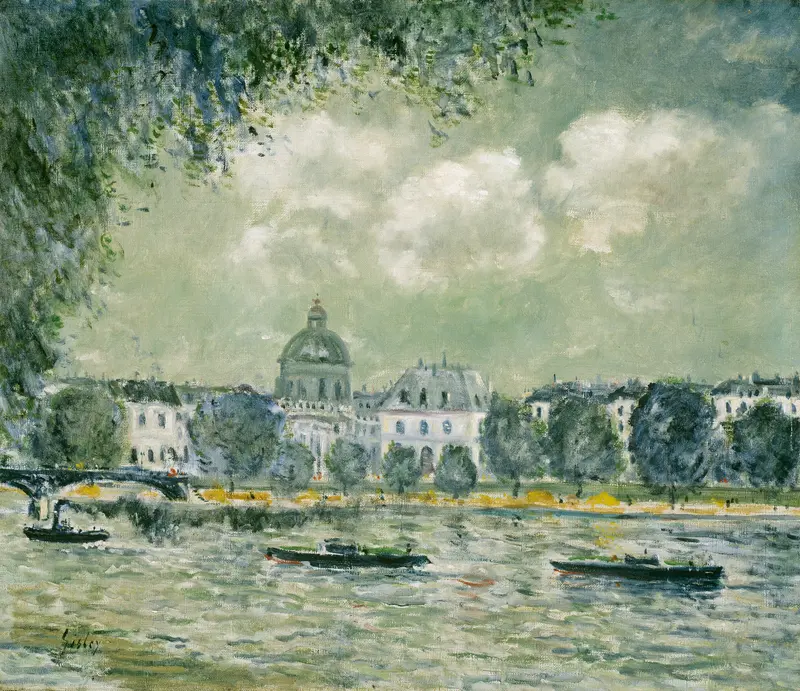
Landscape along the Seine with the Institut de France and the Pont des Arts
Alfred Sisley

Printemps au bord du Loing
Alfred Sisley
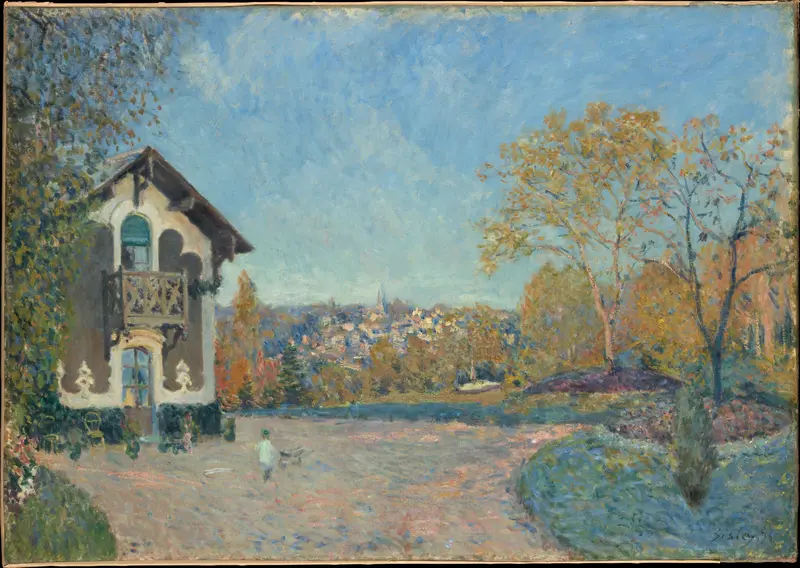
View of Marly-le-Roi from Coeur-Volant
Alfred Sisley
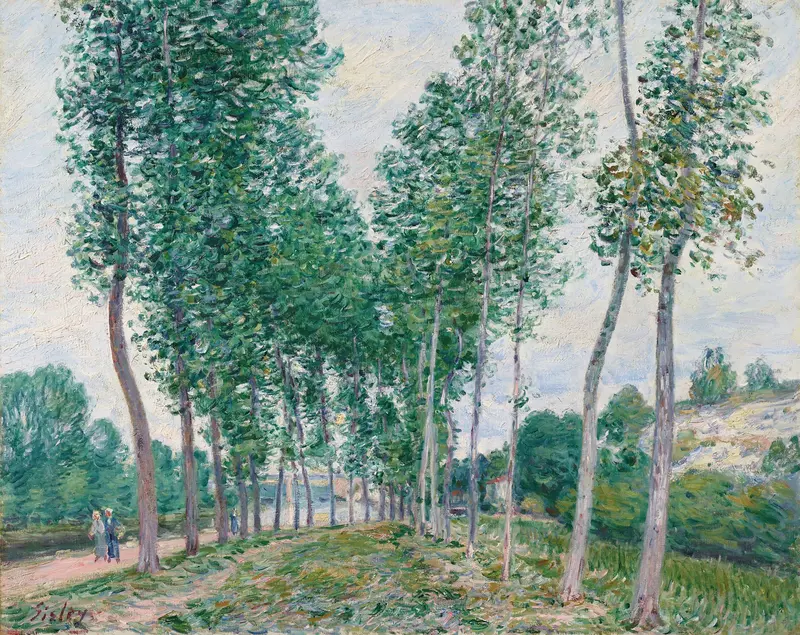
L’allée des peupliers au bord du Loing
Alfred Sisley
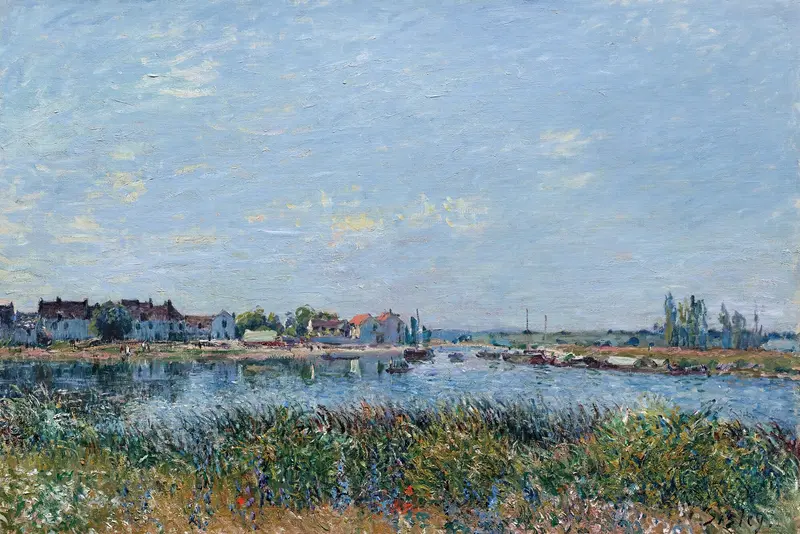
Saint-Mammès, Le Matin
Alfred Sisley
More Landscape Art

The Starry Night
Vincent van Gogh

View of Delft
Johannes Vermeer

Water Lilies
Claude Monet

The Grand Canal, Venice, looking north-west from the Ca' Corner to the Ca' Contarini degli Scrigni, with the campanile of Santa Maria della Carità
Canaletto

Windsor Castle
Canaletto

The Grand Canal looking North-East from the Palazzo Dolfin-Manin to the Rialto Bridge
Canaletto