
Boerenhuis aan een vaart — History & Facts
In the stillness of Boerenhuis aan een vaart, the illusion of tranquility reveals a deeper narrative, where idyllic landscapes often mask hidden struggles beneath their surface. Look to the left at the quaint farmhouse, its warm ochres and earthy tones almost glowing under the sunlight. The delicate brushstrokes suggest both a sense of permanence and fragility, as shadow dances along the path leading to the water. Notice how the light falls upon the rippling surface of the canal, casting reflections that shimmer like forgotten memories, drawing your gaze further into the depth of the scene.
The composition balances simplicity with richness, evoking the serenity of rural life while hinting at complexity. The painting captures a moment where nature and human existence intertwine, revealing the tension between the idyllic and the mundane. The gentle slope of the land suggests both harmony and the relentless passage of time, as the house stands resilient against the encroaching wild. Each element — the trees, the water, the modest dwelling — holds a story of resilience and the silent struggles faced by those who dwell within this picturesque realm, creating an emotional weight that belies its outward beauty. Johan Hendrik Weissenbruch painted this work during a transformative period in the late 19th century, when the Hague School was gaining prominence.
He sought to capture the essence of Dutch landscapes with an impressionist touch, reflecting his own experiences and the socio-political changes of the time, including the shift towards modernity amidst the pastoral. Engaging with both tradition and innovation, the artist's vision encapsulated the beauty and intricacies of rural life, marking a significant moment in the evolution of Dutch art.
More Artworks by Johan Hendrik Weissenbruch
Browse all →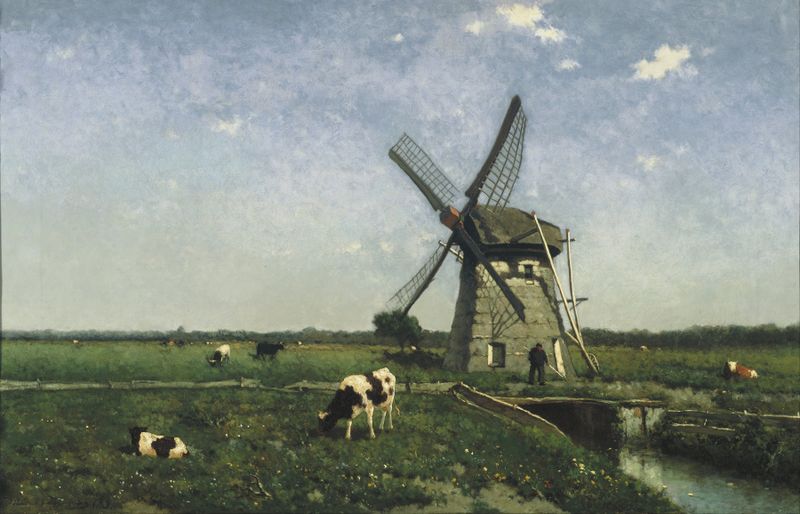
Landscape with Windmill near Schiedam
Johan Hendrik Weissenbruch
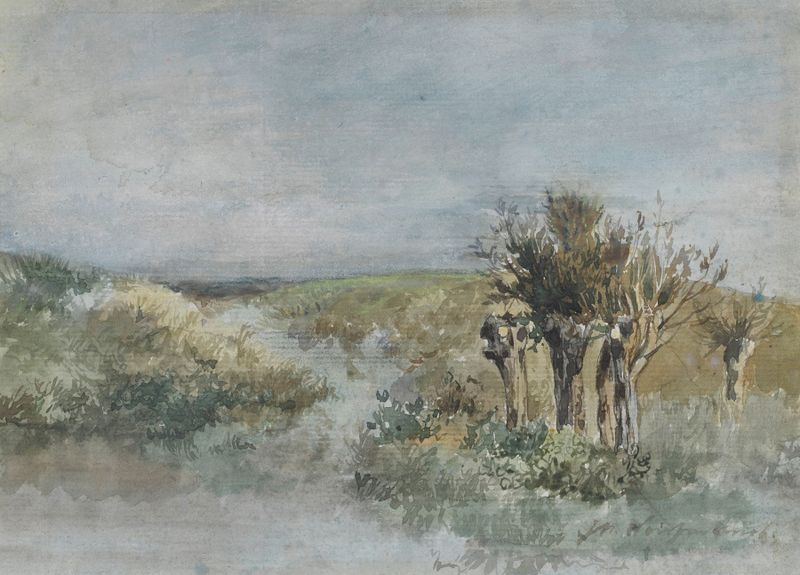
Landschap met knotwilgen langs een sloot
Johan Hendrik Weissenbruch
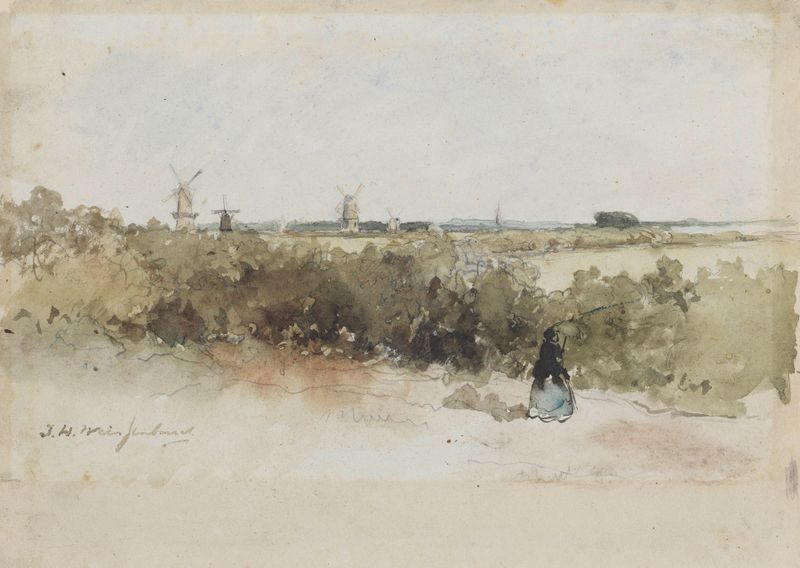
Landschap met windmolens
Johan Hendrik Weissenbruch
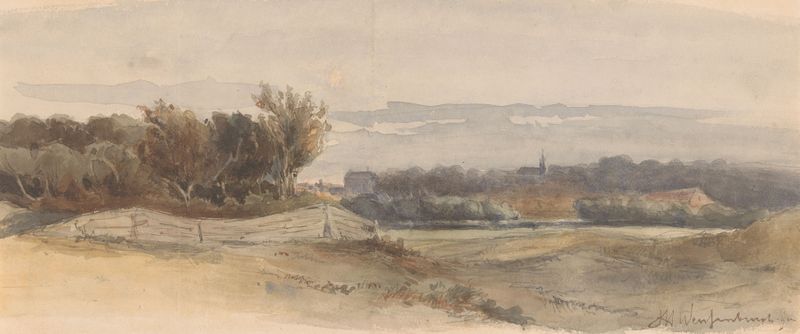
Panoramisch landschap
Johan Hendrik Weissenbruch
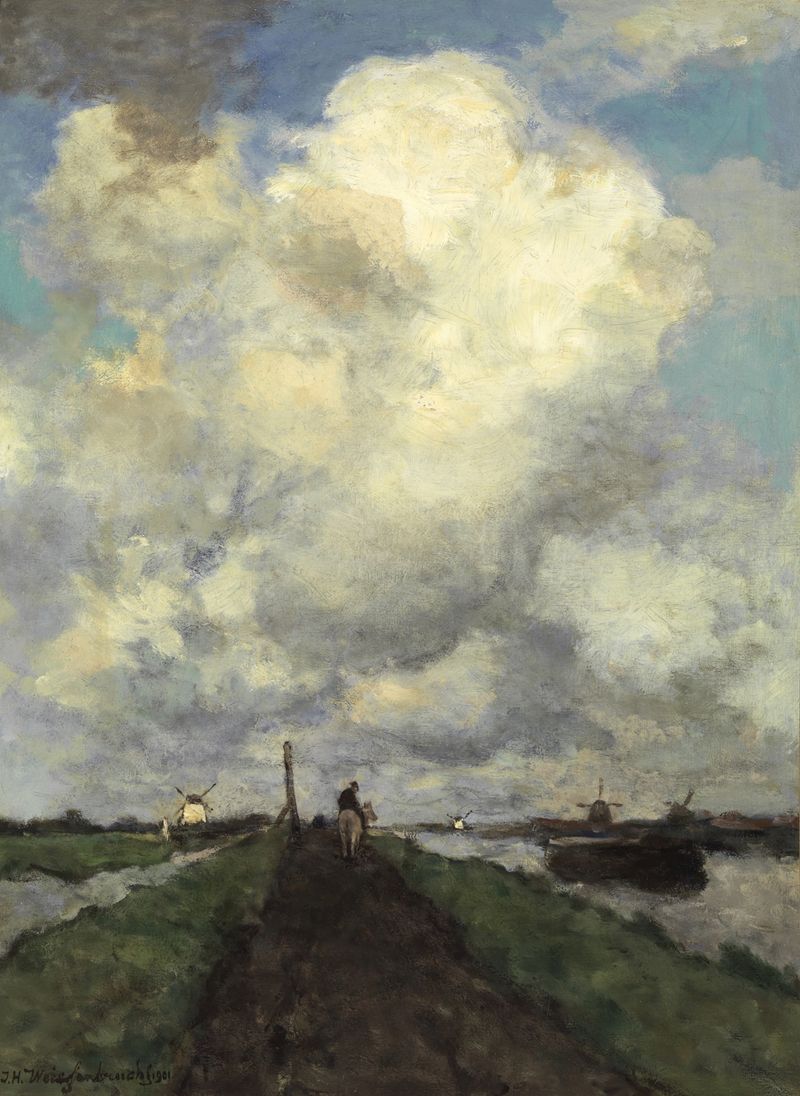
De witte wolk
Johan Hendrik Weissenbruch
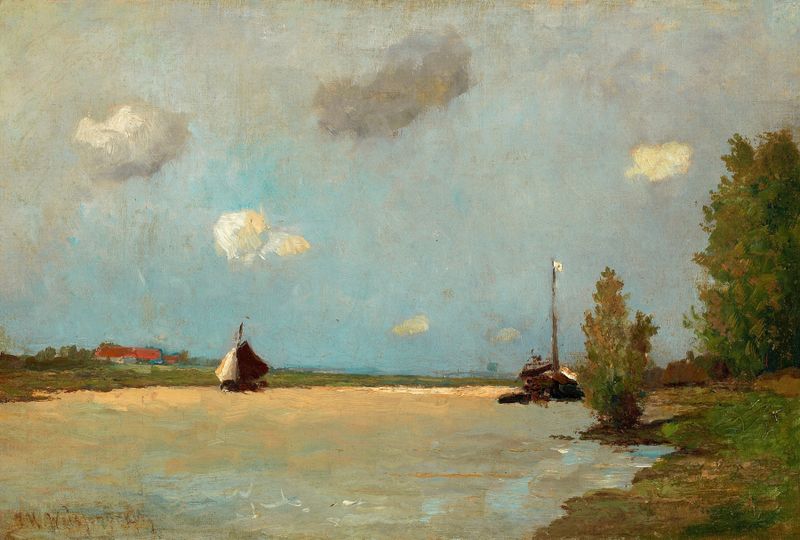
Dutch Landscape with Boats
Johan Hendrik Weissenbruch
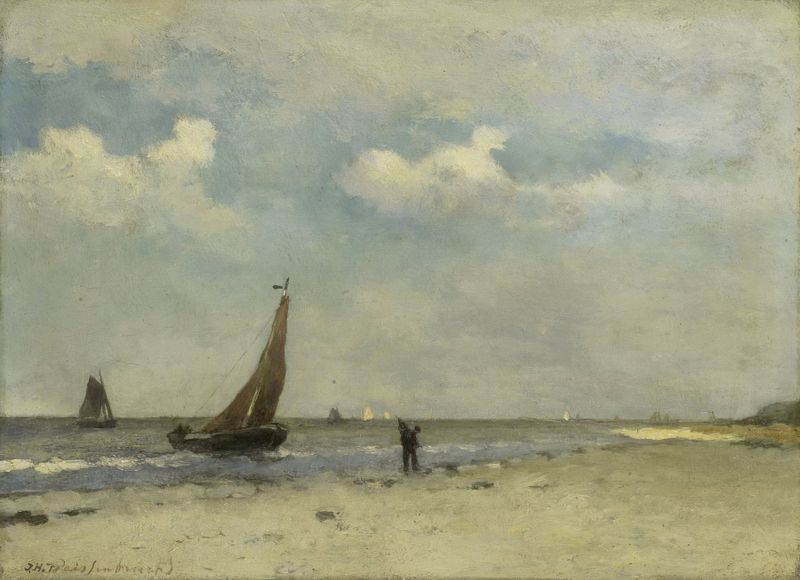
Beach Scene
Johan Hendrik Weissenbruch
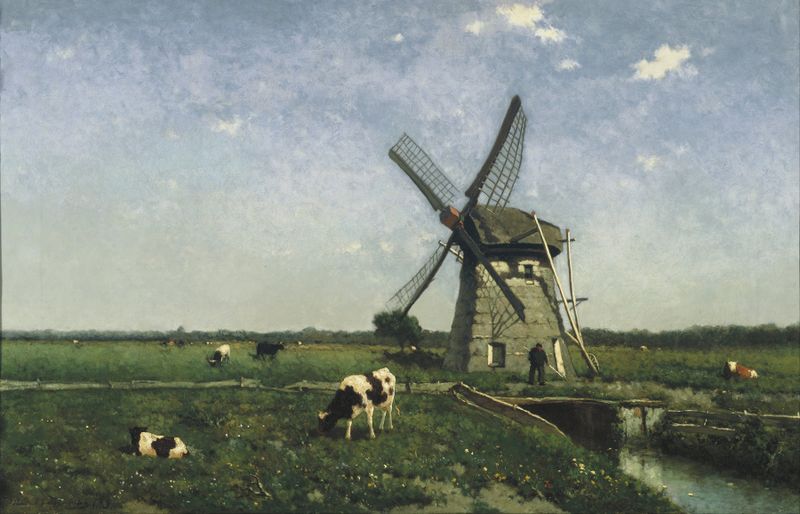
Landscape with Windmill near Schiedam
Johan Hendrik Weissenbruch
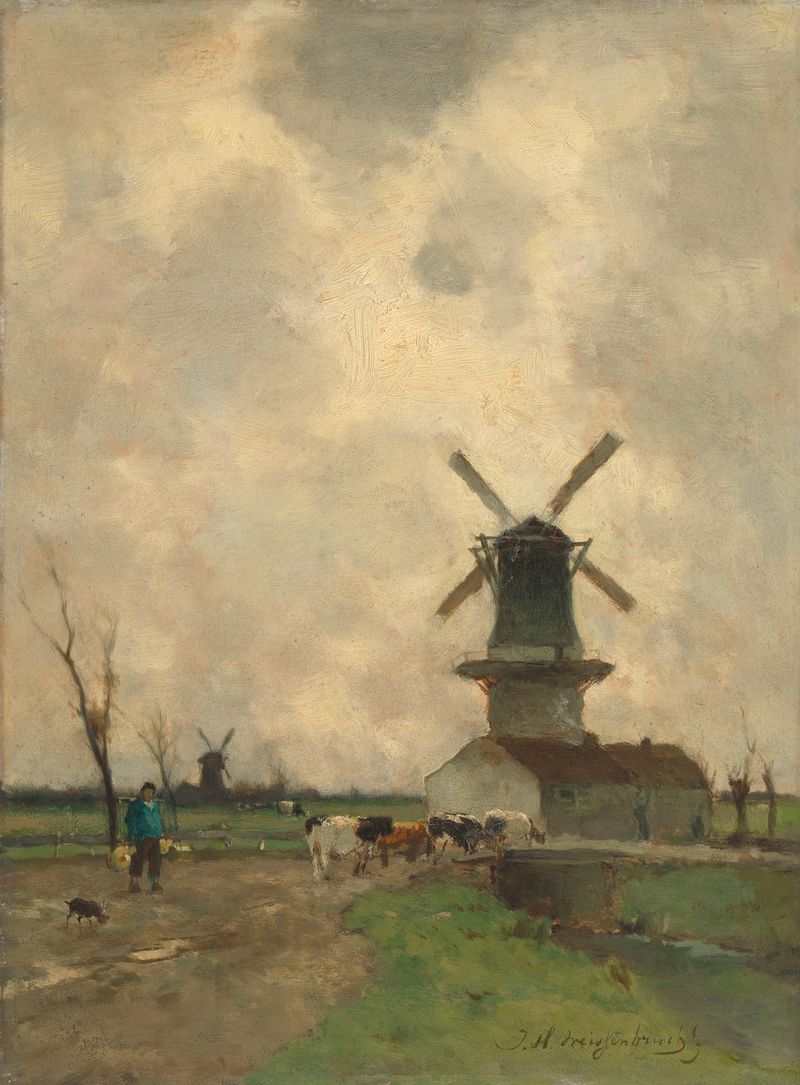
The Mill
Johan Hendrik Weissenbruch
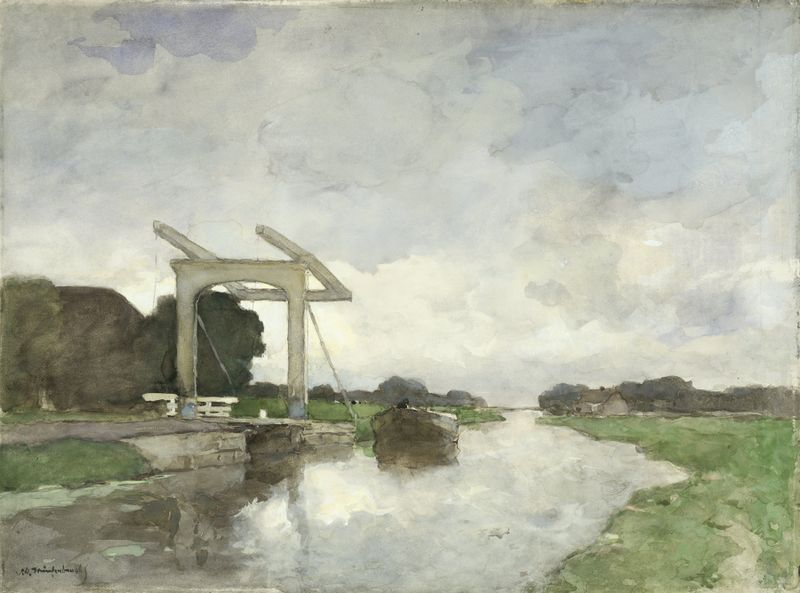
Drawbridge at Noorden
Johan Hendrik Weissenbruch





