
Bombarding of Ancona, 1915-05-24 — History & Facts
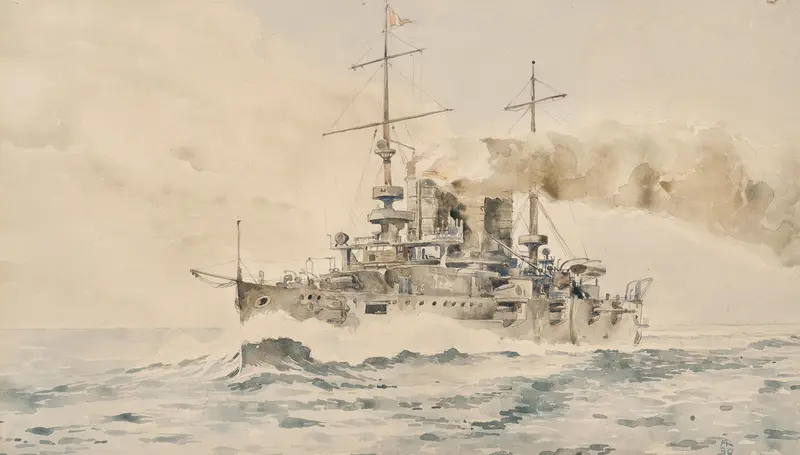
The eye is drawn first to the thick, billowing smoke—an urgent, living force that slices across the pale sky and tells us at once that something momentous is underway. The ships themselves, bristling with flags and guns, cut through the blue water in a line of steel and determination. The largest vessel, its superstructure crowned with the distinctive red-white-red of the Austro-Hungarian Empire, dominates the scene, while the smaller ships follow, their wakes trailing in disciplined formation.
The painter has set the horizon low, giving the sky a vast, almost oppressive presence, while the churned sea reflects both the chaos and order of battle. Every brushstroke of smoke and water is a signal: this is not a peaceful passage, but a moment of action and consequence. Works like this, painted in the early twentieth century, belong to a tradition of naval art that flourished in times of war and empire. Such paintings were often commissioned by governments or naval officers to commemorate significant engagements or to bolster national pride.
The flags, the careful attention to ship detail, and the sense of movement all speak to a period when the fate of nations could hinge on a single day at sea. Today, this particular work resides in Vienna’s Heeresgeschichtliches Museum, photographed in 2017, a reminder of how history is preserved not just in archives, but in images that invite us to witness the world as it was seen by those who lived it. Look again at the smoke: it is both a veil and a signal, a trace of violence and a mark of memory.
More Artworks by August von Ramberg

Bombarding of Pelagosa, 1915-05-23
August von Ramberg

Ramberg Viribus Unitis, HGM, 2017 03 08
August von Ramberg
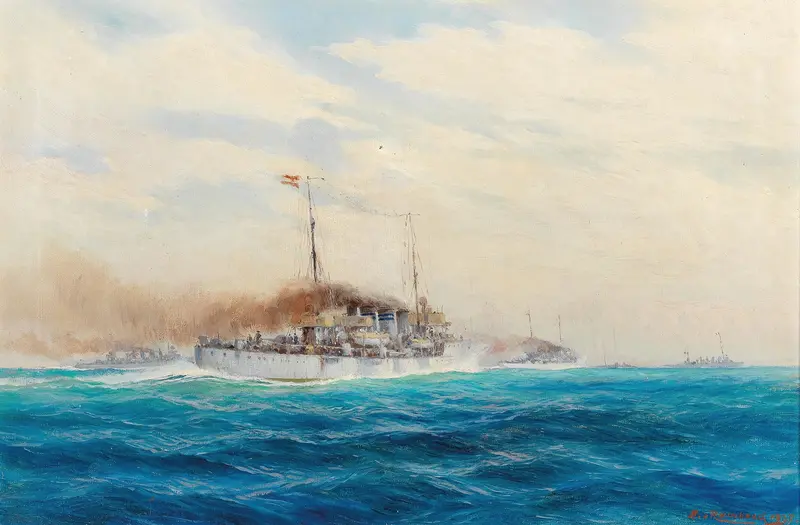
Bombardment of Palagruža in 1915
August von Ramberg
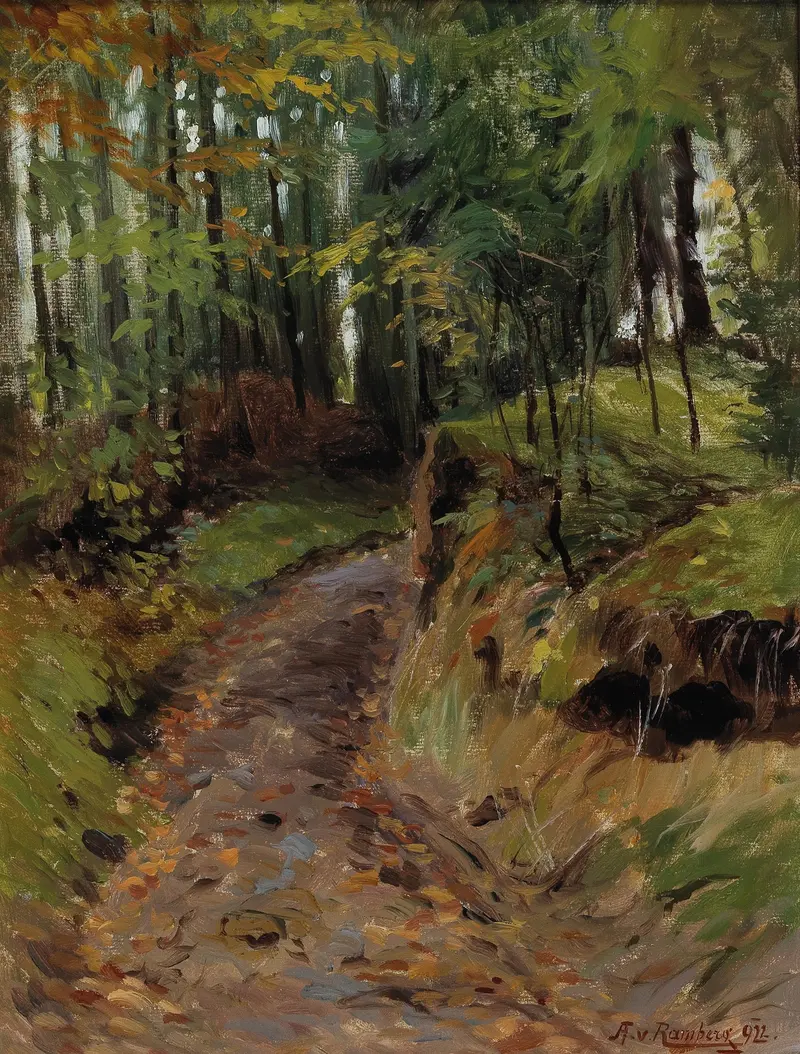
Am Weg zum Gmundnerberg
August von Ramberg
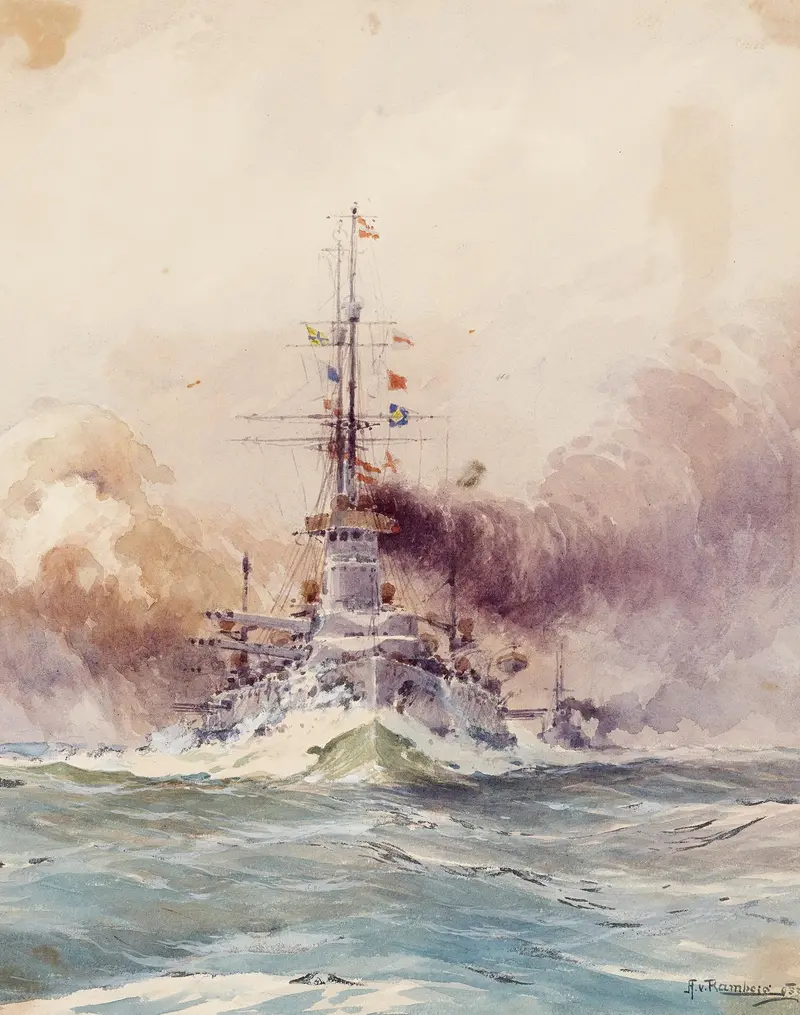
The Imp. Royal Battleship VIRIBUS UNITIS at full speed accompanied by the fleet
August von Ramberg
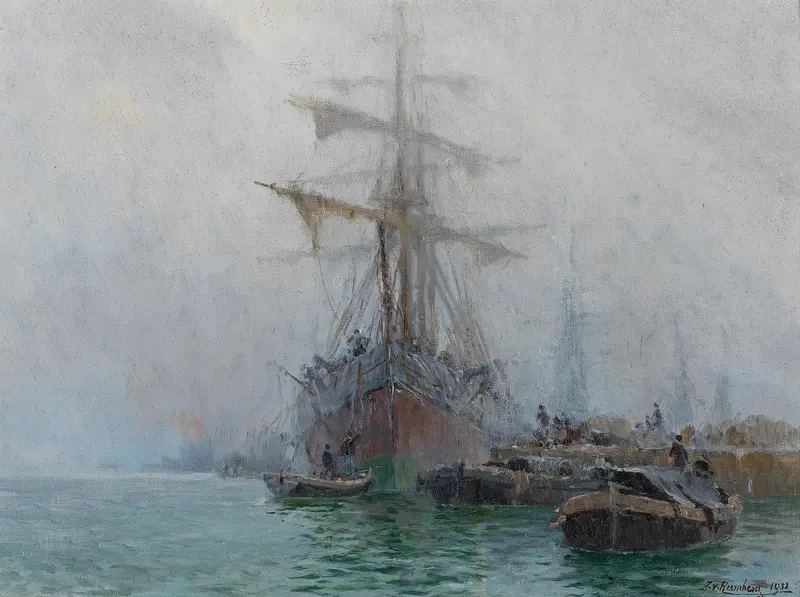
Fishing Boats by the Jetty
August von Ramberg

A Three-Master off a Southern Coast
August von Ramberg
Imperial and Royal Battleship of the SMS Erzherzog Karl Class in full sail
August von Ramberg





