
Boom bij beek in de herfst — History & Facts
This delicate interplay invites us to explore the nuanced beauty of nature, where each hue whispers a secret and every shadow holds a story. Look to the left at the vibrant burst of autumn leaves, a symphony of oranges and reds that draws the eye and breathes life into the scene. Notice how the gentle brushstrokes create a soft blending of colors, contrasting with the sharp clarity of the water’s edge. The light dances across the surface, casting reflections that ripple with a sense of movement and depth, while the stillness of the surrounding landscape captures a moment frozen in time. Beneath this tranquil beauty lies a tension between the vibrancy of the foliage and the somber, muted tones of the land.
The balance of light and shadow highlights the cycle of life and decay, evoking the bittersweet passage of time. The water serves as a mirror, not just of the trees above but of the viewer’s own contemplation, suggesting the inevitable march towards winter and the stillness that follows. In 1876, while creating this piece, the artist was immersed in the Dutch landscape tradition, influenced by both Romanticism and Realism. Living in the Netherlands, Moulijn sought to capture the emotional resonance of nature, reflecting both personal experiences and broader artistic movements of his time.
The painting exemplifies a moment when the beauty of the natural world was both a refuge and a subject of profound contemplation.
More Artworks by Simon Moulijn
Browse all →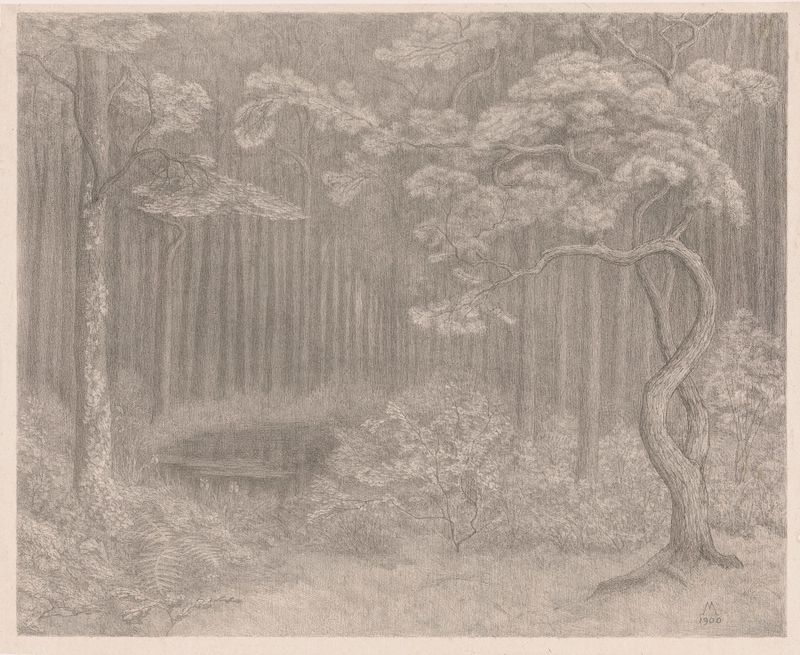
Bosgezicht
Simon Moulijn
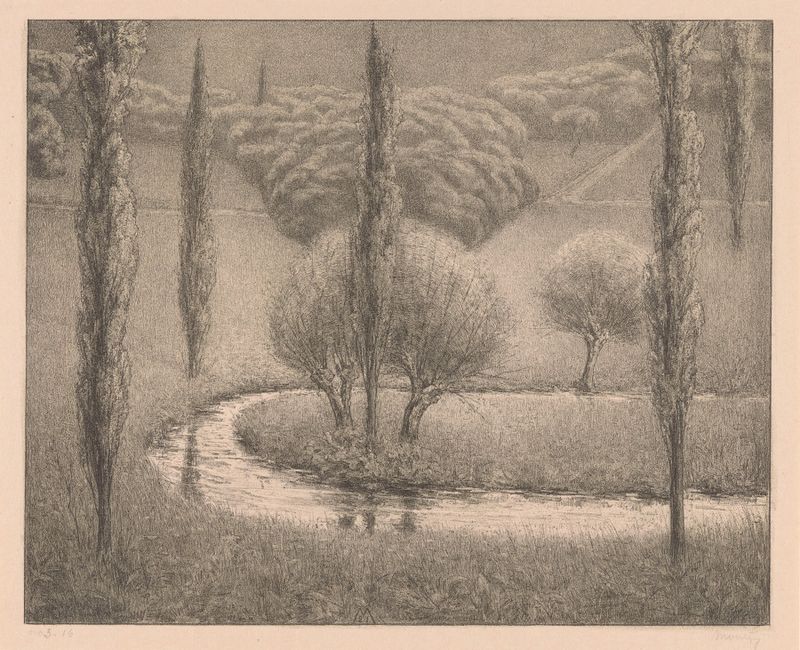
Landschap met wilgen en populieren
Simon Moulijn
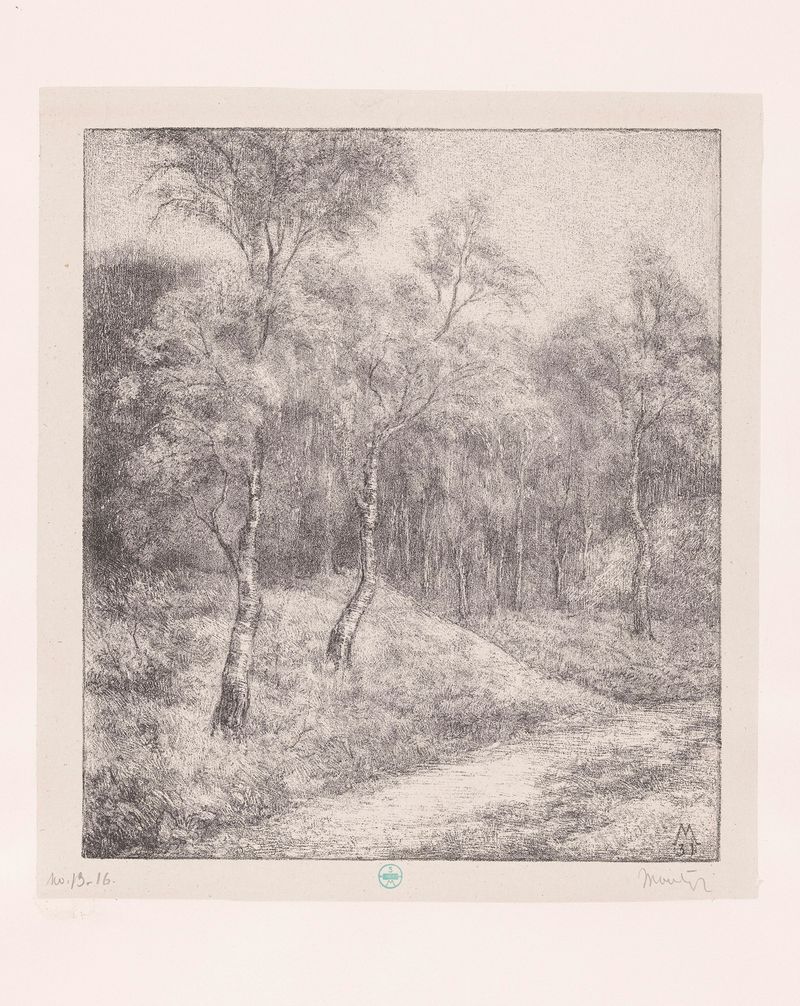
Bospad met berken
Simon Moulijn
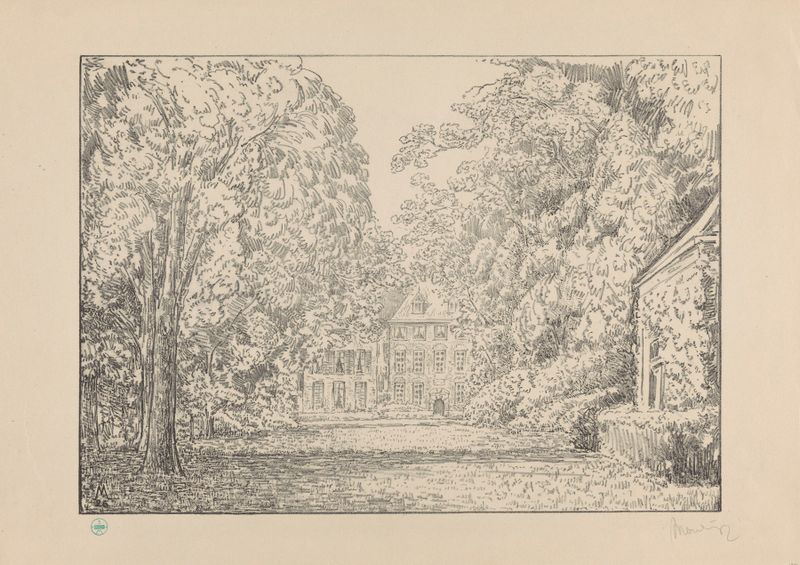
Gezicht op kasteel Duivenvoorde vanuit de tuin Duivenvoorde I
Simon Moulijn
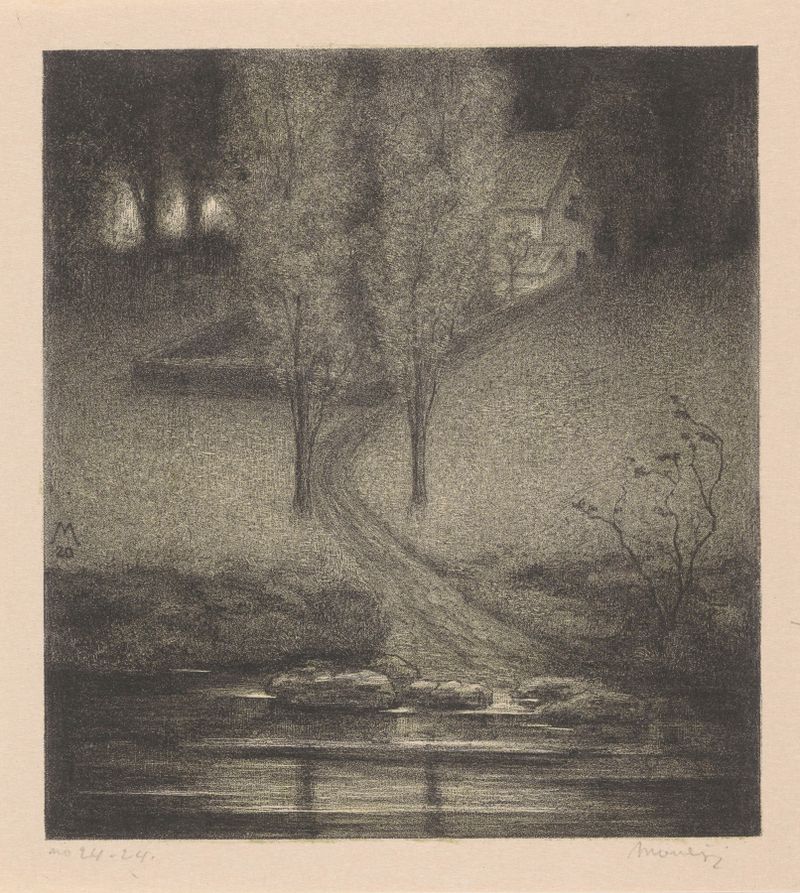
Populieren aan een beek
Simon Moulijn
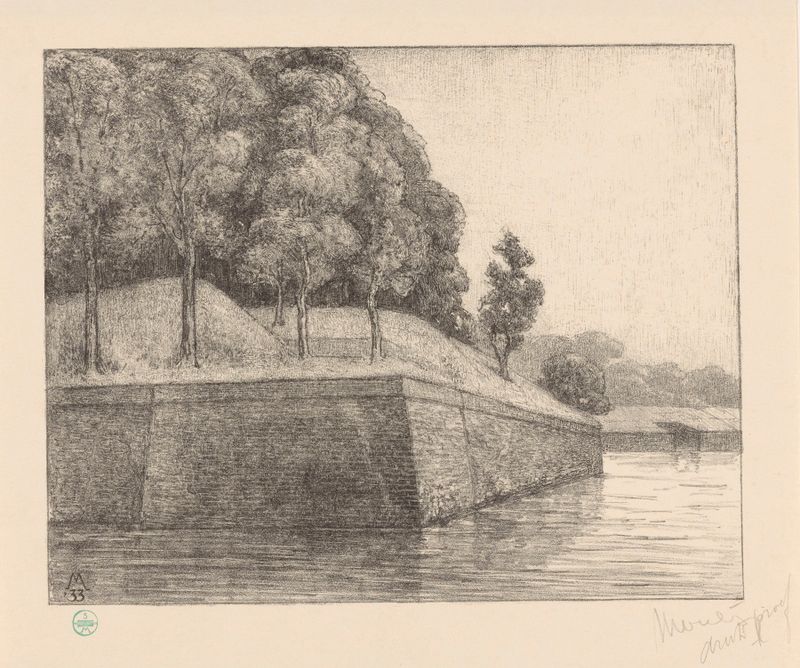
Gezicht op bastion Oud-Molen (westzijde)
Simon Moulijn
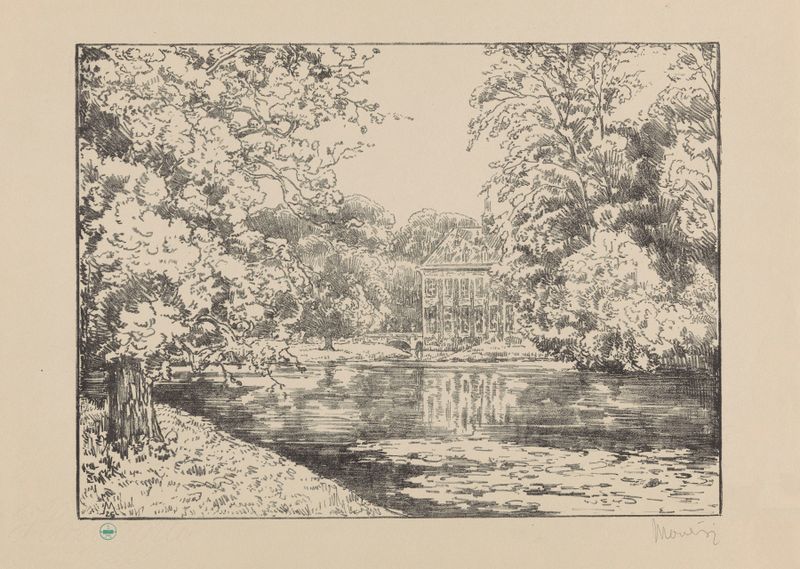
Kasteel Duivenvoorde aan vijver Duivenvoorde II
Simon Moulijn
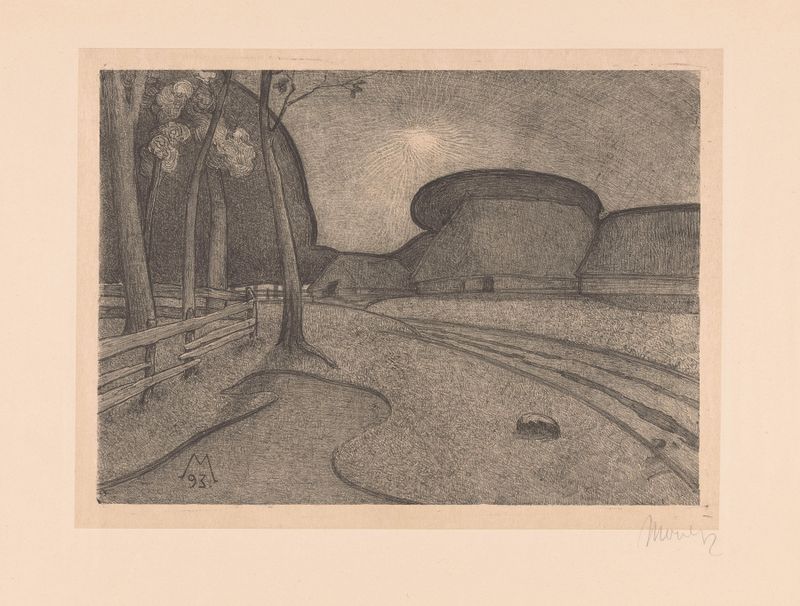
Landschap met boerderij Avond
Simon Moulijn
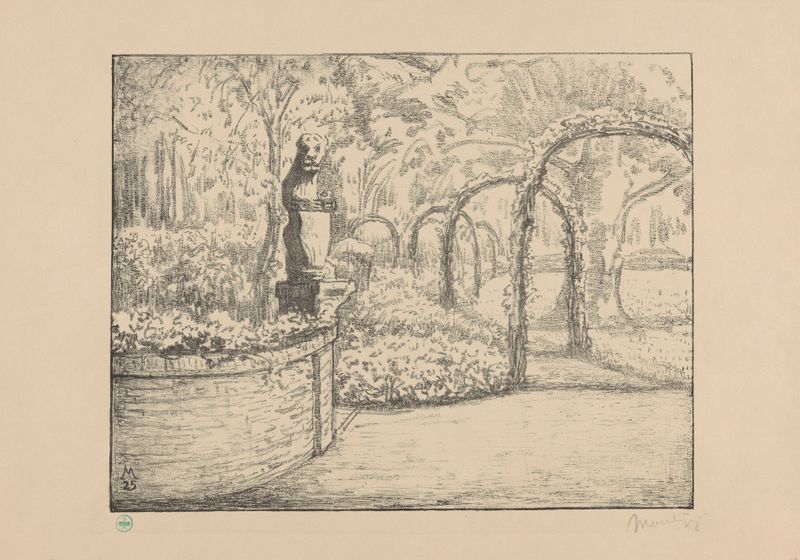
Tuin met rozenbogen op landgoed Zorgvliet Zorgvliet I
Simon Moulijn
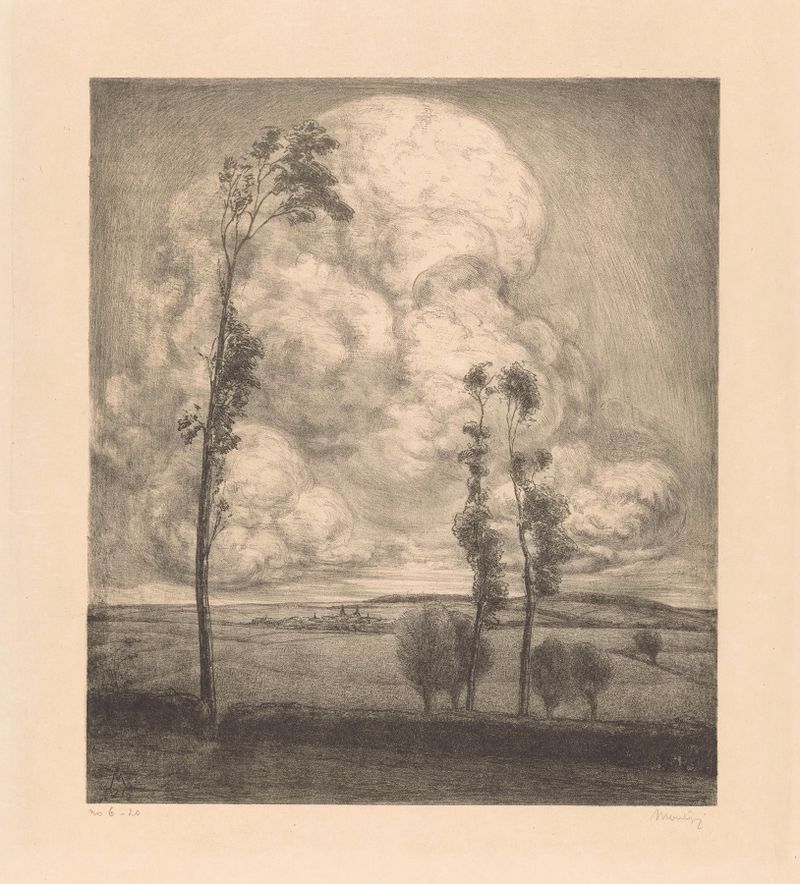
Wolken boven glooiend landschap
Simon Moulijn





