
Buildwas Abbey, Shropshire — History & Facts
In the stillness of Buildwas Abbey, a haunting whisper echoes through the ruins, inviting contemplation amidst the remnants of history. Here, the interplay of light and shadow captures an essence that transcends mere observation, urging us to explore the quiet narratives etched into every stone. Look to the left at the crumbling arches that reach towards an expansive sky, where soft blues blend harmoniously with warm earth tones. Notice how the meticulous brushstrokes render the texture of the aged stone, inviting your fingertips to trace the lines of time.
The overall composition is framed by lush greenery, which serves as both a stark contrast and a gentle caress to the solemnity of the structure, creating a dialogue between nature and architecture. Hidden within the ruins lies a profound sense of loss and resilience. The subtle shadows cast by the dilapidated walls evoke a sense of nostalgia, while the vibrant greens suggest life continuing despite decay. This duality speaks to the transience of existence—the beauty of memory intertwined with the inevitability of time’s passage, a poignant reminder of both glory and ruin. In 1790, Edward Dayes painted this evocative scene amidst a period when Romanticism was burgeoning, reflecting the era's fascination with nature and the sublime.
Living in England, he found inspiration in the picturesque landscapes and historic sites around him, vulnerable to the encroachment of modernity. This work is a testament to his skill in capturing the fragile relationship between humanity and the natural world, marking a pivotal moment in the evolving narrative of landscape painting.
More Artworks by Edward Dayes
Browse all →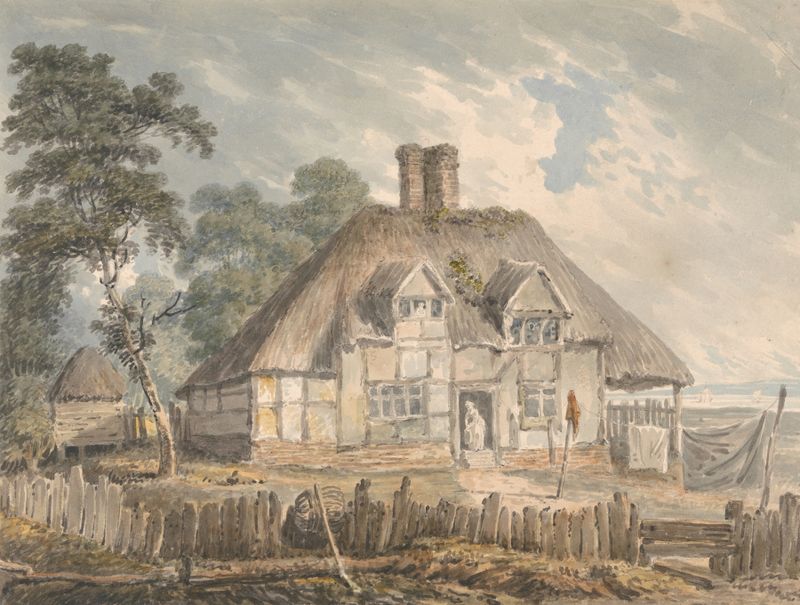
A Cottage near Southampton
Edward Dayes
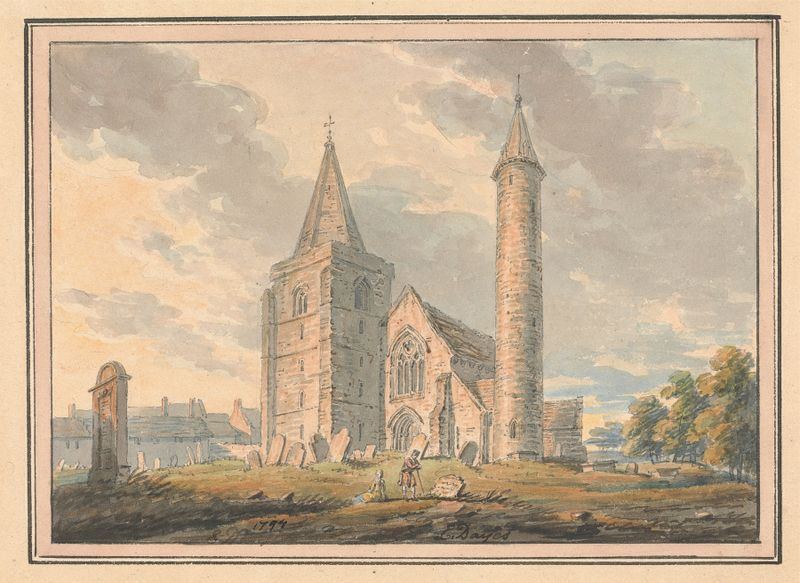
Brechin Cathedral and round tower, Forfarshire, Scotland
Edward Dayes
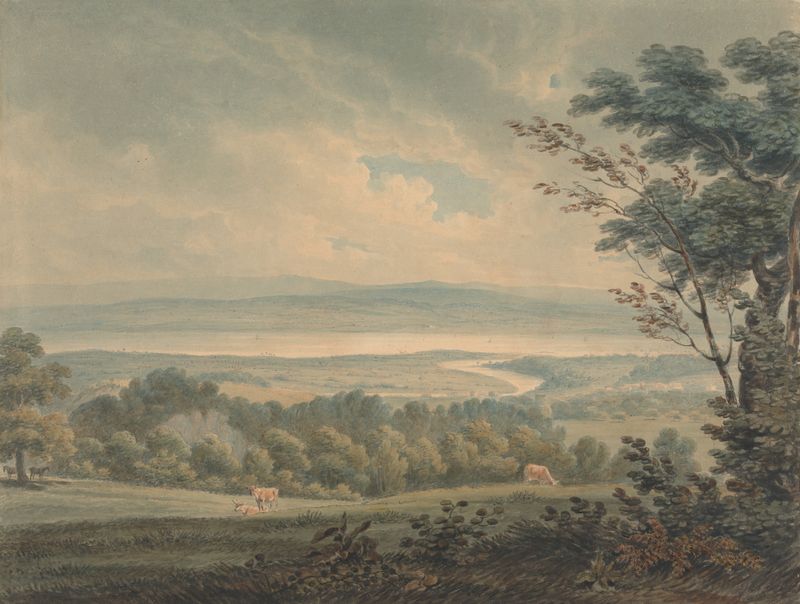
The Meeting of the Rivers Severn and Wye, near Chepstow
Edward Dayes

Ruins of the Old Kirk, Isle of Bute
Edward Dayes
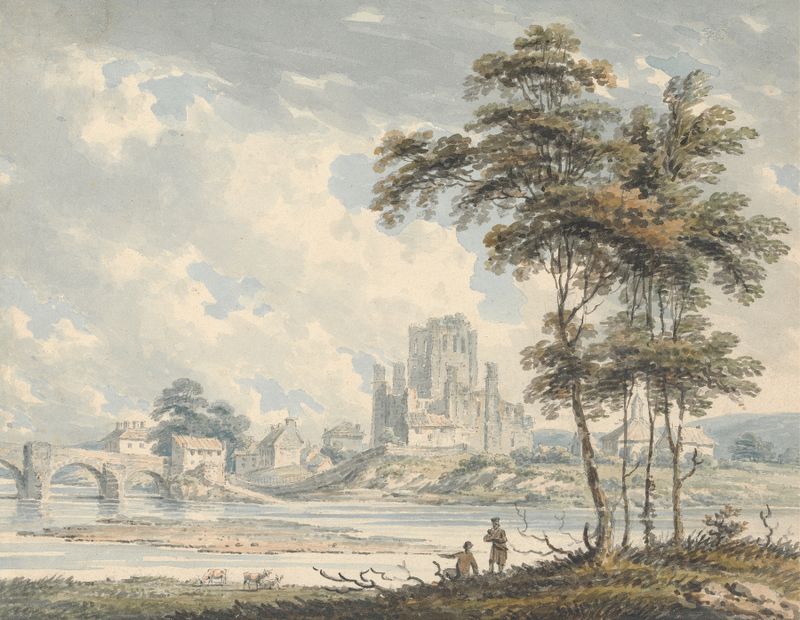
Kelso Abbey, Rosburghshire
Edward Dayes
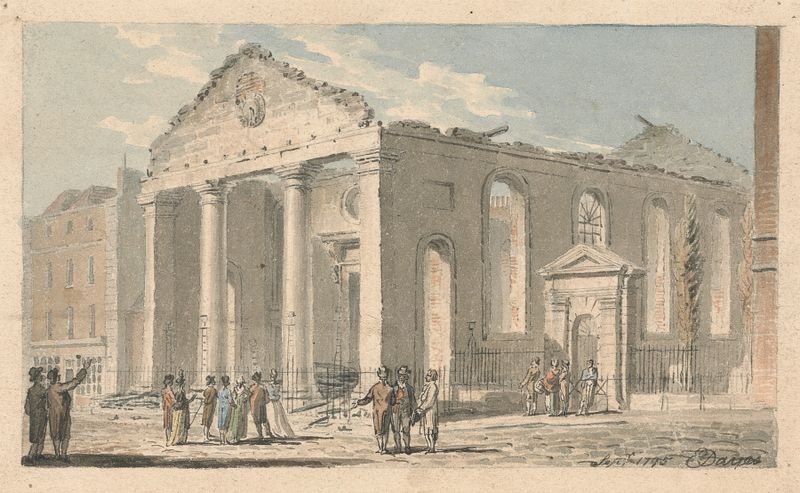
St. Paul’s Church, Covent Garden, after the fire
Edward Dayes
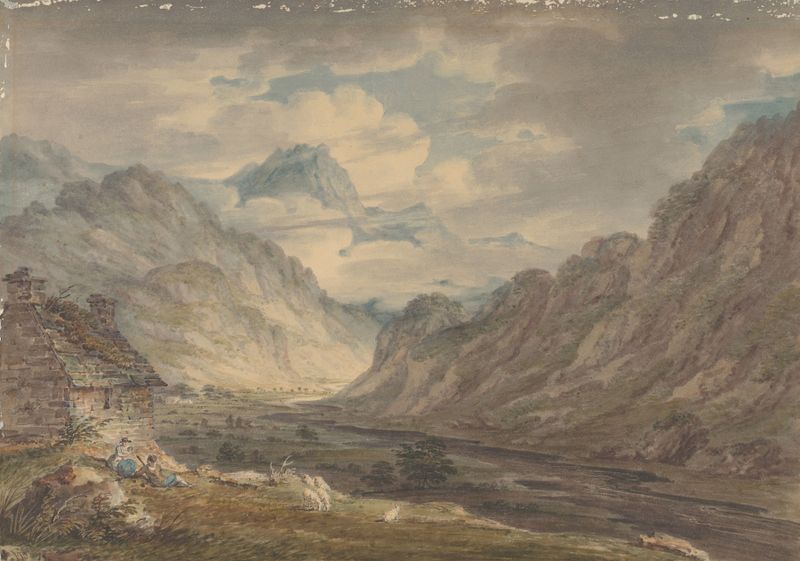
The Honister Pass from Gatesgarth Farm, Gatesgarthdale, Lake District
Edward Dayes
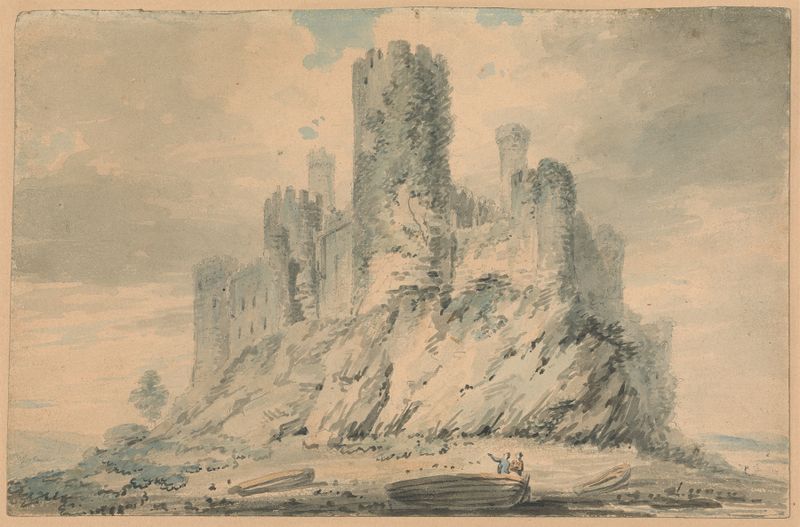
Conway Castle, Caernarvonshire
Edward Dayes
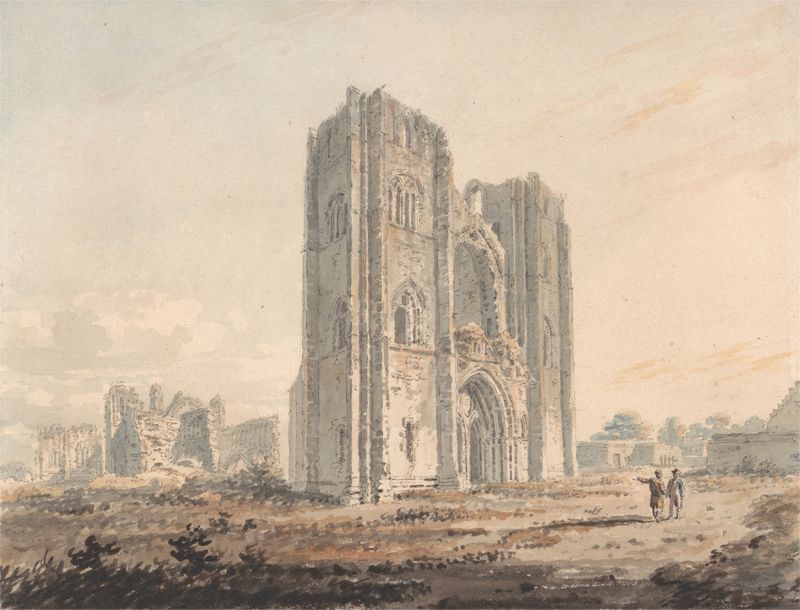
Elgin Cathedral, Moray
Edward Dayes

Lake scene
Edward Dayes
More Architecture Art
Browse all →
The statue of Liberty
Frédéric Auguste Bartholdi

View of Houses in Delft, Known as ‘The Little Street’
Johannes Vermeer

View of Houses in Delft, Known as ‘The Little Street’
Johannes Vermeer

The Cathedral in Rouen. The portal, Grey Weather
Claude Monet

The yellow house
Vincent van Gogh

The Church in Auvers-sur-Oise, View from the Chevet
Vincent van Gogh