
Burial mound — History & Facts
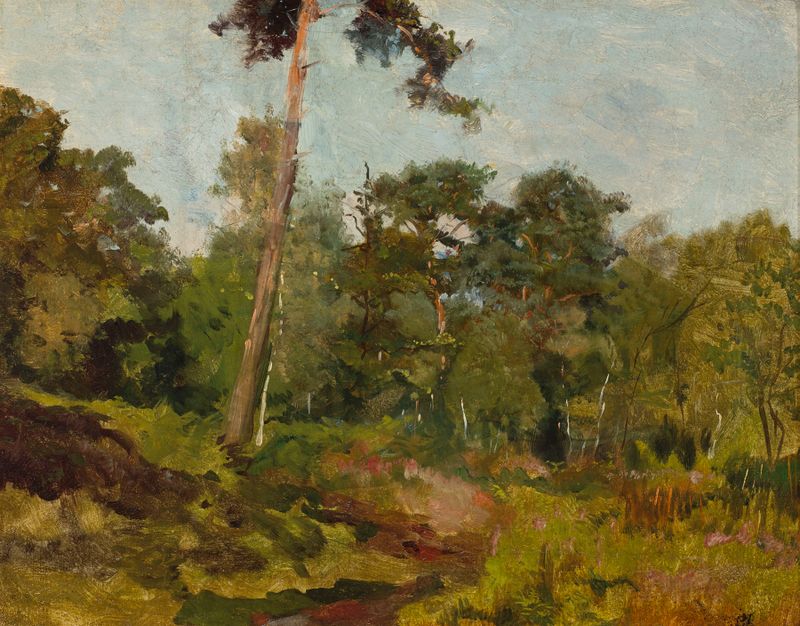
Where does light end, and longing begin? In the depths of Jozef Chelmonski's Burial Mound, beauty entwines with the shadows of memory, establishing a haunting dialogue between the seen and the unseen. Look to the sweeping curves of the landscape, where the earth rises in a gentle swell beneath a luminous sky. The warm golden hues of the setting sun bathe the scene, illuminating the grass with a soft, ethereal glow. Notice how the horizon stretches endlessly, hinting at both the promise of a new day and the weight of history buried beneath the earth.
The artist's brushwork captures the tranquil yet poignant atmosphere, inviting viewers to lose themselves in the delicate balance of nature's majesty and human remembrance. Hidden within this serene landscape lies an emotional tension—between life and death, past and present. The burial mound itself symbolizes the intersection of beauty and mortality, serving as a reminder of the lives once lived and the stories forever silenced beneath the surface. The interplay of light and shadow evokes a sense of longing; it is as if the landscape mourns what is lost yet celebrates the enduring spirit of those who once walked upon it.
This duality transforms the scene into a reflective space, encouraging viewers to ponder their connection to the cycles of existence. Created in 1912, Burial Mound was painted during a time when Chelmonski was deeply engaged with themes of landscape and nostalgia. Living in Poland, he deftly navigated the changing artistic currents of the early 20th century, seeking to merge realism with emotional depth in his work. The painting reflects not only the artist's personal grappling with his homeland's history but also the broader European context of a world on the brink of upheaval, evoking a profound sense of place and time.
More Artworks by Jozef Chelmonski
Browse all →
Landscape; Meadow with Marsh-Marigolds
Jozef Chelmonski
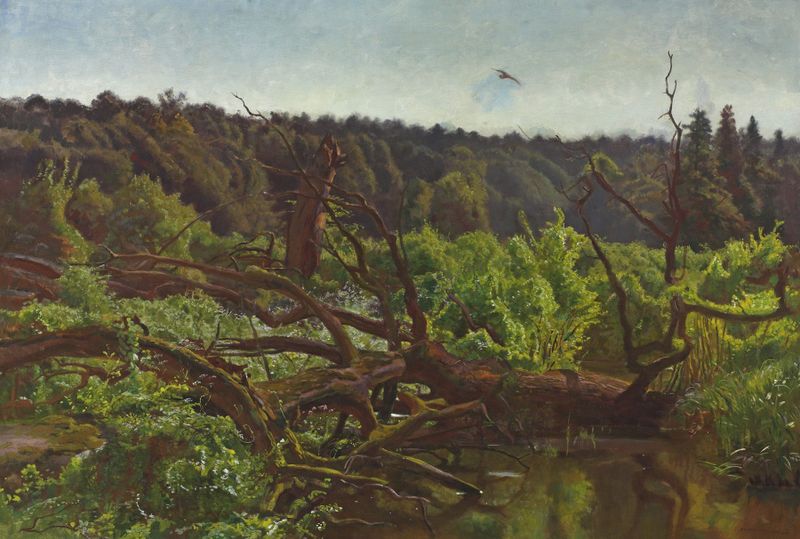
Deep forest – Windthrows
Jozef Chelmonski

Winter Sunset
Jozef Chelmonski
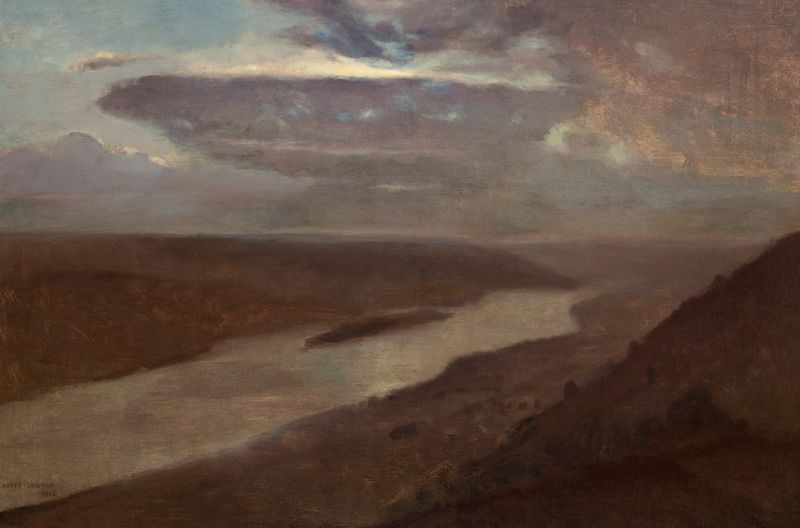
The Dniester River at Night
Jozef Chelmonski
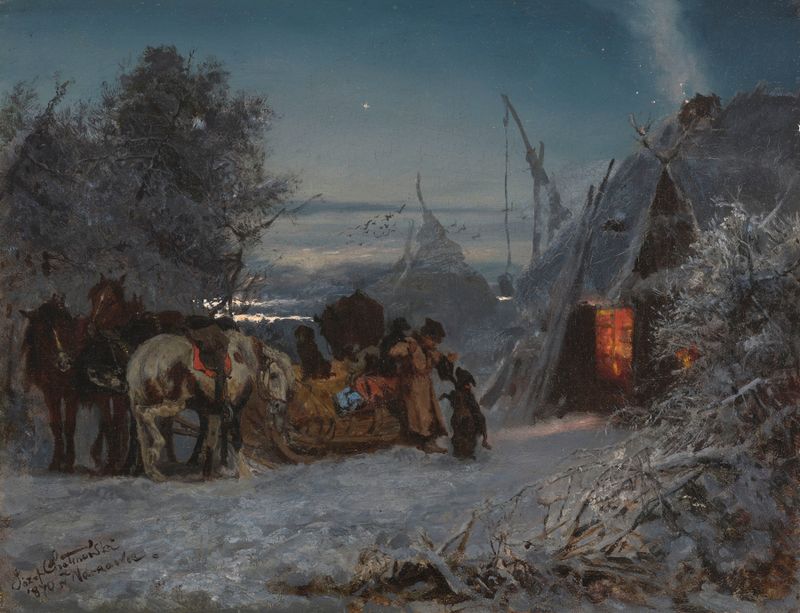
Morning in the Forest
Jozef Chelmonski
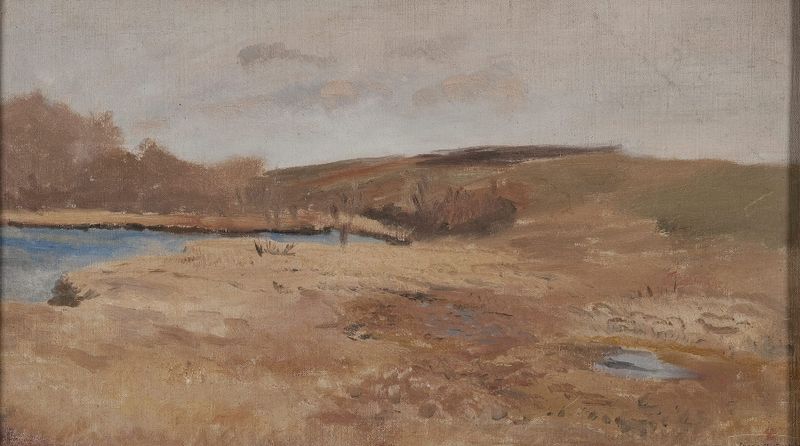
Autumn landscape
Jozef Chelmonski
Lasek Buloński
Jozef Chelmonski

Episode from the Uprising of 1863
Jozef Chelmonski

Dawn
Jozef Chelmonski

Village by the Water
Jozef Chelmonski





