
Lasek Buloński — History & Facts
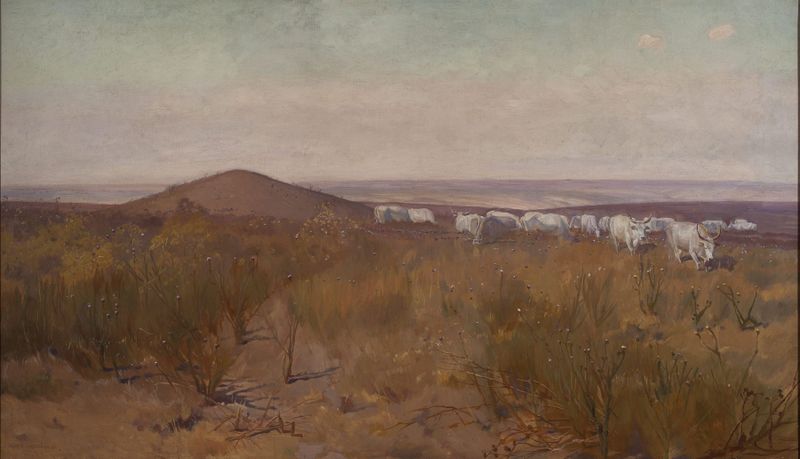
In Lasek Buloński, the tumultuous dance of nature and humanity reveals the violence lurking beneath serene exteriors. The painting captures a moment suspended between tranquility and raw power, inviting contemplation on the delicate balance of life. Look to the foreground, where the figures of hunters emerge with poise, their hunting dogs alert and tense. Notice how the soft greens and muted browns of the forest envelop them, creating a stark contrast with the vibrant red of the hunting gear.
Chelmonski’s brushwork evokes a palpable energy; the flickering light filtering through leaves illuminates the hunters, casting long, expressive shadows that hint at the unseen tensions surrounding the scene. Delve deeper into the composition, and you’ll find an unsettling duality. The hunters, poised for action, embody both dominion and vulnerability, reflecting humanity’s relationship with nature. Their gazes are fixed, suggesting anticipation, yet a subtle unease lingers in their postures.
The quiet of the glade belies the impending violence of the hunt, a reminder that the beauty of the forest harbors both life and death, both moments of stillness and chaotic energy. Jozef Chelmonski painted Lasek Buloński between 1885 and 1886 while living in Poland. During this period, he became immersed in capturing the country’s landscapes and rural life, launching into a broader movement within art that sought to represent the everyday. His works reflected the tensions of a changing world, as nature's beauty intermingled with the harsh realities of rural existence, echoing the struggles faced by his homeland.
More Artworks by Jozef Chelmonski
Browse all →
Landscape; Meadow with Marsh-Marigolds
Jozef Chelmonski
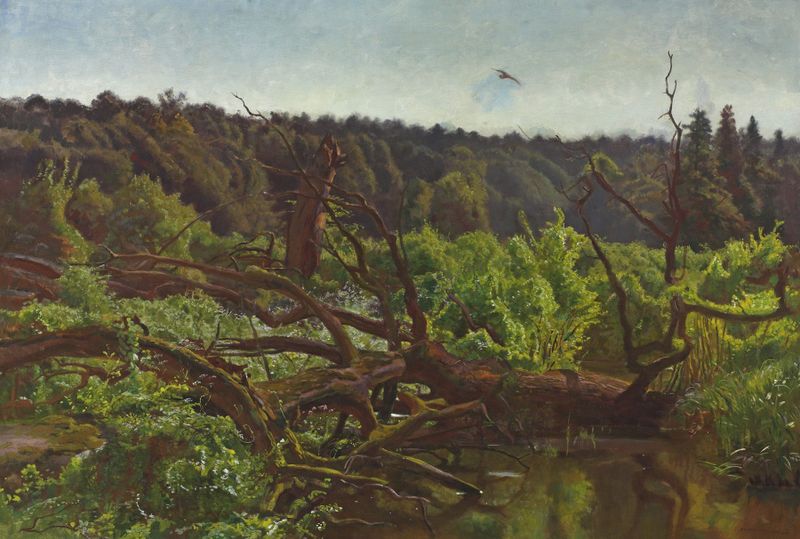
Deep forest – Windthrows
Jozef Chelmonski

Winter Sunset
Jozef Chelmonski
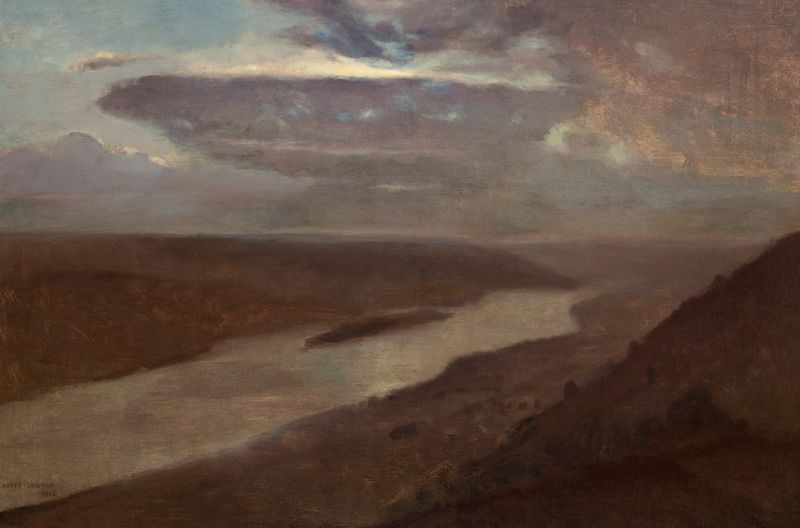
The Dniester River at Night
Jozef Chelmonski
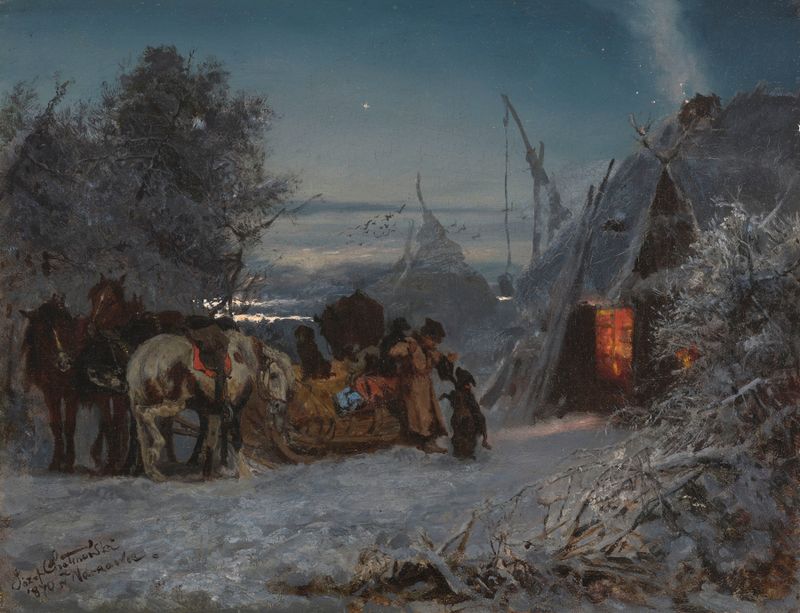
Morning in the Forest
Jozef Chelmonski
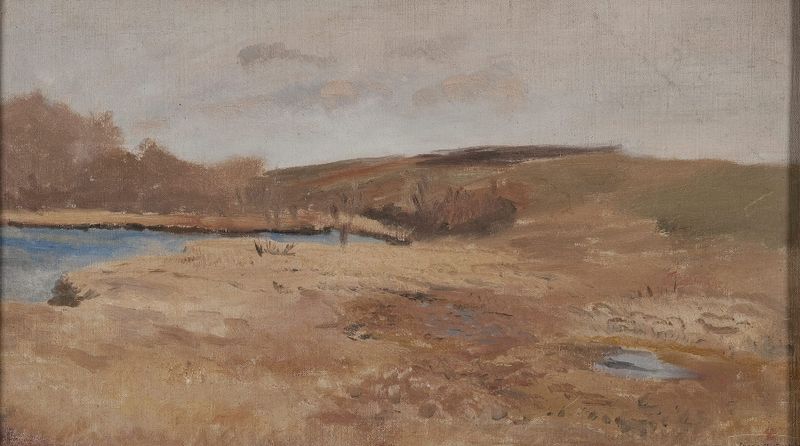
Autumn landscape
Jozef Chelmonski

Episode from the Uprising of 1863
Jozef Chelmonski

Dawn
Jozef Chelmonski

Village by the Water
Jozef Chelmonski
Burial mound
Jozef Chelmonski





