
Cap of snow — History & Facts
When did color learn to lie? In Cap of Snow, an enchanting transformation unfolds, inviting contemplation on nature’s truth and deception, rebirth and renewal amidst the frost. Look to the center of the canvas where a solitary tree emerges, its branches gripping the weight of thick white snow, juxtaposed against a soft, pale blue sky. The delicate brushwork creates a sense of movement in the snowy blanket, hinting at the chill that permeates the air. The light dances across the scene, illuminating the contours of the tree trunk and allowing shadows to playfully flirt with the snow, drawing the viewer deeper into the wintry wonderland. Beneath the tranquil aesthetic, the painting encapsulates a tension between desolation and hope.
The starkness of winter suggests a dormant stillness, while the vivid blue hints at the potential for renewal and life. Each flake of snow carries the promise of rebirth, transforming the barren landscape into a serene canvas, suggesting the cyclical nature of existence and the beauty that emerges from stillness. Created in 1907, this work emerged during a period when Julian Falat was deeply engaged with the natural world, showcasing his mastery in landscape painting. Living in Poland, he was influenced by the Symbolist movement, which sought to express emotional truths through imagery.
This work reflects a broader exploration of romanticized landscapes, as artists sought to capture the essence of their environment in an era marked by both industrial change and an appreciation for the sublime beauty of nature.
More Artworks by Julian Falat
Browse all →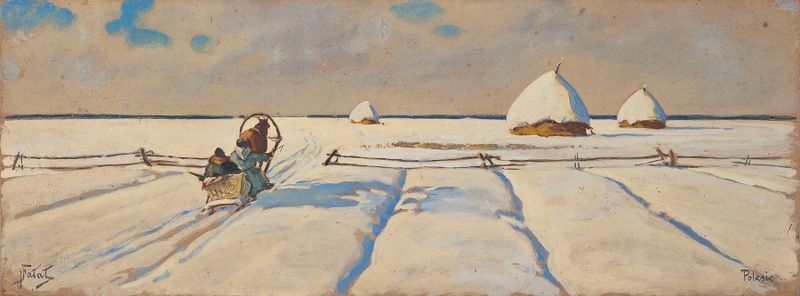
Sleigh in a snowy field – Polesia
Julian Falat
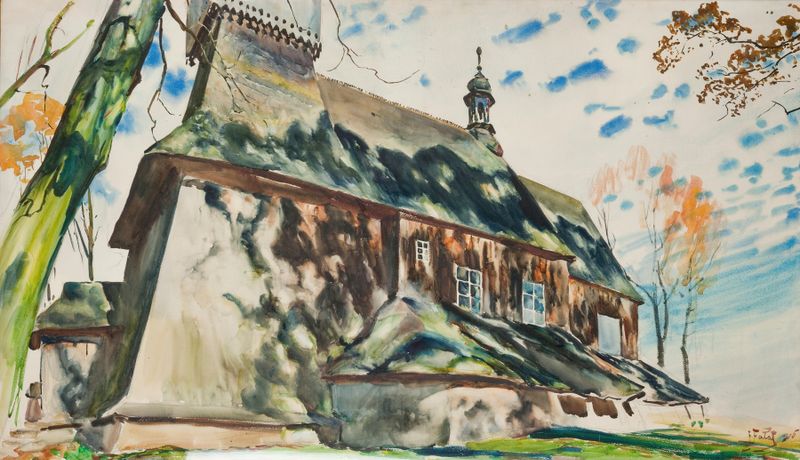
Church in Osiek
Julian Falat
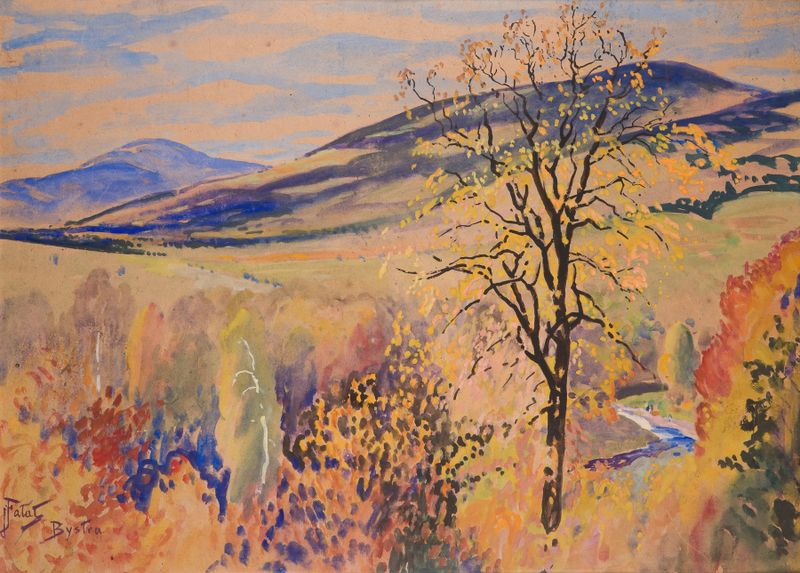
Pejzaż jesienny z Bystrej
Julian Falat
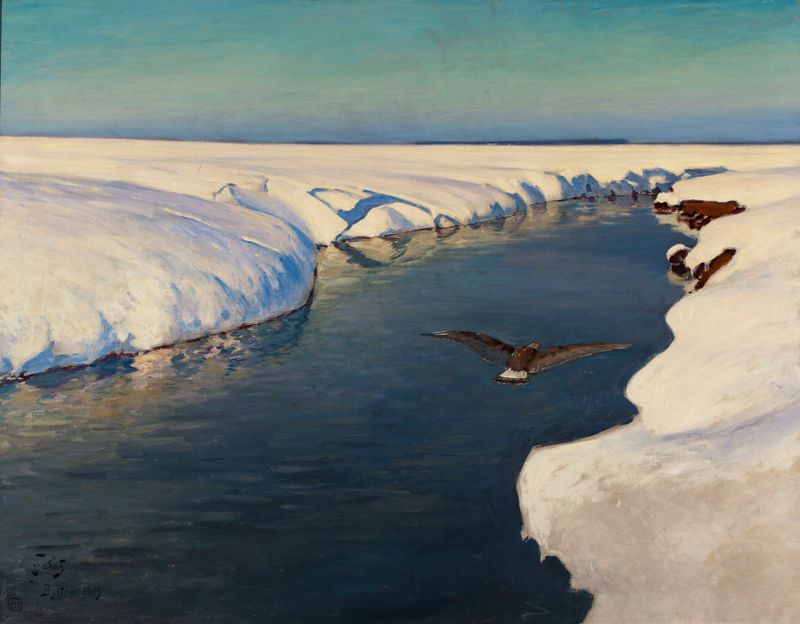
Winter landscape with a river and a bird
Julian Falat
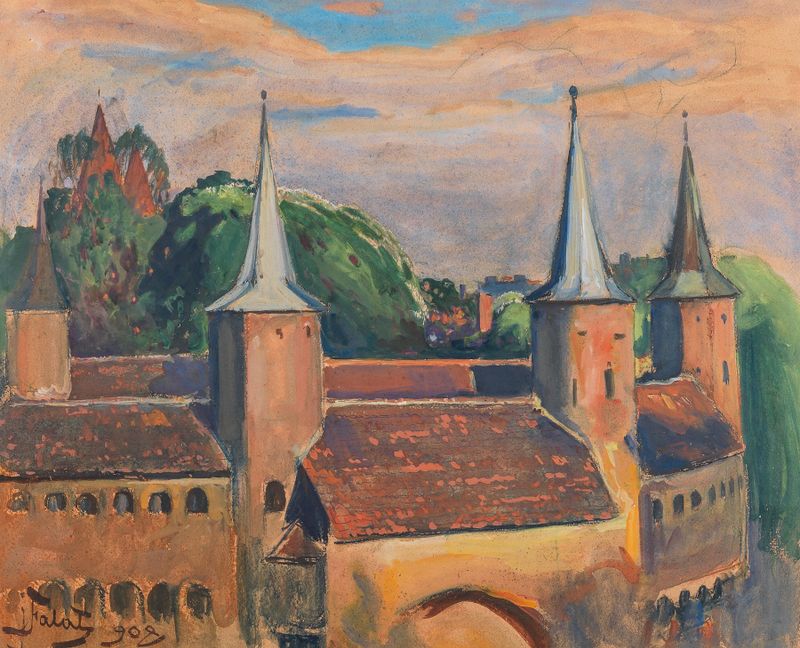
The Kraków Barbican
Julian Falat
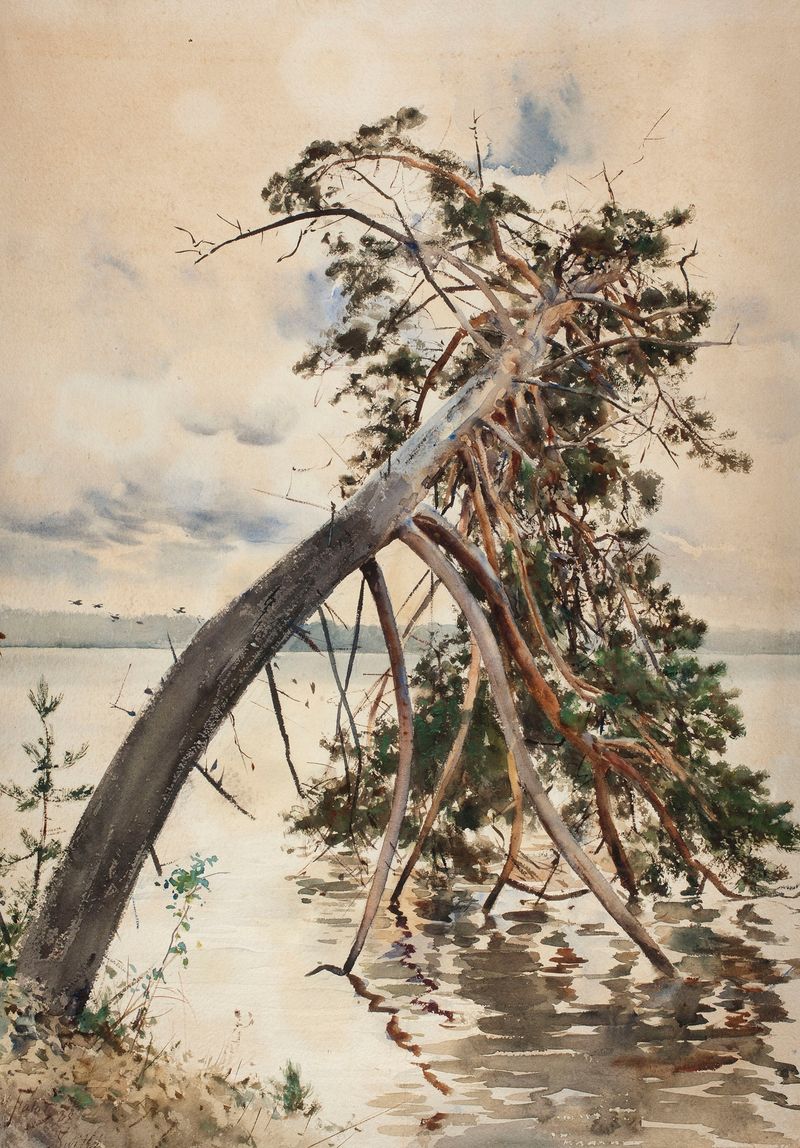
Świteź
Julian Falat
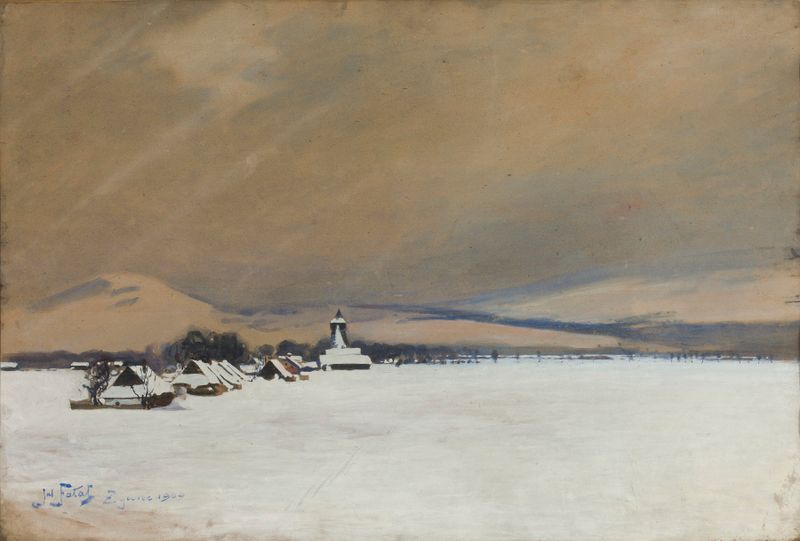
Winter landscape from Żywiec
Julian Falat
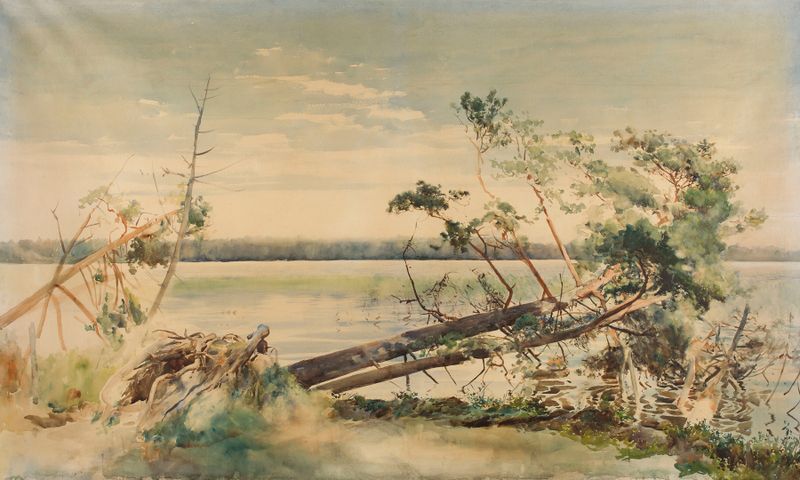
Świteź
Julian Falat
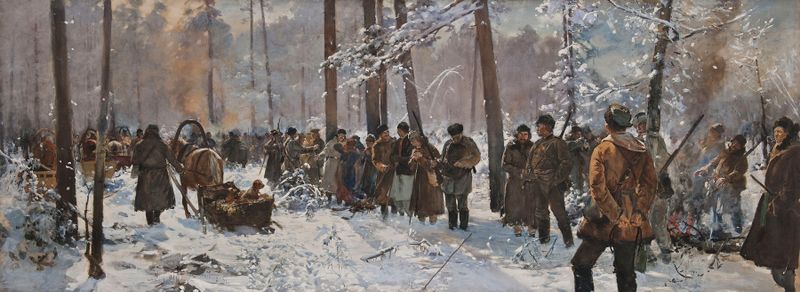
Battue at a hunt in Nieśwież
Julian Falat
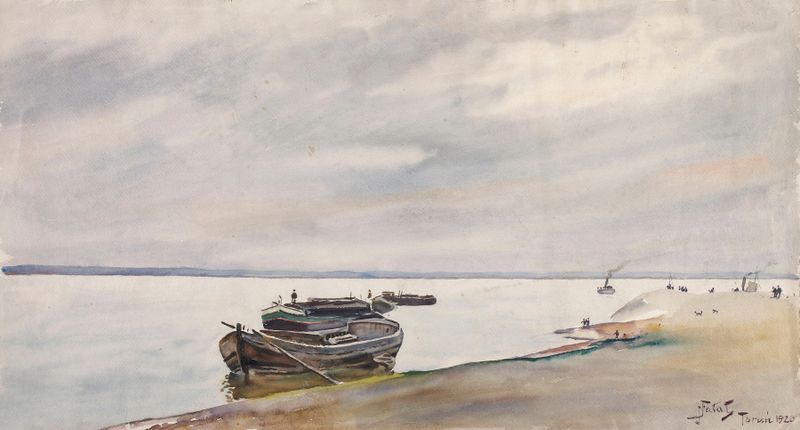
Boats and steamship on the Vistula near Toruń
Julian Falat





