
Caravane Au Coucher Du Soleil — History & Facts
What do we lose in the silence that follows our footsteps? Loneliness seeps into the edges of the canvas, whispering the story of a distant caravan at sunset. Look to the far horizon where deep oranges and muted purples collide, illuminating the sky with an ethereal glow. As your gaze travels downward, notice the silhouettes of weary travelers, their figures etched against the fading light. The muted tones of the earth below—browns and ochres—contrast starkly with the vibrant sky, enhancing the feeling of solitude as the caravan becomes a mere shadow in the vastness of twilight. Beyond the surface, the painting speaks of journeys both physical and emotional.
The caravan, a symbol of transient lives and fleeting connections, evokes a sense of yearning. Each traveler seems to carry their own burdens, isolated amidst the grandeur of the landscape. The sunset serves not just as a backdrop but as a poignant reminder of time’s relentless passage, where every sunset signifies both an ending and a promise of a new dawn, reflecting the duality of hope and despair. Created in a period of the late 19th century, the artist captured this scene during a time when the fascination with travel and the exotic was burgeoning in European art.
Influenced by the Romantic movement, Frère's work aligns with a growing appreciation for nature's beauty and the emotional landscapes it evokes. As he painted, the world was undergoing significant change, creating a backdrop of both excitement and uncertainty for artists seeking to express the complexities of human experience.
More Artworks by Charles Théodore Frère
Browse all →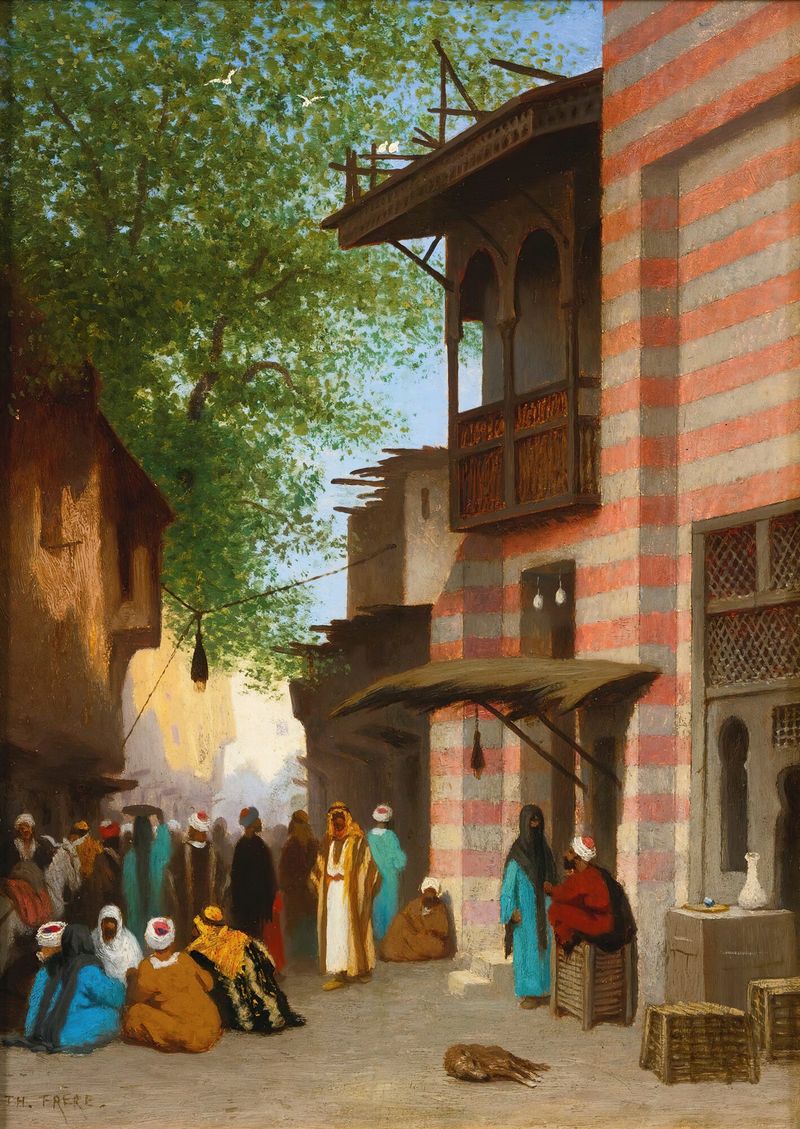
A street scene, North Africa
Charles Théodore Frère
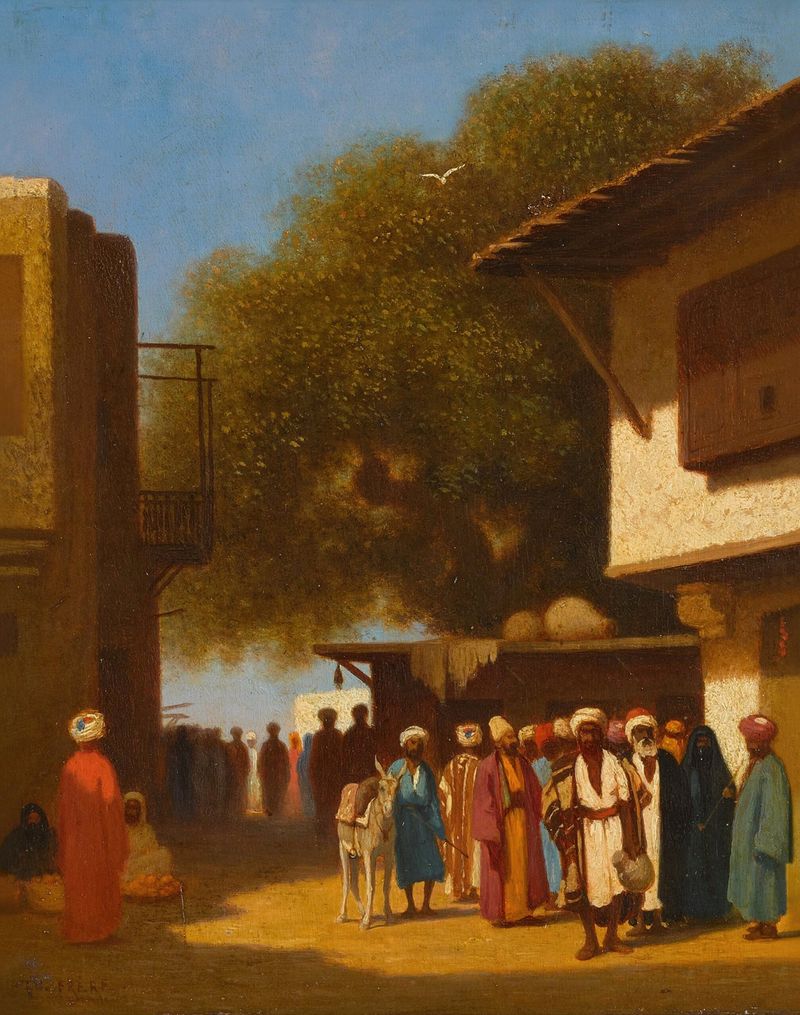
Street in Cairo
Charles Théodore Frère
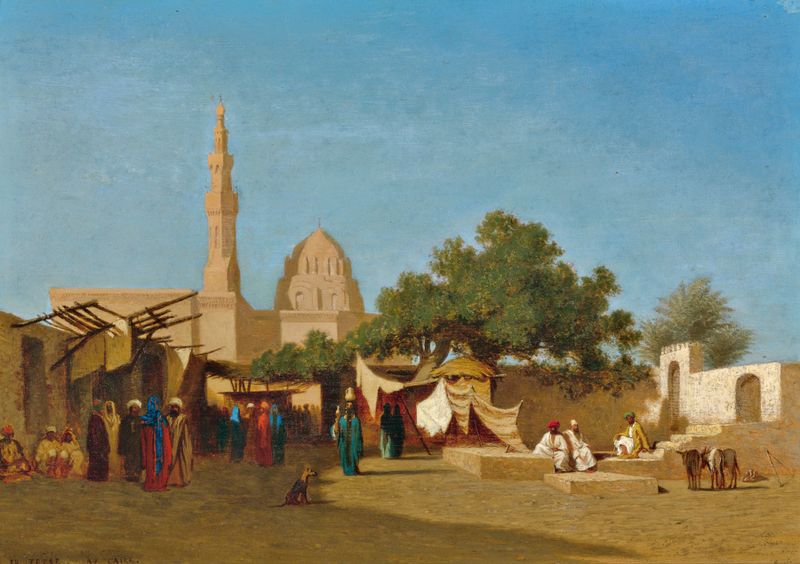
La Mosquée Du Sultan Hassan, Caire
Charles Théodore Frère
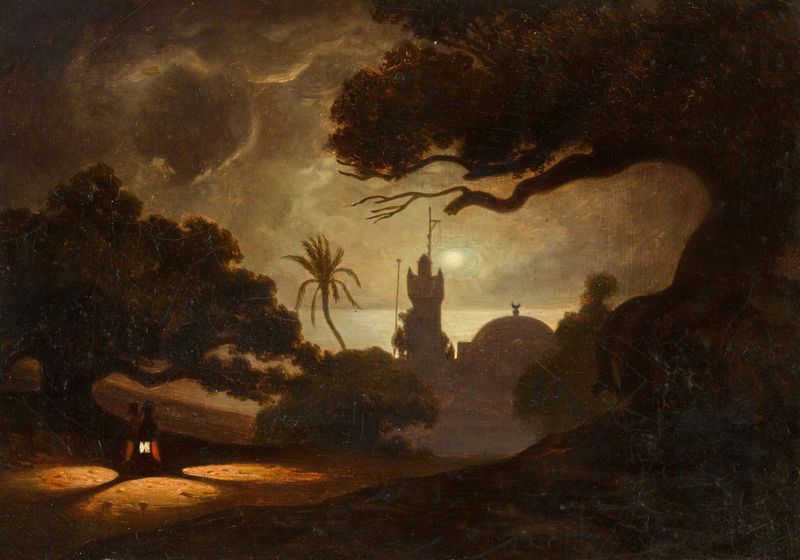
Mosque in the Moonlight
Charles Théodore Frère
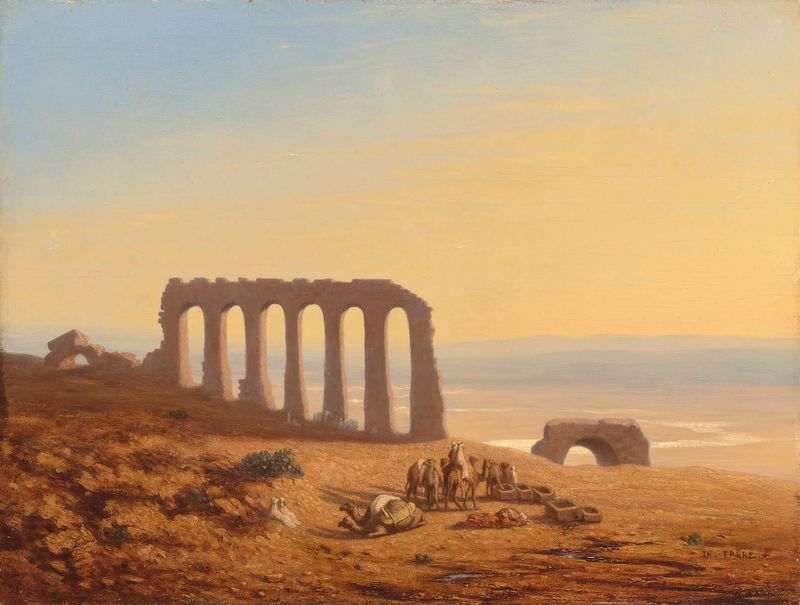
A Bedouin encampment surrounded by ruins
Charles Théodore Frère

A Camel Caravan
Charles Théodore Frère

Caravane traversant le désert
Charles Théodore Frère
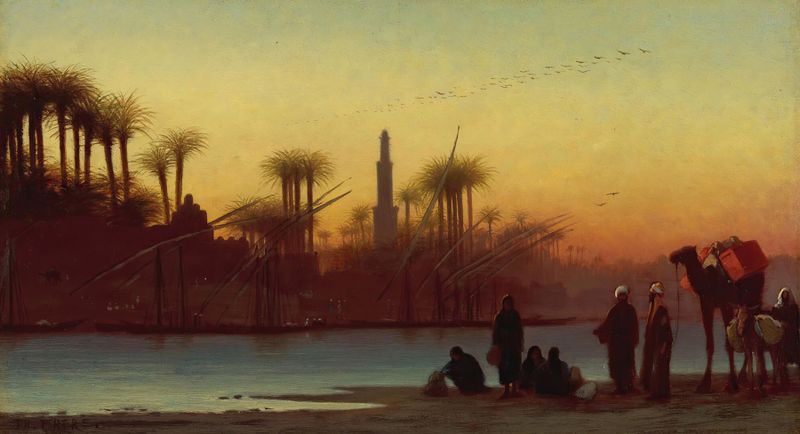
Near Manfalout, Egypt
Charles Théodore Frère

A Bazaar in Cairo
Charles Théodore Frère
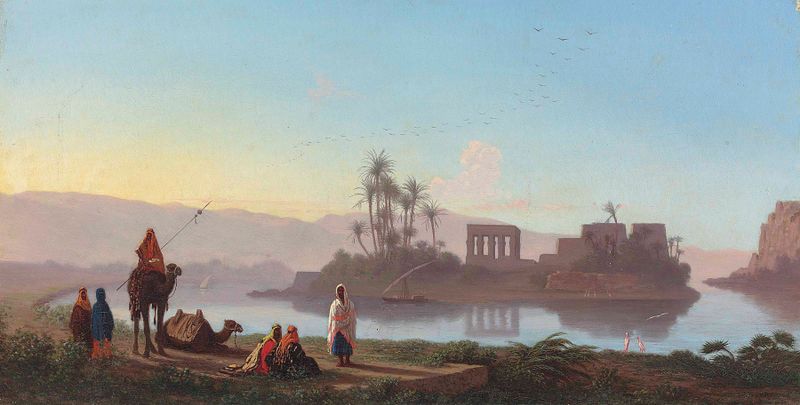
Vue de L’Ile de Philae, Nubie
Charles Théodore Frère





