
Caravansary at Kustchiuk Czemege — History & Facts
In the delicate harmony of shades, a profound narrative unfolds, inviting the viewer to ponder the essence of place and belonging. Look to the left at the vibrant terracotta walls, their warm hues contrasting with the cool blues of the sky. This juxtaposition creates a sense of both shelter and openness, drawing your eye towards the intricately adorned doorways that beckon with the promise of stories untold. Notice how the interplay of light and shadow dances across the canvas, revealing the subtle textures and rich details of each architectural element, while the landscape stretches beyond, a silent witness to the life within. The vibrant colors evoke a sense of warmth and vitality, suggesting the bustling life of the caravansary, yet there lies an undertone of stillness — a moment suspended in time.
The figures, though small and almost secondary in the vastness of the scene, embody a quiet resilience, reflecting the solitude of travelers caught between journeys. The vivid palette serves not only to captivate but also to symbolize the passage of time and the layering of human experience upon this ancient space. In 1810, Luigi Mayer painted this work during his travels in the Ottoman Empire, a period marked by an increasing fascination with Eastern cultures among European artists. Living in a world of shifting artistic paradigms, he embraced a rich visual language that sought to capture the essence of the landscapes and people he encountered.
His experiences in the East, characterized by both wonder and curiosity, informed this vibrant tableau, blending observation and imagination into a singular artistic vision.
More Artworks by Luigi Mayer
Browse all →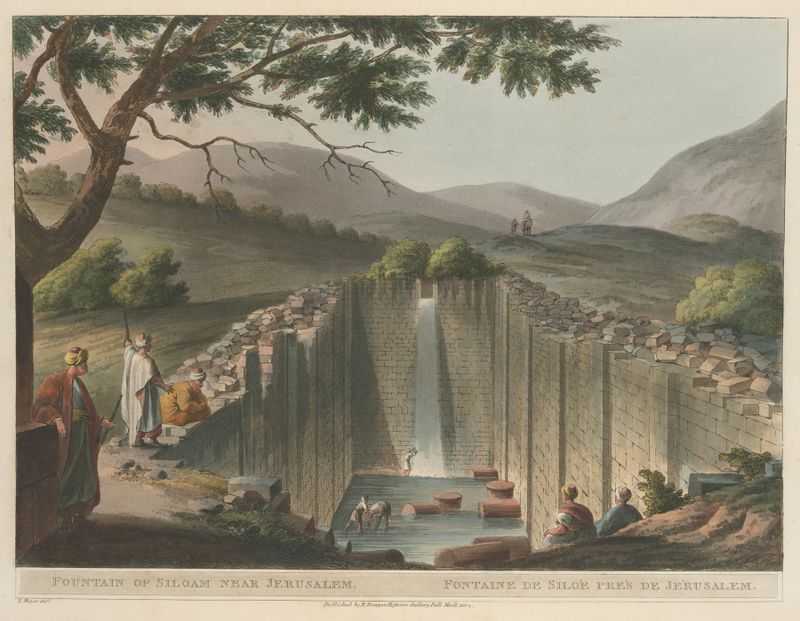
Fountain of Siloam Near Jerusalem
Luigi Mayer

View of the Dardanelles
Luigi Mayer
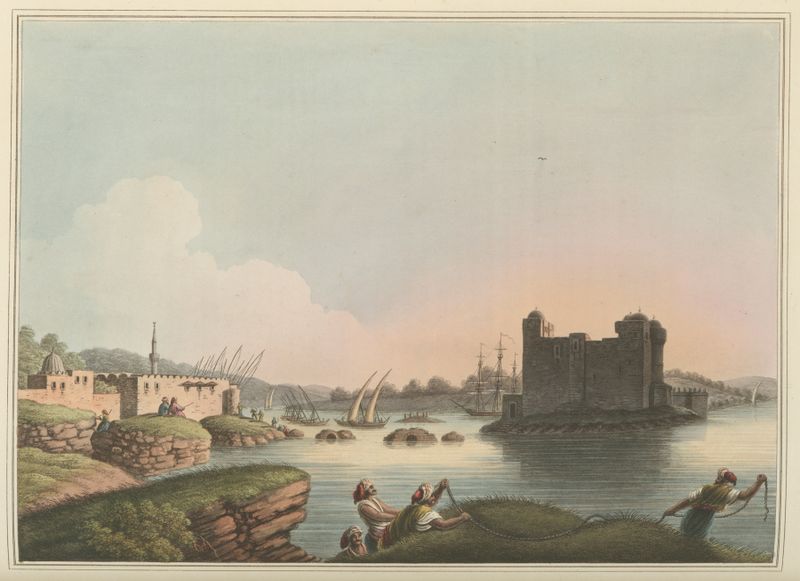
Port of Latachia
Luigi Mayer

Stadium at Ephesus
Luigi Mayer

Ancient Temples at Agrigentum
Luigi Mayer
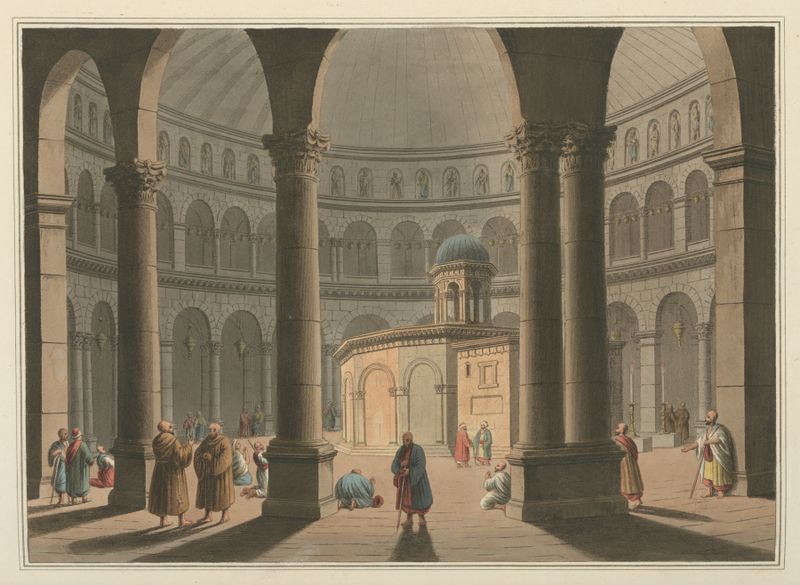
Church of the Holy Sepulchre
Luigi Mayer
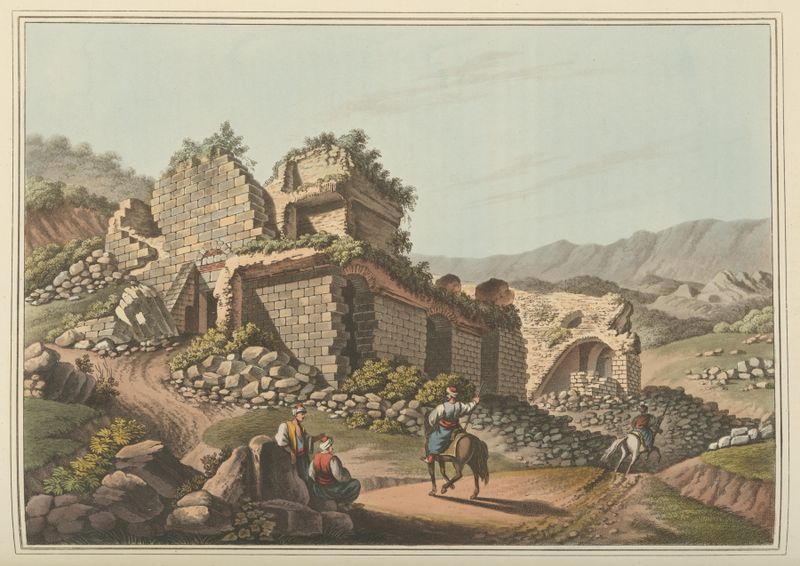
Theatre at Ephesus
Luigi Mayer
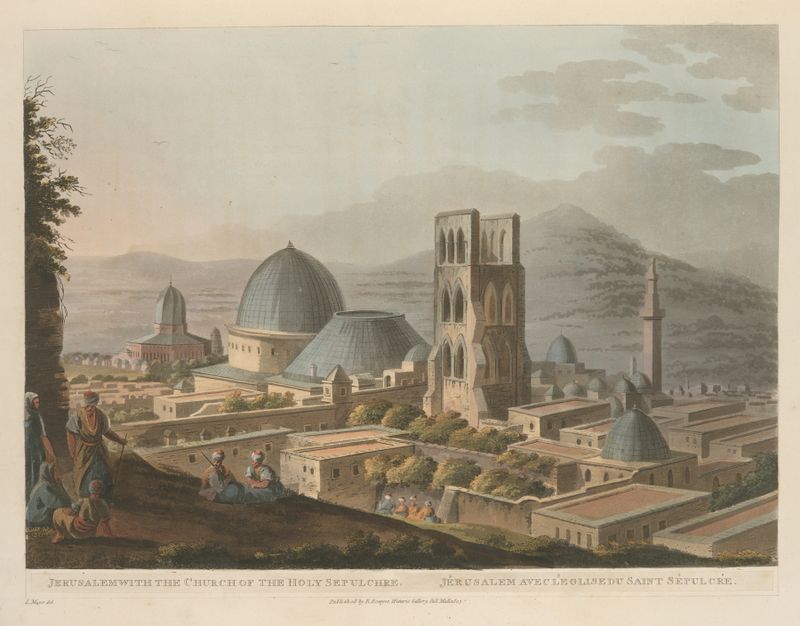
Jerusalem with the Church of the Holy Sepulchre
Luigi Mayer
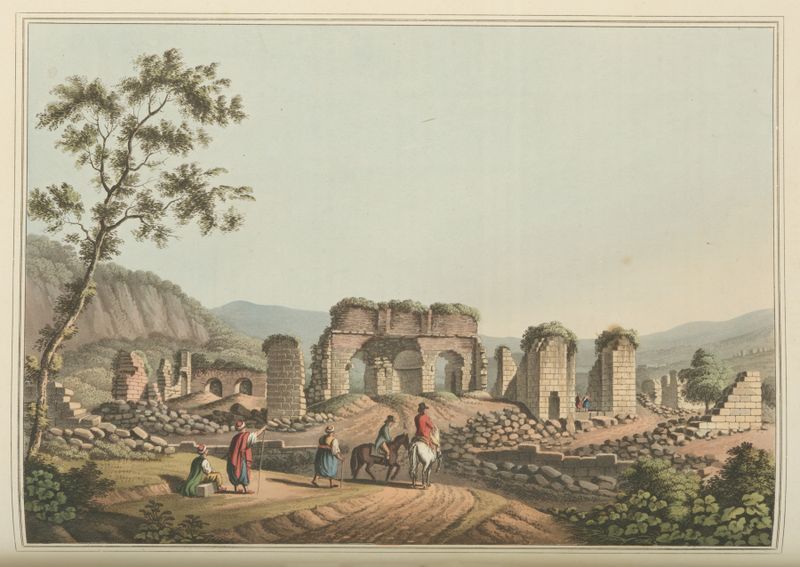
Ruins of the Temple of Diana at Ephesus
Luigi Mayer

Crater in the Island of Volcano
Luigi Mayer





