Cassava with Tree Snake and Caterpillar — History & Facts
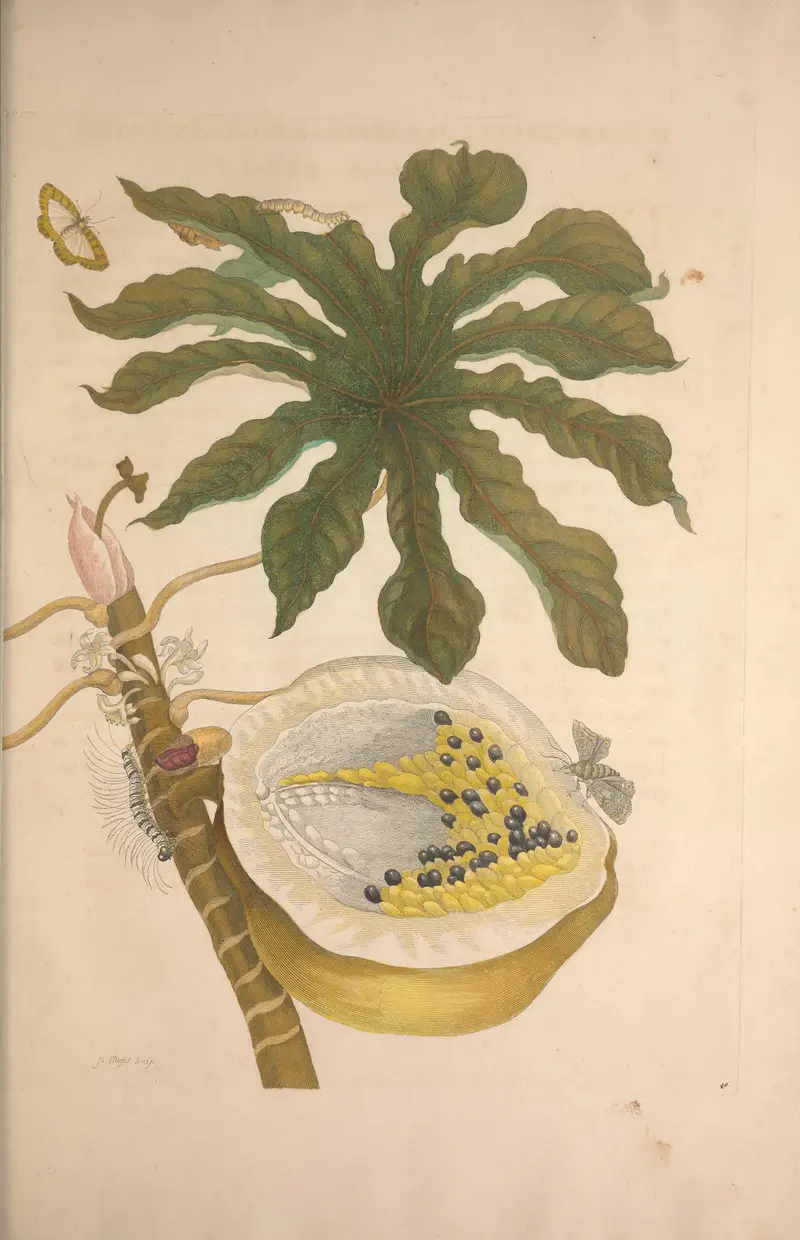
A single cassava stem becomes a stage for transformation and survival, where each leaf and tendril hosts a different moment in the cycle of life. The eye is drawn first to the coiled, muscular body of the tree snake, its patterned skin rendered with a precision that suggests both danger and elegance. Nearby, a caterpillar bristles with delicate hairs, crawling along a stem that bends under its weight, while two butterflies—one newly emerged, the other with wings outspread—hover at the edges, their fragile forms a counterpoint to the reptile’s taut energy.
The palette is earthy and restrained, the greens and ochres of the foliage setting off the subtle iridescence of insect wing and reptilian scale. Every element is carefully staged: the snake’s upward gaze, the caterpillar’s slow progress, and the butterflies’ ephemeral presence all invite the viewer to consider the interconnectedness of these lives. Works like Cassava with Tree Snake and Caterpillar belong to a world where art and science were inseparable allies. In the early eighteenth century, naturalists and explorers sought to capture the marvels of distant lands, not just for curiosity’s sake but as a way to catalogue, understand, and sometimes exploit the riches of the natural world.
Maria Sibylla Merian’s Metamorphosis insectorum surinamensium—from which this illustration comes—was a landmark in both natural history and illustration, painted “na het leven en levensgroote” (from life and at life size) in Suriname. Such works were prized by collectors, scientists, and wealthy patrons eager to possess a piece of the exotic. History has kept few traces of the individual journeys of these images, but the precision and quiet drama of this scene still speak across the centuries—urging us to look closer, and to see the world as a web of stories, not just specimens.
More Artworks by Maria Sibylla Merian
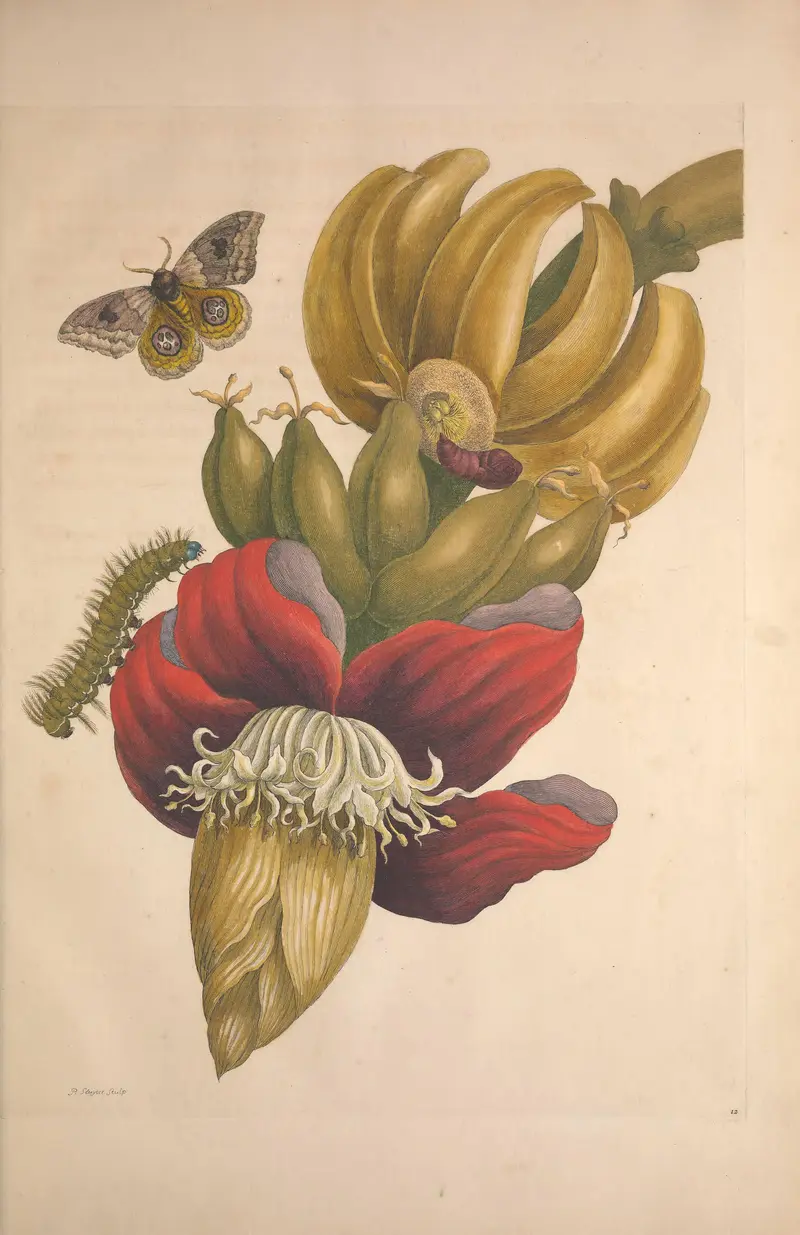
Banana with Bullseye Moth and Caterpillar
Maria Sibylla Merian
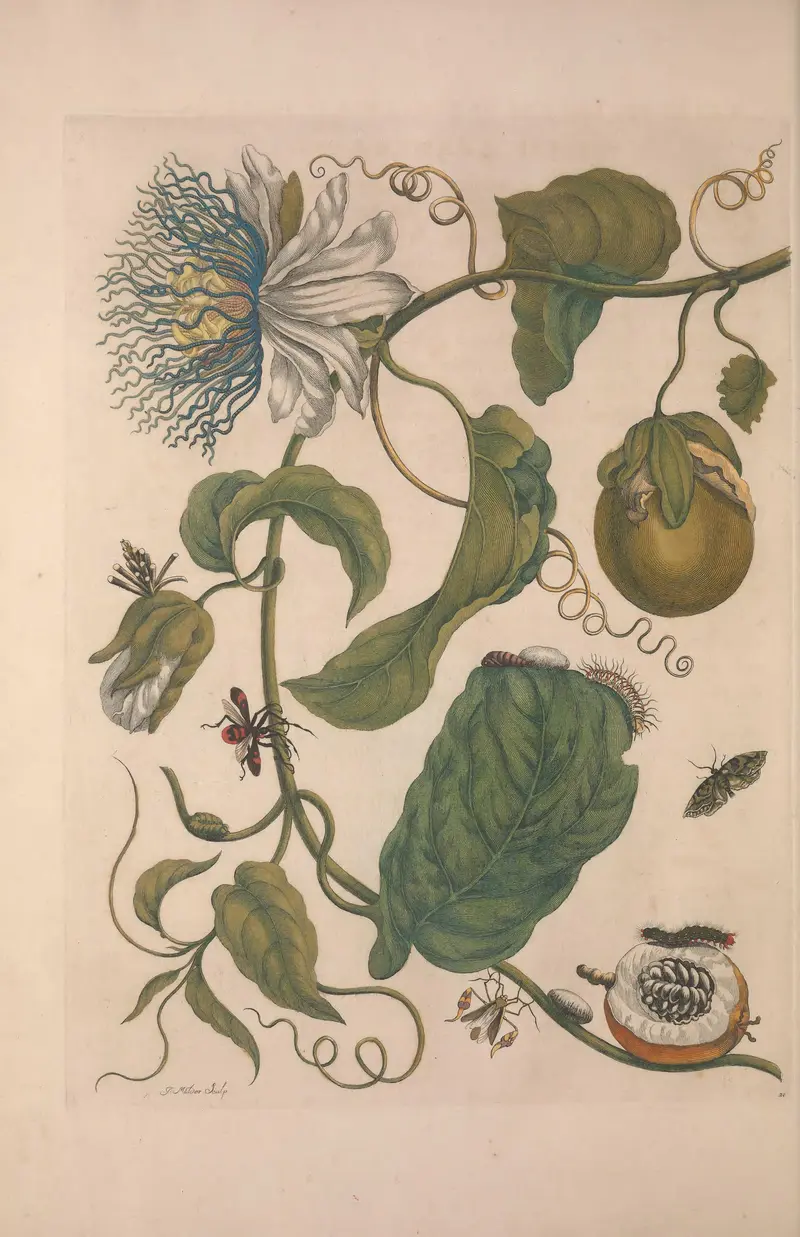
Passionflower with Caterpillars and Insects
Maria Sibylla Merian
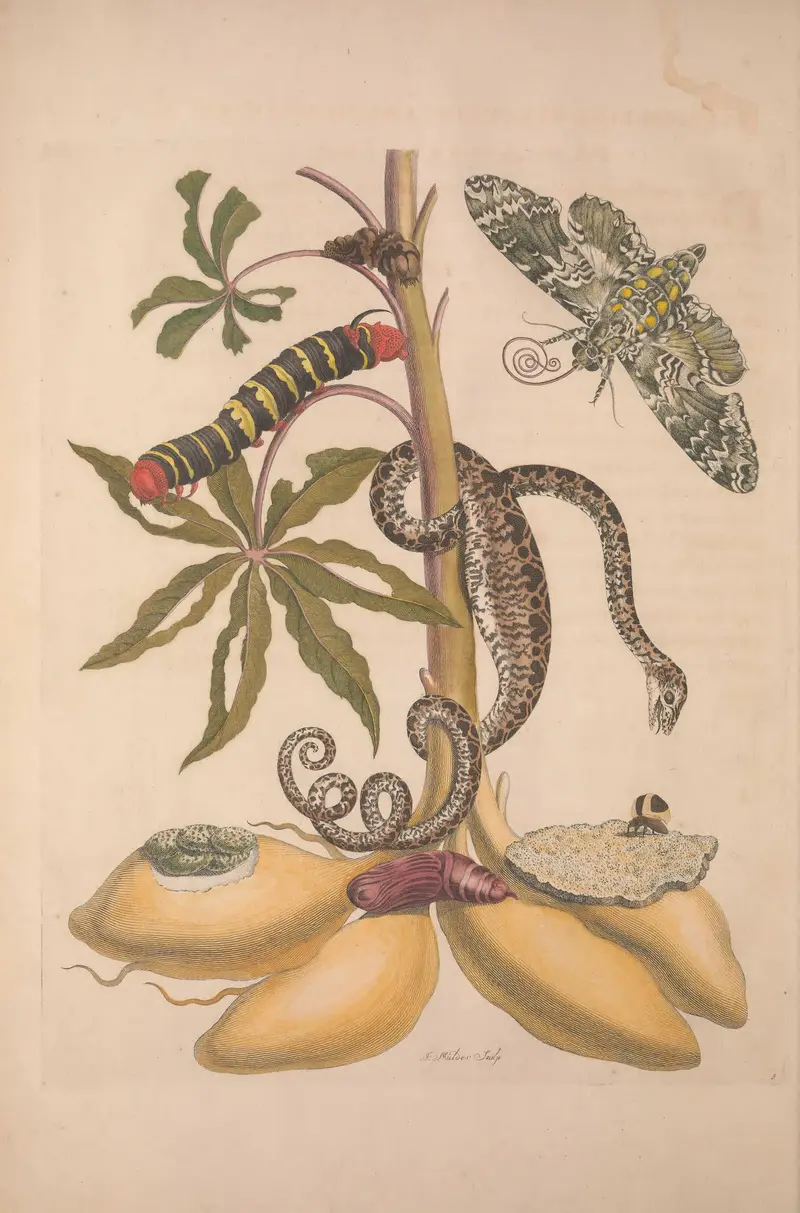
Cassava Root with Tree Boa and Sphinx Moth
Maria Sibylla Merian
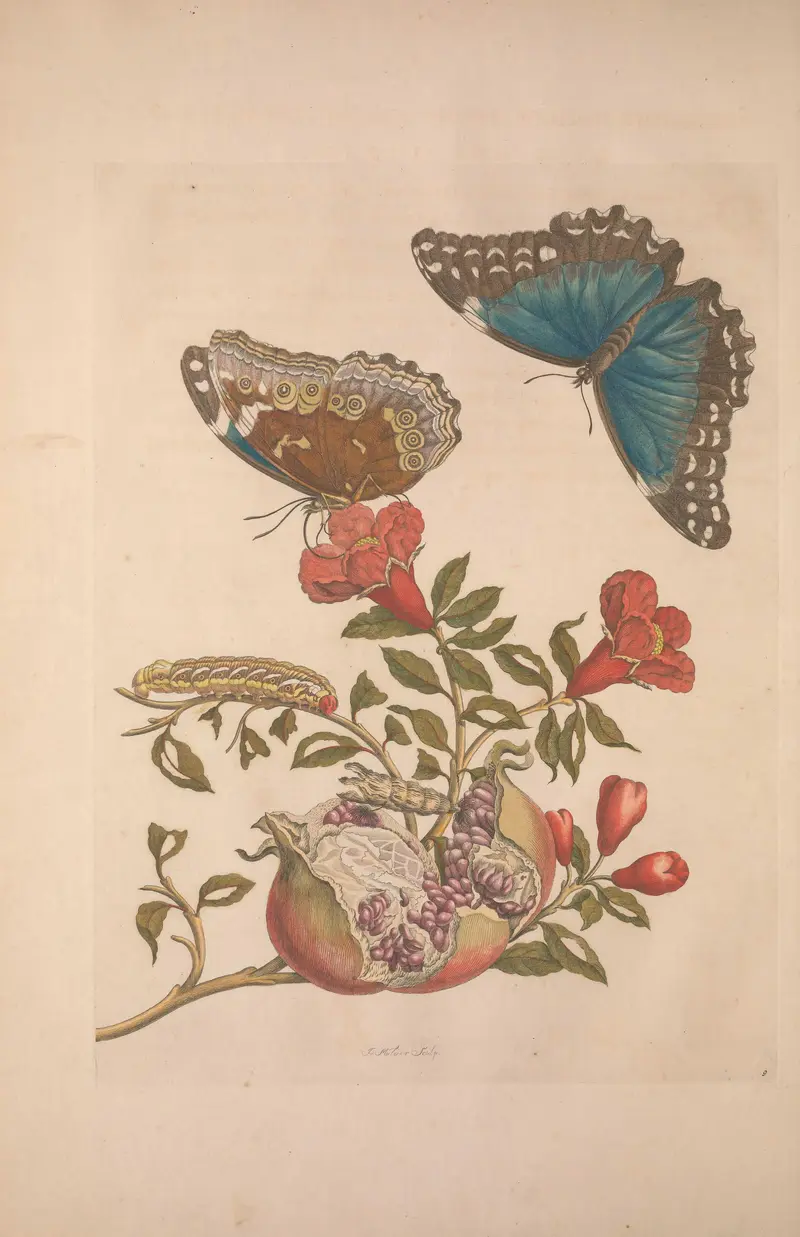
Pomegranate with Caterpillar, Pupa and Blue Butterfly
Maria Sibylla Merian
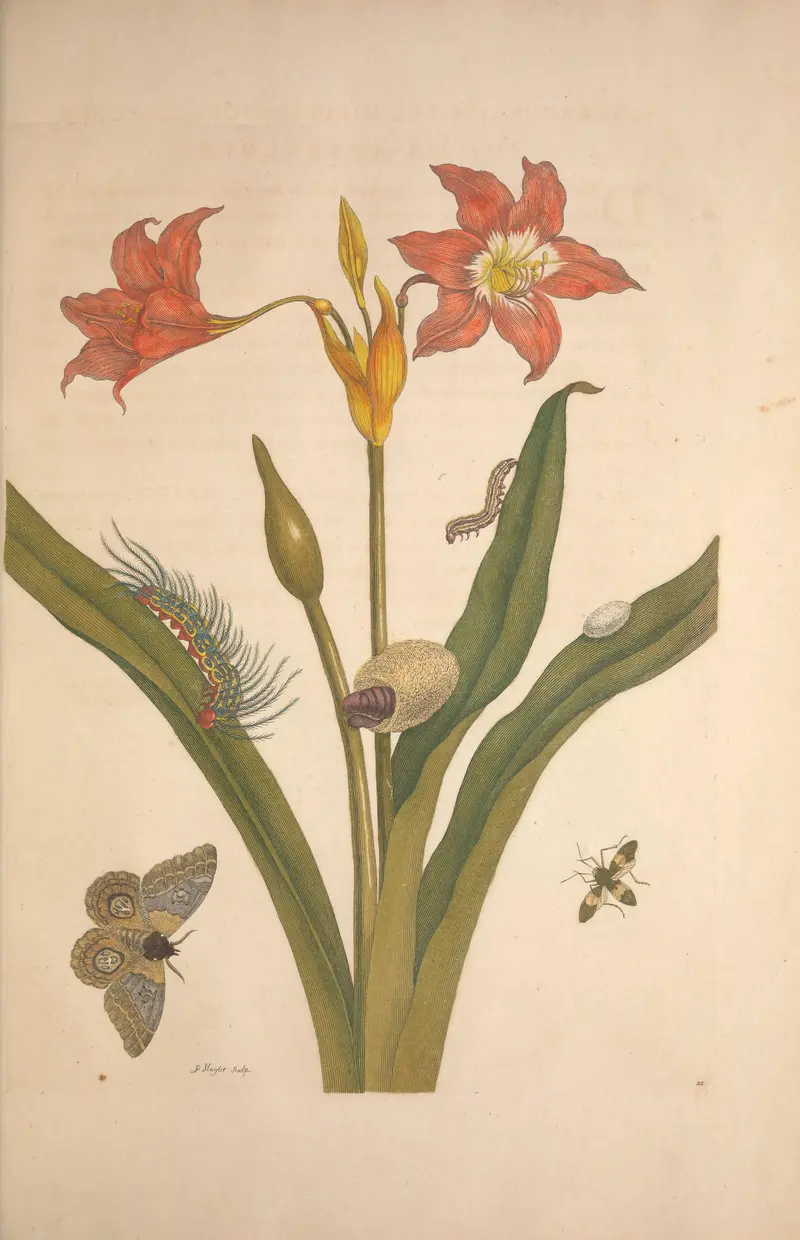
Red Amaryllis Lily with Moth and Caterpillars
Maria Sibylla Merian
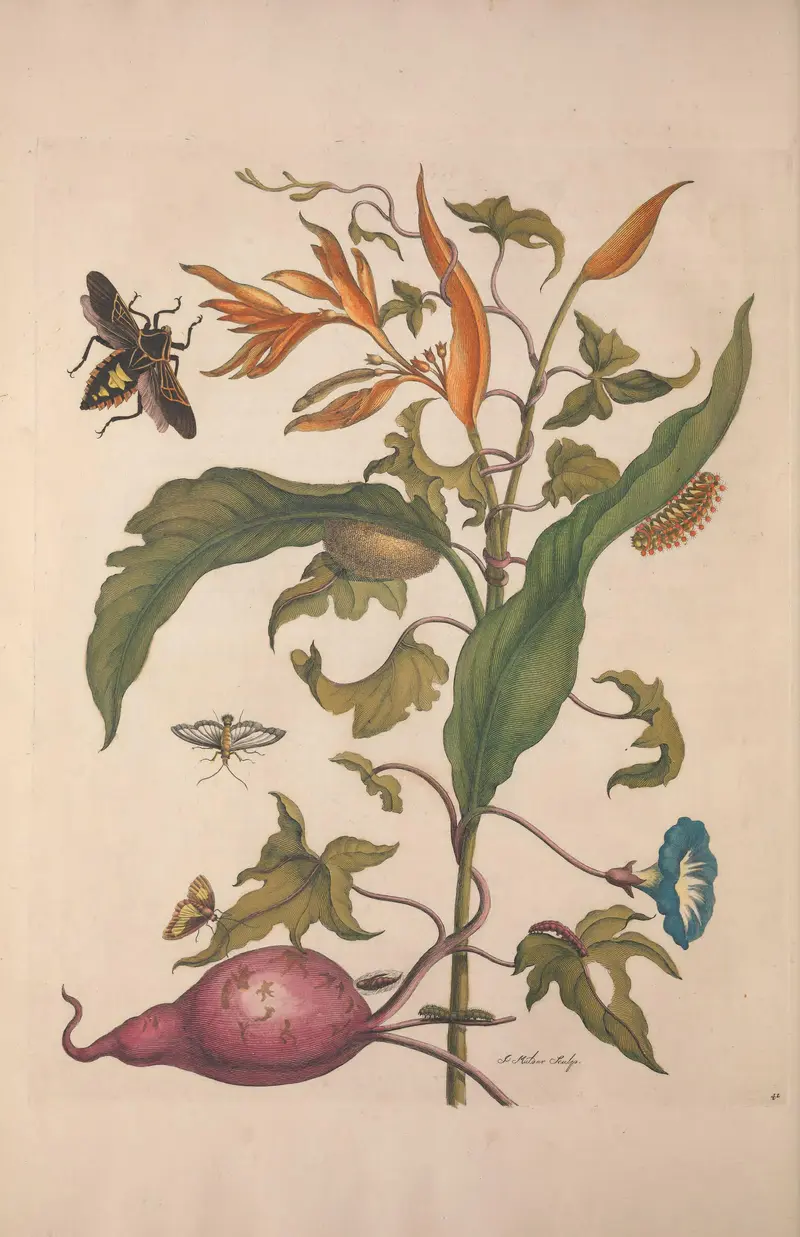
Sweet Potato with Beetle and Butterfly
Maria Sibylla Merian
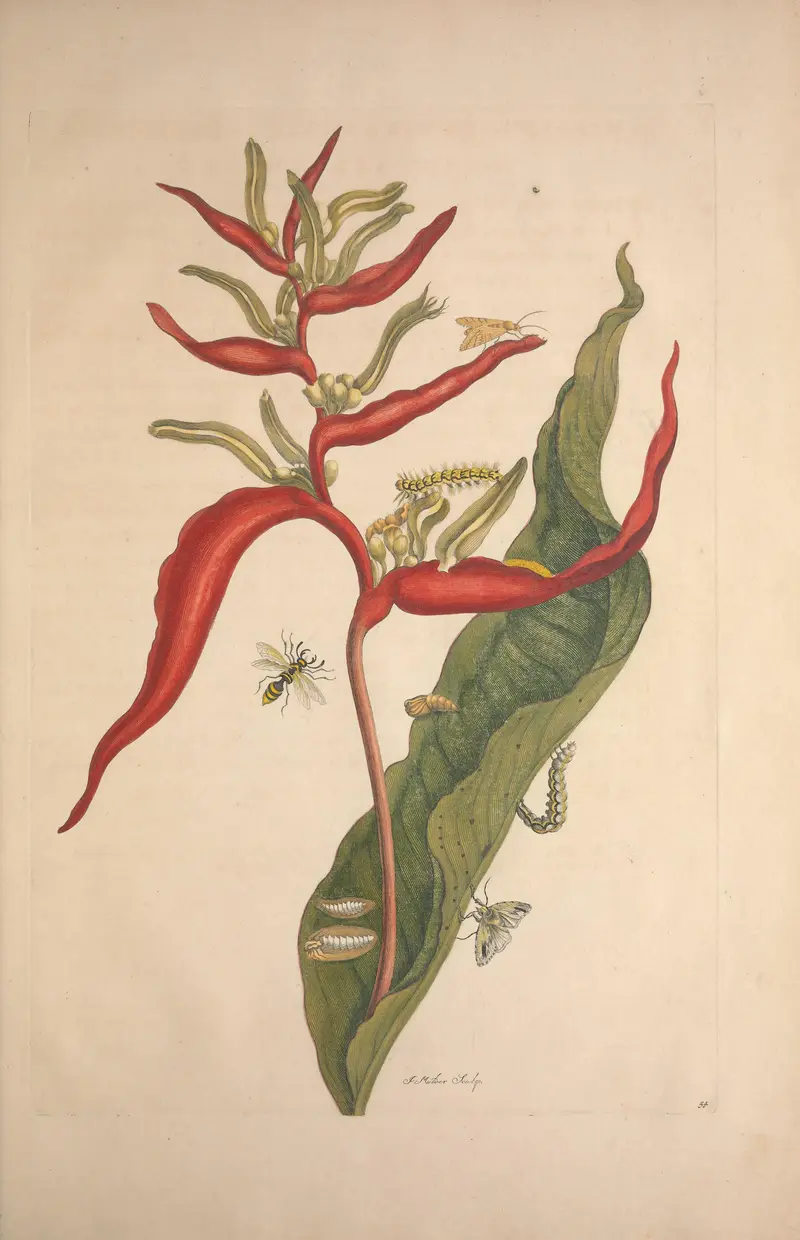
Heliconia with Moth
Maria Sibylla Merian
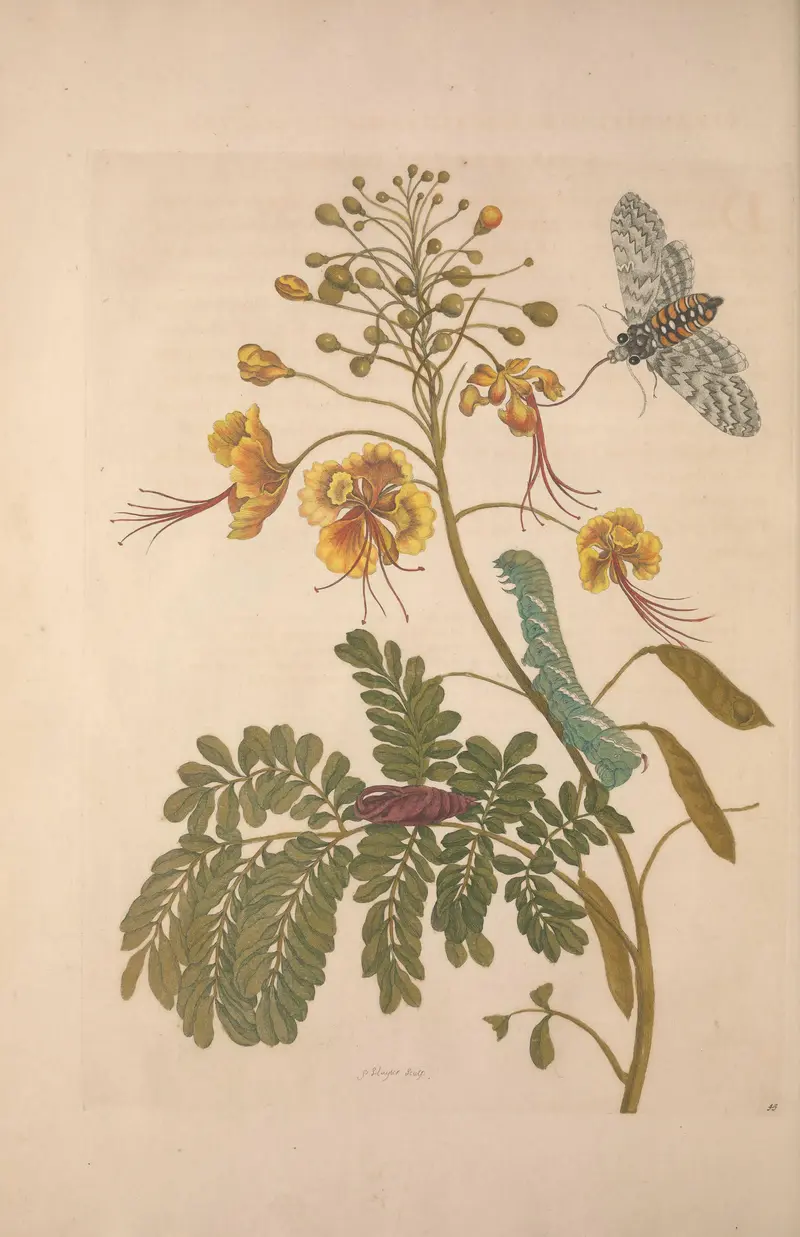
Mimosa with Moth and Caterpillar
Maria Sibylla Merian

Grapevine with Caterpillar and Moth
Maria Sibylla Merian
Papaya with Moth and Caterpillar
Maria Sibylla Merian