Pomegranate with Caterpillar, Pupa and Blue Butterfly — History & Facts
A pomegranate branch carries red, trumpet-shaped flowers, glossy buds, narrow leaves and a split fruit spilling purple-red seeds. A pale yellow caterpillar with dark markings stretches along a twig at left, and a gray pupa lies across the fruit. Two large butterflies hover above: one shows brilliant blue wings edged in brown with white marks, the other a brown wing with yellow-ringed eyespots. Maria Sibylla Merian drew the scene for plate 9 of Metamorphosis insectorum Surinamensium (1705), engraved by J.
Mulder; the Natural History Museum, London, describes it as a pomegranate with a butterfly's life cycle. Merian fed the yellow caterpillar pomegranate leaves in Suriname. On April 22 it became a gray pupa, and on May 5 the butterfly emerged, blue and silver with a brown border and white half-moons above, brown with yellow eyes beneath.
The two butterflies are that one insect seen from both sides. Merian wrote that pomegranates grew well in Suriname but were little cultivated there. Under her magnifying glass the blue wing looked like neatly laid roof tiles, or broad feathers like a peacock's, with a wonderful sheen. It is in the Smithsonian Libraries in Washington, DC.
More Artworks by Maria Sibylla Merian
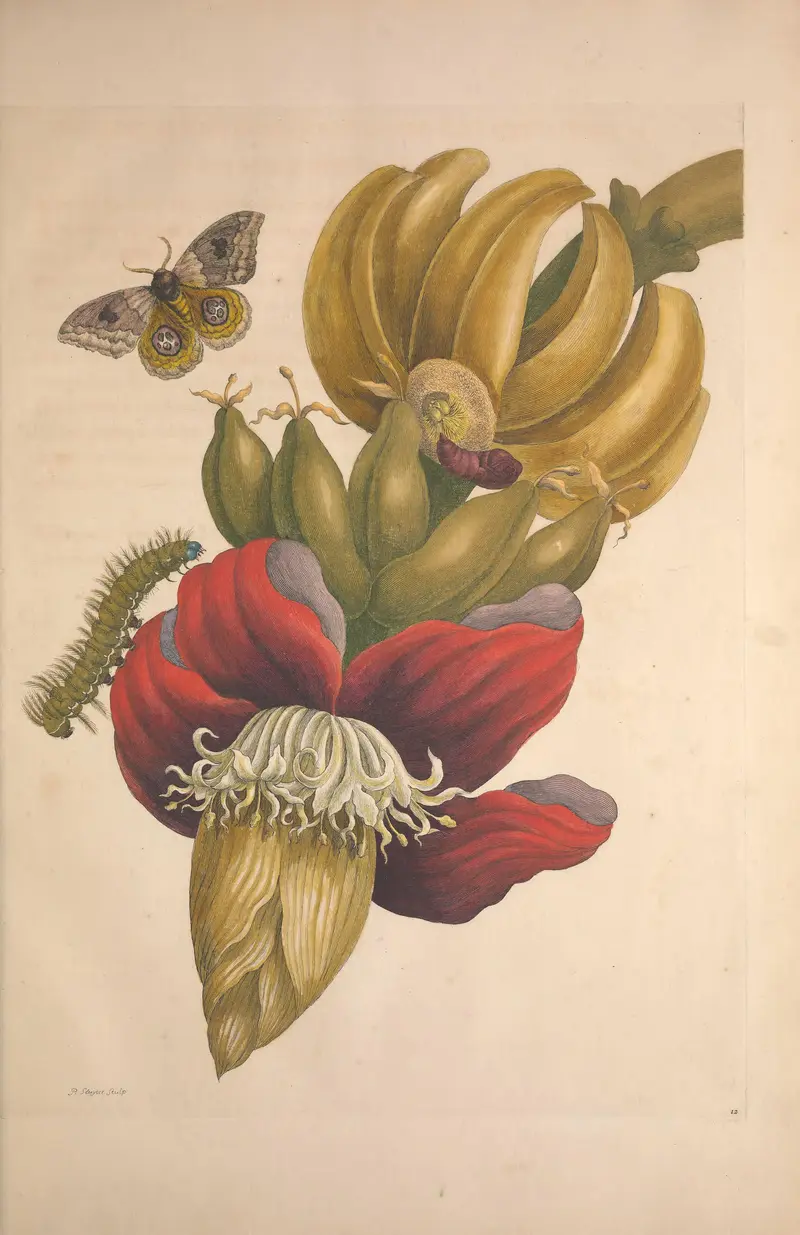
Banana with Bullseye Moth and Caterpillar
Maria Sibylla Merian
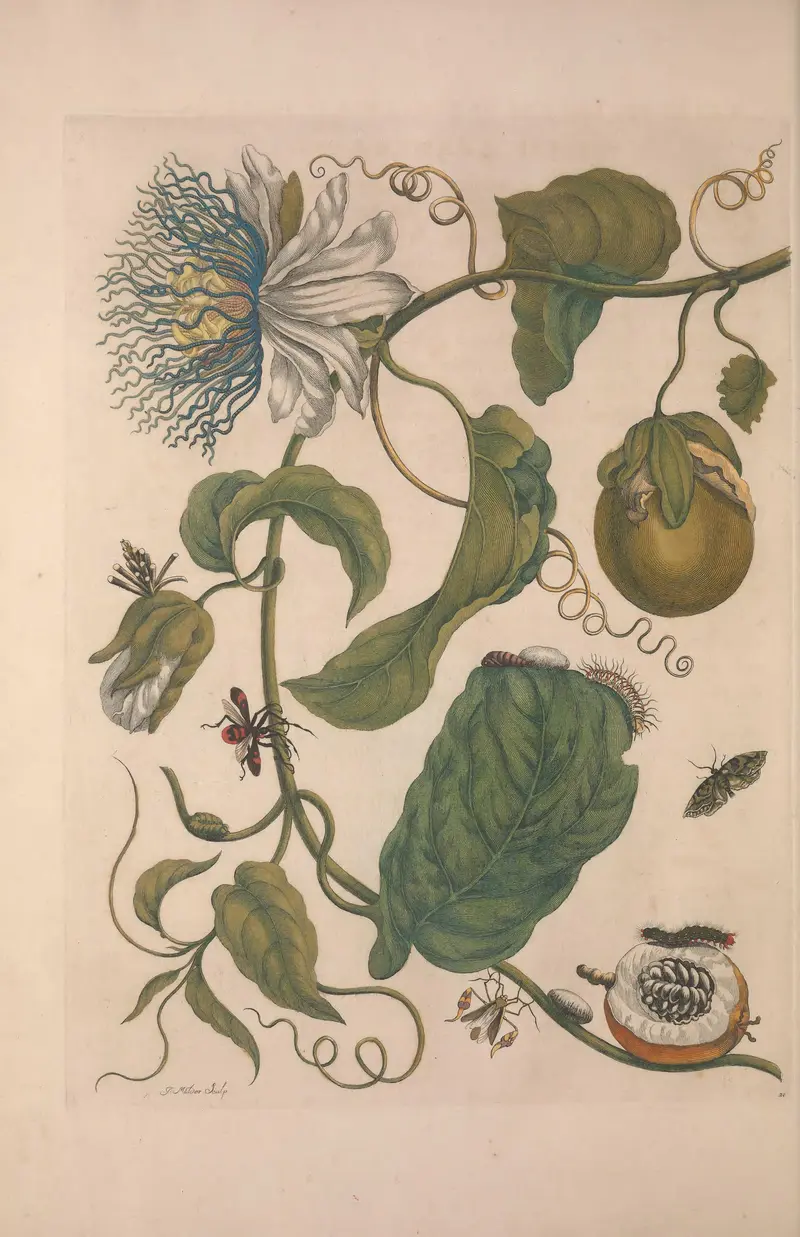
Passionflower with Caterpillars and Insects
Maria Sibylla Merian
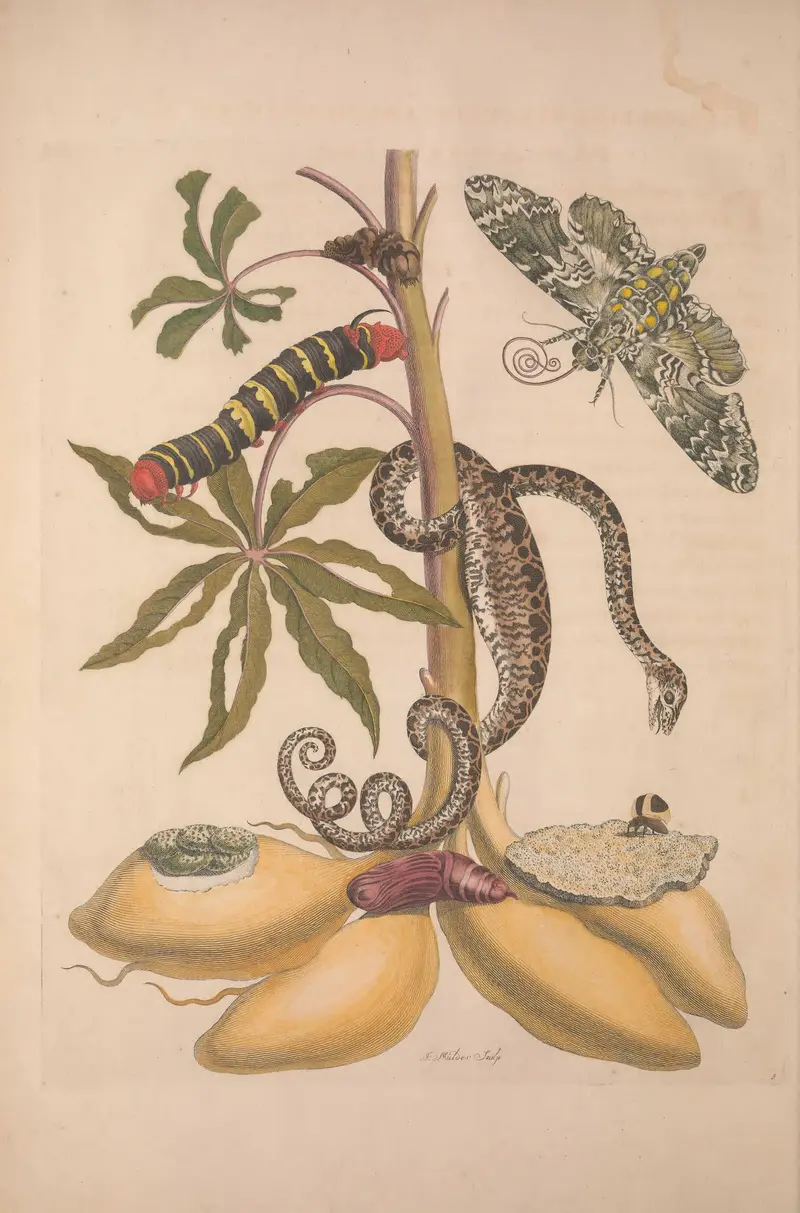
Cassava Root with Tree Boa and Sphinx Moth
Maria Sibylla Merian
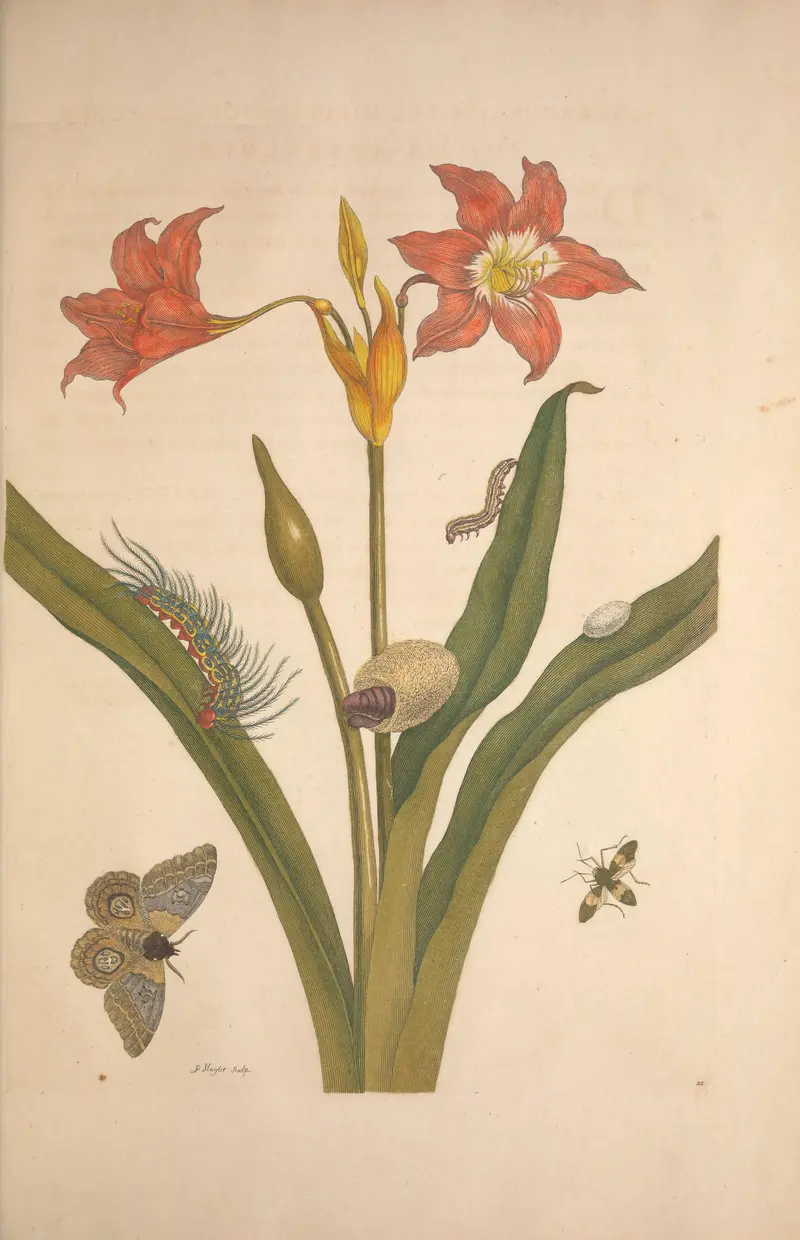
Red Amaryllis Lily with Moth and Caterpillars
Maria Sibylla Merian
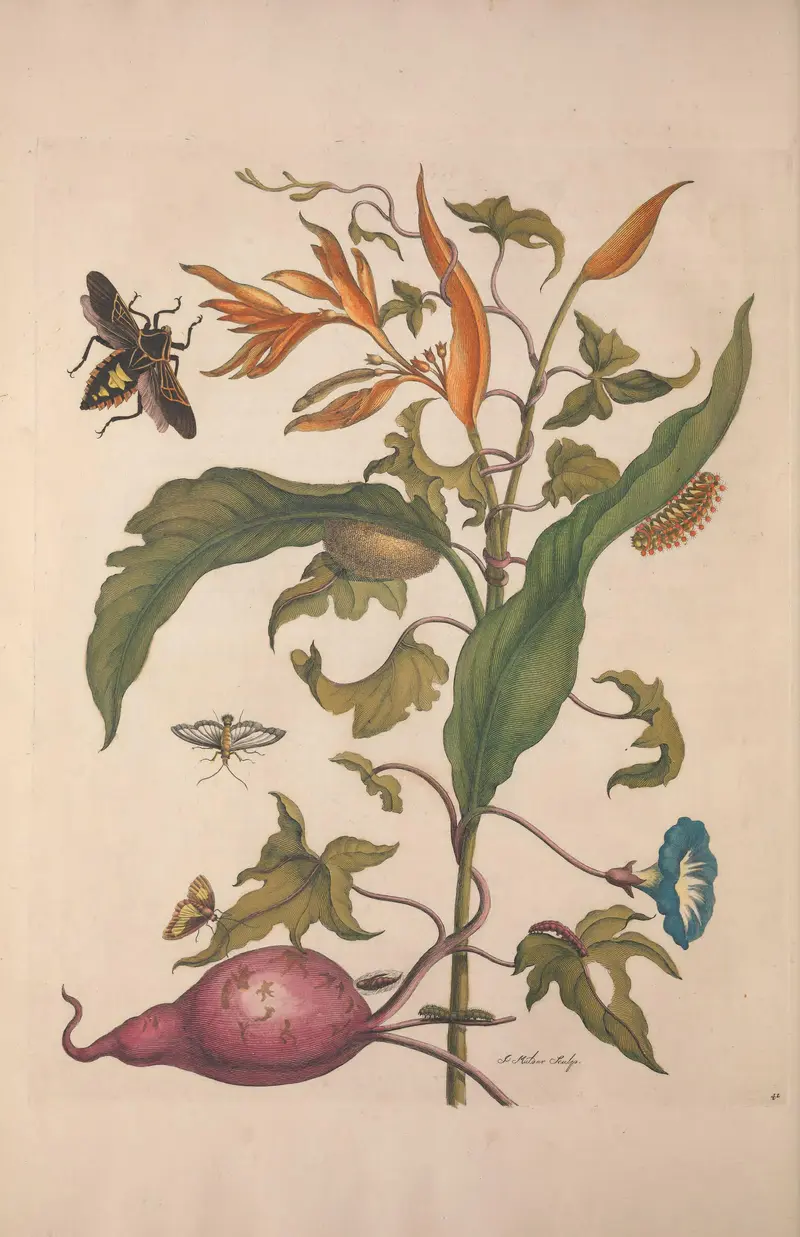
Sweet Potato with Beetle and Butterfly
Maria Sibylla Merian
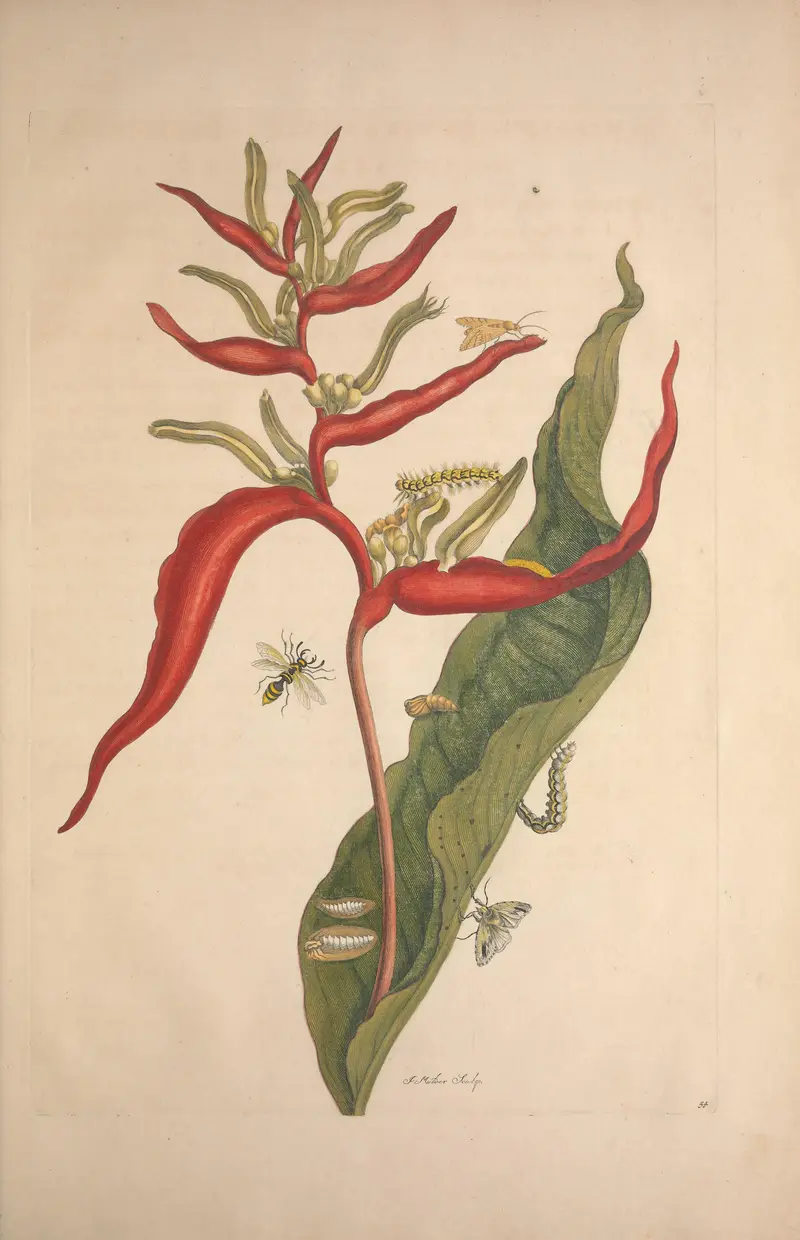
Heliconia with Moth
Maria Sibylla Merian
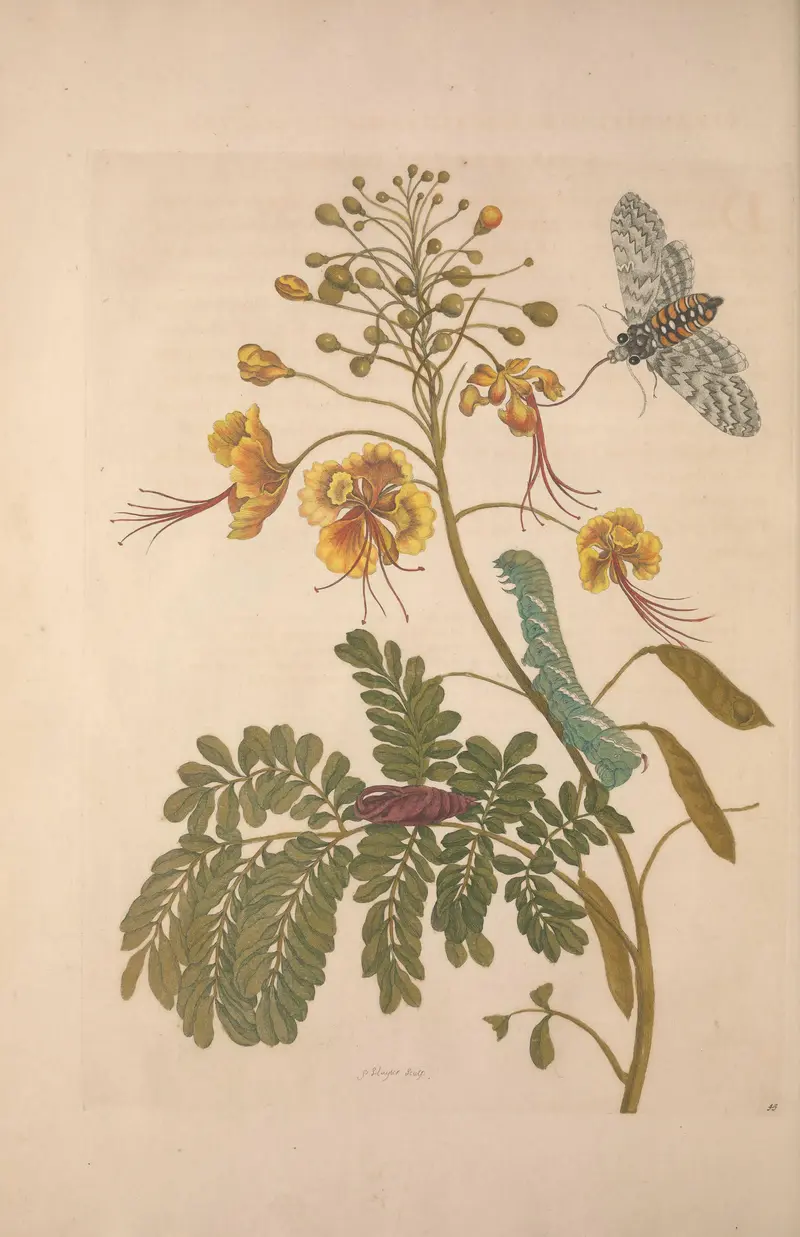
Mimosa with Moth and Caterpillar
Maria Sibylla Merian

Grapevine with Caterpillar and Moth
Maria Sibylla Merian
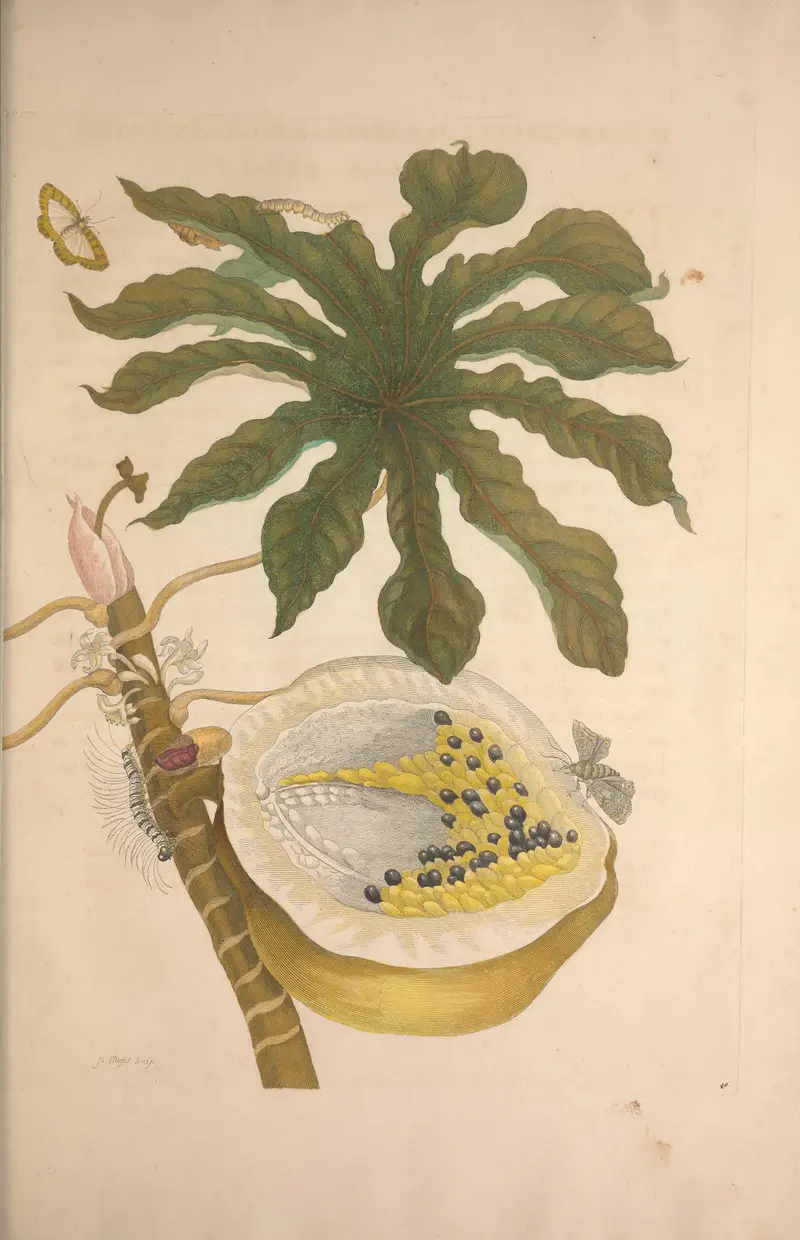
Papaya with Moth and Caterpillar
Maria Sibylla Merian
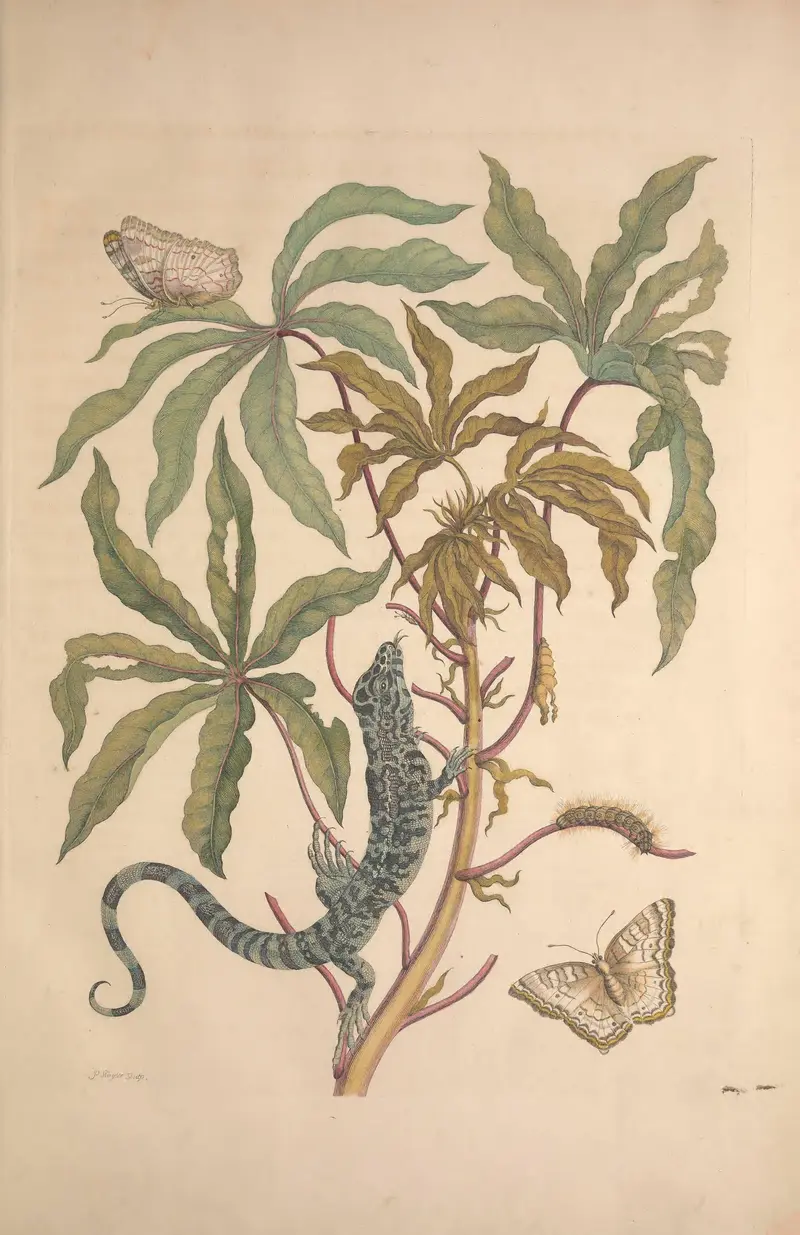
Cassava with Tree Snake and Caterpillar
Maria Sibylla Merian