Mimosa with Moth and Caterpillar — History & Facts
The first thing to arrest the eye in Mimosa with Moth and Caterpillar by Maria Sibylla Merian is the sense of a living cycle, frozen at a single moment. The painting draws you in with the bright yellow blossoms, but soon your gaze is caught by the moth poised delicately above, its wings patterned with intricate lines, and then follows the stem down to the plump, blue-green caterpillar and the dark, resting chrysalis. Every element is arranged to reveal not just a plant, but a stage for transformation: the moth sipping nectar, the caterpillar feeding, the chrysalis lying in wait.
The light is even and clear, as if to insist that nothing here is hidden—every detail is meant to be examined, every stage of life given equal dignity. Created in 1705 for Metamorphosis insectorum surinamensium, this work belongs to a world fascinated by the wonders of nature and the promise of scientific discovery. In the early eighteenth century, such images were not merely decorative: they were tools for learning, commissioned by collectors, scholars, and the curious elite who sought to catalog the riches of distant lands. Maria Sibylla Merian’s meticulous studies of Surinamese insects and plants brought the marvels of the New World into European salons and libraries, changing how people understood natural history.
History has kept few traces of individual copies, but the spirit of careful observation and wonder that animates this page still invites the viewer to look closer, and to discover the drama unfolding on a single flowering stem.
More Artworks by Maria Sibylla Merian
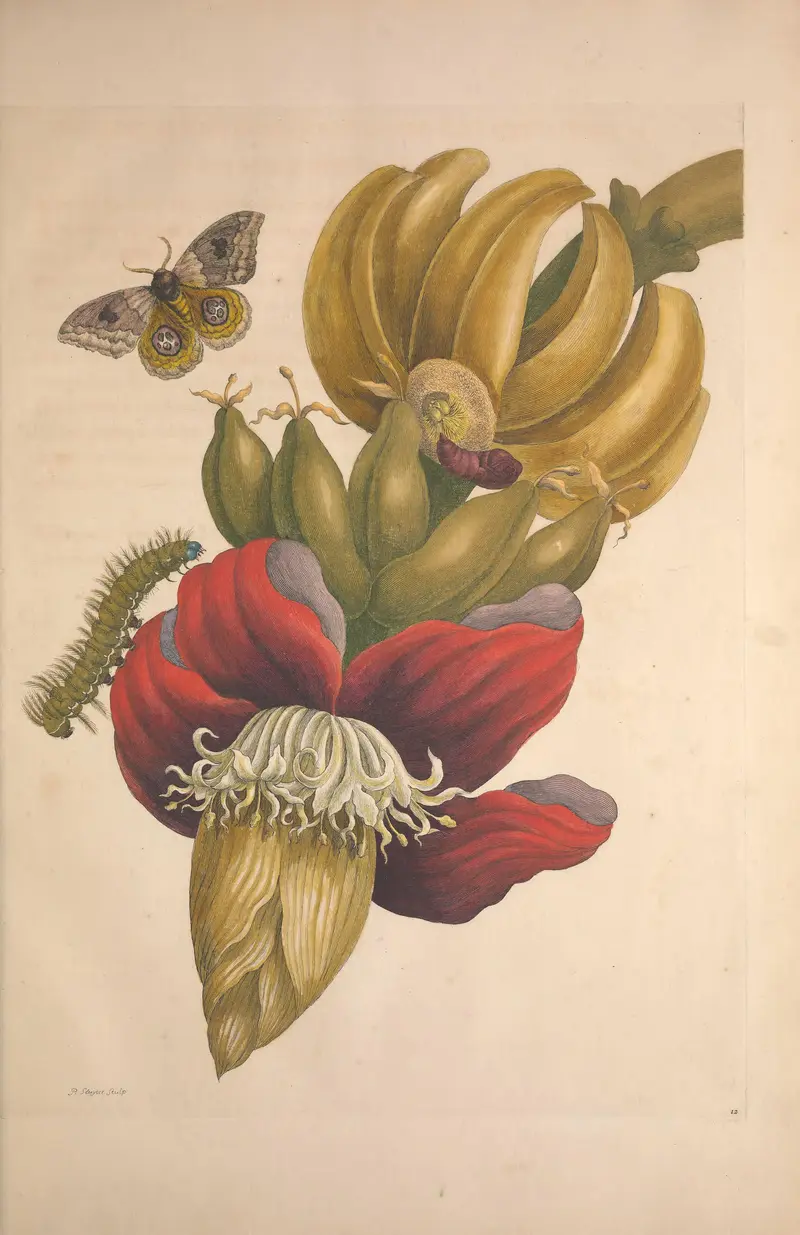
Banana with Bullseye Moth and Caterpillar
Maria Sibylla Merian
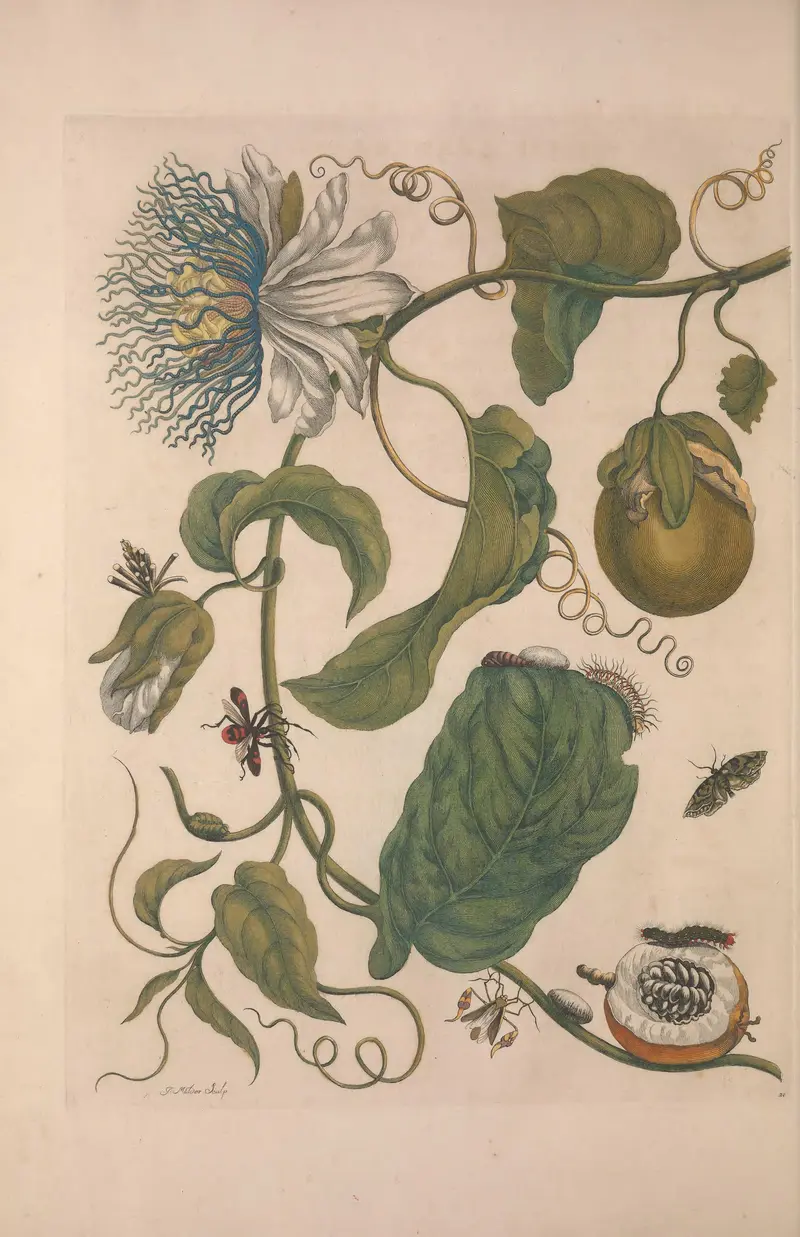
Passionflower with Caterpillars and Insects
Maria Sibylla Merian
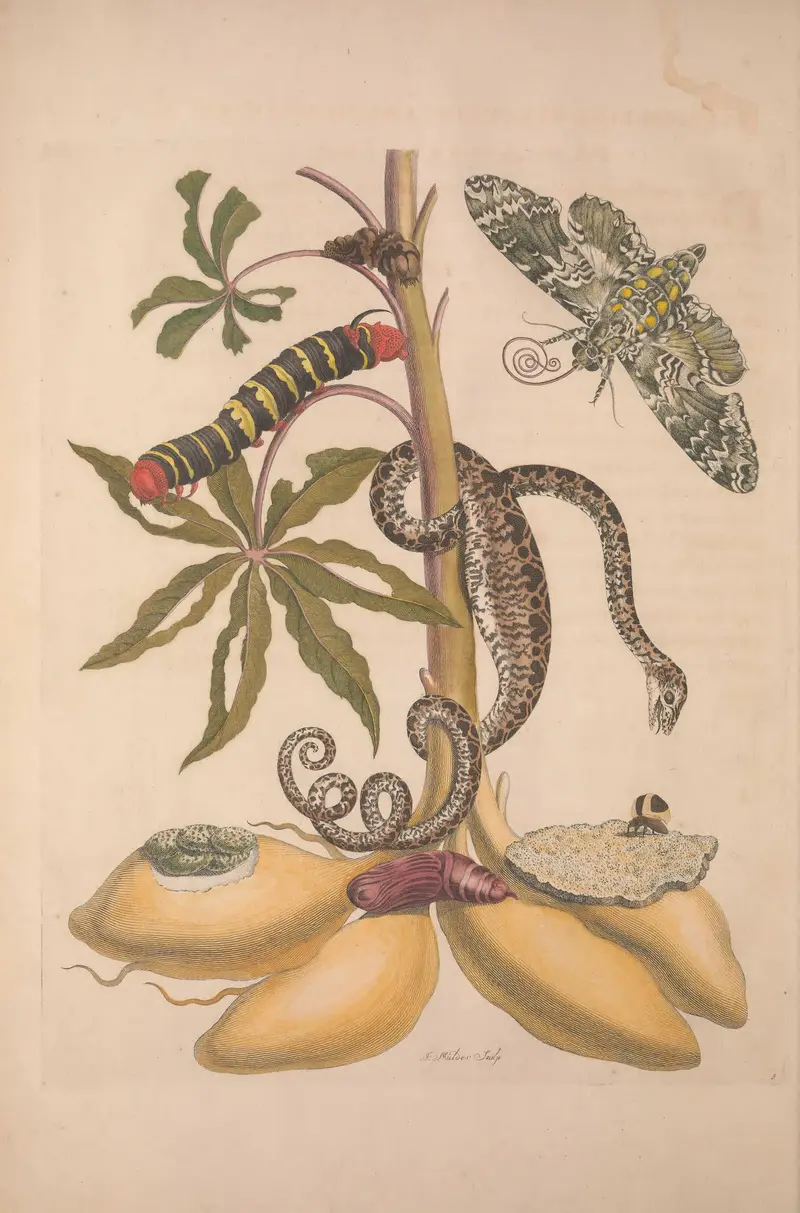
Cassava Root with Tree Boa and Sphinx Moth
Maria Sibylla Merian
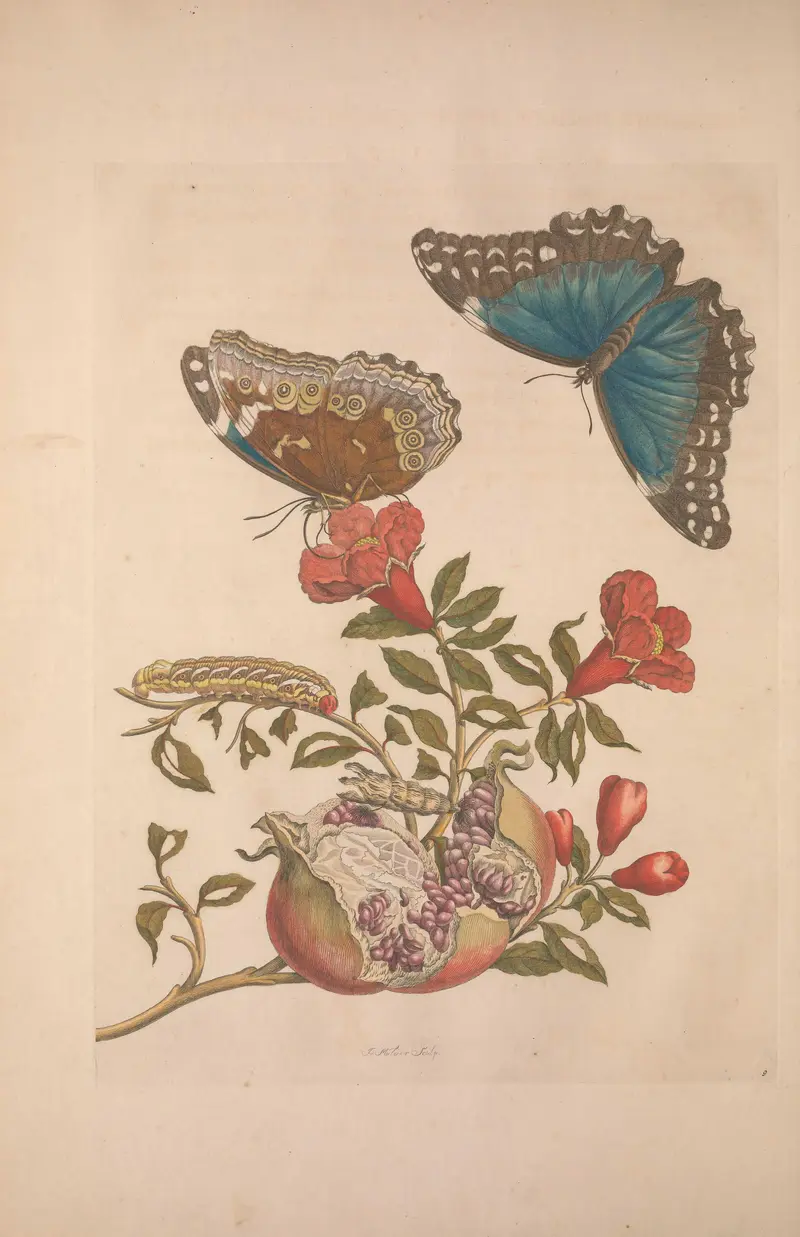
Pomegranate with Caterpillar, Pupa and Blue Butterfly
Maria Sibylla Merian
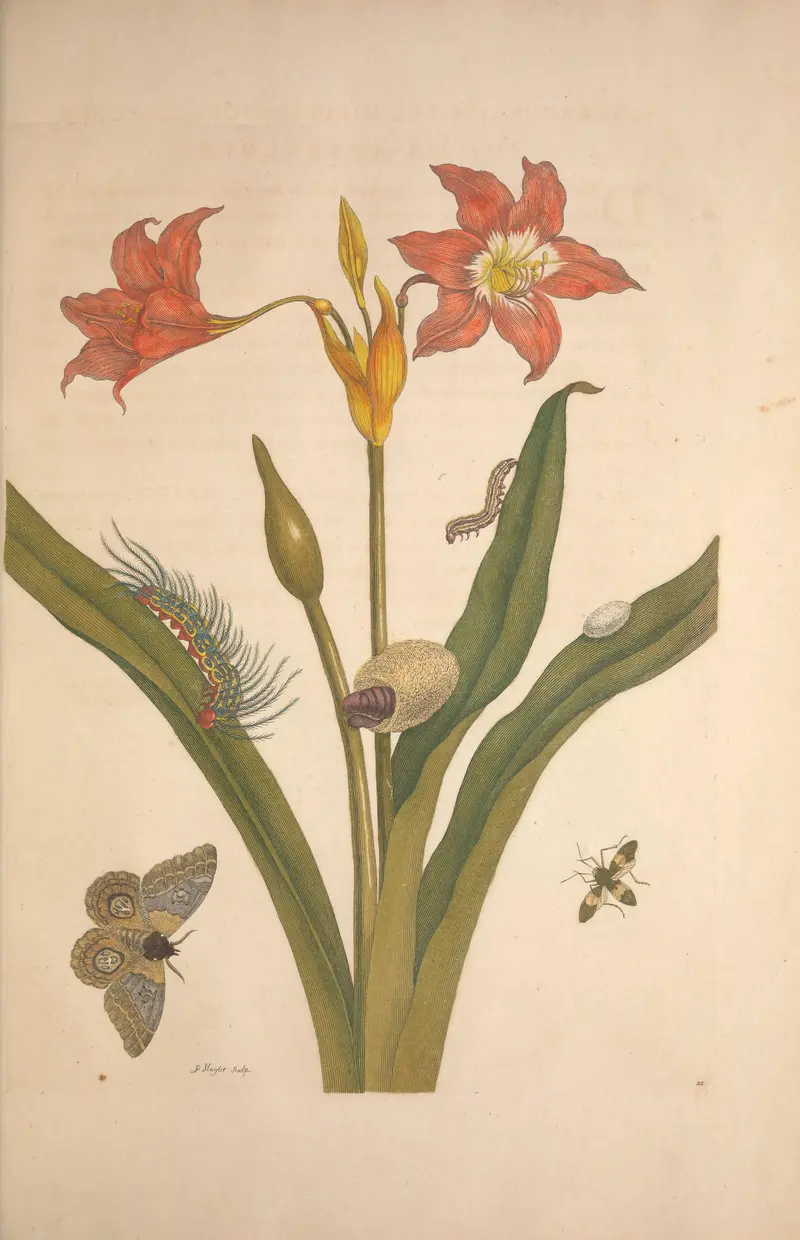
Red Amaryllis Lily with Moth and Caterpillars
Maria Sibylla Merian
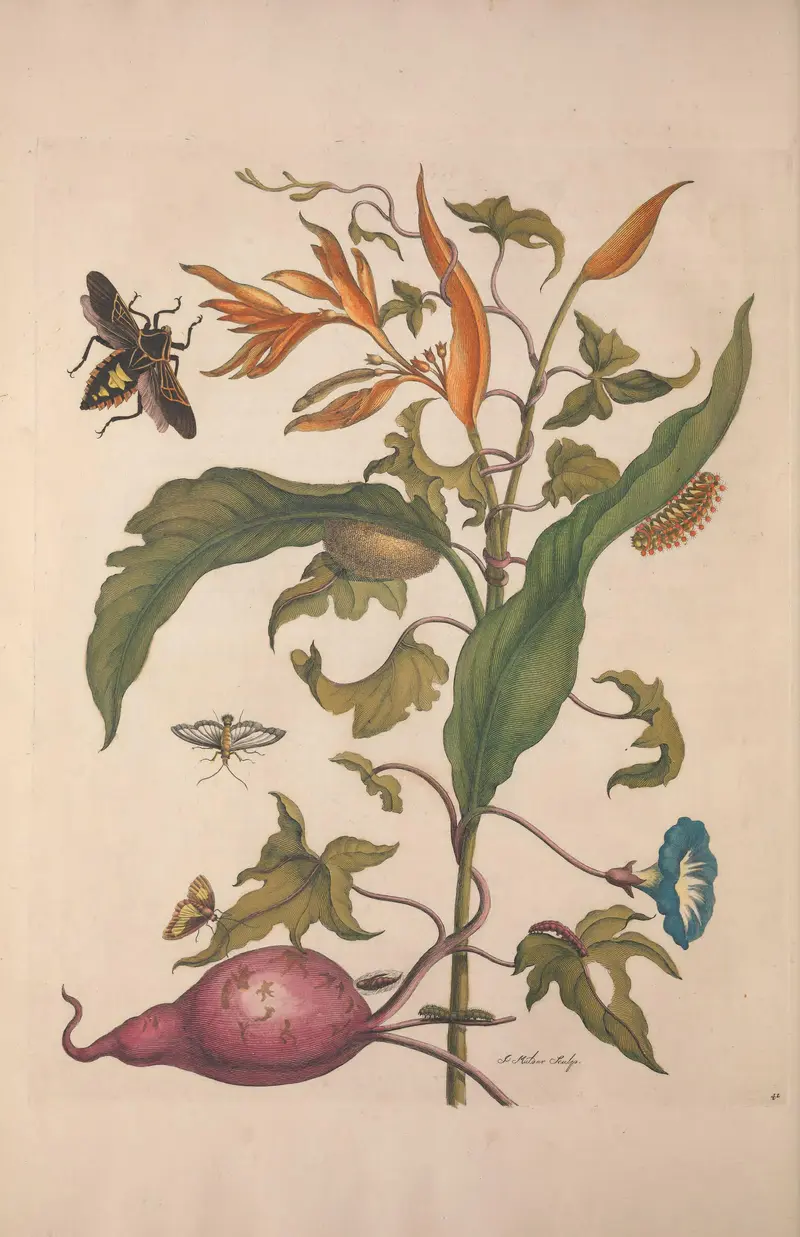
Sweet Potato with Beetle and Butterfly
Maria Sibylla Merian
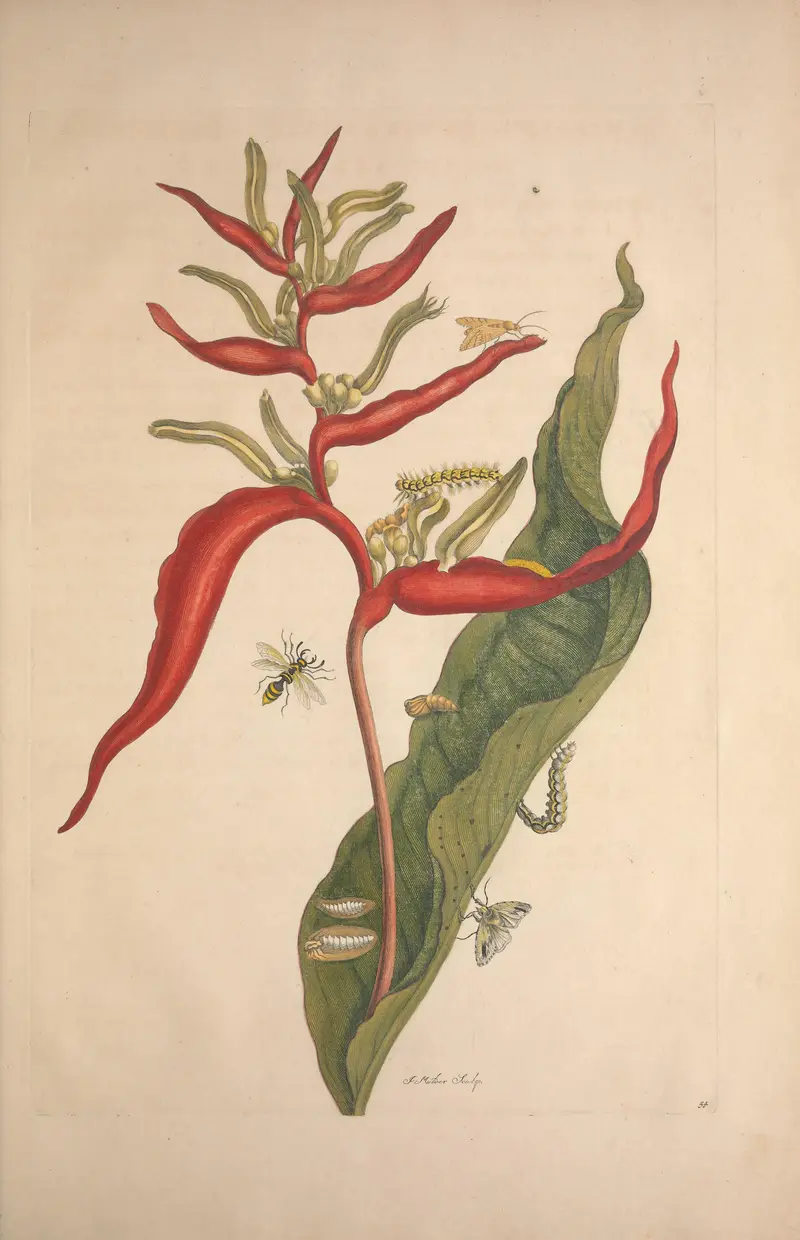
Heliconia with Moth
Maria Sibylla Merian

Grapevine with Caterpillar and Moth
Maria Sibylla Merian
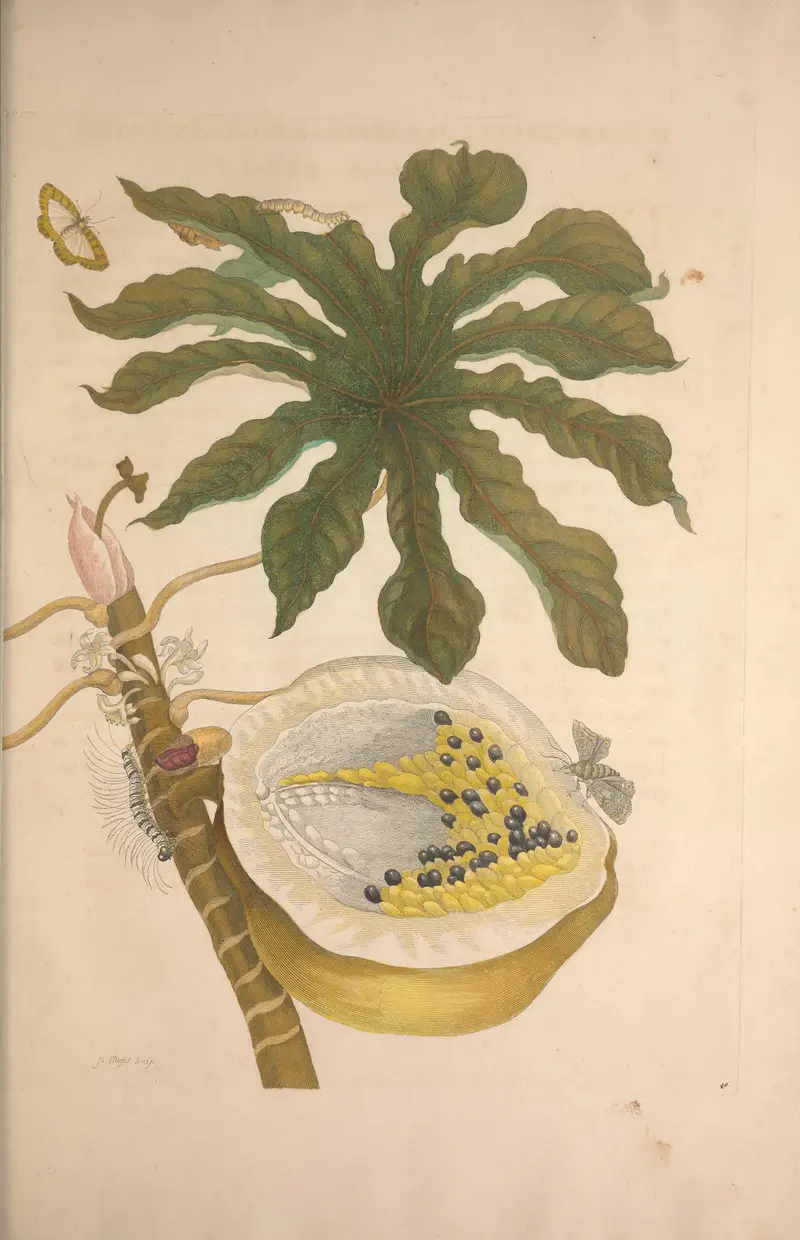
Papaya with Moth and Caterpillar
Maria Sibylla Merian
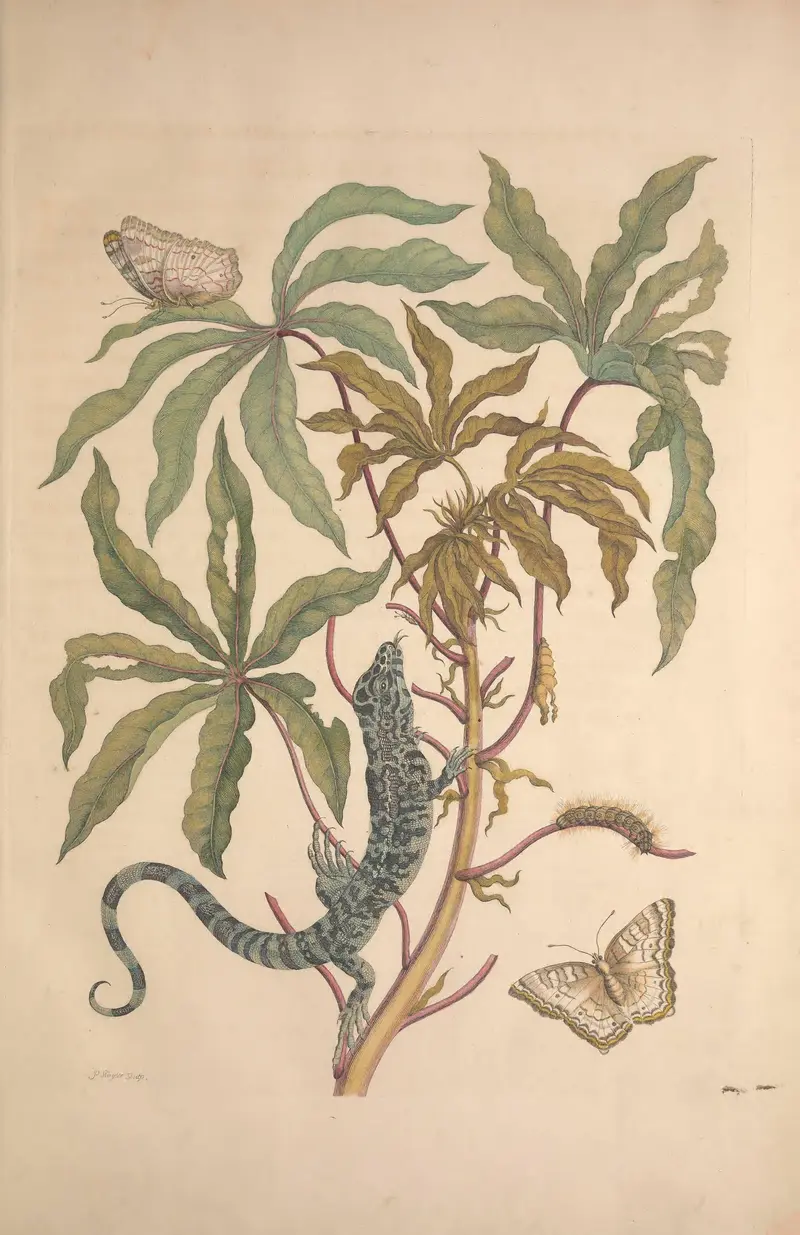
Cassava with Tree Snake and Caterpillar
Maria Sibylla Merian